








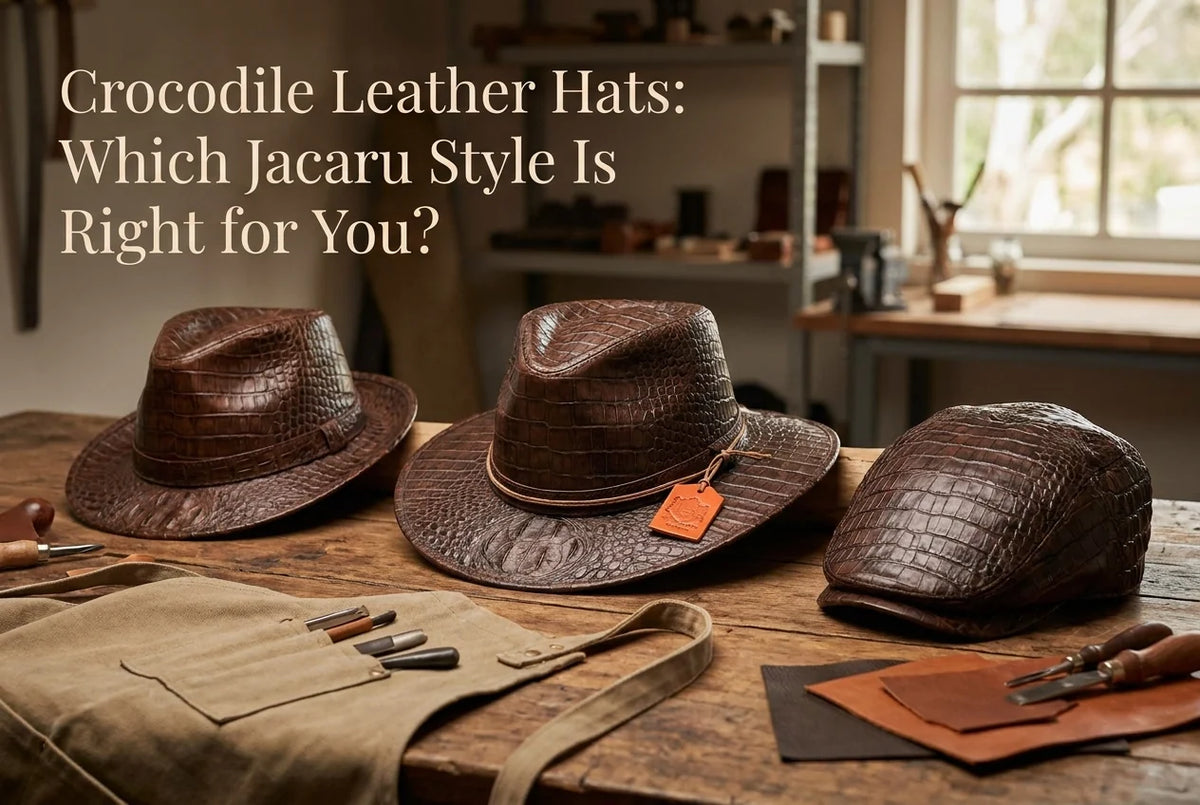
Crocodile Leather Hats: Which Jacaru Style Is Right for You?
Not every hat tells a story, but a crocodile leather hat practically demands one. Whether you are drawn to the rugged mystique of the Australian outback or simply want headwear that stands apart from anything else on the market, few accessories command attention the way genuine crocodile leather does.
Jacaru has been crafting Australian leather hats since 1968, and their dedicated Exotic Hats collection represents the pinnacle of that legacy. But with multiple retailers now offering crocodile leather hats across various platforms, knowing which option is worth your investment requires a closer look.
In this guide, you will get a thorough comparison of Jacaru's standout crocodile styles, including the iconic Croc Hunter Hat with its genuine crocodile teeth and hatband. You will also learn what separates authentic Australian craftsmanship from marketplace alternatives, who these hats are genuinely built for, and how to care for your investment over the long term. By the end, you will have everything you need to choose the right crocodile hat for your next adventure.
What Actually Makes a Crocodile Hat Genuinely Australian?

When you search "crocodile leather hat" online, the results are crowded with listings that use the term loosely. Many describe hats with embossed or printed crocodile-pattern bands made from synthetic or low-grade materials. Jacaru's Exotic Hats collection is built to a different specification entirely.
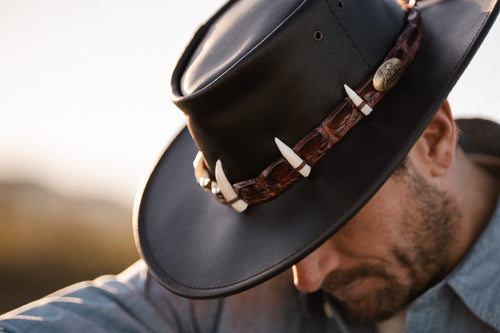
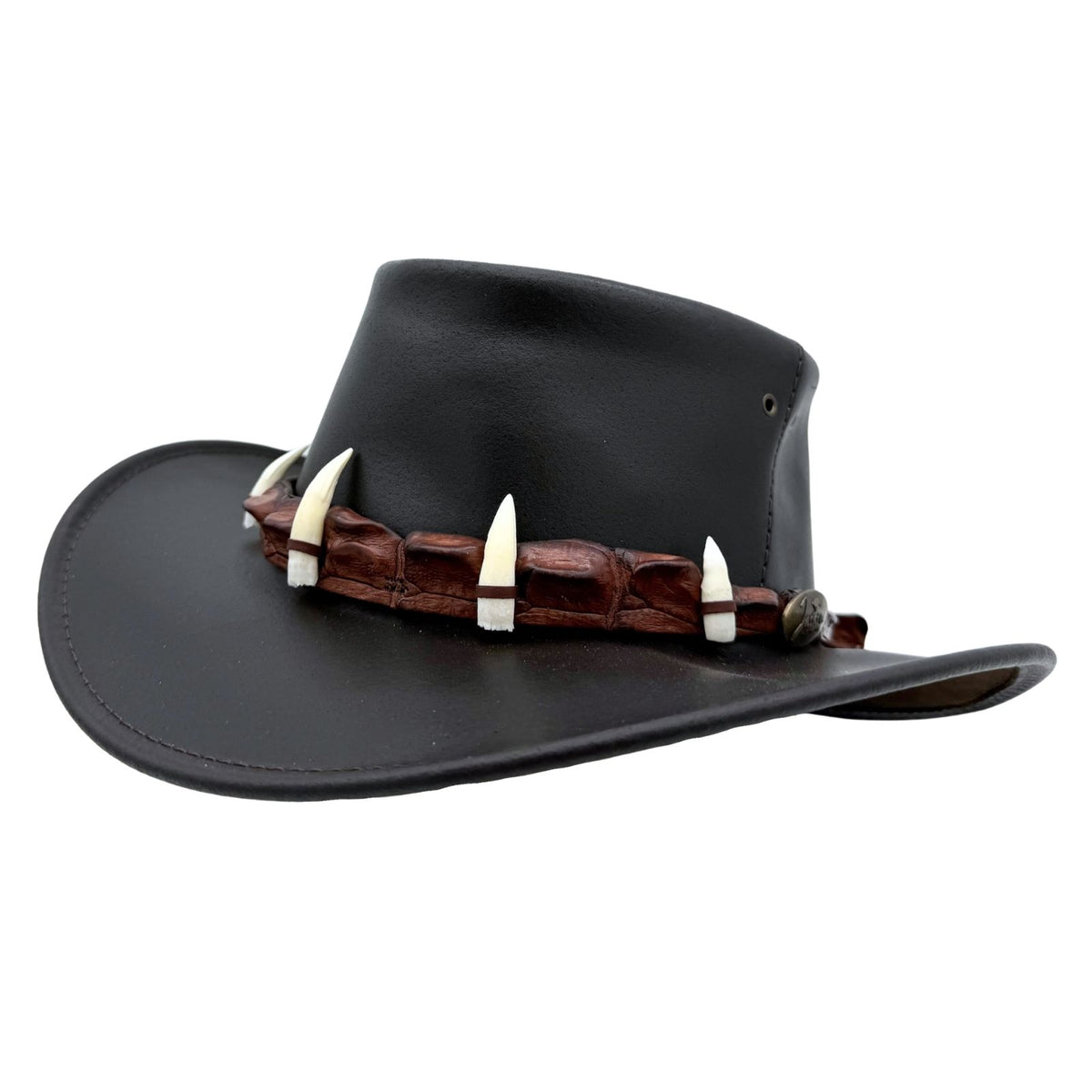
The hat body is 100% bovine leather. The hatband is genuine crocodile leather. The teeth are real. That combination is not the industry default; it is a deliberate material choice that buyers need to understand before comparing prices across platforms.
Why bovine leather for the body? Bovine hide is a proven material for outback headwear, offering the structural weight needed to hold a brim's shape through sustained field use. In outback conditions, a hat needs to resist warping, cracking, and brim collapse, and bovine leather is a well-established choice for meeting that demand.
The authenticity gap is real. Competitor listings regularly apply the phrase "crocodile leather hat" to products where the crocodile reference describes an embossed pattern on a synthetic band, not genuine material. Jacaru uses sourced crocodile leather and individually attached teeth. These are not decorative embellishments; they are verifiable material components.
Manufacturing history matters here. Jacaru has been producing Australian leather hats since 1968, giving the brand more than 55 years of category knowledge. That history underpins consistent sizing, quality control across batches, and product accountability that marketplace newcomers cannot replicate.
Australian-made is a specification, not a slogan. Local manufacturing means traceable materials, direct quality oversight, and a supply chain that a buyer can query. Global dropship sellers offering similar-sounding products carry none of that accountability. For a purchase at this price point, provenance is part of what you are paying for.
Croc Hunter Hat vs. Wild Roo Croc Hat: Side-by-Side Comparison
With the material distinction established, the practical question becomes: which of Jacaru's two crocodile hat SKUs is right for you?
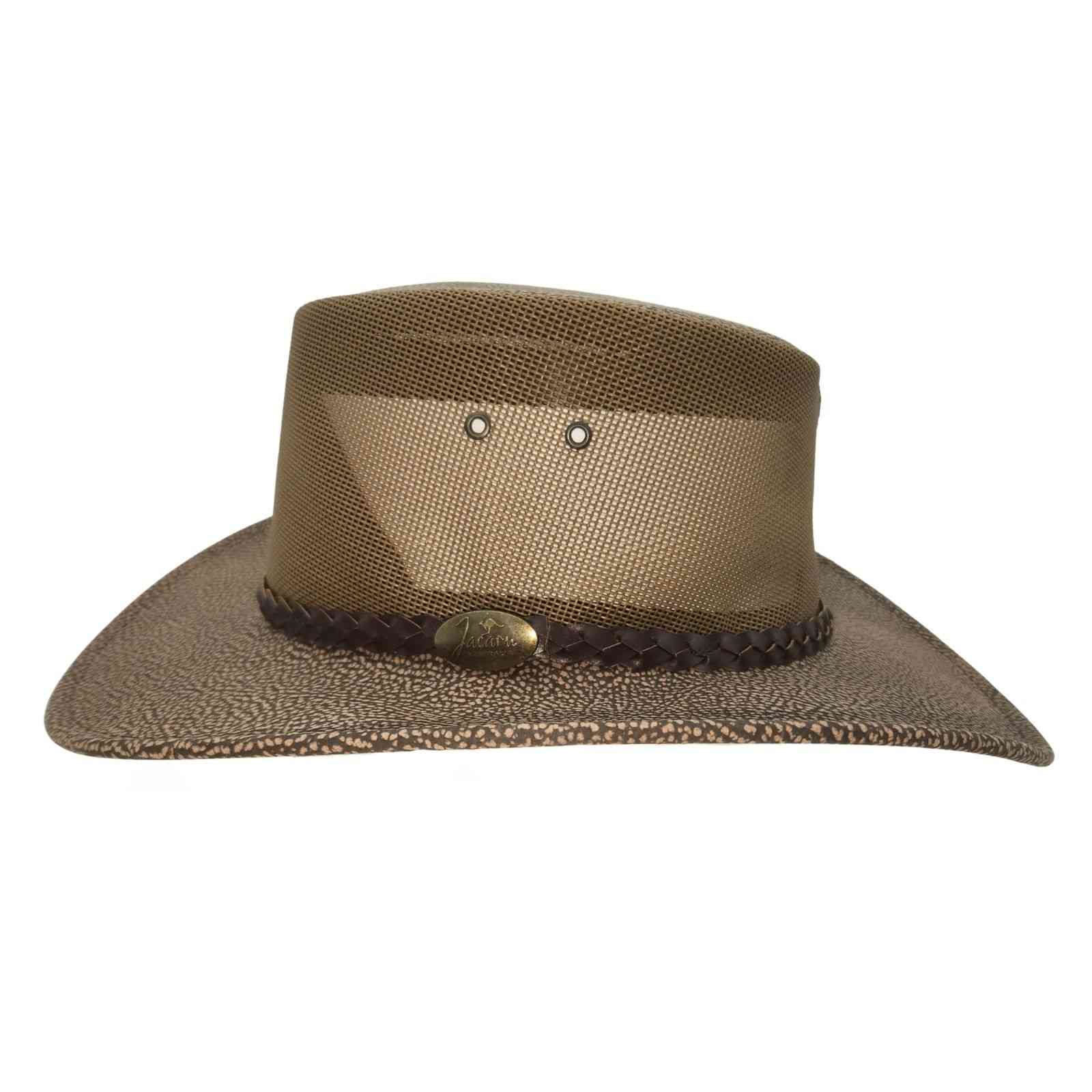
The Croc Hunter Hat is built on a 100% bovine leather body with a wide outback brim designed for serious sun coverage in open terrain. The centrepiece is a genuine crocodile hatband with real crocodile teeth individually affixed along the band. This is the bolder of the two silhouettes: heavier, stiffer out of the box, and unmistakably statement-making.
The Wild Roo Croc Hat introduces kangaroo leather into the construction, producing a lighter hat with a more supple hand. The crocodile accent detail remains, but the overall profile is trimmer and the finish more refined.
Dimension |
Croc Hunter Hat |
Wild Roo Croc Hat |
|---|---|---|
Material weight |
Heavier, stiffer |
Lighter, more supple |
Brim profile |
Wide outback brim |
Moderate brim |
Hatband |
Genuine croc with teeth |
Crocodile accent trim |
Best climate |
Dry, high-UV outback |
Versatile; tropical to temperate |
Recommended use |
Adventure travel, collecting |
Everyday wear, travel |
Both styles are available across Jacaru's exotic hats collection.
Buyer guidance: Choose the Croc Hunter for maximum outback character and bold iconography. Choose the Wild Roo Croc if you want crocodile accent detail with kangaroo leather's lighter, more packable feel.
On sizing and break-in: both hats conform to the wearer's head over time. Expect the first few weeks to feel snug; bovine and kangaroo leather both soften and mould with wear. Size to a firm but comfortable initial fit rather than sizing up to compensate.
Why Jacaru Outperforms the Marketplace Alternatives
Choosing between a Jacaru crocodile leather hat and a lower-priced marketplace listing comes down to one question: what are you actually buying?
Marketplace listings at lower price points exist, and that price difference reflects something equally real in the construction. Buyers should ask whether a hatband is made from genuine crocodile leather or an embossed synthetic, a distinction that is not always clear in marketplace listings. Jacaru's Exotic Hats collection uses sourced crocodile material with teeth individually attached to the band. These are not equivalent products wearing similar descriptions.
Ask any seller these questions before purchasing:
Is the hatband made from genuine crocodile leather or an embossed synthetic?
Are the teeth real crocodile, and how are they secured to the band?
Who manufactured the hat, and where?
What warranty or quality assurance applies to this specific batch?
Jacaru's manufacturing continuity since 1968 means the brand can answer all four questions above. Many marketplace listings structurally cannot, not because sellers are necessarily dishonest, but because anonymous listing formats offer no mechanism for warranty support, consistent sizing across batches, or traceable quality control.
Jacaru's product detail pages make sourcing and construction transparent by default. If a listing you are evaluating elsewhere cannot match that standard, treat the gap itself as a specification. Buyers who want to compare at lower price brackets can also browse Jacaru's clearance range before looking off-platform entirely.
Who Actually Wears a Crocodile Leather Hat?
Knowing who the specifications suit helps close the purchase decision faster than any feature list.
The "tourist souvenir" label undersells what these hats actually are. Bovine leather construction built to outback durability standards does not degrade under sustained UV exposure or rough handling. A crocodile leather hat worn on a four-wheel drive trip through the Kimberley or a fishing charter in the Top End earns its keep the same way any serious field gear does.
Adventure travellers represent the clearest functional fit. The wide outback brim delivers meaningful sun coverage across exposed terrain, the leather resists abrasion from scrub and equipment straps, and the hat develops a personalised patina with wear rather than failing at the seams. It is genuinely suited to extended travel through Australia's outback, coastal, and tropical zones, improving with each trip rather than showing wear as damage.
Gift buyers and collectors have a different priority: provenance. Australian-made goods with a traceable manufacturing history carry cultural weight that generic retail alternatives cannot replicate. The Croc Hunter Hat, with its genuine crocodile hatband and individually attached teeth, functions as a premium corporate gift or premium souvenir with a verifiable story behind it. That story is what separates it from mass-produced novelty items at airport price points.
Domestic Australian buyers are perhaps the most underacknowledged segment. Rural and regional communities have used character-rich leather hats as everyday workwear and lifestyle pieces for generations. The idea that a quality leather hat with genuine materials is exclusively for international visitors ignores that leatherwork tradition entirely. Consult Jacaru's Australian leather hat glossary for terminology that reflects this working heritage.
The Crocodile Dundee films brought the outback hat silhouette to global audiences, and Jacaru's more than 55 years of continuous Australian manufacturing have kept that credibility firmly grounded in genuine craft.
Sourcing, Sustainability, and What Goes Into Every Hat
Crocodile farming in Australia operates under state and federal wildlife legislation, and the saltwater crocodile's CITES Appendix II listing enables controlled commercial trade in captive-bred and ranched specimens. That classification creates a traceable, documented supply chain that wild-harvest alternatives simply cannot offer. Australian-regulated crocodile farming provides the traceable supply chain that legitimate manufacturers in this space rely on, the framework through which genuine hatband material is sourced.

Regulatory compliance is the baseline, not the differentiator. The differentiator is provenance. Australian-made manufacturing means Jacaru's supply chain is subject to domestic oversight at every stage, whereas offshore marketplace sellers operating in jurisdictions with minimal wildlife trade enforcement offer no equivalent accountability. For buyers applying an ethical lens to exotic material purchases, that is a commercially meaningful distinction, not just a feel-good claim.
The bovine leather body adds a separate sustainability argument. A well-constructed leather hat built to last decades generates a fraction of the waste produced by fast-fashion accessories that degrade and require replacement within a season or two. Longevity is inherently more sustainable than disposability, and premium price reflects that lifecycle difference. You can read more about Jacaru's approach on their sustainability page.
One gap remains worth noting for buyers importing into markets with strict CITES enforcement: published sourcing documentation, farm certifications, or export permit references from Jacaru would directly address the compliance questions that international buyers legitimately raise. Closing that transparency gap would strengthen the premium price case and remove a friction point for global buyers doing their due diligence before purchase.
How to Care for Your Crocodile Leather Hat
A hat built to last decades demands proportionate care. The investment in quality materials only pays off if maintenance keeps pace with use.
Conditioning the bovine leather body is the foundation of the routine. Apply a quality leather conditioner every few months, or more frequently if the hat sees sustained UV exposure or high humidity. Australia's climate accelerates moisture loss in untreated leather, leading to the surface cracking and brittleness that ends a hat's useful life prematurely. Work conditioner in lightly with a soft cloth and allow it to absorb fully before wearing.
The crocodile hatband requires separate, gentler treatment. Exotic leather scales have a different cellular structure to bovine hide and respond poorly to the same heavy conditioners. Use a product formulated for exotic or reptile leathers, apply sparingly, and condition more frequently in small amounts rather than saturating the band infrequently. As a precaution, test any conditioner on an inconspicuous area first; products not formulated for exotic leather can alter the scale texture.
Storage determines longevity as much as conditioning. Storing the hat on a hat block or crown-down on a clean surface (rather than brim-down) helps preserve the brim's shape. Keep it away from direct sunlight and heat sources such as car dashboards and sunny windowsills, both of which dry out leather regardless of how well it has been conditioned.
After rain or a river crossing, resist the urge to speed-dry the hat near a heater or in direct sun. Allow it to dry naturally at room temperature away from direct heat. If the brim has shifted, consult Jacaru's care guidance before attempting to reshape.
Full care instructions for Jacaru leather hats are available on the Jacaru website for detailed product-specific guidance.
With consistent care, a Jacaru leather hat develops a deepening patina that adds character with each year of use. Synthetic alternatives simply degrade. That distinction is the clearest measure of what genuine materials are worth.
Finding the Right Crocodile Hat for Your Adventure
Once your hat is properly conditioned and stored, the only remaining question is which one to buy.
The decision comes down to use case. As the comparison above shows, the Croc Hunter and the Wild Roo Croc Hat serve different profiles, match the silhouette and material to how you intend to wear it.
Material transparency is your sharpest buying tool. When any listing uses the phrase "crocodile leather hat," ask exactly which component is crocodile. The Croc Hunter Hat features a full genuine crocodile hatband with teeth; the Wild Roo Croc Hat carries crocodile accent detail. Either is a substantively different proposition from an embossed or printed band, regardless of price.
Fifty-five years of Australian hat making is a specification, not a slogan. Manufacturing continuity since 1968 means consistent block sizing, repeatable construction standards, and quality control that marketplace newcomers cannot replicate by sourcing offshore and listing locally.
Buyers who understand these distinctions are ready to browse with confidence. Jacaru's Exotic Hats collection brings together the full range of crocodile-themed styles in one place, with the product details to back every claim made on this page. That is the natural next step for anyone who takes their gear seriously.
Conclusion
Choosing the right crocodile leather hat comes down to four things: understanding what "crocodile" actually means in a listing, matching the style to your intended use, trusting a manufacturer with a verified track record, and committing to basic care that protects your investment for decades.
Both the Croc Hunter Hat and the Wild Roo Croc Hat are built by Jacaru, an Australian manufacturer with over 55 years of consistent craftsmanship behind every block and stitch.
Buyers who demand genuine materials and honest product descriptions will not find a stronger option on the market. Browse Jacaru's Exotic Hats collection today, compare the details side by side, and choose the hat that matches how you live. Gear this well made deserves to be worn, not just considered.


Our friends at Bocchetta Plush Toys have a great range of lifelike plush animals that make great gifts for people of all ages.