








What to Know Before Buying an Australian Kangaroo Hat
Picture yourself strolling through the Australian outback, a rugged and stylish hat sitting proudly on your head. Sounds appealing, right? Australian kangaroo hats have become increasingly popular among outdoor enthusiasts, fashion lovers, and culture seekers around the world. But before you make a purchase, there are a few important things you should know.
Buying the right hat is more than just picking a style you like. From understanding the materials and craftsmanship to knowing what makes an authentic product worth your money, the details matter, especially if you are new to this type of headwear. The wrong choice can leave you with a hat that looks great in photos but falls apart after a few uses.
In this guide, we have put together a straightforward list of key factors every beginner should consider before investing in Australian kangaroo hats. Whether you are buying one for practical outdoor use or simply as a statement piece, these tips will help you shop with confidence and avoid common mistakes. Let's get started.
What Makes Kangaroo Leather Different From Other Hides

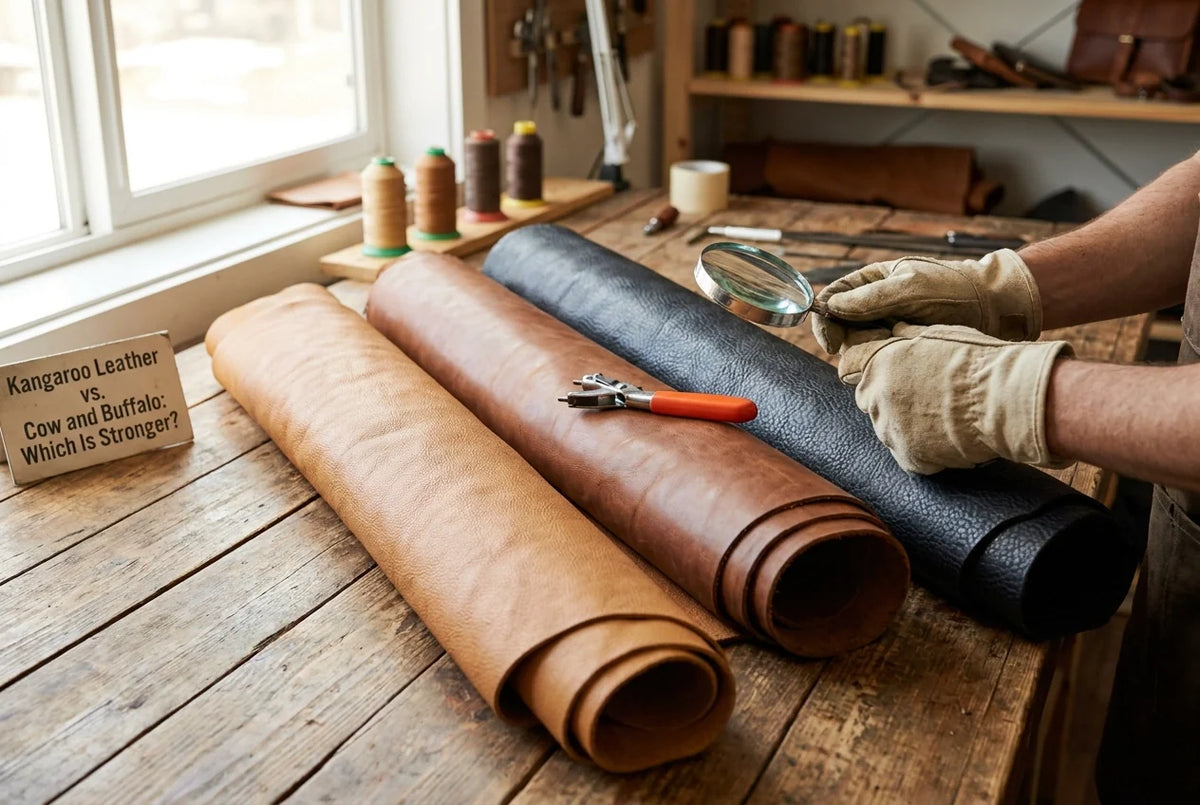
Not all leather is created equal, and when it comes to hat construction, the differences between hides matter far more than most buyers realise. Kangaroo leather stands apart from cow and buffalo hide in several measurable ways, and understanding those differences helps explain why serious hat makers and outdoor enthusiasts consistently reach for it.
Strength Without the Weight
Kangaroo leather carries one of the highest tensile strength-to-weight ratios of any hide in the world. Research into leather strength comparisons indicates that kangaroo leather delivers approximately ten times the tensile strength of cowhide and sits around 50% stronger than goatskin. What makes this remarkable is the thickness involved. A typical kangaroo hide measures just 0.9 to 1.1 mm, compared to cowhide at 1.2 to 1.4 mm. For hat construction, this translates directly into a finished product that sits noticeably lighter on your head across a full day outdoors, without compromising the durability you need in demanding conditions.
Fibre Structure and Long-Term Durability
The internal architecture of kangaroo hide is fundamentally different from cow leather. Kangaroo leather features a uniform fibre structure throughout its full thickness, meaning the fibres are consistently organised from the surface down. Cowhide, by contrast, has fibres that vary in density and arrangement across the cross-section, which introduces weak points where cracking and delamination can develop over years of use. This structural distinction also means kangaroo hide retains between 30 and 60% of the tensile strength of the unsplit hide even after processing, a level of performance that cowhide simply cannot match at equivalent thickness.
Water Resistance and Outdoor Suitability
The same tightly packed fibre density that gives kangaroo leather its strength also contributes to natural moisture resistance. The closely organised fibres leave less space for water to penetrate, making kangaroo leather better suited to rain, humidity, and perspiration than many comparable hides. This quality is particularly relevant for Australian outback conditions, where a hat is expected to perform reliably across extreme heat, dust, and occasional downpours.
How Buffalo Leather Compares
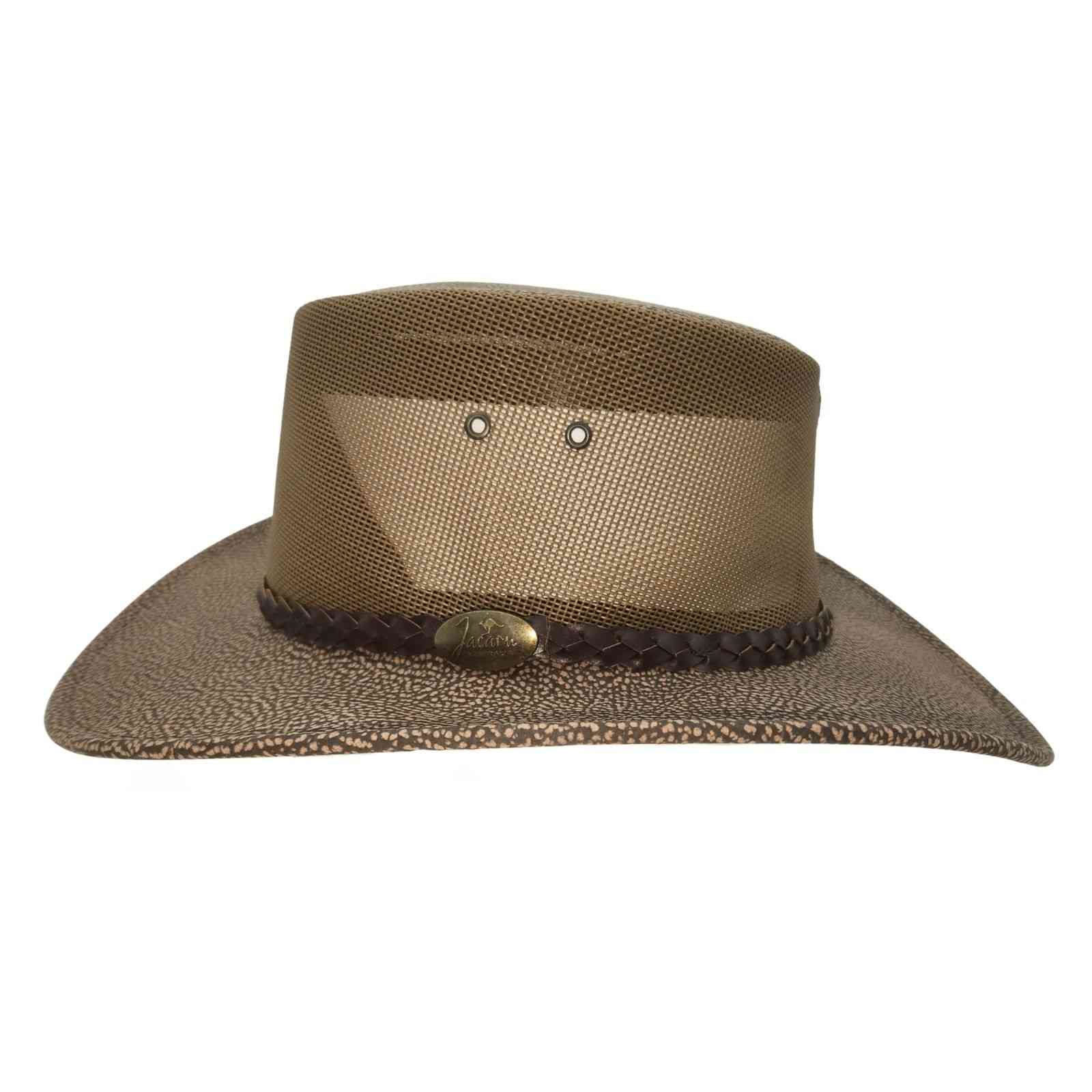
Jacaru uses buffalo leather in several structured outback styles, and it serves a different purpose entirely. Buffalo hide is thicker and stiffer than kangaroo leather, which makes it well suited to hats that need to hold a firm crown shape and a rigid brim. Kangaroo leather, being thinner and more supple, gradually moulds to the shape of the wearer's head over time, producing a personalised fit that structured hides cannot replicate. Neither material is superior in an absolute sense; they simply perform differently, and the best choice depends on whether you prioritise structured form or adaptive comfort.
Where Kangaroo Leather Comes From and Why It Is Sustainable
Understanding where kangaroo leather originates is essential for any buyer considering an Australian kangaroo hat. The short answer is that kangaroo leather comes from one of the most rigorously managed wildlife harvesting systems on the planet. Australia regulates kangaroo populations under the National Code of Practice for the Humane Shooting of Kangaroos, a federal framework administered by the Australian Department of Climate Change, Energy, the Environment and Water. State-level plans, such as the Victorian Kangaroo Harvest Management Plan 2024–2028, add another layer of governance, addressing ecological sustainability, animal welfare standards, and ongoing population monitoring. Annual culling quotas are typically set at 10–20% of regional populations, calibrated to prevent overpopulation-driven habitat damage rather than to supply any particular industry.
A critical distinction that separates kangaroo leather from most other hides is that kangaroos are not farmed. Australia's kangaroo population regularly exceeds 30–40 million animals, all of them wild and free-ranging across native landscapes. There is no land clearing for feedlots, no grain cultivation for feed, and no intensive agriculture connected to the kangaroo's lifecycle at any point. This stands in sharp contrast to cattle leather production, which carries significant associated land use, water consumption, and methane emissions. For buyers evaluating the environmental credentials of their purchase, this distinction is meaningful and measurable.
The leather itself is a genuine byproduct. Culling programs exist to maintain ecological balance and support the kangaroo meat industry; hides are a secondary output of that process. Without commercial use, those hides would go to landfill. By contrast, most synthetic alternatives marketed as sustainable contain less than 30% bio-based content in independent laboratory testing and are largely non-biodegradable. Choosing kangaroo leather over synthetic substitutes is, in this sense, the more environmentally sound decision. You can read more about the sustainability and ethics of kangaroo leather to explore the full lifecycle comparison in detail.
For international buyers, import legality is a practical concern worth addressing directly. Kangaroo leather products are currently legal to import into most major markets, including the United States and the European Union, though US legislative debate around the Kangaroo Protection Act of 2025 means buyers should stay informed about evolving regulations. This makes provenance documentation important. Working with a brand like Jacaru, which specialises in Australian-made kangaroo leather hats and maintains transparent sourcing standards, is the most reliable way to ensure your purchase is fully compliant. Their buyer's guide to Australian kangaroo hats covers provenance and compliance considerations in practical detail.
These sustainability credentials are increasingly valuable in commercial terms. Global hats market forecasts project growth from approximately $12.5 billion in 2025 to $17.6 billion by 2033, with ethically sourced and transparently produced materials consistently identified as a measurable growth driver across multiple market reports. Demand for materials with a clear, verifiable supply chain is not a niche preference; it is a mainstream consumer expectation that is reshaping purchasing decisions across the global headwear market.
The Cultural Story Behind the Australian Outback Hat
Before the Australian outback hat became a globally recognised symbol of rugged adventure, it was simply a working tool. Stockmen, drovers, and station hands across Australia's vast interior wore wide-brimmed leather hats as a direct response to punishing conditions: relentless sun, dust, wind, and days spent on horseback covering enormous distances. The wide brim was not a style choice; it was protection. The sturdy leather construction was not a luxury; it was a requirement. This functional origin story is the foundation of everything that makes an authentic Australian hat worth owning, and it distinguishes the genuine article from the many imitations that have followed in its wake.
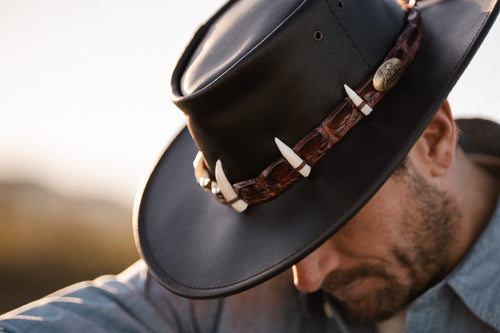
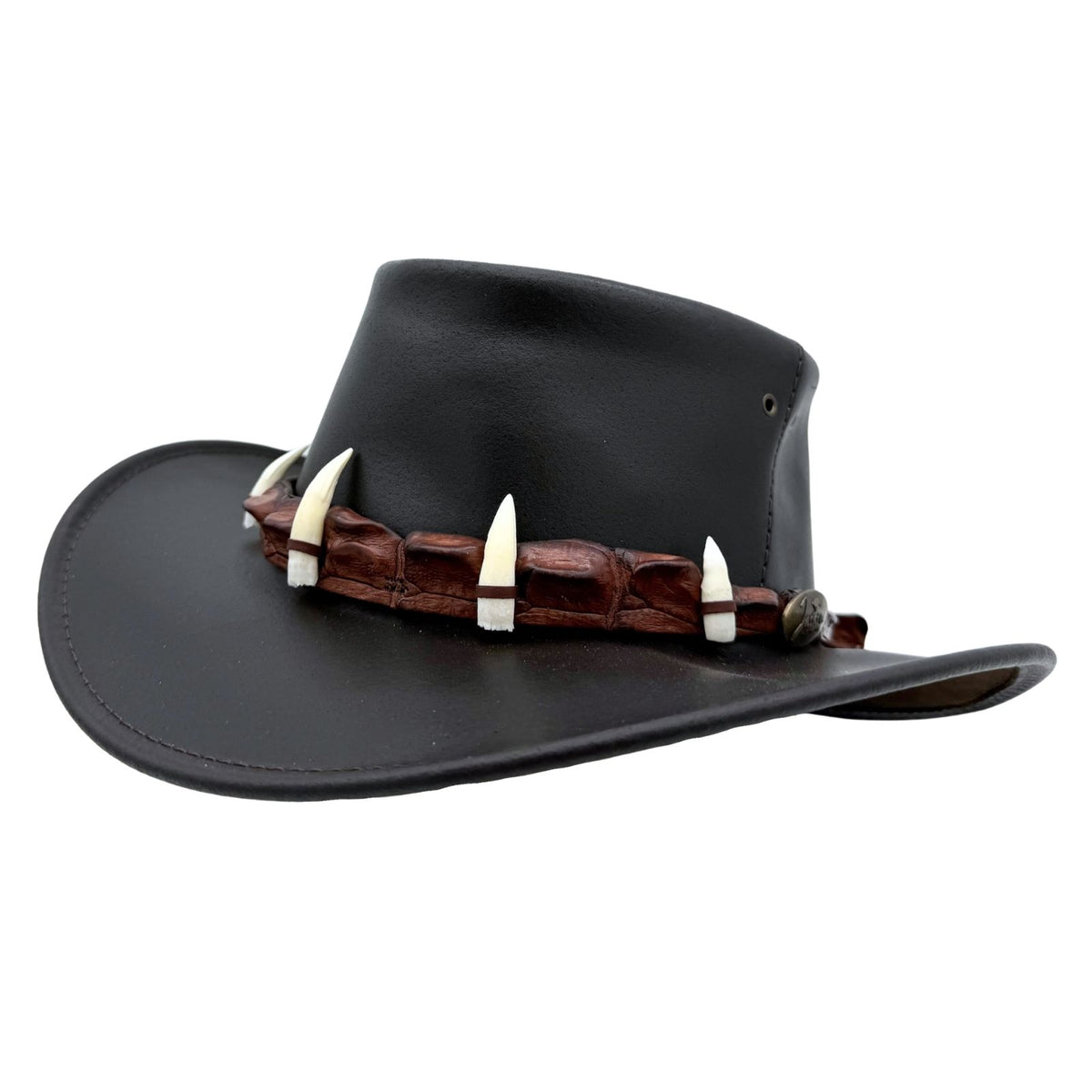
The moment that transformed the Australian outback hat from a regional working garment into an international icon came in 1986 with the release of Crocodile Dundee. The film's central character, Mick Dundee, wore a wide-brimmed leather hat adorned with a crocodile tooth hatband, and audiences across North America, Europe, and beyond immediately associated that image with Australian identity. The film became a cultural phenomenon, grossing over $300 million worldwide, and the hat it featured generated lasting demand for an authentic version. That demand has never fully disappeared.
Jacaru has been producing Australian hats since 1968 and remains one of the very few producers crafting genuine Crocodile Dundee-style hats using real crocodile teeth and traditional backstrap hatbands. This is not a mass-produced novelty. It is a continuation of a material tradition that requires authentic sourcing and skilled construction. Most manufacturers producing outback-style hats in volume use synthetic detailing or imported components. Jacaru's commitment to genuine materials is what keeps this cultural archetype alive in its original form.
Provenance is the critical word when evaluating any Australian outback hat. A genuine hat carries Australian-sourced materials, construction methods informed by outback tradition, and a traceable origin. Mass-market imitations may replicate the silhouette, but they cannot replicate the story or the material integrity behind it.
For international buyers and travellers, a Jacaru outback hat is more than a souvenir. It is a culturally specific object with a documented history stretching back decades, made by craftspeople working within an unbroken tradition. That traceable origin story is a meaningful part of what you are purchasing, and it is something no mass-market alternative can authentically offer.
How to Choose the Right Style for Your Needs
Choosing the right Australian kangaroo hat comes down to matching the style, brim width, and material to your specific use case. The following breakdown covers the five most common buyer scenarios to help you make a confident decision from the start.
1. Outdoor and Travel Use: Prioritise Function and Coverage
For outdoor activities, hiking, or extended travel in sun-exposed environments, a full-brim kangaroo leather hat with a chin strap or adjustable backstrap is the right starting point. A brim width of 3 to 4 inches delivers meaningful protection across the face, ears, and neck, which are the areas most vulnerable to UV exposure during long days outdoors. The chin strap is not a decorative detail; it keeps the hat secured in wind and during physical activity. Kangaroo leather's strength-to-weight ratio means you get a durable, protective hat without the bulk of heavier hides.
2. Fashion and Urban Wear: Packability Comes First
City wear and travel-light lifestyles call for a narrower brim or a crushable style that fits into a bag without deforming. Kangaroo leather's natural flexibility makes it one of the best materials available for packable hat construction. Unlike stiffer hides, a kangaroo leather hat can be compressed for transit and recover its shape reliably. This makes it a practical daily carry option for travellers and commuters alike.
3. Matching Material to Purpose Across the Range
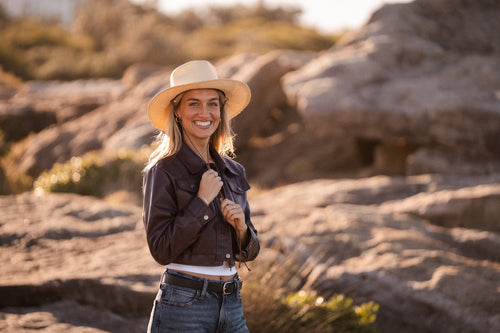
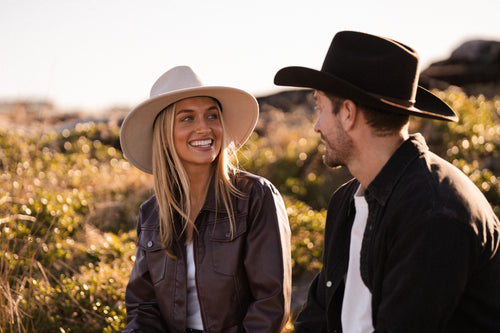
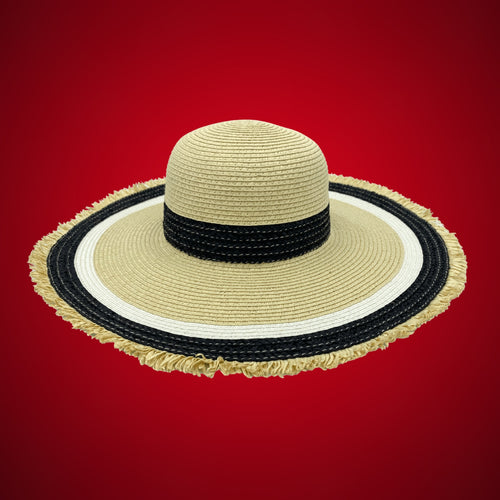
Jacaru's kangaroo leather hat range spans kangaroo, cow, and buffalo leather outback hats, alongside dedicated ladies' styles and straw options. Lighter kangaroo leather suits long-wear and travel; heavier buffalo leather suits rugged outdoor durability; straw options serve warm-weather casual use. Matching material weight and brim width to your primary activity is the single most practical step you can take before purchasing.
4. Gift Buyers: The Crocodile Dundee Hat Is a Proven Choice
For international recipients unfamiliar with Australian outback culture, the Crocodile Dundee-style hat with genuine crocodile tooth detail is consistently the most recognisable and conversation-starting option. The cultural association with the iconic 1986 film gives this silhouette instant context for overseas recipients, making it a self-explanatory gift with genuine Australian provenance.
5. Corporate Gifting: Presentation and Customisation at Scale
Corporate buyers should focus on styles that pair well with hat presentation boxes and support branding or customisation for bulk orders. Jacaru's corporate gift range is specifically designed for this purpose, making it worth exploring early in the procurement process for branded or large-volume orders.
Sizing, Fit, and What to Expect From a Leather Hat
Premium leather hats in the kangaroo and outback category carry a return rate of around 7% on major retail platforms, sitting above the standard 5% concern threshold. The overwhelming majority of those returns trace back to two avoidable issues: incorrect sizing and unmet expectations about how stiff a new leather hat feels. Getting these two things right before purchasing removes almost all the friction from the buying experience.
Measuring your head correctly is the single most important step. Use a soft tape measure and wrap it around the widest part of your head, approximately 1 cm above your ears and across the mid-forehead. That circumference measurement in centimetres or inches maps directly to standard hat sizing charts. A hat sizing tutorial by Cowboy Cartel attracted over 83,000 views on Facebook, which confirms just how many buyers feel uncertain about this step. If you do not have a soft tape measure, a strip of paper marked and then measured against a ruler works just as well. For a detailed reference point, the Akubra hat size guide provides a reliable example of how Australian hat brands translate head circumference into hat sizing, and the Barmah Hats size guide offers a comparable breakdown.
New kangaroo leather hats will feel noticeably firm on first wear, and this is completely normal. Kangaroo leather is a dense, high-tensile material that requires a break-in period before it settles. Over repeated wears, the leather gradually moulds to the individual contours of the wearer's head, producing a personalised fit that mass-produced synthetic or low-grade hats simply cannot replicate.
If your hat feels slightly snug when it arrives, resist the urge to force it onto your head. Instead, wear it for short sessions initially, building up duration over several days. Applying a small amount of leather conditioner to the inner hatband accelerates softening considerably, as the band is typically the tightest contact point.
For gift buyers, the safest approach when uncertain about size is to go slightly larger rather than smaller. Padding inserts can bring a larger hat down to a snug, comfortable fit with minimal effort. Attempting to stretch a kangaroo leather hat that is too small, however, risks permanent distortion of the crown and brim shape, so sizing up is always the lower-risk direction when in doubt.
Why Australian Kangaroo Hats Make Exceptional Gifts

Demand for leather hats peaks consistently in October, November, December, and January, driven by gifting occasions and the holiday season. This seasonal pattern makes Australian kangaroo hats one of the more strategically timed purchases a buyer can make, whether shopping for Christmas, a birthday, or a farewell gift for someone heading on an adventure. Planning purchases around this window ensures the best selection from Jacaru's range and avoids the stock pressure that builds as peak season approaches.
The Built-In Story That Elevates the Gift
Generic leather goods share a problem: they have nothing to say. An Australian kangaroo hat is the opposite. The material itself carries talking points, sourced from one of the world's most tightly regulated wildlife management programmes and processed using techniques refined over decades. Add the country of origin, the cultural association with the Australian outback, and the handcrafted construction Jacaru has maintained since 1969, and the recipient receives far more than a hat. They receive a conversation piece with a clear and compelling origin story. You can explore Jacaru's full range of kangaroo leather hats to find the style that best matches the story you want to tell.
Souvenir and Utility in One Product
For travellers returning from Australia, or buyers shopping for someone who loves the country, a Jacaru hat resolves a common gifting dilemma: the choice between something meaningful and something useful. It is both. The hat works as a souvenir with genuine cultural weight while remaining a high-performance piece of outdoor headwear built to last for years.
Building a Curated Australian Gift Set
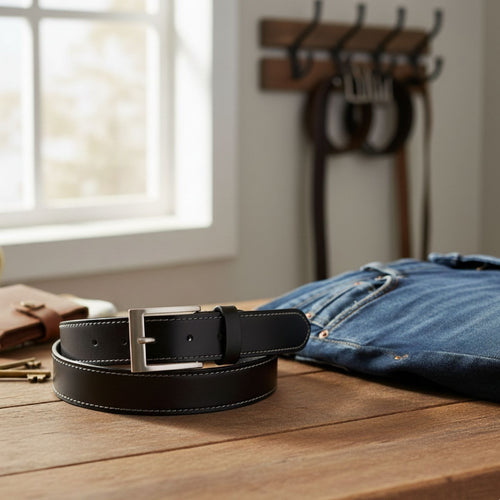
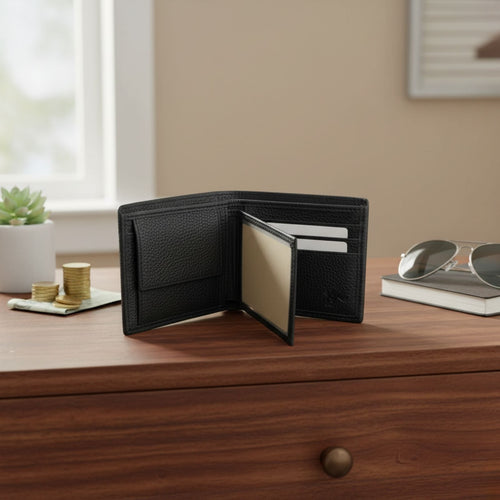
The hat works well as a centrepiece for a broader gift set. Jacaru's accessories range includes kangaroo keyrings, fur items, wallets, belts, and coin purses, all of which pair naturally with a kangaroo leather hat to create a cohesive, Australian-themed gift. Buyers can browse options across the full Jacaru catalogue for companion products that complement the hat without duplicating it.
Corporate Gifting With Cultural Distinction
Corporate gift buyers seeking something beyond the predictable will find that a premium Australian leather hat makes a lasting impression on international clients and partners. The provenance of the product, its material quality, and its cultural specificity all communicate thoughtfulness in a way that generic corporate gifts rarely achieve. For buyers with volume requirements, Jacaru's wholesale programme provides a structured pathway for corporate orders at scale.
What Separates a Premium Kangaroo Leather Hat From a Budget Alternative
The average leather hat on major US retail platforms sells for around $32, with the full tracked price range running from roughly $12 to $133. Jacaru's kangaroo leather hats sit above this range entirely, and that positioning requires explanation rather than assumption. The premium is not marketing; it reflects a fundamentally different material, construction standard, and expected lifespan.
Why Budget Hats Fall Short
Leather hats priced between $12 and $35 are almost universally made from split leather, bonded leather, or heavily treated hides. Split leather comes from the lower layers of the hide after the top grain has been removed; it is cheaper, weaker, and prone to stretching and cracking under the repeated bending stress that hat panels experience with daily wear. Bonded leather is worse still, consisting of ground leather scraps glued together into sheets that peel and fail within a few seasons. Both materials can be finished to look convincingly like quality leather on a product page, which is precisely where uninformed buyers lose money.
What Full-Grain Kangaroo Leather Actually Delivers
A full-grain kangaroo leather hat uses the complete, unaltered outer surface of the hide, retaining the natural grain pattern and the densest fibre structure available from that animal. This is not a marketing distinction; it is a structural one. Full-grain leather develops a rich patina with use, moulds gradually to the wearer's head shape, and resists weather without breaking down. Kangaroo hide specifically is valued for its tight fibre density relative to its weight, making it lighter and stronger than equivalently graded bovine leather. According to leather grade analysis from Popov Leather, full-grain is the only grade that retains the full structural integrity of the original hide, which is the direct reason it supports a multi-decade lifespan.
How to Verify Authenticity Before You Buy
Four signals reliably separate genuine premium hats from budget alternatives marketed with premium language:
Country-of-origin labelling: Authentic Australian-made kangaroo leather hats carry explicit origin marking. If the listing does not specify Australia, the provenance claim is unverified.
Named hide type: Look for specific identification such as "kangaroo leather," "buffalo leather," or "full-grain cowhide." Generic "genuine leather" is an industry term that frequently corresponds to split or bonded grades, not a quality endorsement.
Hardware quality: Buckles, hatbands, and strap fittings on premium hats use solid metal components. Budget alternatives use lightweight alloys that corrode quickly.
Construction detail: Burnished or bound brim edges indicate proper craftsmanship. Unfinished edges that fray with use are a reliable signal of budget construction regardless of what the product description claims.
The Cost-Per-Wear Argument
The financial case for a premium hat is straightforward once the replacement cycle is considered. A $30 hat requiring replacement every two to three years costs between $100 and $150 over a decade, before accounting for the inconvenience of repeated purchases. A well-maintained full-grain kangaroo leather hat, properly cared for, carries a realistic lifespan of 15 to 20 years. At that rate, the higher upfront cost amortises to a lower annual figure, and the hat continues improving in appearance with age rather than degrading. The premium pays for itself; budget alternatives only appear cheaper.
How to Care for a Kangaroo Leather Hat
A kangaroo leather hat is a long-term investment, and with the right care routine it will outlast most other hats you will ever own. The following five practices cover everything a first-time owner needs to know.
1. Clean with a soft, dry cloth first
For everyday maintenance, a soft dry cloth is all you need to remove surface dust and light grime. If the dirt is more stubborn, use a very lightly dampened cloth, wrung thoroughly before it touches the leather. Never saturate the hide with water. When excess moisture soaks into leather and then evaporates unevenly, the hide stiffens in patches, distorting the shape and weakening the surface. Always test any new cleaning product on a small, inconspicuous area before applying it broadly, as formulations can react differently depending on the tanning method used.
2. Condition the leather every 3 to 6 months
Conditioning is the single most important ongoing maintenance step for any leather hat. The natural oils present in the hide gradually evaporate through wear and exposure, particularly in hot or dry climates. Once those oils are depleted, the leather dries out, stiffens, and eventually cracks. A quality leather conditioner, lanolin-based balm, or beeswax product applied every 3 to 6 months replenishes those oils and keeps the hide supple. How often you condition depends on how frequently you wear the hat and where you live. Frequent use in an arid climate may require conditioning closer to every three months. Detailed guidance on conditioning leather hats is available at Barmah Hats' leather hat care page, which covers product selection and application technique.
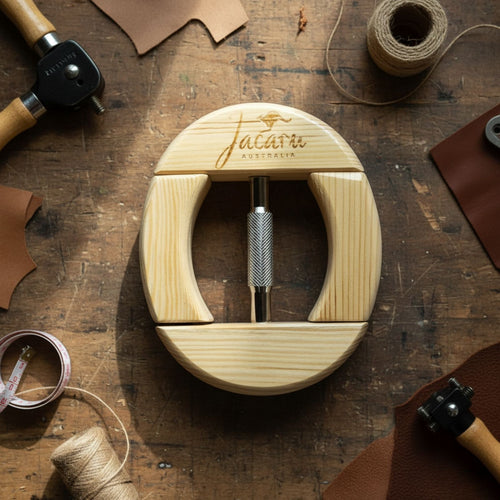
3. Store on a hat block or upturned bowl
Shape retention during storage is easy to overlook and surprisingly easy to get right. When you are not wearing the hat, rest it on a hat block, a purpose-made hat form, or a sturdy upturned bowl of roughly the right diameter. This supports the crown geometry and prevents the brim from warping under its own weight. Avoid stacking hats on top of one another or leaving the hat compressed inside a bag for extended periods. Kangaroo leather is notably more resilient and flexible than cattle hide, but sustained pressure will still deform the crown over time.
4. Air-dry at room temperature after getting wet
If the hat gets caught in rain or becomes genuinely soaked, resist the temptation to speed up the drying process. Place the hat in a well-ventilated area at room temperature, away from radiators, car dashboards, direct sunlight, or any other concentrated heat source. High heat causes leather fibres to contract suddenly, resulting in irreversible shrinkage and cracking. Patient air-drying, even if it takes a full day, protects the structural integrity of the hide completely.
5. Embrace the patina as it develops
Over years of wear, a kangaroo leather hat develops a natural patina, a gradual darkening and softening of the surface caused by the interaction of skin oils, sunlight, and handling. This is not deterioration. It is a mark of authentic, long-used quality that leather enthusiasts and collectors specifically value. A hat that has developed a rich patina tells a story of real use, and that character cannot be replicated artificially.
Finding the Right Australian Kangaroo Hat
Kangaroo leather's combination of lightweight durability, sustainable sourcing under Australia's federally managed harvest program, and deep cultural provenance sets these hats apart in a global market projected to exceed $17 billion by 2033. No other leather hat carries that convergence of performance, ethics, and story. Apply the sizing and care steps covered earlier in this guide and your hat will arrive correctly fitted, hold its shape through heavy use, and reward you with decades of wear rather than seasons.
Jacaru's full range spans kangaroo, cow, and buffalo leather outback hats, giving every buyer a clear path from entry-level to premium. For readers who want to go deeper on material comparisons before purchasing, the Kangaroo Leather Hats: The Complete Buyer's Guide at jacaru.com covers fibre density, weight comparisons, and care protocols in full detail.
If you are shopping in the October to January window, Jacaru is the natural first stop for authentic Australian leather hat gifts. Demand for leather hats peaks sharply across that period, and Jacaru supports international buyers with multi-currency checkout and gift cards, making it straightforward to send a genuinely Australian gift anywhere in the world.
Conclusion
Choosing the right Australian kangaroo hat comes down to a few essential factors: understanding the materials used, verifying the authenticity of the product, matching the hat to your intended purpose, and investing in quality craftsmanship that lasts.
A well-chosen hat is more than an accessory. It is a reflection of your personal style and a practical tool built for real-world conditions. By knowing what to look for before you buy, you avoid costly mistakes and walk away with something truly worth owning.
Now that you have the knowledge, it is time to put it to use. Browse trusted retailers, ask the right questions, and choose a hat that fits both your lifestyle and your standards. Your perfect Australian kangaroo hat is out there waiting. Go find it with confidence.


Our friends at Bocchetta Plush Toys have a great range of lifelike plush animals that make great gifts for people of all ages.