








7 Things to Know Before Buying a Crocodile Leather Hat
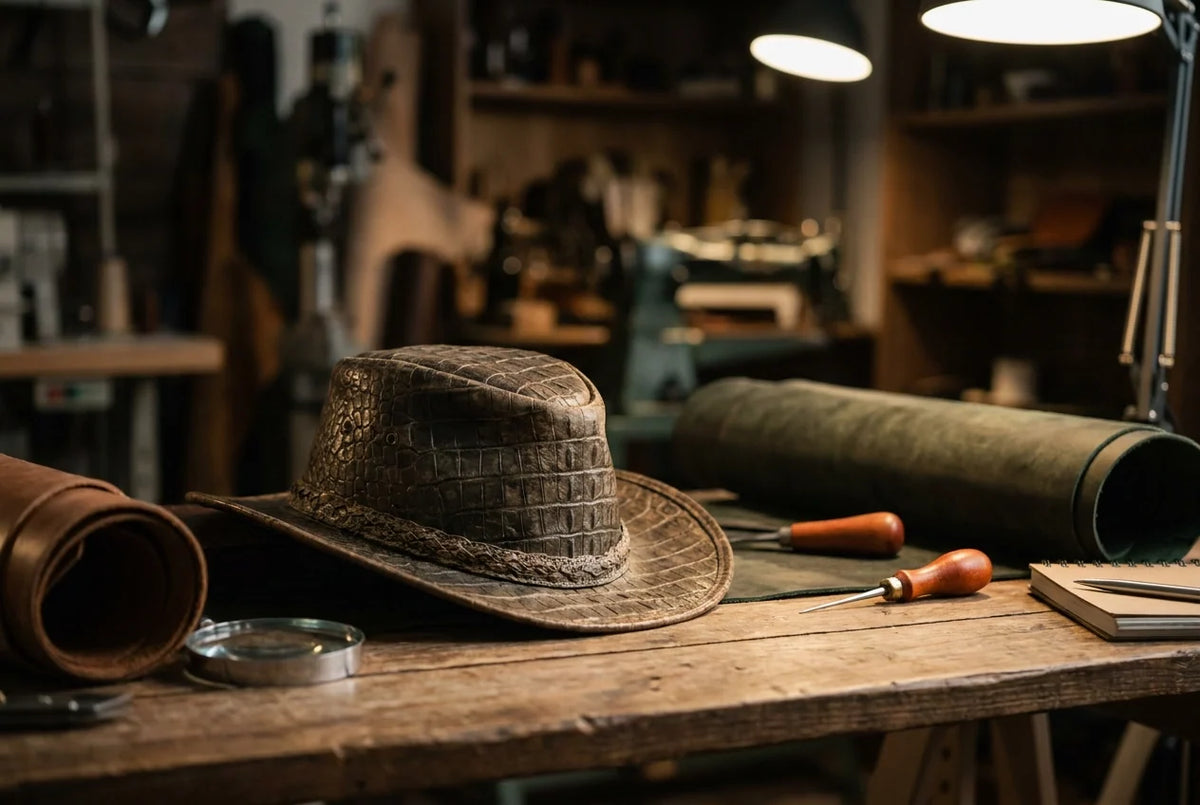
A crocodile leather hat is not simply an accessory. It is a statement of intent, a nod to genuine Australian craftsmanship, and one of the more significant purchases you can make in the premium outback accessories market. But with growing demand and a flood of imitations, knowing what you are actually buying has never been more important.
Before you invest in a piece that could last decades, there are critical distinctions worth understanding. Not every hat marketed as "crocodile leather" is built the same way. The sourcing of materials, the construction methods, the reputation of the maker, and even the legal landscape around exotic leather all play a role in determining real value.
This guide walks you through seven essential things every informed buyer should know, covering everything from how genuine crocodile leather differs from imitations to how different hides compare, where the leather originates, how these hats are actually constructed, and how to care for your investment once it arrives. Whether you are buying for yourself, considering customisation, or sourcing a corporate gift, this is where your research starts.
What Makes Genuine Crocodile Leather Different from Imitations

Spotting the difference between genuine crocodile leather and a convincing imitation comes down to three physical details that no embossing process can fully replicate.
Scale pattern regularity is the first test. Genuine saltwater crocodile skin shows natural variation in scale shape and spacing, a product of biological individuality. Embossed bovine leather, by contrast, repeats the same stamped tile across the entire surface. Run your eye along a hatband and look for variation. Uniformity is the tell.
Osteoderm nodes are the second marker. Authentic crocodile leather can contain natural bone deposits beneath the scales in certain species, producing subtle surface irregularity. These are a biological characteristic of the animal, not a manufacturing addition.
Price is not a reliable filter. Some embossed bovine leather hats retail at prices comparable to entry-level genuine crocodile pieces, which means material transparency from the maker matters more than the ticket. Always look for product descriptions that name the species explicitly. Saltwater crocodile (Crocodylus porosus) is among the most regulated and documented species in the exotic leather trade, and the distinction should appear in the product listing, not require a follow-up enquiry.
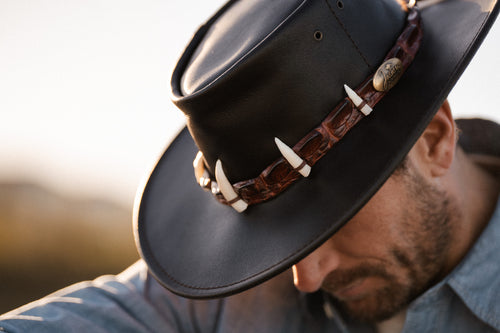
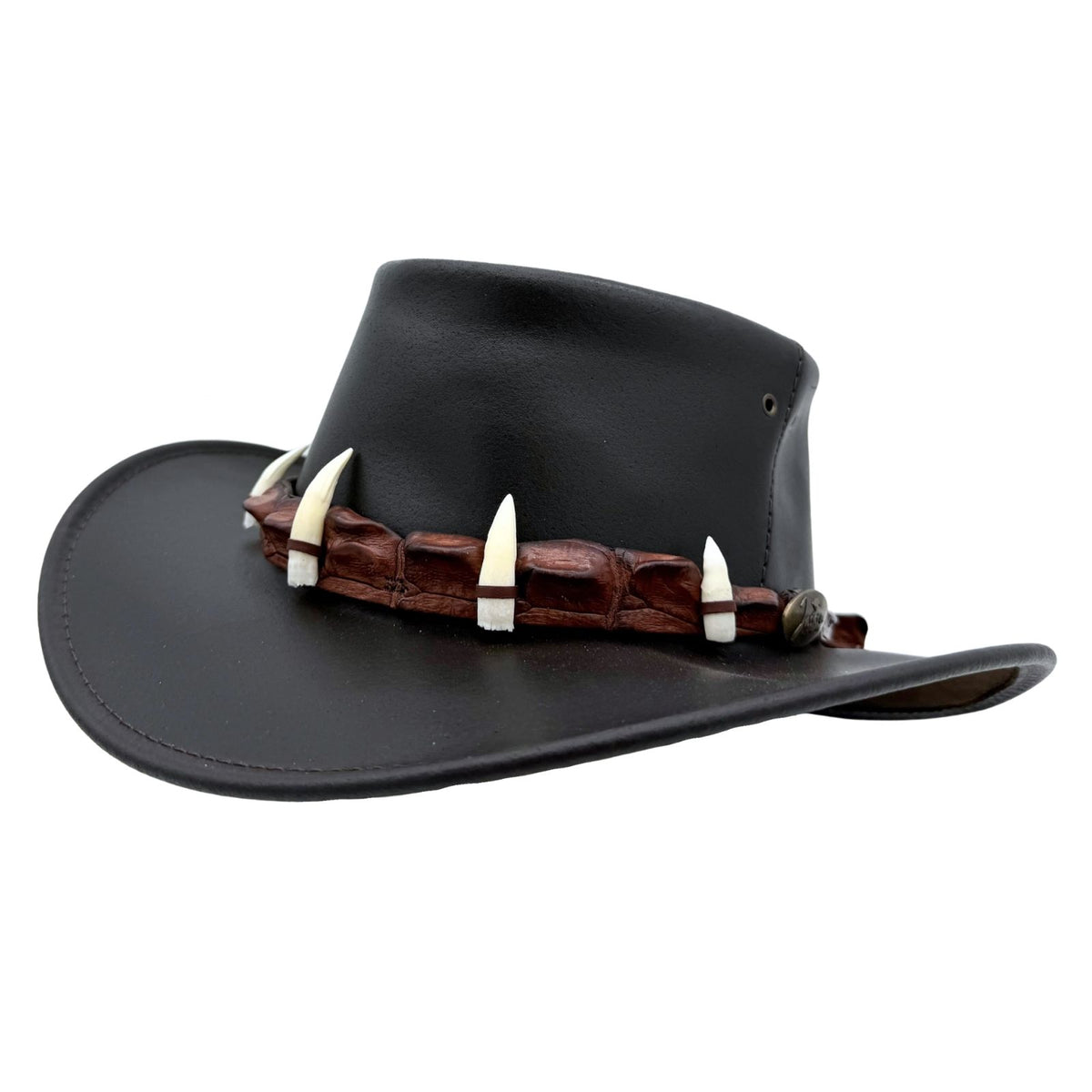
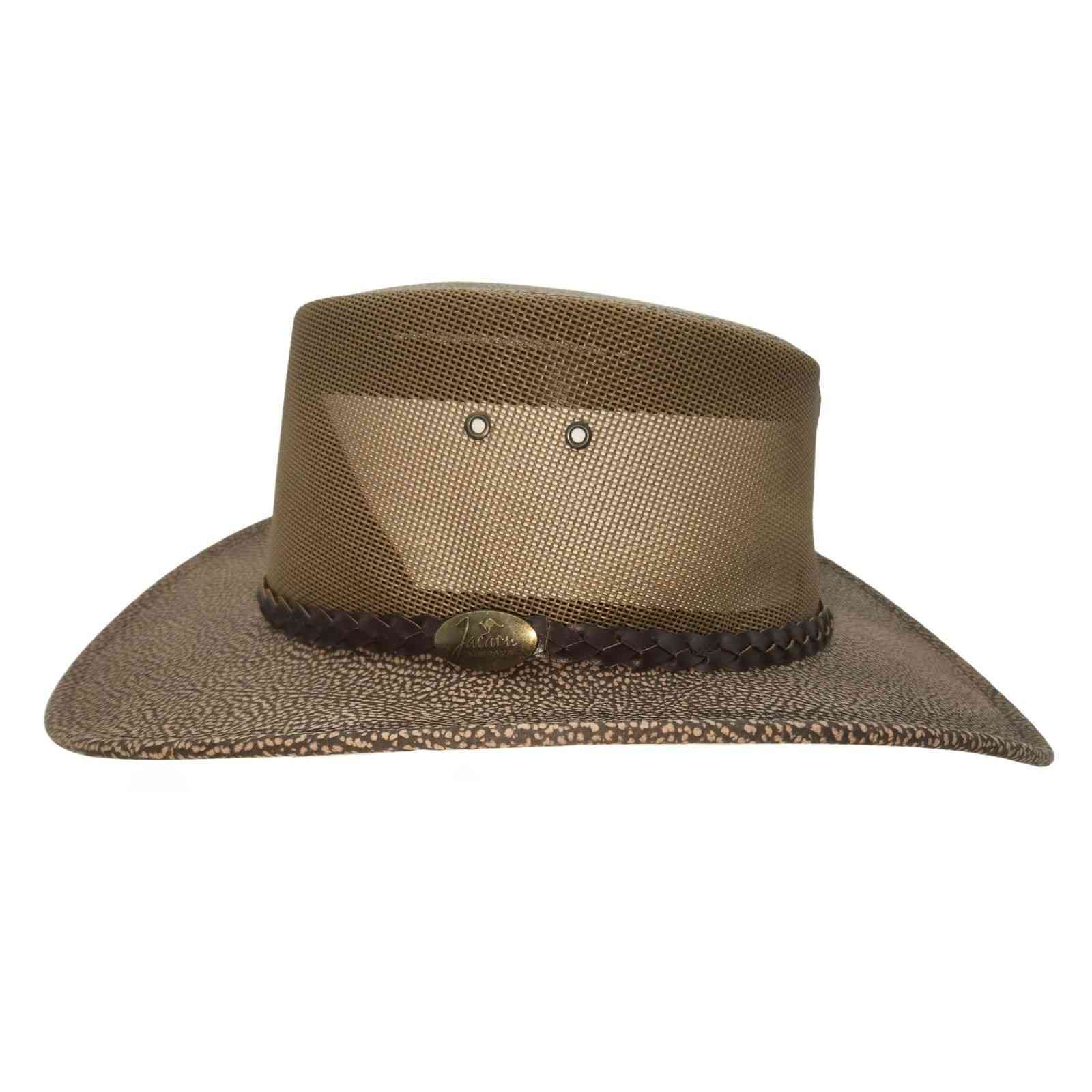
Jacaru's Exotic Hats collection uses genuine crocodile teeth and crocodile leather hatbands on bovine leather hat bodies, concentrating authentic material precisely where it is most visible and most handled. It is a construction approach that delivers genuine material integrity without the cost of a full crocodile hide body.
How Crocodile Leather Compares to Kangaroo and Buffalo
Understanding how crocodile leather performs against the other leathers in an Australian outback hat is what separates a confident purchase from buyer's remorse.
Buffalo leather is the workhorse of the category, widely used in Australian outback hat construction for its thickness and durability.
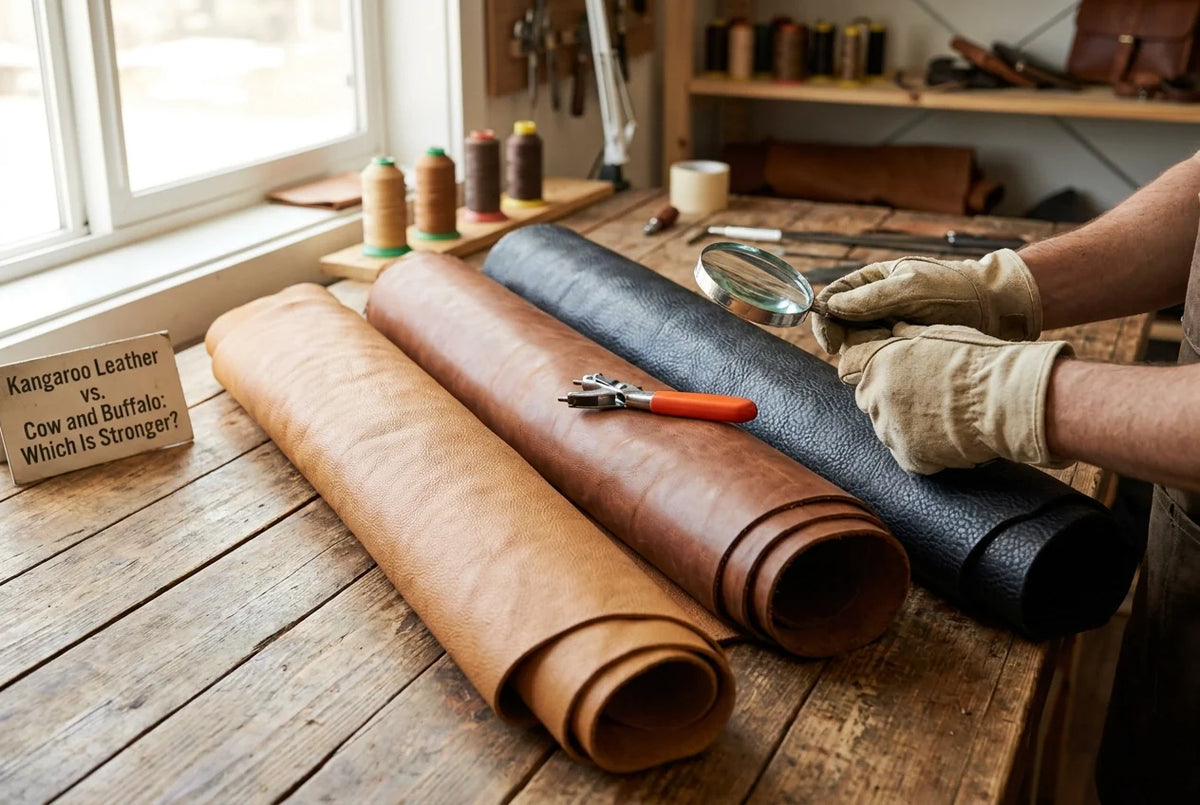
Kangaroo leather takes a different approach to durability. Pound-for-pound, it is the strongest natural leather available, with a high strength-to-weight ratio that makes it a compelling choice for hat bodies. For buyers wanting a lighter hat that resists cracking over years of hard use, kangaroo is a compelling choice. If you want to understand how these materials stack up across the full range of construction options, the Outback Kangaroo Hat vs. Other Materials: What to Know Before You Buy guide covers the comparison in depth.
Crocodile leather is rarely used for full hat bodies. Hide dimensions are limited, and the cost is prohibitive at scale. As a hatband or accent material, however, it delivers textural contrast and exotic premium status that buffalo and kangaroo simply cannot replicate. Crocodile leather demands more attentive conditioning than buffalo hide; without regular care, the membranes between scales can dry out, leading to cracking or scale lifting over time.
For buyers weighing a full kangaroo leather hat against a buffalo hat with crocodile accents, the choice comes down to one question: do you want everyday field durability, or a piece with distinctive visual impact and collectible status?
Where the Leather Comes From: Sourcing and Sustainability
Knowing what a crocodile leather hat is made of matters. Knowing where that material comes from matters just as much.
Australian saltwater crocodile (Crocodylus porosus) is governed by the CITES (Convention on International Trade in Endangered Species) framework, which requires every legally traded skin to carry documented proof of origin. This is not optional paperwork; it is the mechanism that separates traceable, legitimate supply chains from unverified imports.
Australia's licensed crocodile farms operate under harvest quotas linked to wild population monitoring. That conservation model has delivered a significant recovery in saltwater crocodile numbers since the hunting ban of the 1970s, when populations were severely depleted. Regulated harvest and population health are now explicitly connected, meaning the industry has a direct incentive to protect wild stocks.
Buyers should be aware that farmed and wild-harvested skins may differ in appearance; asking the supplier about sourcing gives you the information needed to assess authenticity.
Before purchasing, ask two direct questions: Is the crocodile leather sourced from a CITES-documented supplier? And where was the tanning carried out? Pre-tanned crocodile leather imported from Southeast Asian facilities operates under different traceability standards than leather processed domestically, and the distinction affects what you can verify about the product in your hands.
Jacaru's position as an Australian-made brand with local material sourcing sits within a supply chain built around sustainability and transparency, which is precisely what conscientious gift buyers and international travellers are increasingly scrutinising before committing to exotic leather goods.
The Anatomy of a Crocodile Leather Hat: Hatbands, Teeth, and Bodywork
The hat body on premium Australian outback hats is typically constructed from buffalo or bovine leather, the Jacaru Croc Hunter Hat, for example, uses 100% bovine leather, blocked and shaped over a wooden form. The brim is then hand-finished and stitched, a process that sets the hat's silhouette before any decorative elements are added.
The hatband is cut from the crocodile hide and hand-stitched or attached to the hat body at the crown join, with a backstrap closure allowing circumference adjustment.
The teeth are genuine teeth harvested from legally farmed or culled animals, as required under Australian wildlife regulations. Because each tooth grows at a distinct angle and size, no two decorated hats are identical. This natural variation is a straightforward authentication point: uniform teeth suggest reproduction.
The Crocodile Dundee style hat that defines much of the Australian market combines these elements directly: a wide-brimmed buffalo leather body, a crocodile leather hatband, and multiple teeth positioned across the front of the band. Jacaru's exotic hats collection builds on this template with genuine materials throughout.
Three construction indicators worth examining before purchasing:
Stitching density at the hatband join: more stitches per inch indicates a longer-wearing seam
Brim edge finish: hand-rolled edges outperform machine-cut edges over sustained outdoor use
Tooth attachment: individually secured teeth hold position far more reliably than those sharing a single rivet
Sizing, Fit, and What to Ask Before You Order
Once you understand how a crocodile leather hat is constructed, the next question is equally practical: will it fit?
Leather does not behave like fabric. A genuine leather hat that feels firm on first wear will gradually conform to your head shape, typically settling into a personalised fit within a few weeks of regular use. Buy for a snug but not uncomfortable initial feel, not a loose one.
Measuring correctly matters. Use a flexible tape measure to find your head circumference at the widest point, just above the eyebrow line. Then cross-reference that measurement against the maker's own size chart. Hat sizing conventions vary across markets, so confirm measurements against the maker's own size chart rather than relying on a generic size label. Jacaru's hat size guide provides the reference point to start from.
If you are buying as a gift, the adjustable backstrap hatband common to most crocodile leather hat designs provides meaningful circumference flexibility, which helps when buying as a gift.
Before you confirm your order, ask the maker one direct question: is the hat body pre-shaped or hand-blocked? Hand-blocked hats are formed over a wooden mould and hold their crown shape reliably through rain, heat, and sustained outdoor use. Machine-pressed bodies can gradually revert to a flatter profile under the same conditions.
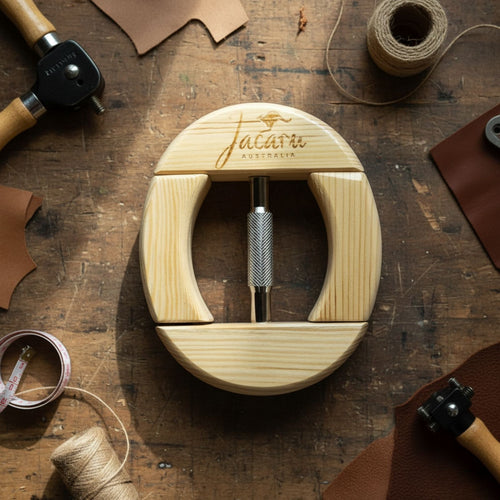
For international buyers, confirm whether hat stretchers are available as an accessory. Australian suppliers including Jacaru typically stock these as complementary items, giving you a practical option if post-delivery adjustment is needed.
Caring for Your Crocodile Leather Hat
Once your hat is fitted correctly, how you maintain it determines how long it keeps that fit and finish.
Condition the crocodile leather hatband regularly using a product specifically formulated for exotic or reptile leather. Standard boot and saddle conditioners are not formulated for scaled leather and can damage the surface finish.
The bovine leather hat body and the crocodile hatband respond differently to conditioners because they have different tanning processes and porosity levels. Treat them as separate materials. Apply each conditioner with a soft cloth, working one section at a time, rather than running the same product across the entire hat.
After rain exposure, reshape the hat gently and allow it to dry at room temperature away from heaters and direct sunlight. Accelerated drying can cause scale edges to crack and lift.
When spot-cleaning the hatband, use a barely damp cloth and work in the direction of scale growth. Cleaning against the scales risks lifting the edges over time.
Store the hat on a hat stand or inside a breathable hat box. Stacking other items on top, or storing the hat compressed in a bag, distorts the brim set and can permanently flatten the crown shape.
Jacaru's leather hat care products and accessories are selected to suit the composite construction of Australian outback hats, making them a practical starting point for building a proper care kit.
Corporate Gifts and Customisation Options

A well-maintained crocodile leather hat is also a compelling gift, and that practical longevity is part of what makes these hats work so effectively in a corporate gifting context.
At AUD$120 and above, a genuine crocodile leather hat sits in a premium tier that communicates real consideration without crossing into jewellery-level expenditure. The product is distinctly Australian, visually striking, and functional, which is a combination that few gift categories can claim simultaneously.
Jacaru's Exotic Hats collection, including its Crocodile Dundee style hats with genuine crocodile teeth and crocodile leather hatbands, offers corporate buyers a consistent, ready-made option. For organisations distributing gifts across a group, a unified design from an Australian maker carries far more provenance than a generic luxury item.
Corporate buyers should consider three customisation priorities:
Hatband monogramming for personalisation at the individual recipient level
Branded packaging to align the gift presentation with company identity
Bulk sizing flexibility to accommodate a range of recipients
The adjustable backstrap design common across Jacaru's crocodile hat range provides practical sizing flexibility, which resolves the most common obstacle in bulk gift purchasing: unknown recipient head measurements.
Across the broader market, visible customisation offerings are largely absent. Buyers seeking bespoke crocodile tooth placement, personalised hatbands, or engraved accessories will find few specialist options listed publicly. Direct inquiry with the maker remains the most productive path for bespoke requirements.
For gift buyers wanting a cohesive set, pairing a crocodile leather hat with a kangaroo keyring or leather accessory from the same collection creates a distinctly Australian presentation without requiring custom work.
Why Provenance Matters When Choosing Your Maker
Beyond the gift-buying decision sits a more fundamental question: who made this hat, and does that origin hold up under scrutiny?
A crocodile leather hat is a long-term purchase. Buyers who understand the sourcing, construction, and care requirements before spending extract significantly more value than those choosing on aesthetics alone. The material ages, the hatband flexes with use, and the teeth carry provenance that either holds meaning or does not, depending entirely on who supplied them.
Australian-made provenance is not a marketing phrase when it comes to exotic leather goods. It represents a traceable supply chain, CITES compliance obligations governing every legally traded crocodile skin, and a manufacturing tradition with decades of outback credibility behind it. That regulatory framework cannot be replicated by a label claiming "Australian style."
Jacaru's Exotic Hats collection, including the Crocodile Dundee style hats with genuine crocodile teeth and crocodile leather hatbands, delivers this provenance in a ready-to-wear form suited to everyday adventurers and gift buyers alike. If unfamiliar terms come up while researching, the Jacaru leather glossary provides a useful reference point.
Before purchasing from any supplier, ask three questions:
Where was the crocodile leather sourced?
Where was the hat constructed?
What care support does the maker provide after purchase?
The answers will tell you whether the price is justified.
Conclusion
A crocodile leather hat is not a casual purchase. It is a long-term investment in craftsmanship, provenance, and materials that improve with age when properly sourced and maintained. The key takeaways are straightforward: genuine crocodile leather outperforms imitations in durability and character; Australian-made construction with verified sourcing matters legally and ethically; correct sizing and aftercare protect your investment; and customisation options make these hats genuinely distinctive gifts.
The guidance in each section above equips you to ask the right questions of any supplier.
If the answers satisfy you, you will own something built to last decades. Explore Jacaru's Exotic Hats collection to find a hat backed by traceable provenance, authentic materials, and real outback heritage. Ask the right questions, and the right hat will follow.


Our friends at Bocchetta Plush Toys have a great range of lifelike plush animals that make great gifts for people of all ages.