






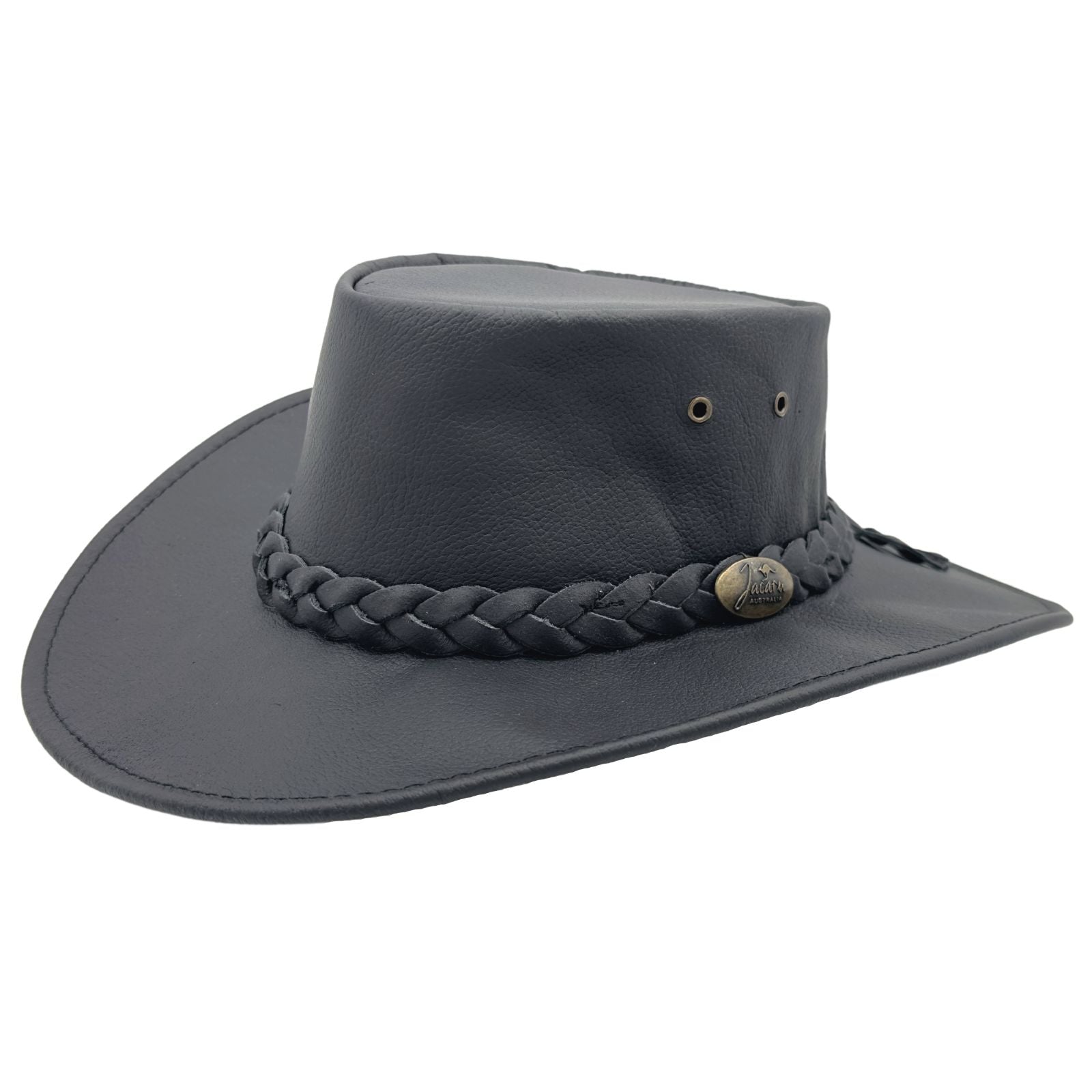


Boonie Hat vs. Australian Outback Hat: Which One Wins?

Picture this: you're gearing up for a big outdoor adventure, the sun is blazing, and you need a hat that can handle it all. But then you find yourself standing in the store (or scrolling online) wondering which wide-brimmed hat is actually worth your money. Sound familiar?
Two hats come up again and again in these moments: the classic boonie hat and the rugged Australian Outback hat. Both look cool, both offer solid sun protection, and both have loyal fans who swear by them. So how do you choose?
If you've never heard of a boonie hat before, don't worry. We're going to break everything down in simple terms, no confusing gear jargon here. By the end of this post, you'll know exactly what makes each hat unique, where they perform best, and which one is the smarter pick for your specific needs. Whether you're hiking, camping, fishing, or just spending a long day outside, this comparison will help you walk away with the right hat on your head. Let's get into it!
What Is a Boonie Hat, Exactly?
If you've ever seen someone hiking a dusty trail or wading a riverbank wearing a floppy, wide-brimmed hat with a chin strap, chances are you've spotted a boonie hat in the wild. But what exactly is it, and where did it come from?
The name tells the story. "Boonie" is short for "boondocks," a word meaning rough, remote backcountry terrain, originally derived from the Tagalog word bundók, meaning mountain. U.S. forces picked up the term during early military operations in the Philippines, and it stuck. By the Vietnam War era, the U.S. military had officially adopted the boonie hat as a piece of field kit, designed specifically for jungle conditions where sun, heat, and sweat were as much of an enemy as anything else. According to Propper, early examples were even sewn by local Vietnamese tailors before official military-issue versions existed.
The design itself is pretty distinctive once you know what to look for. A genuine boonie hat has four key features: a wide all-round brim (typically about 3 inches), a chin cord or retention strap to keep it on in wind, ventilation eyelets punched around the crown for airflow, and a fabric hatband originally intended for tucking in foliage as camouflage. UF Pro's deep dive into boonie hat history traces these design cues back even further, to British bush hats and Australian "giggle hats" used in earlier conflicts.
Traditional boonie hats are made from lightweight cotton ripstop or synthetic fabrics, chosen for packability, fast-drying performance, and low cost. They're practical, no-question, but they're built for utility rather than longevity or character. They won't age gracefully. They won't develop a story.
Beyond the military, the boonie hat has been embraced by hikers, anglers, campers, and even festival-goers who love the pack-flat convenience and solid sun coverage. That widespread appeal shows up in the numbers: the global sun hats market was valued at USD $2.8 billion in 2025 and is projected to hit $4.6 billion by 2034, growing at 5.8% annually. Wide-brim, functional headwear is clearly having a moment, and it shows no signs of slowing down.
Boonie Hat vs. Australian Outback Hat: A Side-by-Side Look
These two hats might look like cousins at a family reunion, but spend five minutes with each of them and you'll realise they were built for completely different worlds.
Where they came from matters. The boonie hat was born from military necessity, refined through jungle warfare and tropical deployments where lightweight, packable headgear meant the difference between comfort and misery on a long patrol. The word "boonie" itself traces back to the Filipino word "bundok," meaning remote wilderness or mountain terrain, and the design was cemented during the Vietnam War era. The Australian outback hat, by contrast, grew from civilian life in one of the planet's most unforgiving landscapes. Blazing sun, choking dust, brutal heat, and the kind of distances that make you rethink your life choices; the outback hat was shaped by all of it, over generations of working Australians who needed serious protection without excuses.
The brim tells the story. Both hats wrap a wide all-round brim around your head, and both will keep the sun off your face and neck. But the similarity ends there. A boonie hat's brim is intentionally soft and floppy, which helps it squash into a pack but means it can lose its shape over time. The outback hat carries a stiffer, structured brim, often reinforced to hold its form through years of hard use. There's a reason for that rigidity; the shaped brim actually pushes the hat down onto your head at speed, which matters when you're on horseback or riding into a headwind across open country.
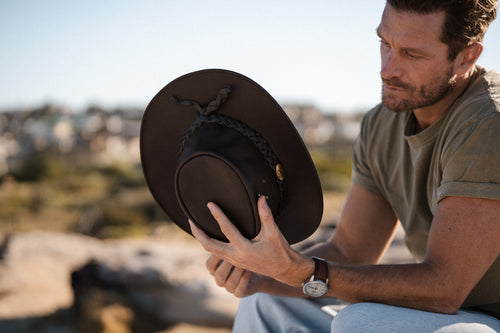
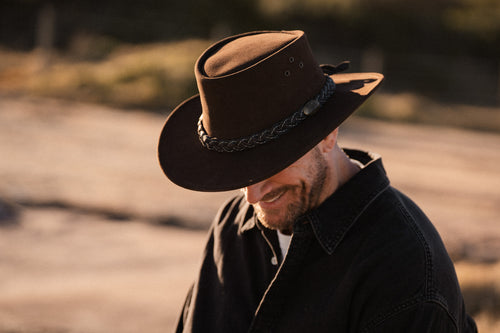
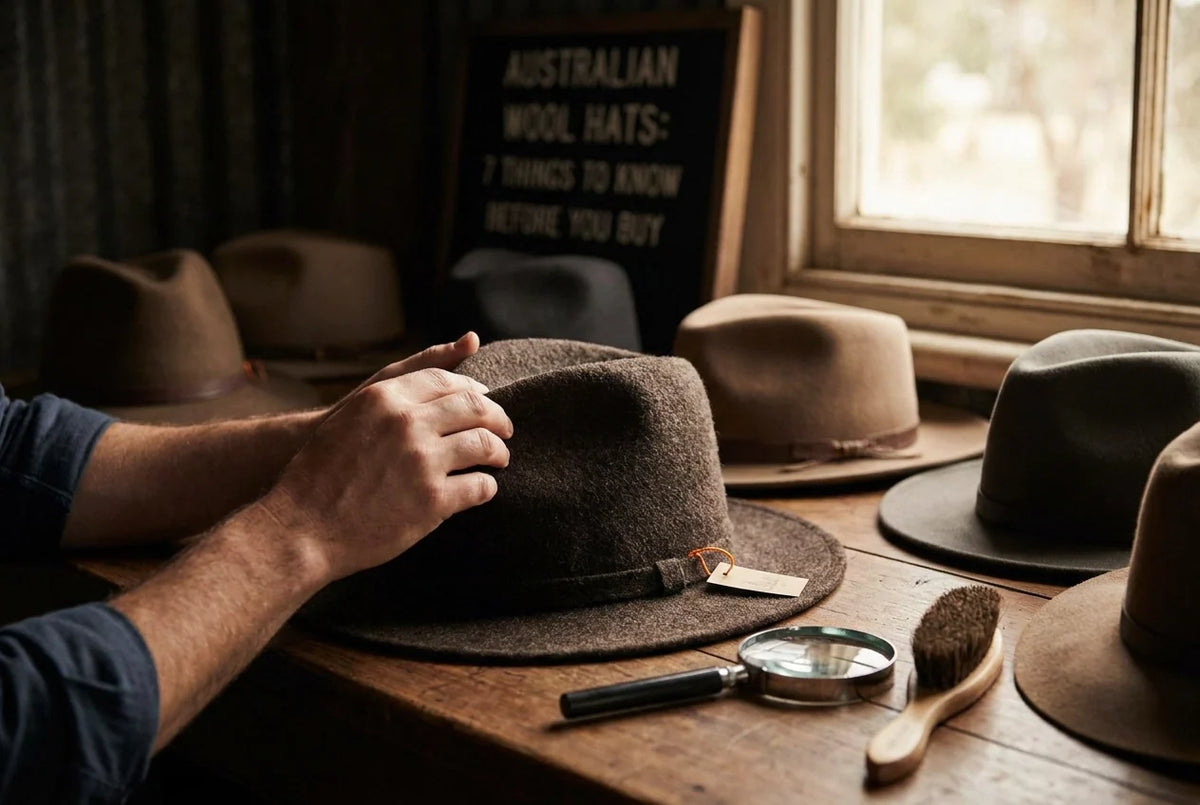
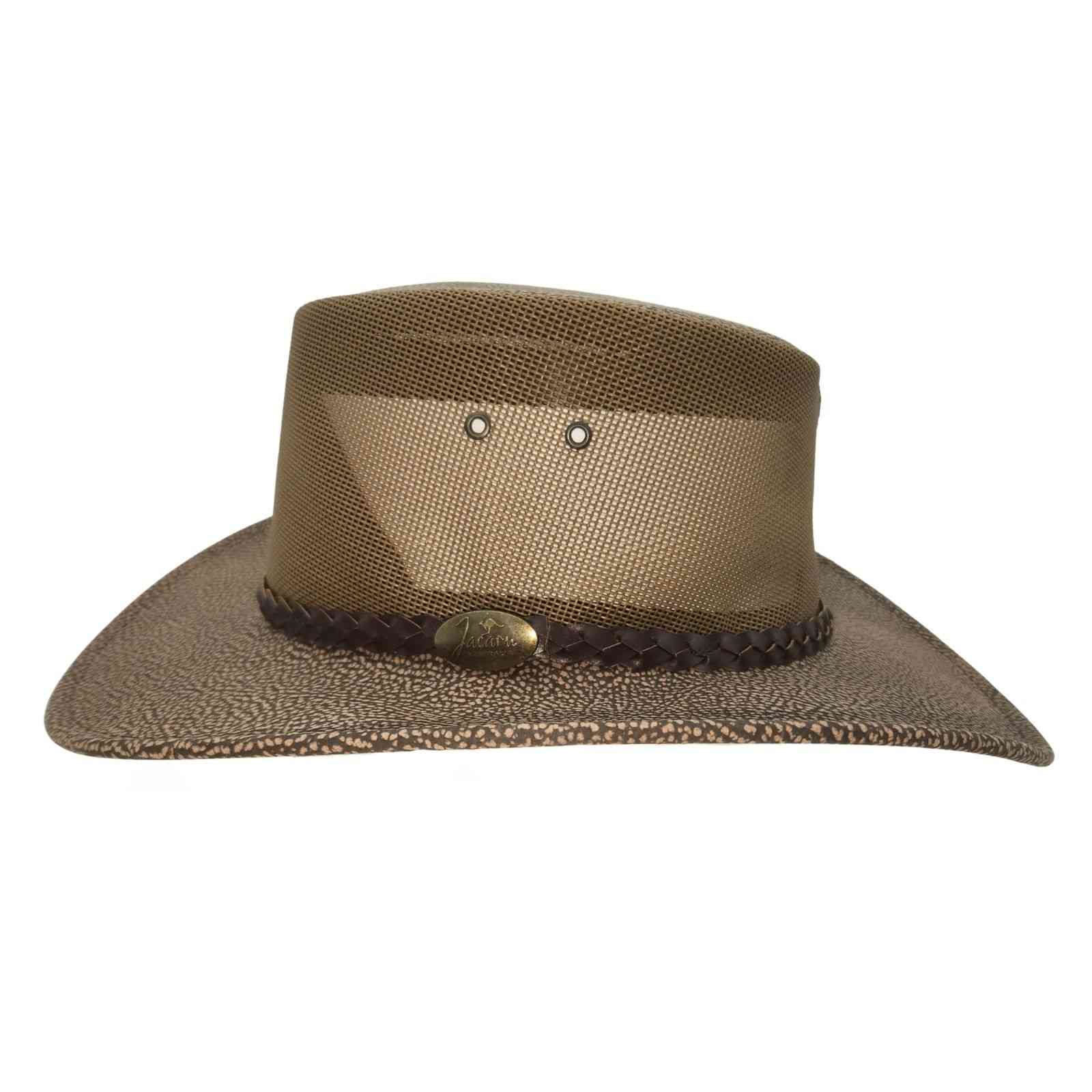
Materials are where the real gap opens up. Boonie hats are typically made from nylon, polyester, or cotton ripstop, which keeps them light and affordable. Australian outback hats are built from kangaroo leather, buffalo leather, wool, or straw. These aren't just fancier fabrics; they're materials that develop character and patina with every trip rather than slowly degrading. A quality leather hat from Jacaru doesn't just survive the years; it gets better with them.
On packability, the boonie wins. Stuff it in a side pocket and forget about it. A structured leather outback hat needs a bit more respect in storage, but what you gain is presence, durability, and a hat that genuinely improves with age rather than losing its shape after a season.
The cultural angle is real. A boonie hat says "I'm prepared and practical," which is never a bad signal on the trail. An Australian outback hat says something richer; it carries a national identity, a heritage narrative, and honestly, it's a better conversation starter at the end of a long day of travel. If you want to know more about how the boonie hat earned its iconic status, this deep-dive into boonie hat history is worth your time.
Finally, the price. Boonie hats sit comfortably in the budget-to-mid-range bracket, which reflects their origins as mass-produced utility gear. Australian outback hats command a premium that reflects the cost of premium natural materials, skilled craftsmanship, and a lifespan measured in decades rather than seasons. Think of it as a buy-once-wear-forever proposition rather than a recurring expense.
UV Protection: Why Your Hat Choice Is a Health Decision in Australia
Let's be real: in Australia, choosing the right hat is not a fashion decision. It is a health decision, full stop.
Cancer Council Australia reports that two in three Australians will be diagnosed with some form of skin cancer by the age of 70. That is not a statistic you can brush off. UV radiation is the primary cause, and it does not care whether you are on a beach in Queensland or walking to the shops in Melbourne. The Australian sun is relentless, and your hat is one of the simplest, most effective tools you have against it.
This is why the global sun hat market is shifting the way it is. UV-rated headwear now holds 54.2% of global sun hat market share as of 2025, driven almost entirely by rising skin cancer awareness. Buyers are no longer grabbing any old hat off a rack. They are reading labels, checking brim widths, and asking real questions about protection. Asia Pacific, which includes Australia, accounts for 38.4% of global sun hat revenue in 2025, which tells you everything about how seriously this part of the world treats sun protection as a daily necessity rather than an optional extra.
So what actually makes a hat protective? According to SunSmart's sun protective hats guide, the minimum recommended brim width for adults is 7.5 cm (approximately 3 inches) all the way around the hat. This is the threshold that adequately shades your face, ears, and the back of your neck, which are the areas most commonly affected by skin cancer. A boonie hat or outback hat that clears this measurement is doing genuine protective work. One that falls short is essentially decorative.
Material matters just as much as structure. UPF ratings, which measure protection against both UVA and UVB radiation, vary significantly depending on what the hat is made from. Tightly woven natural materials like wool and leather offer naturally high UV resistance. Many lightweight synthetic boonie hats, however, use thin fabrics that can allow significant UV penetration, particularly when wet or stretched. A hat that gets soaked on a humid trail hike may be providing far less protection than its label suggests. Premium natural materials are not just about aesthetics; they are a genuinely smarter choice for your skin.
Materials Matter: What Your Hat Is Made Of Changes Everything
Not all hats are created equal, and the material your hat is made from determines everything that matters: how long it lasts, how it feels after six hours in the sun, and whether it ends up in landfill after two seasons or becomes a treasured piece of kit you pass on to someone else.
Kangaroo Leather
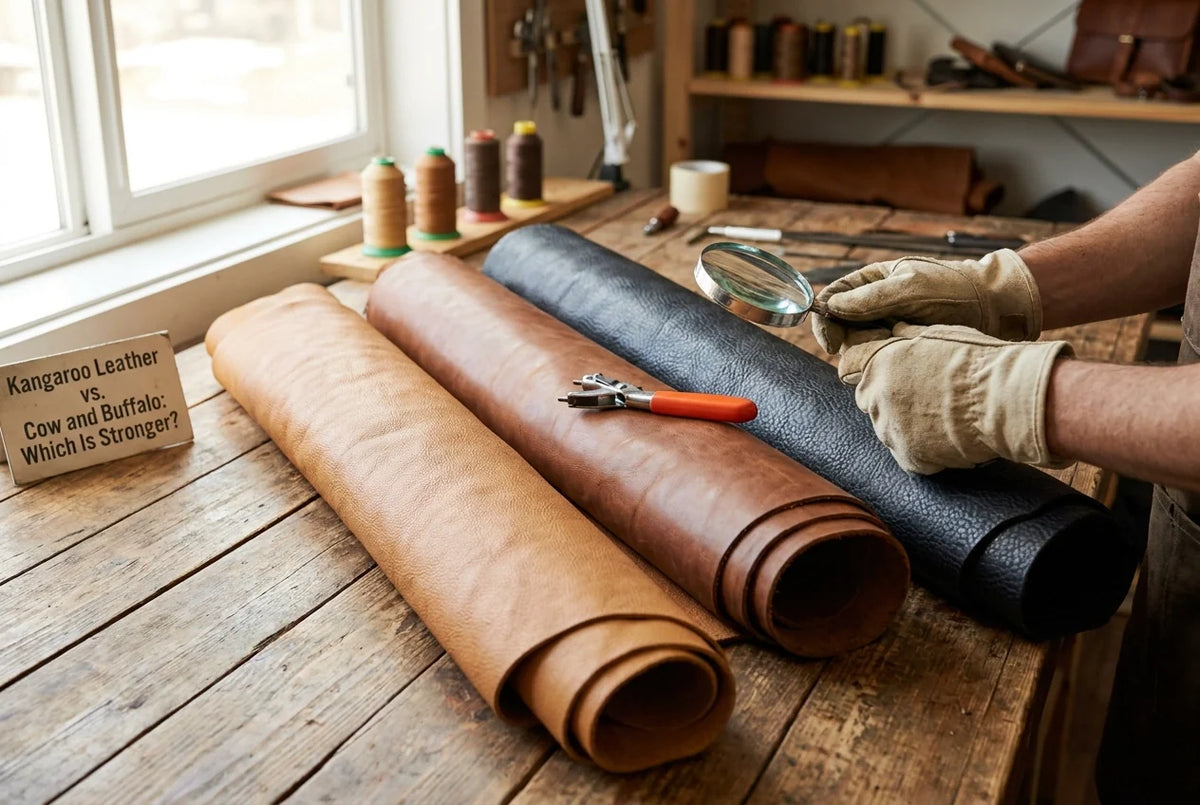
Kangaroo leather is one of the most remarkable natural materials in the hatmaking world. It carries an exceptionally high strength-to-weight ratio, meaning you get serious durability without the bulk. A kangaroo leather outback hat sits comfortably on your head even during long days on the trail, because the hide is notably lighter than cowhide while remaining tough enough to handle scrapes, sun, and sudden downpours without complaining.
Buffalo Leather
If kangaroo leather is the endurance athlete of the group, buffalo leather is the rugged character actor. It is thicker, with a distinct grain and texture that synthetic materials genuinely cannot replicate. Buffalo leather hats develop a rich patina over years of wear; every crease and mark tells a story. You simply cannot fake that kind of character with polypropylene or nylon.
Wool Felt
Wool felt is a legitimate all-season performer. It is naturally breathable, moisture-wicking, and provides meaningful UV resistance, making it far more versatile than its "winter hat" reputation suggests. A well-made wool hat regulates temperature across a surprisingly wide range of conditions, keeping you comfortable whether the mercury is climbing or dropping.
Straw
For warm-weather adventures, natural straw construction delivers airflow that synthetic mesh cannot match. As this guide to outdoor hat materials confirms, each material earns its keep in a specific setting, and in genuine heat, natural straw wins. The case for natural over synthetic straw is increasingly well-made: real straw breathes; plastic alternatives just sit on your head.
The Long Game
Sustainability is becoming a genuine purchase driver, not a marketing afterthought. Demand for natural, durable materials is accelerating as a structural market trend through 2035, and for good reason. Natural leather, wool, and straw biodegrade and improve with use. Synthetic petroleum-based fabrics fade, lose their shape, and eventually end up in a skip.
That last point is worth sitting with. After five years, a synthetic boonie hat is typically faded, misshapen, and forgotten. A Jacaru leather outback hat after five years is broken in, personalised by wear, and genuinely better than the day you bought it. That is not a small difference. That is the whole point.
Who Should Actually Be Wearing Which Hat?
Different hats genuinely suit different people, and being honest about that is more useful than pretending one option wins every scenario. Here is a plain-language breakdown of who should reach for what.
The Outdoor Adventurer
If you are covering serious ground in the Australian bush, working a cattle station, or pushing through exposed alpine terrain, you need a hat that works as hard as you do. A well-made leather outback hat has structural integrity that holds its brim in position when the wind picks up, provides consistent shade without flopping around, and ages into something better with every season rather than degrading. A boonie hat will give you solid coverage for a day trip, but the soft brim collapses, the synthetic fabric holds sweat, and after a few seasons of real use it looks exactly like what it is: a disposable piece of gear.
The Global Traveller
Packing light matters, but arriving somewhere interesting wearing a hat that makes strangers ask questions matters more. An Australian outback hat is a recognisable cultural object with a story built in. It travels well in ways that go beyond luggage weight. Whether you are stepping off a train in Tokyo, walking through a Texas market town, or wandering a Tuscan hill village, a well-crafted leather outback hat communicates something. A limp synthetic boonie hat communicates very little. The global headwear market is undergoing a structural shift toward premium functional fashion, projected to grow from USD $20.69 billion in 2024 to $35.92 billion by 2035, and that shift is being driven by people who want their gear to look intentional.
The Festival or Day-Trip Crowd
Here is where the boonie hat earns its keep honestly. If the hat lives at the bottom of a festival bag eleven months of the year and comes out once for a weekend on the water, the packability trade-off makes sense. That said, a well-chosen straw outback hat is more packable than most people expect, and it looks considerably better in the photos.
The Gift Buyer
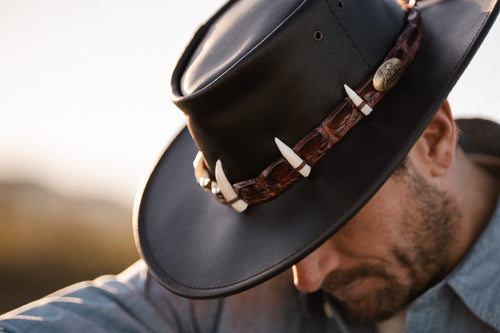
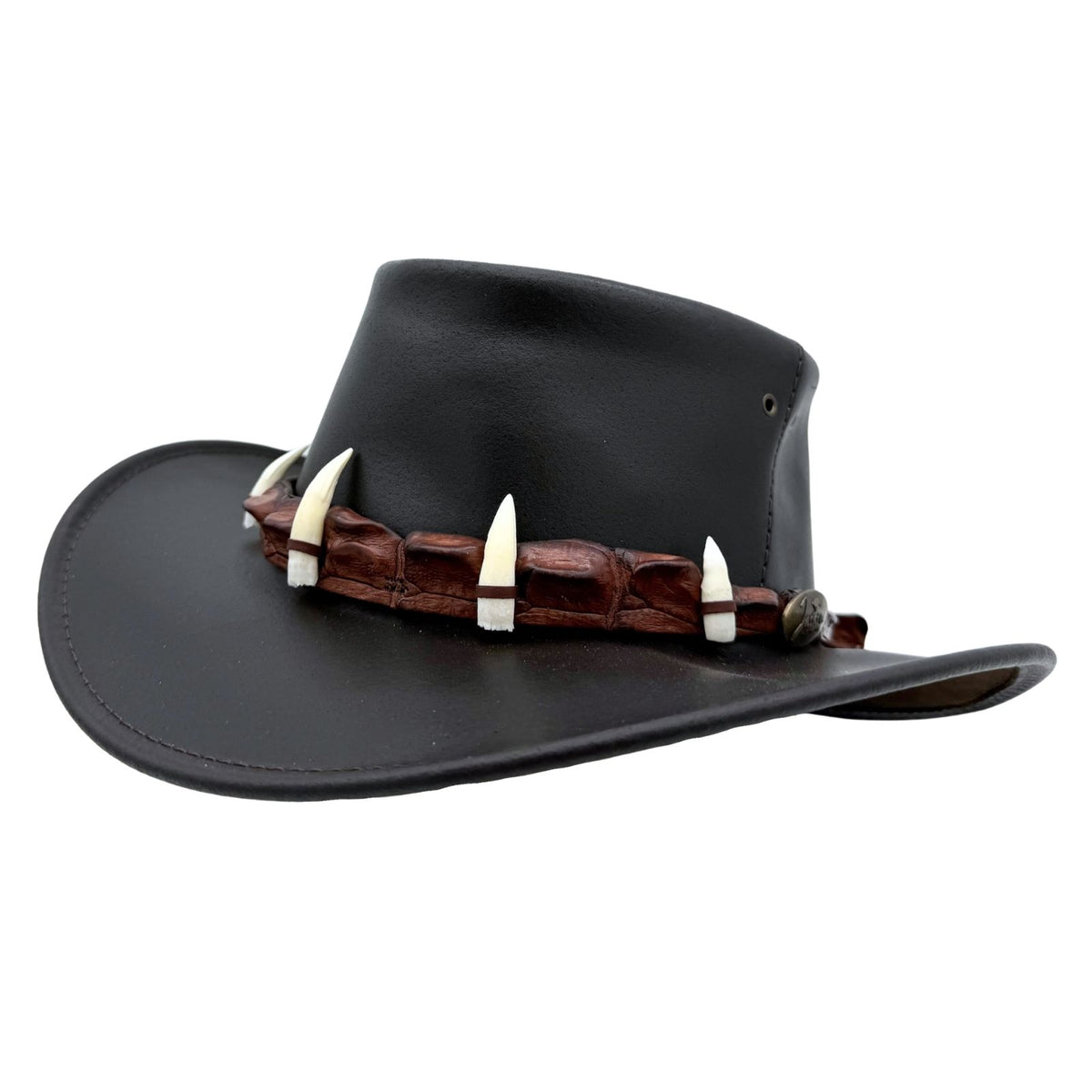
Nobody has ever unwrapped a boonie hat and felt something. A handcrafted Australian leather outback hat with genuine crocodile teeth and a backstrap hatband is a completely different kind of object. It carries provenance, a story, and the kind of lasting quality that means it gets kept on a hook by the front door rather than donated to a charity bin three years later.
The Style-Conscious Adventurer
Outdoor gear media has started explicitly judging hats on style and versatility alongside UV protection, and that shift reflects something real happening in the market. People increasingly want something that looks as good walking into a pub as it does walking a trail. A leather outback hat delivers that without trying. The premiumisation trend is not a marketing word; it is a structural market movement that runs through 2035, and it is rewarding exactly the kind of hat that was never trying to be fashionable in the first place.
The Australian Outback Hat as a Gift or Souvenir
Here is one corner of the hat conversation that almost nobody writes about: buying a hat for someone else. Every review, comparison guide, and market report focuses on the person wearing the hat. But corporate gifting and souvenir buying are enormous purchase occasions in the headwear world, and the person standing at the counter is not shopping for themselves.
This is where the outback hat completely runs away from the boonie hat. Not because the boonie hat is bad at its job, but because it has no story to tell. Think about the last time someone handed you a souvenir and it genuinely meant something. It was specific to a place, made from something real, and carried a sense of "you had to be there to know this existed." That is exactly what a Jacaru kangaroo leather outback hat with genuine crocodile teeth delivers. It is globally recognisable as distinctly Australian, tied to a landscape and an identity that people find genuinely compelling. The Outback is not just a geography; it is a cultural shorthand that lands instantly, whether the recipient is in Tokyo, Toronto, or Turin.
Customisation makes this even stronger in a gift context. Genuine crocodile teeth on the hatband, a backstrap closure, hand-shaped brim, kangaroo hide crown: each of these details makes the hat an individually expressive object rather than a commodity. That matters enormously to gift buyers, because the goal is not just to give a hat, it is to give something the recipient will actually keep and wear. As one corporate gifting source puts it, premium hats keep winning as corporate gifts precisely because they travel with people, showing up at airports, weekend barbecues, and coffee runs in ways that generic branded merchandise simply does not.
For corporate buyers specifically, the shift toward premium gifting is well underway. Companies want items that feel like real retail products, not promotional filler. A handcrafted Australian leather hat achieves that without even trying. It is already a premium object before you add any branding.
Nobody brings a boonie hat back from Australia as a meaningful souvenir. That blunt truth is the cleanest summary of the difference between these two hats in a gift context. One is a utility item with a logo opportunity. The other is a wearable piece of Australia.
How to Choose the Right Australian Outback Hat for You
Start by matching your material to how you actually plan to use the hat. Kangaroo leather is a standout choice for everyday adventure: it is lighter than most leathers, incredibly tough, and develops a natural patina the more you wear it. Buffalo leather leans into a rougher, more characterful aesthetic, the kind of hat that looks better after a hard season than it did coming out of the box. Wool felt is your all-rounder, comfortable across seasons and genuinely capable of handling both crisp mornings and warm afternoons. Straw is the hot-weather specialist; if you are spending long days in direct sun with limited shade, nothing beats it for breathability.
Brim width is your single most important UV decision. Aim for a minimum of 7.5 cm (3 inches) of all-round brim if you want meaningful sun protection, and wider is generally better in open-country environments like paddocks, beaches, or desert terrain. That said, an oversized brim in dense bush or a busy city street starts working against you practically, so match the brim to your actual environment rather than just going as wide as possible.
Fit and retention matter far more than most beginners expect. A chin cord or retention strap is non-negotiable if you are riding, hiking in wind, or doing anything remotely active outdoors. Look for an adjustable backstrap and a proper internal sweatband; both make the difference between a hat you wear all day and one you carry in your hand.
Provenance is worth caring about. Hats made in Australia from Australian hides or natural fibres carry a quality story that imports simply cannot replicate, and that story is a meaningful differentiator in the premium outback hat market.
Finally, think in cost-per-year terms rather than sticker price. A quality leather outback hat is a multi-decade piece of kit. Spread the price across twenty-plus years of use and it is almost certainly cheaper than cycling through boonie hats every two or three seasons.
The Verdict: Both Hats Have a Place, But One Has a Story
The boonie hat earns its place honestly. It is affordable, packable, and does exactly what it promises: shade your face without fuss. For a weekend camping trip, a festival, or a casual afternoon outdoors, there is zero shame in reaching for one. It gets the job done.
But if you are thinking beyond five weekends and into five years, the calculus shifts pretty quickly. For serious outdoor use, travel, gifting, or anyone who wants a hat that actually improves with age, the Australian outback hat is the clear step up. Kangaroo and buffalo leather develop character over time, wool holds its shape and breathes naturally, and every Jacaru hat carries the kind of genuine provenance that a synthetic boonie simply cannot replicate. UV protection, durability, sustainability, and flat-out personality all favour natural-material outback hats when you assess them honestly across a full lifecycle.
The question worth asking before you buy is not "what do I need this weekend?" but "what do I want this hat to do in five years?" One option ends up faded and shapeless at the bottom of a bag. The other becomes a travel companion with a story.
Browse Jacaru's range of Australian-made outback hats, built for the same punishing conditions that made the boonie hat famous, and then some. From kangaroo and buffalo leather to wool and straw styles, there is an option for every adventure, and every adventurer worth buying a gift for.
Conclusion
Choosing between a boonie hat and an Australian Outback hat does not have to be complicated. Here is what it comes down to: the boonie hat wins for lightweight, packable, active outdoor use like hiking and fishing. The Outback hat is your go-to for rugged durability, style, and all-day ranch or trail wear. Both offer excellent sun protection, but they serve different lifestyles and environments.
Think about where you spend most of your time outdoors and what features matter most to you. Comfort, packability, and versatility point toward the boonie. Toughness, structure, and classic style point toward the Outback.
Now it is time to stop debating and start adventuring. Pick the hat that fits your world, grab it, and get outside. The best hat is always the one you actually wear.


Our friends at Bocchetta Plush Toys have a great range of lifelike plush animals that make great gifts for people of all ages.