






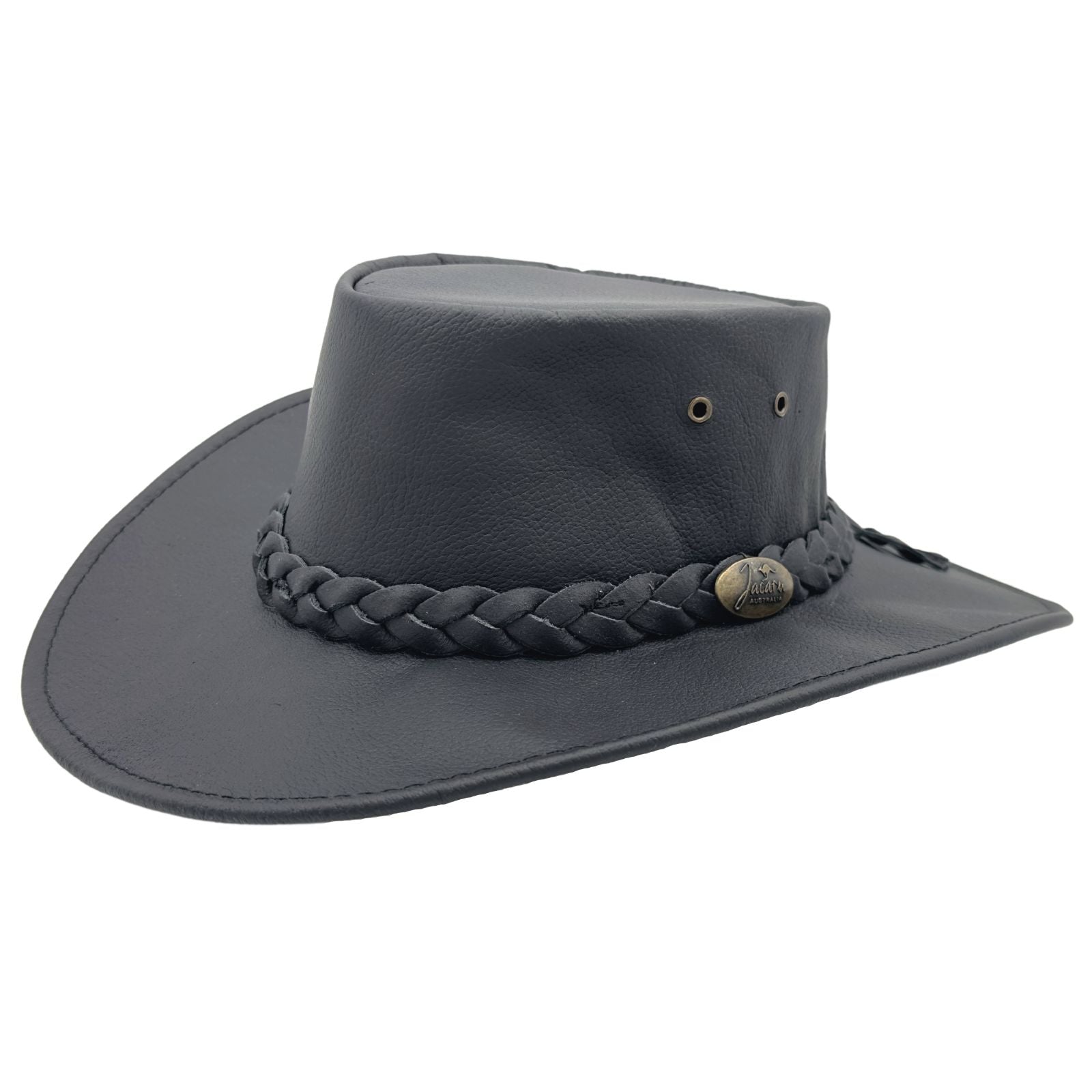


7 Things to Know Before Buying a Crocodile Dundee Hat

G'day, mate! Whether you're gearing up for Halloween, a costume party, or just want to channel your inner Mick Dundee, there's one iconic accessory that pulls the whole look together. That's right, we're talking about the legendary crocodile dundee costume hat, that wide-brimmed beauty adorned with crocodile teeth that screams adventure from a mile away.
But here's the thing: not all Dundee hats are created equal. Walk into the wrong store or click "add to cart" too quickly, and you might end up with a flimsy piece of headwear that falls apart before the night is over. Nobody wants that!
The good news is that buying the perfect hat doesn't have to be complicated. This guide is designed specifically for first-timers who want to nail the look without wasting their money. We've put together seven essential things you should know before making your purchase. From sizing and materials to authenticity and styling tips, we've got you covered. By the end, you'll feel totally confident and ready to find your perfect hat. Let's dive in!
What Actually Makes a Hat 'Crocodile Dundee Style'
Not every wide-brimmed hat deserves the Crocodile Dundee label, even when sellers slap that name on the listing. The 1986 film gave us a very specific silhouette, and once you know what to look for, the difference becomes obvious pretty quickly.
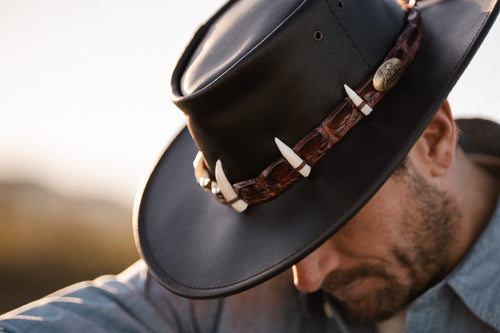
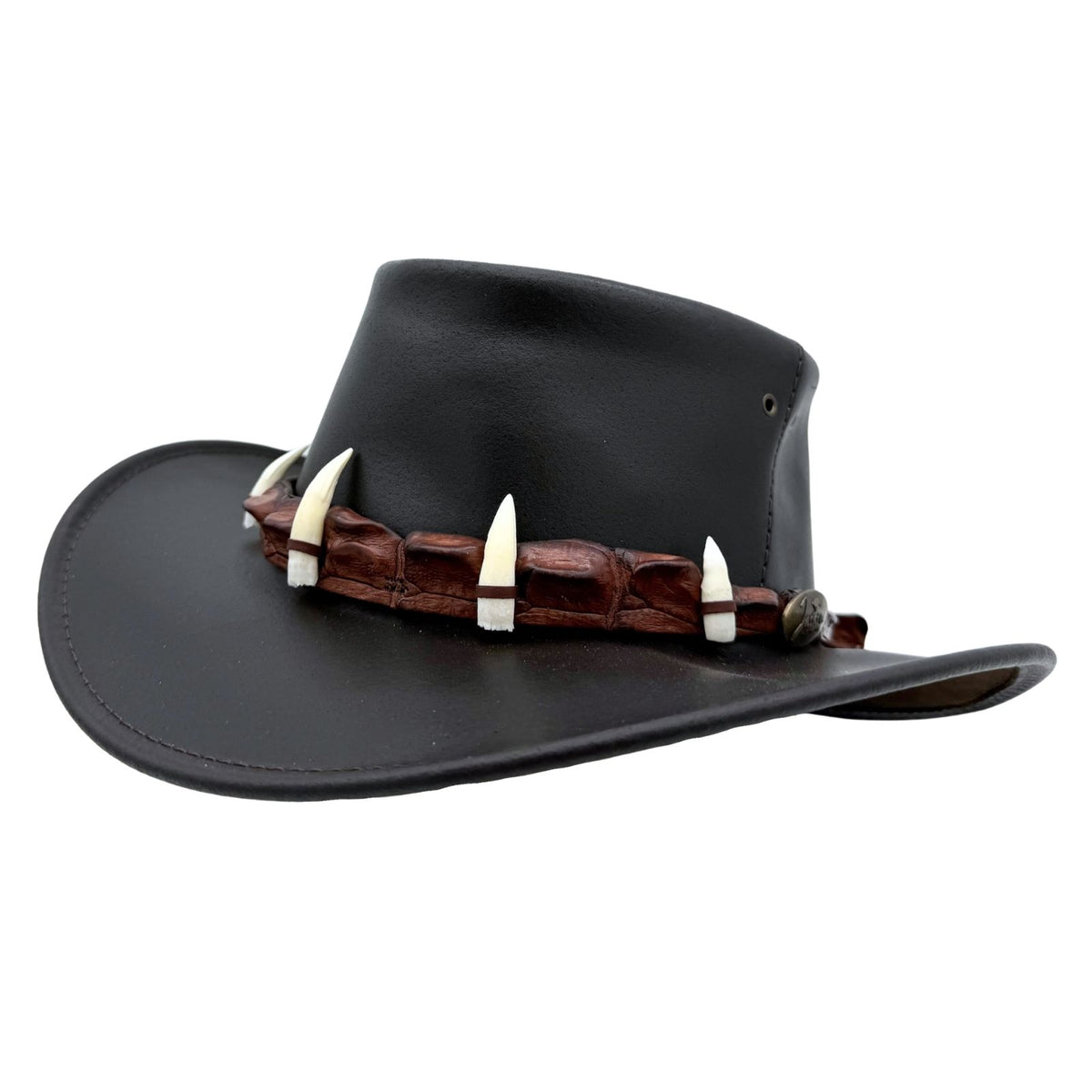
The hat Mick Dundee wore combined three structural features: a wide brim (think serious sun coverage, not a modest cowboy tuck), a high tapered crown, and most importantly, a crocodile teeth hatband. That last detail is the one that matters most. You could put almost any wide-brim leather hat on someone's head, but without those teeth running around the band, it just reads as a generic outback hat. The teeth are what made the costume iconic.
Here is where a lot of shoppers get tripped up. Sellers frequently list items as "Dundee style" when they are really just selling a plain wide-brim hat or a standard Western cowboy hat with a leather cord band. These crossover listings on Etsy show exactly how blurred the categories get, with "cowboy hat with crocodile teeth" used interchangeably for styles that vary wildly in shape and authenticity.
The Australian bush hat and the American cowboy hat are actually quite different in structure. One hat maker who spent time recreating the outback style described it as sitting somewhere between a Western cowboy hat and a fedora, with a lower, more fitted crown than you would find on a traditional Western hat. American Western crowns tend to be tall and open; Australian bush hat crowns are more compact and practical, shaped for outdoor function rather than rodeo flair.
Back to that hatband. It is genuinely the single most culturally specific element of the whole look. It is not decoration in the way a ribbon or a feather might be. The crocodile teeth band signals provenance, craftsmanship, and a direct connection to Australian outback culture. Interestingly, some hat makers note that authentic replica bands are nearly impossible to source commercially, which is exactly why genuine crocodile teeth on a hatband, like those found on Jacaru's Australian-made hats, represent a meaningful distinction from costume versions using resin or plastic substitutes.
Finally, the leather itself makes a real difference to how the hat looks and wears. Full-grain leather holds a structured brim shape over time. Cheaper split-grain or synthetic materials cause the brim to soften and droop, which is the fastest way for an outback hat to slide into "fancy dress" territory. If the brim cannot hold its wide, flat silhouette through a day outdoors, it reads as a prop, not the real thing.
The Cork Hat Myth: What Mick Dundee Actually Wore
Here is one of the most common traps shoppers fall into when hunting for a Crocodile Dundee costume hat: they type "Australian hat" into a search engine and end up buying a cork hat. You know the one. It has little corks dangling from strings around the brim, it looks faintly ridiculous, and it has become the go-to comedy shorthand for "this person is Australian." The problem is that Mick Dundee never wore one. Not once. Not in any of the films.
The cork hat is a piece of novelty Australiana, the kind of thing you might find in a tourist shop near the Opera House. It has roots in a long-running myth that Aussie bush workers wore cork-trimmed hats to swat away flies, though in practice it was mostly a tourism marketing creation rather than genuine outback gear. Somewhere along the way, it became the international visual shorthand for "Australian bloke," and that stereotype stuck hard enough that people still confuse it with the actual hat worn on screen in the 1986 film.
What Mick Dundee actually wore was a wide-brimmed bush hat distinguished by a hatband of real crocodile teeth. That hatband is the whole point. It is the single detail that makes the hat immediately recognisable to anyone who has seen the film, and it is completely absent from every cork hat ever made. Jacaru has actually written a dedicated guide breaking down this exact confusion, and it is well worth reading before you buy: Corks vs Croc Teeth: Real Crocodile Dundee Hat Guide.
For costume buyers, this mix-up has real consequences. If you show up to a fancy dress party in a cork hat expecting people to shout "that's a knife," you might be waiting a while. The crocodile teeth hatband is the recognition signal. It is what connects the hat to the character instantly, and without it, you are just wearing a novelty item. The actual screen-worn hat is significant enough that it is held in the collection of the National Film and Sound Archive of Australia, which tells you everything about the cultural weight of that specific design.
Getting the right hat means knowing that the croc teeth are non-negotiable, not decorative, not optional. They are the whole costume.
Are the Crocodile Teeth Genuine? Here Is What to Look For

This is the question most shoppers forget to ask until after the package arrives. You open the box, flip the hat over, and wonder: are these teeth actually real, or are they just painted plastic? It is a fair question, and the answer matters more than you might think.
What Genuine Crocodile Teeth Actually Look Like
Real crocodile teeth are conical and slightly curved, tapering to a fine, asymmetric point. According to San Diego Zoo's crocodilian profile, teeth are one of the defining anatomical features of crocodilians, specific enough that zoologists use tooth morphology to distinguish between species. That means genuine teeth have a recognisable character to them. Run your finger along a real tooth and you will feel a slightly porous, textured enamel surface with micro-ridges rather than a smooth, glassy finish. Colour-wise, look for natural gradation: ivory or cream at the base, deepening to a yellowed or slightly stained tip. Plastic replicas tend to be uniformly white or uniform ivory with no tonal variation at all. The tip on a fake is usually symmetrical and over-regular; a real tooth tapers to a subtly uneven point because it grew that way.
The Jacaru Difference: Genuine Teeth, Proper Construction
Jacaru pairs genuine crocodile teeth with a backstrap hatband, and that combination is what separates an authentic Dundee-style hat from a costume novelty. Genuine teeth have a hollow root, which means they can be properly threaded or wired into the hatband rather than glued onto a flat moulded mount. If you look at the base of each tooth and see a visible plastic backing or a uniform moulded cradle holding it in place, that is a strong sign the teeth are not real. Real teeth also feel noticeably heavier for their size than hollow resin replicas.
Why Legal Sourcing Is Non-Negotiable
Australia's saltwater crocodile (Crocodylus porosus) is protected under national wildlife legislation, and any crocodile-derived product sold legally in Australia must come from licensed farming operations, primarily in Queensland and the Northern Territory. These farms operate under strict quota systems, making the materials genuinely traceable. Buying from a licensed Australian maker is not just an ethical choice; it is the only legally compliant one. As Wikipedia notes on crocodiles, crocodilians are among the most regulated wildlife groups globally, and that regulation exists for good reason given historical pressure from hunting.
Sustainability Is Part of the Story Too
Crocodile teeth and leather sourced through Australia's licensed farming framework carry a level of traceability that most synthetic alternatives simply cannot match. Synthetic resin or plastic teeth are petrochemical products with no provenance documentation whatsoever. A hat built with genuine, legally sourced materials from a verified Australian maker is actually the more transparent choice, and that is worth knowing before you spend your money.
Costume Prop vs. Genuine Outback Hat: Do You Have to Choose?
When people search for a crocodile dundee costume hat, they are rarely all looking for the same thing. Some shoppers need a hat for a Saturday night costume party and want the iconic look without spending a fortune. Others are genuine outback enthusiasts, travellers, or adventure lovers who want a hat that can handle sun, wind, dust, and years of hard use. These two groups have very different needs, but here is the thing: you do not always have to pick a side.
Why Most Hats Force You to Choose
A costume-grade Dundee hat is built for one job: looking the part on a budget. Peel back the surface and you will usually find a lightweight shell made from thin felt or synthetic fabric, a cardboard or paperboard brim stiffener that warps the moment it gets wet or sweaty, and a plastic or printed band where real crocodile accents should be. These shortcuts keep costs low, but they show up fast under real conditions. After one night of wear, the brim loses its shape, the band starts peeling, and the teeth look exactly like what they are: plastic. For a single event, that might be acceptable. For anything beyond that, it falls apart quickly.
A genuine leather outback hat is built the opposite way. Quality construction means full bovine leather, real water resistance, reinforced brim structure, and genuine crocodile elements that hold up over time. You can read more about what separates a leather outback hat from cheaper alternatives if you want a deeper breakdown of materials.
Where Jacaru Sits in the Middle
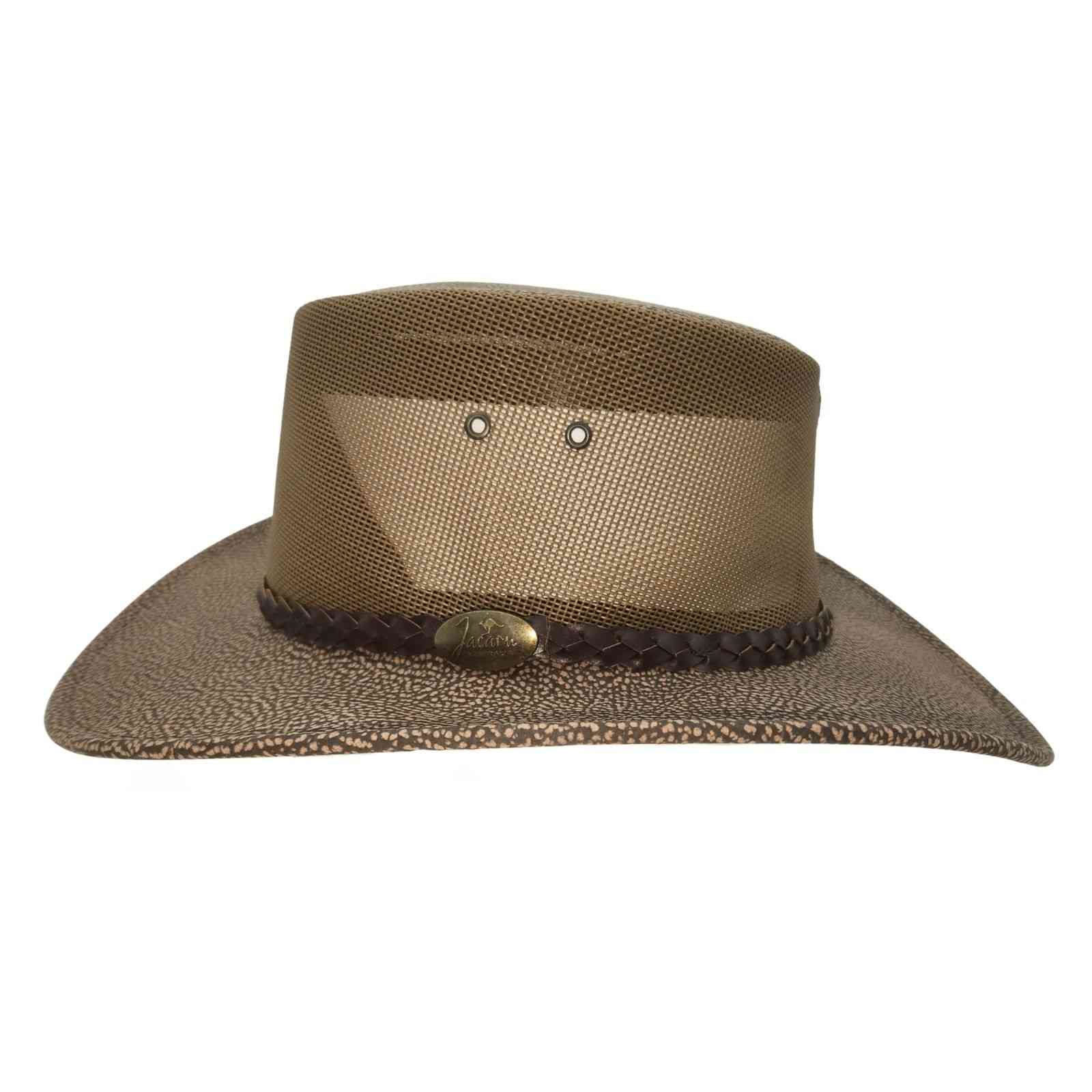
Jacaru's Dundee-style hat, featuring genuine crocodile teeth on a backstrap hatband and premium bovine leather construction, occupies a rare position. It is premium enough for daily outback use, with UPF 50+ sun protection and weather resistance built in. At the same time, it is iconic enough to anchor an Australian-themed costume without any compromise on authenticity.
How to Spot Quality Before You Buy
When assessing any hat, look for these signals. Full-grain leather feels substantial and develops character over time rather than peeling. Genuine crocodile accents have natural texture variation that plastic simply cannot replicate. A solid brim that holds its shape after being packed or rained on is a strong indicator of proper internal structure. Red flags include very low price points under $50 for the full hat, vague material descriptions, and sellers who do not specify Australian-made origins.
The long-term value case is straightforward. A quality leather hat at around AUD $151 can last years with basic care, delivering ongoing sun protection and versatile style for travel, hiking, and daily wear. A costume prop often does not survive a second outing, meaning repeat purchases quickly erase any initial savings. If you plan to wear your hat beyond a single event, investing in genuine construction is simply the smarter choice.
Who Actually Buys a Crocodile Dundee Hat? The Gift Angle Worth Knowing
Not everyone buying a Crocodile Dundee hat is heading to a costume party. A surprising number of buyers are actually gift shoppers, and once you understand who they are, the hat starts to make a lot more sense as a purchase.
The Three Types of Gift Buyers
The first group is international travellers visiting Australia and looking for a souvenir that actually means something. A cheap keyring or a tin of Tim Tams is forgettable. A genuine leather hat with authentic crocodile teeth is something a person keeps for decades. The second group is Australian culture enthusiasts living overseas, people who grew up watching the 1986 film and want something tangible that connects to that nostalgia. The third group is corporate gift buyers who need a premium, distinctly Australian product that travels well as a brand statement.
Why the Film Reference Works So Well
The Crocodile Dundee film reached audiences across the US, UK, Europe, and beyond, which means the hat silhouette carries instant recognition even for non-Australians. That cross-cultural shorthand makes it an unusually strong gift choice because the recipient does not need to be Australian to understand what they are holding.
Premium Souvenir vs. Tourist Trinket
A genuine leather hat with real crocodile teeth hatband is simply more durable and meaningful than mass-produced tourist merchandise. You can explore Jacaru's kangaroo leather hat range to understand how material quality sets these apart. Jacaru also maintains a dedicated comparison of Crocodile Dundee hat replicas specifically to help gift buyers avoid purchasing an imitation by mistake.
For practical gifting, most quality leather hats ship well when boxed correctly, though it is worth confirming sizing options before ordering, since adjustable hatbands or gift cards can solve the common problem of not knowing the recipient's head size.
Australian-Made vs. 'Australian Style': Why Provenance Matters

Here is something that surprises a lot of shoppers: typing "Australian hat" or "Dundee-style hat" into a search engine does not guarantee you are looking at anything Australian at all. Many listings use words like "outback-inspired," "bush hat," or "Australian leather" as marketing language, with no physical Australian address, no traceable supply chain, and no certification to back the claim up. The aesthetic gets borrowed; the origin does not come with it.
So how do you spot the difference? A few things to check when shopping online will save you a lot of disappointment. Look for a physical Australian business address on the website, not just a flag emoji in the product description. Look for the Australian Made and Owned certification, which is the green-and-gold kangaroo logo administered by Australian Made Campaign Ltd. This certification requires manufacturers to meet defined origin thresholds, so it carries real meaning. Named materials with traceable sourcing, such as "kangaroo leather sourced and tanned in Australia," are a good sign. Vague phrases like "premium leather" or "Dundee-inspired finish" with no origin details are a red flag worth noting. You can see this pattern in action by browsing generic Dundee-style listings on Amazon, where product titles invoke "Australian Leather" without disclosing tannery location or manufacturing site.
Jacaru, based in Western Australia, uses kangaroo, cow, and buffalo leather sourced and processed domestically. That closed supply chain means every stage is subject to Australian environmental and labour standards, with no undisclosed substitutions along the way. For context on what genuine Australian outback hat production actually involves, this overview of Australian outback hats gives a useful grounding in the craft traditions behind the finished product.
One sustainability point worth knowing: kangaroo leather is a by-product of Australia's federally regulated kangaroo management program, a government-managed quota system that controls population levels to prevent habitat and agricultural damage. Because the animals are free-ranging and not farmed, kangaroo leather carries one of the lowest land-use footprints of any commercially available leather. This is a genuine traceability advantage, not a greenwashing claim, and it is something most "Australian-style" sellers are not even close to being able to match.
Provenance also has a direct effect on how a hat actually performs. Australian tanning traditions developed specifically in response to intense UV exposure, low inland humidity, and temperatures that regularly exceed 40 degrees Celsius. Leather finished under those standards resists deformation in heat, holds its shape over years of outdoor wear, and outlasts costume-grade imports by a considerable margin. A higher upfront cost starts looking very different when you consider the cost per year of actual use.
Getting the Right Fit: A Sizing Guide for International Buyers
Getting a leather outback hat to fit properly is one of those things that sounds simple until you actually try to do it from the other side of the world. Here is how to get it right the first time.
1. Measure your head at home before you order
Grab a flexible fabric tape measure (the kind used for sewing) and wrap it around the widest part of your head, roughly one finger-width above your ears and across the middle of your forehead. Write that number down in centimetres. That single measurement is everything you need to cross-reference against an Australian hat size chart. Most Australian sizing runs numerically, so a 58 cm circumference typically corresponds to a size 58, making it refreshingly straightforward once you have your number.
2. Know how international sizing conventions differ
This is where international buyers regularly get caught out. Australian hat sizing is generally based on head circumference in centimetres. US sizing uses a fractional system (like 7 or 7 3/8), while UK sizing uses a similar scale but the crown construction can differ enough to change the feel. European sizing tends to align more closely with the Australian centimetre system, so EU buyers often find the conversion easier. Always check the brand's specific size chart rather than relying on a generic conversion table.
3. Understand how leather hats adjust over time
A quality leather outback hat typically includes an internal sweatband and sometimes a lace or backstrap crown adjuster that lets you fine-tune the fit. If your new hat feels slightly snug at first, that is completely normal. Leather naturally softens and moulds to your head shape across the first several wears, so a hat that feels firm on day one will feel custom-fitted by week two. Resist the temptation to size up just because the first wear feels tight.
4. Care tips that protect your hat and hatband in transit
Different climates call for different approaches. In humid environments, store your leather hat upside down on its crown to maintain brim shape and allow airflow. If the brim warps after travel, lightly dampen a cloth and gently reshape by hand while the leather is slightly warm, then allow it to dry naturally away from direct heat. For packing, the crocodile teeth hatband deserves special attention: wrap each tooth section loosely in tissue paper and place the hat in a rigid hat box rather than a soft bag. As this look at Crocodile Dundee hat replicas shows, the genuine teeth hatband is one of the defining features of the style, so protecting it during shipping is worth the extra care.
5. Why fit is especially important for the Dundee silhouette
A wide-brimmed hat that sits too high on your head looks like a novelty item. One that drops too low swamps your face and kills the proportional silhouette that makes the style so recognisable. The Dundee look works because the brim, crown height, and face proportions all balance each other. Getting your sizing right is not just about comfort; it is about making sure the hat looks the way it is supposed to look the moment you put it on.
The Crocodile Dundee Hat Deserves to Be Done Properly
By now, you have a pretty clear picture of what separates the real deal from a shelf-full of costume-shop knockoffs. Three things matter above everything else: genuine crocodile teeth, verified Australian provenance, and proper leather construction. If a hat is missing any one of those three, it is a novelty item, not an authentic Dundee-style hat worth wearing.
Jacaru's Crocodile Dundee style hats are built specifically for buyers who refuse to compromise. With genuine crocodile teeth and a backstrap hatband, they work equally well as a costume centrepiece, an everyday outback hat, or a memorable gift that will outlast any occasion. Browse the full Jacaru Exotic Hats collection if you are ready to buy the real thing.
Shopping for someone else? Jacaru's souvenir and corporate gifts range is worth exploring for distinctly Australian gift ideas that travel well and make a lasting impression.
Forty years on from the 1986 film, the Dundee hat has never lost its pull. It remains one of the most instantly recognised symbols of Australian identity anywhere in the world, which is exactly why it deserves to be done properly.
Conclusion
There you have it, mate! Finding the perfect Crocodile Dundee hat doesn't have to feel like navigating the Australian outback alone. Remember the essentials: prioritize quality materials and sturdy construction, get your sizing right before purchasing, verify the authenticity of those crocodile teeth details, and always buy from a reputable seller.
Armed with these seven key tips, you're now fully equipped to make a smart, confident purchase that will complete your costume and turn heads at any event. No more second-guessing, no more buyer's remorse.
So go ahead and start shopping with purpose. Compare your options, check those reviews, and invest in a hat that will actually last. Your inner Mick Dundee is waiting to come alive. Now that's what you call a knife... and a hat worth wearing!


Our friends at Bocchetta Plush Toys have a great range of lifelike plush animals that make great gifts for people of all ages.