






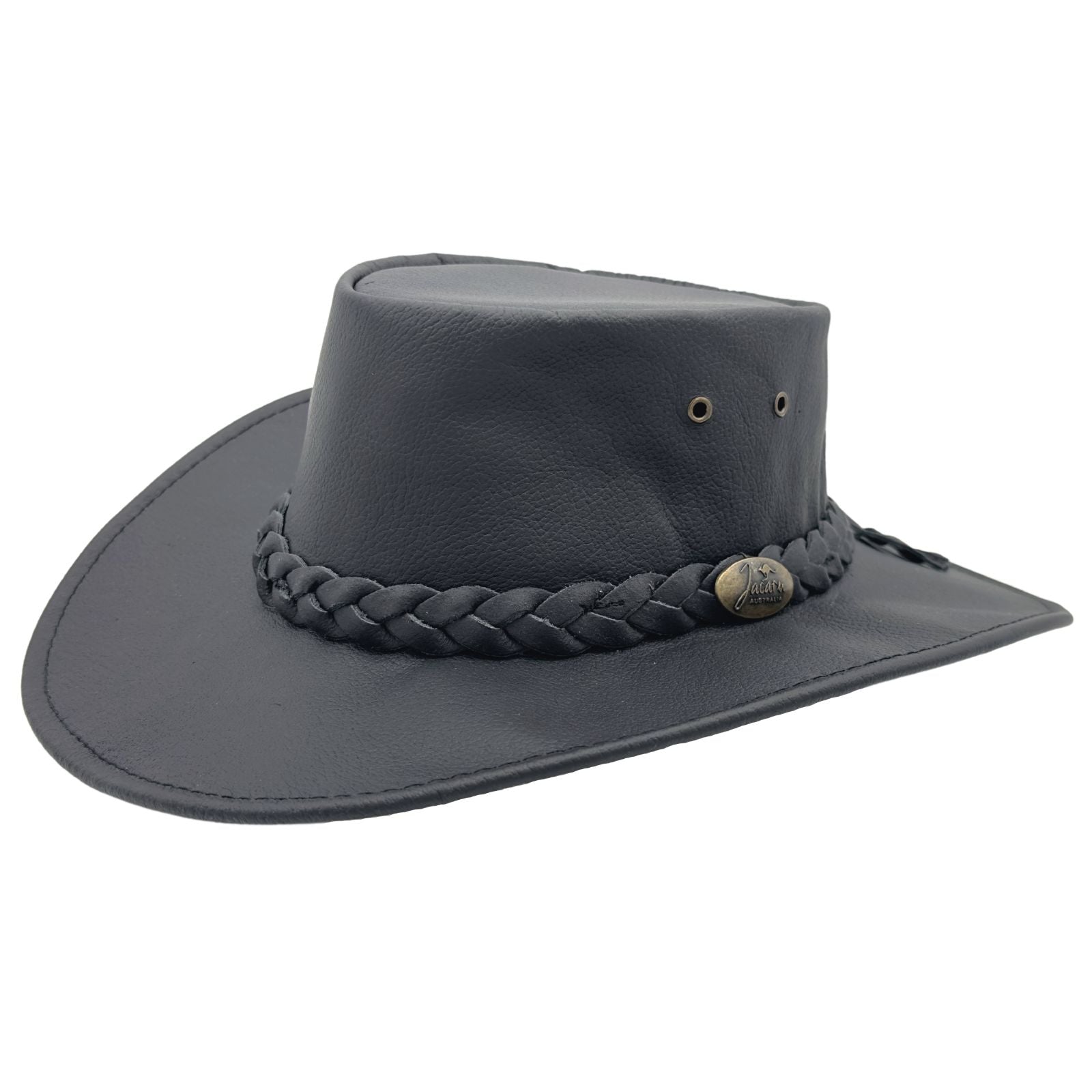


Hats Made in Australia: What to Look For and Why It Matters

When it comes to quality headwear, not all hats are created equal. The materials used, the craftsmanship behind each stitch, and the place of origin all play a significant role in determining whether a hat will last a season or a lifetime. That is why so many shoppers are turning their attention to hats made in Australia, and for very good reason.
Australia has a long and proud tradition of hat-making, shaped by a climate that demands serious sun protection and a culture that values durability and honest craftsmanship. But with so many options on the market, knowing what to look for can feel overwhelming, especially if you are new to buying quality hats.
This guide is designed to make that process simple. Whether you are shopping for your first Australian-made hat or simply want to make more informed choices, we will walk you through the key things to look for, explain why local manufacturing matters, and help you understand what sets genuinely Australian-made hats apart from the rest. Let's get started.
What "Made in Australia" Actually Means
When you see "Australian Made" on a hat, that label carries legal weight, not just marketing appeal. The Australian Made logo is a registered certification mark governed by Australian law, meaning businesses must be licensed to use it. To qualify, a product must have undergone its last substantial transformation in Australia and meet a minimum Australian content threshold. This gives buyers a verifiable trust signal that goes well beyond a brand simply printing a kangaroo on its packaging.
It is also worth understanding the difference between two distinct labels you may encounter. "Made in Australia" confirms the product was substantially manufactured here, though some imported materials may have been used. "Product of Australia" sets a higher bar, requiring that virtually all significant ingredients, components, and processing occurred on Australian soil. Knowing this distinction helps you make an informed decision rather than assuming both labels mean the same thing.
Origin labelling also matters because Australian manufacturing operates under stricter workplace laws, fair pay frameworks, and materials standards than most mass-market offshore production hubs. That translates directly into better quality assurance, traceable sourcing, and ethically produced goods from start to finish.
For tourists and gift buyers, provenance is a genuine purchase driver. A hat assembled overseas and decorated with Australian imagery simply cannot carry the cultural authenticity of one crafted here. Jacaru's hats are made in Australia using locally sourced and ethically managed materials, placing them firmly within the certified Australian-made category. That credibility resonates equally with domestic buyers and the international visitors who want to bring home something genuinely Australian.
The Materials That Define Australian Hat-Making
Not all hats are created equal, and nowhere is that more apparent than in the materials Australian makers use. Understanding what goes into a genuinely Australian hat helps you appreciate why these pieces command a premium and why they last a lifetime.
Kangaroo Leather: Sustainability With Credentials
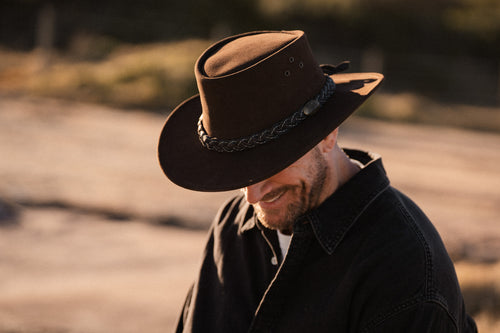
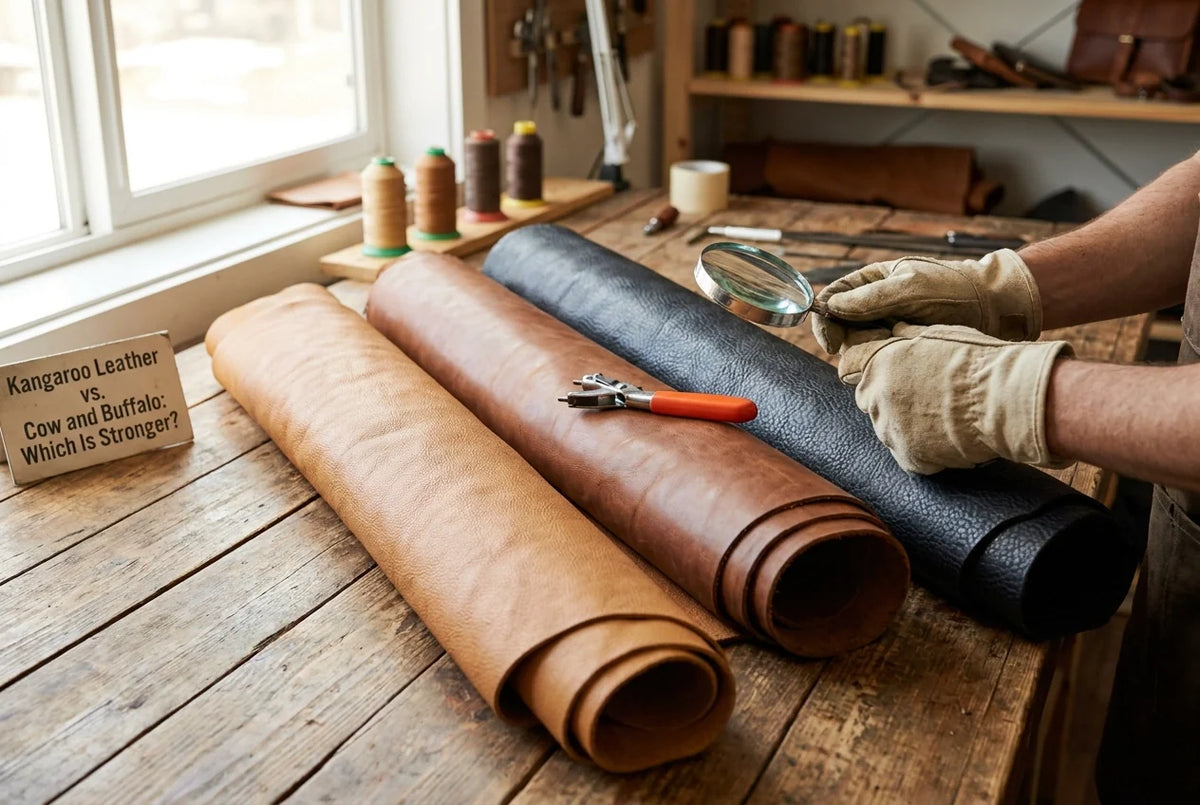
Kangaroo leather is arguably Australia's most distinctive hat material, and its sustainability story is structural rather than a marketing claim. Kangaroo harvesting in Australia operates under government-regulated wildlife management programs, meaning the leather is a traceable by-product of a controlled system rather than purpose-farmed production. This gives kangaroo leather genuine low-waste credentials that synthetic alternatives simply cannot match. For buyers who care about provenance, this is the material that delivers on its promises.
Buffalo and Cow Leather: Built to Last
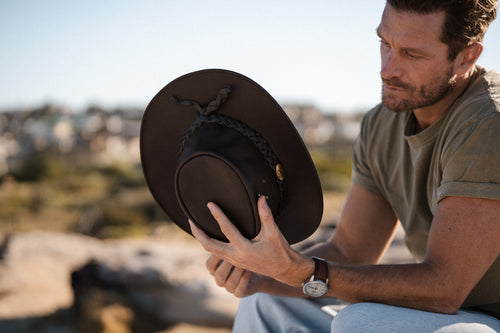
Buffalo and cow leather are the workhorses of outback hat-making, chosen specifically for their durability and weather resistance in harsh Australian conditions. What makes these materials genuinely special is how they age; over time, leather develops a rich patina that reflects the wearer's journeys and environment. Mass-produced synthetic hats flatten and degrade. Leather hats deepen in character. That distinction matters enormously to outdoor lovers and long-term adventurers.
Wool, Straw, and the Artisanal Tradition
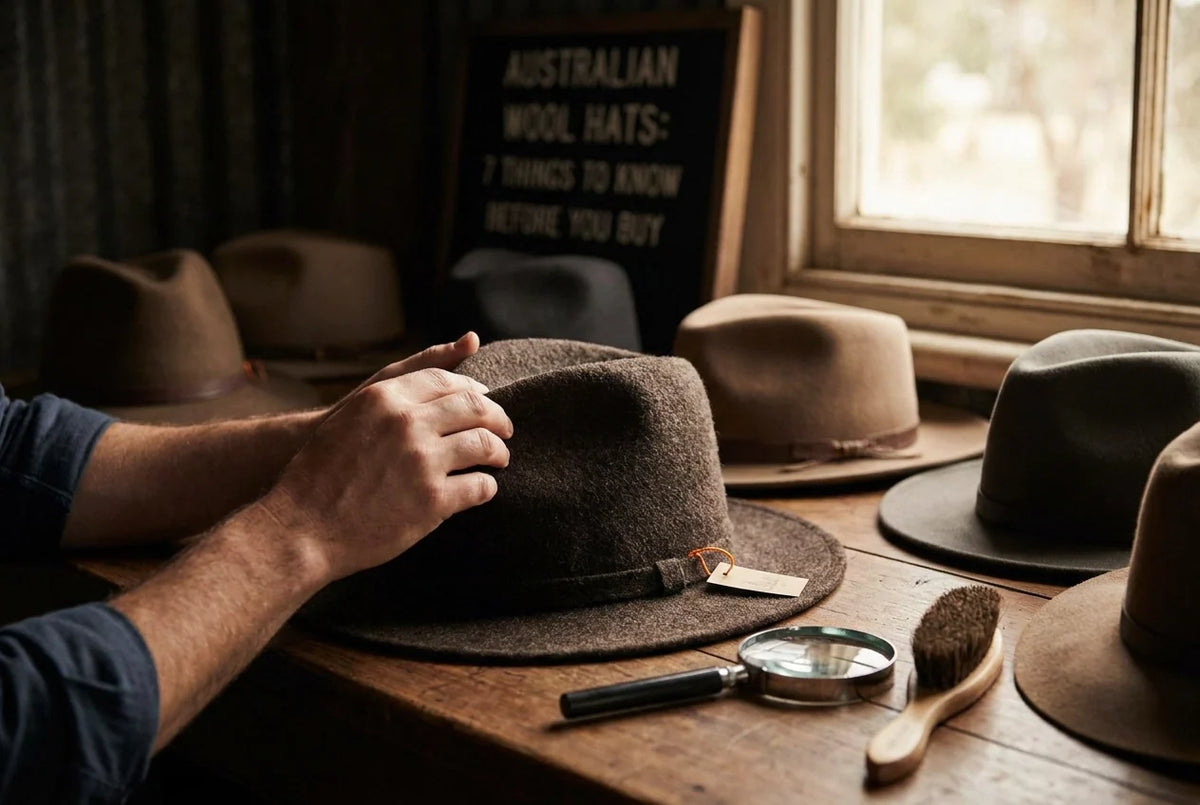
Wool and straw represent the broader handcrafted backbone of Australian hat-making. Globally, the artisanal felt hat segment covering wool, fur, and blended wide-brim styles is a documented growth category from 2025 to 2034, confirming that consumer appetite for handcrafted hats is accelerating, not fading.
Premium Materials in a Cotton-Dominated Market
Context helps here. Cotton accounts for 41.5% of the global hats market by material segment (Dataintelo, 2026), making it the dominant choice by volume. Leather and wool occupy a smaller but distinctly high-value niche. When you choose kangaroo leather or artisanal wool felt, you are stepping into a premium, differentiated product category defined by craftsmanship and longevity rather than mass production.
Uniquely Australian Embellishments
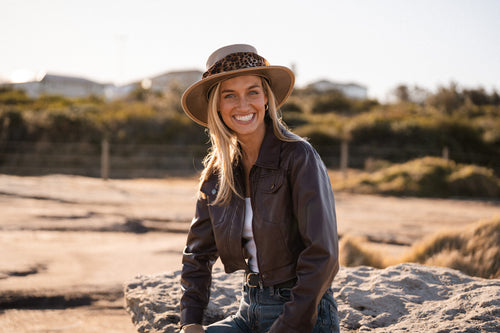
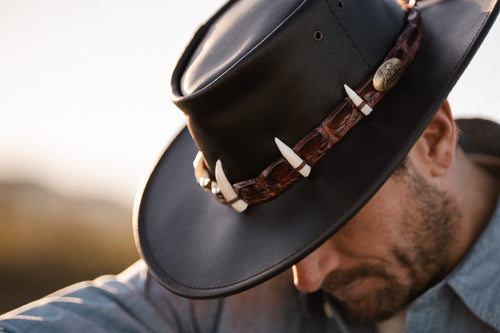
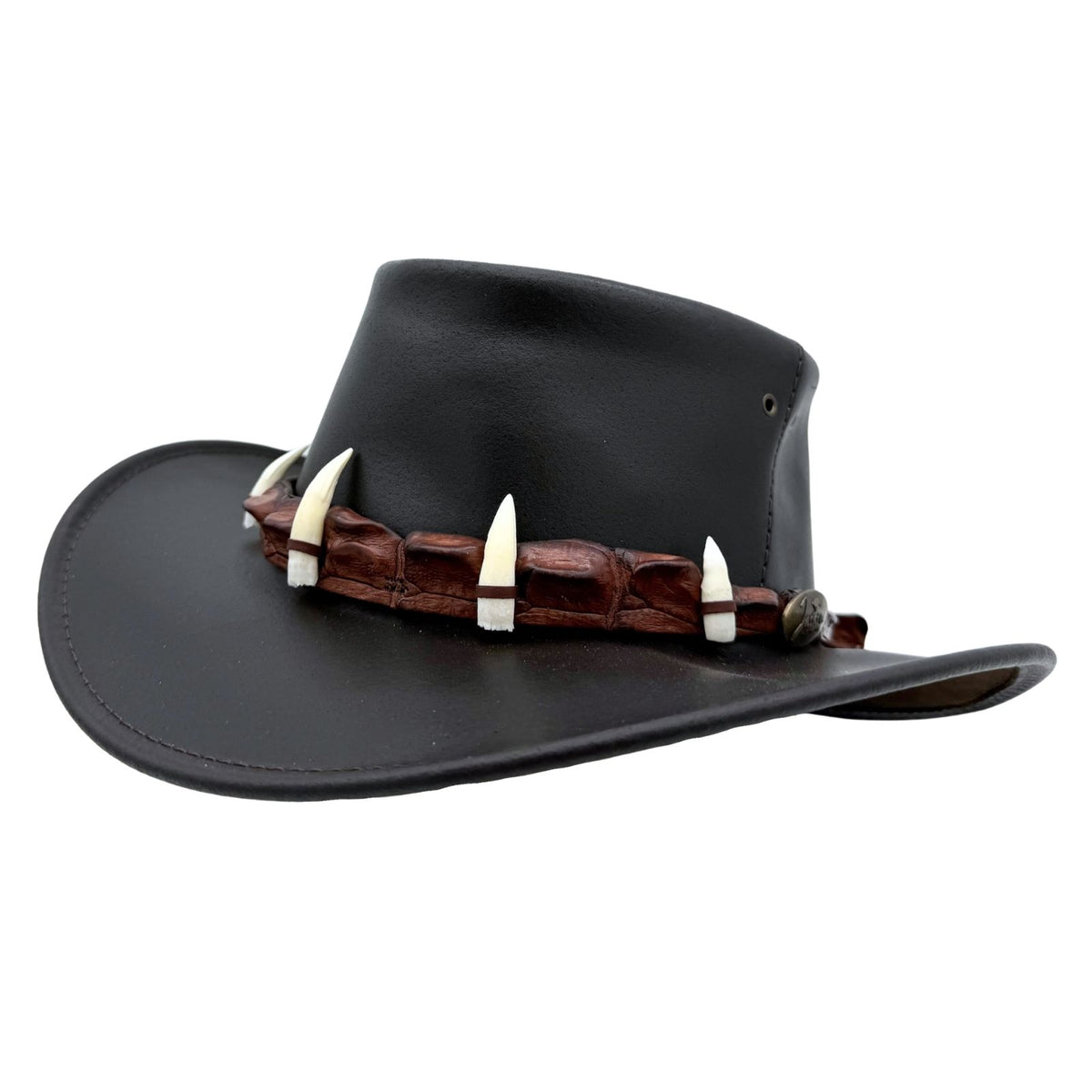
Some details simply cannot be replicated outside Australia. Genuine crocodile teeth hatbands and fur trim, as featured on Jacaru's range of Australian hats for women and men, are proof-of-origin markers as much as design features. The global recognition of the Crocodile Dundee aesthetic gives these accents cultural weight beyond their visual appeal, making them genuinely irreplaceable souvenirs and conversation pieces for international buyers.
Australia's Sun Safety Imperative and Why Wide-Brim Wins
Australia records more than one million skin cancer treatments and over 2,000 deaths every single year, and two in three Australians will be diagnosed with skin cancer by the age of 70, according to Cancer Council Australia. Those numbers reframe the humble hat entirely. A wide-brim Australian hat is not a fashion statement or a tourist souvenir; it is a piece of personal protective equipment that addresses one of the country's most pressing public health challenges. When you understand the scale of that burden, the design choices behind traditional Australian outback hats start to make immediate, practical sense.
The SunSmart program and Cancer Council Australia are specific about what constitutes a protective hat. A broad-brimmed hat must have a minimum brim width of 7.5 cm all the way around to qualify as genuinely sun-protective for adults. The traditional wide-brim outback hat, by its very design, meets or exceeds this standard. That broad brim was not an aesthetic accident; it evolved directly from the demands of working life under the Australian sun, providing consistent shade to the face, ears, neck, and lower face simultaneously.
Material matters just as much as shape. UPF (Ultraviolet Protection Factor) ratings account for both design and fabric construction. Tightly woven natural materials, including wool, leather, and straw, offer strong inherent UV resistance because dense fibre structures physically block UV rays from reaching skin. Loosely woven fabrics or thin synthetic caps provide minimal shielding by comparison. Critically, under Australian Standard 4399:2017, baseball caps and sun visors cannot claim or display a UPF rating at all, regardless of the fabric used.
That last point deserves emphasis. Baseball caps are owned by an estimated 68% of consumers globally, yet WorkSafe Victoria confirms they are explicitly not recommended by Australian health authorities because they leave the ears, neck, and cheeks fully exposed. These are precisely the areas where sun damage accumulates most consistently in outdoor workers and travellers. Outdoor workers face five to ten times more UV exposure per year than indoor workers, making hat choice a legitimate occupational health and safety consideration, not a personal style preference. For hikers, farmers, and travellers spending extended time outdoors, the wide-brim Australian hat answers a genuine physical need that no baseball cap can replicate.
The Cultural Heritage Behind the Outback Hat
The wide-brim outback hat did not begin as a fashion statement. It was shaped entirely by necessity, worn by the stockmen, drovers, and station hands who spent their working lives on horseback or on foot across Australia's vast, unforgiving open country. The broad brim offered protection from brutal sun, the high crown allowed air circulation, and the durable construction had to withstand years of hard use in dust, heat, and rain. This functional logic is so sound that the essential design has remained largely unchanged for well over a century, a rare example of form following function so perfectly that improvement becomes redundant.
The hat's global profile shifted dramatically with the release of the Crocodile Dundee film franchise. Mick Dundee's iconic wide-brim hat, finished with a crocodile-tooth hatband, introduced the Australian outback aesthetic to international audiences on a scale no tourism campaign could match. That single cinematic image permanently fused the wide-brim hat with rugged Australian identity, and the association has only deepened with time. Jacaru has built directly on this legacy, producing authentic Crocodile Dundee style hats featuring genuine crocodile teeth and traditional outback construction. These are working hats crafted in the Australian tradition, not costume replicas.
The commercial relevance of this heritage is significant. Asia Pacific leads global hat revenue at $9.6 billion, representing 41.0% of the total global market in 2025, according to Dataintelo. A meaningful portion of this demand connects directly to inbound tourism and a strong aspirational interest in Australian outdoor culture among Asian consumer segments.
For international visitors, an Australian-made hat offers something most souvenirs simply cannot. It is wearable, practical, and carries a layered story about landscape, identity, and craft. A hat made in Australia from kangaroo or bovine leather, finished with genuine crocodile teeth, communicates something deeply specific about place; no fridge magnet achieves that.
Premium vs. Mass-Market: How to Spot the Difference

The global luxury hats market is analytically distinct from mass-market headwear, tracked as its own segment through 2035 according to Business Research Insights. This matters for buyers because it confirms that premiumisation is real and measurable. Consumers in this segment are not simply paying for a brand name; they are specifically seeking craftsmanship, traceable materials, and a genuine origin story. Understanding what separates premium from mass-market helps you spend confidently and avoid being misled.
Construction Is the First Giveaway
Pick up a handcrafted hat and compare it to a volume-produced alternative and the difference becomes apparent quickly. Handcrafted hats show consistent, tight stitching along every seam, properly finished edges with no loose threads or uneven trimming, and deliberate shaping that holds its form. Machine-produced hats at competitive price points are built for speed, not precision. The finishing details that skilled hands produce simply cannot be replicated at high volume without significant visible compromise.
Materials Tell the Truth
Genuine kangaroo leather has a distinct texture, suppleness, and grain that synthetic or lower-grade substitutes cannot convincingly replicate once you handle them. Real crocodile teeth, hand-set into a hatband, are immediately distinguishable from moulded plastic imitations. Natural wool and straw have a weight and breathability that man-made fibres approximate but never match. The headwear market's own segmentation confirms leather as a distinct minority category in a market dominated by polyester and cotton, reinforcing that genuine leather hats occupy a specialist, high-value position.
Price Reflects Real Costs
The dominant global headwear players compete on volume at mass-market price points. Named competitive leaders including Crown Cap, Chautuan, and TTD Berman Cap (Dataintelo, 2026) are oriented toward scale and distribution, not artisan craft. This leaves the premium Australian-made niche largely uncontested globally, which is precisely where Jacaru operates. A hat priced similarly to fast-fashion headwear and claiming genuine kangaroo leather construction in Australia should prompt serious scepticism; authentic Australian-made leather hats reflect the true cost of quality materials and skilled local labour, and that cost is visible in the price.
Who Buys Australian-Made Hats and Why
Understanding who actually buys Australian-made hats helps clarify exactly why quality and provenance matter so much in this category. The buyer pool is broader than most people assume, and each group has distinct reasons for choosing a genuinely Australian product over a cheaper imported alternative.
Outdoor workers, farmers, and adventurers form the foundational buyer group. These are people who wear a hat for eight or more hours a day in conditions that would destroy a lesser product within a season. They need wide-brim coverage against intense UV, structure that holds up in wind and rain, and a fit that stays comfortable across a full working day. Australian-made leather and wool hats are engineered precisely for this environment, built from materials that breathe, mould to the wearer's head over time, and resist the kind of wear that synthetic alternatives simply cannot handle.
International tourists and gift buyers represent a significant and growing second segment. For visitors to Australia, an Australian-made hat is not merely a souvenir; it is a functional, premium object with a production story that mass-manufactured tourist merchandise cannot replicate. These buyers are paying for authenticity and provenance, not just a logo. A leather outback hat crafted in Australia carries a narrative weight that justifies its price point and travels home as a genuinely useful keepsake.
Sustainable fashion consumers are an increasingly active buyer group that deserves serious attention. According to YouGov research, 41% of Australian consumers have already purchased at least one sustainable fashion product, with Gen Z and Millennials leading adoption. Critically, 56% of non-buyers cite availability as the main barrier, meaning brands that make their Australian-made credentials easy to find and clearly communicate their materials are positioned to convert significant latent demand. The sustainable fashion market forecast through 2034 lists accessories as a core growth segment, placing Australian-made hats directly in the path of this consumer shift.
Corporate gift buyers are a distinct segment that is frequently overlooked in hat marketing. Australian-made hats with custom branding or premium presentation packaging serve as high-value corporate gifts for companies in tourism, agriculture, resources, and export who need items that communicate Australian identity at a professional tier. A well-presented leather hat communicates far more than a branded pen or tote bag ever could.
Underpinning all of this is a strong macro tailwind. The global hats market is projected to grow from $23.4 billion in 2025 to $38.7 billion by 2034 at a CAGR of 5.8% (Dataintelo). The audience for premium Australian-made hats is expanding, making now a genuinely strong moment to invest in a quality piece that will last for years.
What to Look for When Buying an Australian-Made Hat
Knowing what to look for before you buy saves you from paying a premium price for an imported product dressed in Australian branding. Use this checklist every time.
1. Look for the Australian Made logo or a verified provenance claim. The Australian Made logo is a registered certification mark with legally defined criteria; it is the clearest third-party signal that a hat was genuinely manufactured on Australian soil using significant Australian content. If a brand makes Australian-made claims without displaying this logo or an equivalent certified declaration, ask directly: where is the hat manufactured, and where are the materials sourced? A credible brand will answer both questions without hesitation.
2. Read material labelling with precision. Vague descriptors like "genuine leather" with no further detail are a red flag. A legitimate Australian leather hat should identify the specific hide used; kangaroo, buffalo, or cowhide are distinct materials with different weight, durability, and texture profiles. Specificity in labelling reflects specificity in production. If a brand cannot name the leather, that is worth noting before you purchase.
3. Assess construction quality directly. Whether you are shopping in person or online, examine stitching consistency, edge finishing, hatband attachment, and the interior sweatband material. These details expose manufacturing standards far more honestly than any product description. For a closer look at how materials and construction intersect in a quality leather hat, Jacaru's guide to leather cowboy hats covers exactly these considerations.
4. Prioritise brand heritage and transparency. Jacaru has been handcrafting hats in Australia since 1968, and that longevity matters. A brand with decades of documented production history can speak specifically about its suppliers, materials, and processes. Newer entrants making broad Australian-made claims without that supporting detail deserve closer scrutiny.
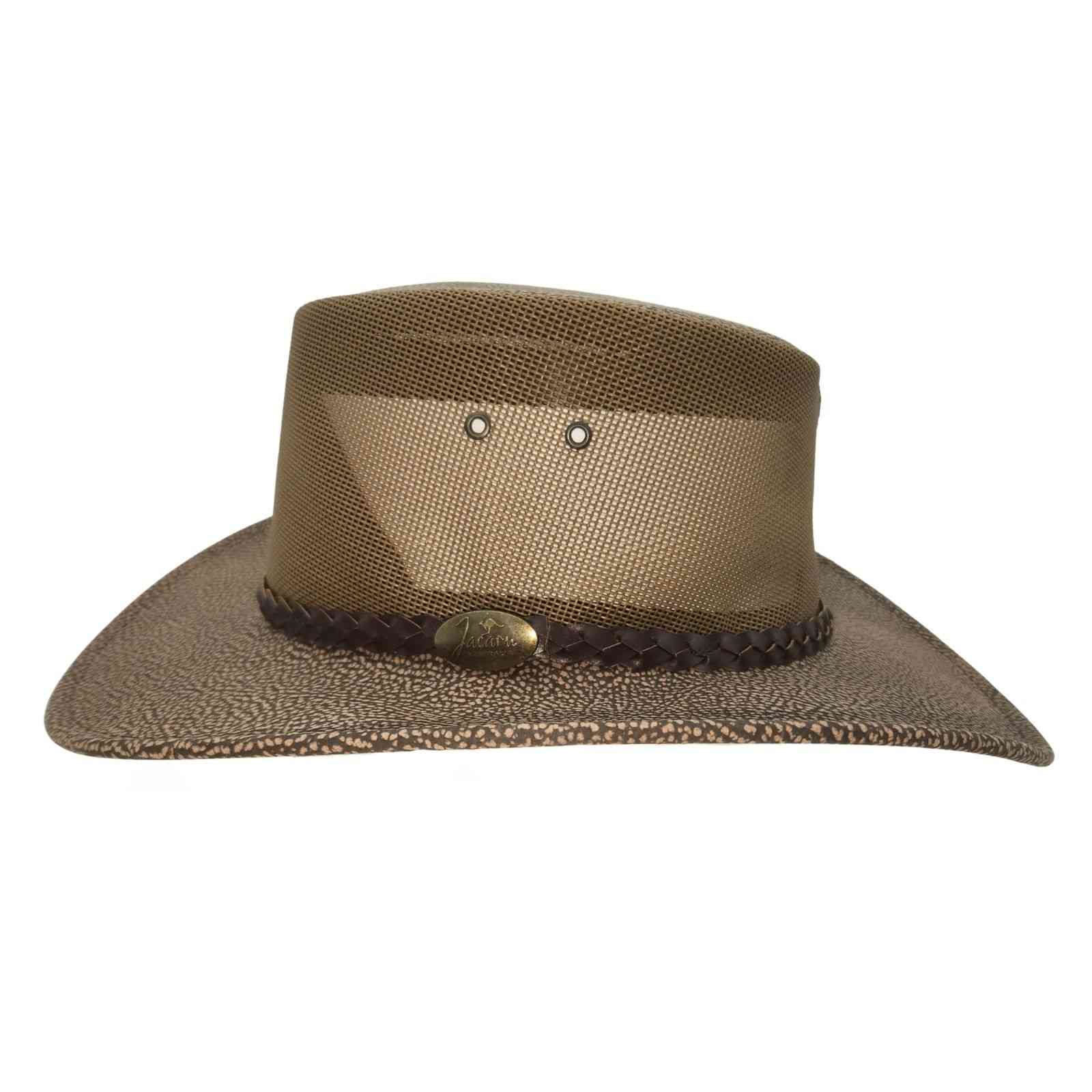
5. Use Jacaru as your benchmark. Jacaru's full range, covering outback hats, kangaroo leather hats, buffalo leather hats, ladies hats, and the signature Crocodile Dundee style hats with genuine crocodile teeth, satisfies every point on this checklist. It is a practical and reliable starting point for any first-time buyer.
The Australian-Made Difference Is Worth Seeking Out
Australian-made hats earn their place through verifiable substance: premium leathers, wool, and natural materials; craftsmanship refined over decades; functional wide-brim designs built for genuine UV conditions; and a cultural heritage rooted in the actual landscape. None of that comes from a marketing brief. It comes from the work itself.
Before you buy, run through the checklist covered in the previous section. Confirm the Australian Made certification mark, verify the manufacturing location, and question any hat that leans on outback imagery without stating where it was made. Country-themed branding is common, and real sun protection built for Australian conditions is a specific design outcome, not a visual aesthetic.
For buyers who want full material transparency and a documented Australian heritage, Jacaru's hat range is the practical next step. Their leather outback hats, from kangaroo to buffalo hide, represent exactly the kind of certified, traceable provenance this entire article has been building toward.
The closing thought is simple. In a global headwear market where 68% of consumers own a baseball cap, choosing an Australian-made wide-brim hat is a deliberate, values-driven decision. It reflects where the hat was made, what it was made from, and why that still matters. And that difference shows.

Conclusion
Choosing a hat made in Australia is about more than just style. It means investing in genuine craftsmanship, supporting local makers, and getting headwear built to handle real Australian conditions. When shopping, look for verified local manufacturing, quality natural materials, and brands with a transparent production story. These details separate a hat that lasts years from one that fades after a single summer.
The right hat is out there waiting for you. Take what you have learned here and shop with confidence, asking the right questions and knowing exactly what to look for. Browse Australian-made hat brands today, compare your options, and choose a piece you will be proud to wear for years to come. When you invest in quality made locally, you are not just buying a hat. You are buying into a tradition worth keeping alive.


Our friends at Bocchetta Plush Toys have a great range of lifelike plush animals that make great gifts for people of all ages.