






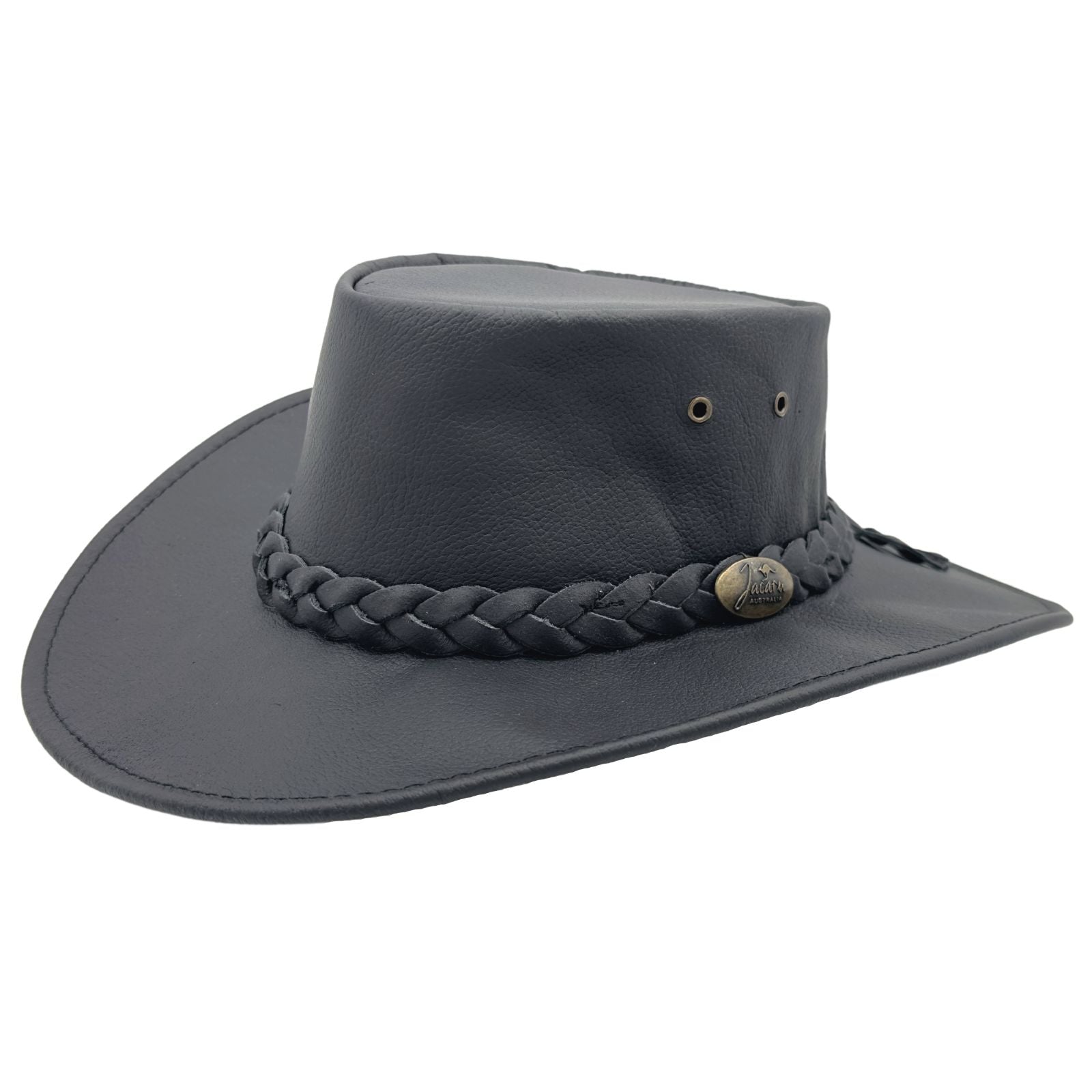


Australian Outback Hat Leather: What Makes the Real Thing

Not all hats are created equal, and when it comes to surviving the brutal Australian sun, the leather you choose makes all the difference. The iconic silhouette of a wide-brimmed Akubra or drover hat has become synonymous with rugged outdoor life, but the real story lies beneath the surface, in the quality and character of the australian outback hat leather that gives these hats their legendary durability.
Serious hat enthusiasts know that leather accents, bands, and trims are what separate a genuine working hat from a tourist trinket. Yet with so many options flooding the market, knowing what to look for can feel overwhelming. The wrong leather cracks, fades, and fails you exactly when you need it most.
In this guide, we break down the key factors that define authentic, high-quality outback hat leather. From hide selection and tanning methods to weatherproofing treatments and regional craftsmanship, you will walk away with a clear, confident understanding of what makes the real thing worth every cent. Let us get into it.
Why Leather Is the Definitive Outback Hat Material
Not all hat materials are created equal, and in the Australian outback, the difference between a good material choice and a poor one is measured in years of reliable performance. Leather has earned its place as the definitive outback hat material through a combination of physical properties that felt and straw simply cannot match under sustained sun, wind, and rain exposure.
Built for Australia's Harshest Conditions
Australia's UV index regularly reaches "extreme" ratings across large parts of the continent, and the outback presents a combination of intense sun, dust, and sudden rain that degrades softer hat materials rapidly. Leather's natural density and surface oils provide inherent water resistance, allowing it to shed light rain without absorbing moisture and losing its shape. Straw becomes brittle and splits under prolonged UV exposure, while felt softens and sags when repeatedly wetted and dried. Full-grain leather, by contrast, develops a tighter surface over time, becoming more resistant to the elements rather than weaker. For anyone spending genuine time outdoors, this distinction is not a minor detail; it determines whether the hat is still functional after a full season of use.
A Fit That Becomes Yours
Full-grain leather gradually conforms to the wearer's head shape through repeated use, pressure, and body heat. This progressive moulding creates a personalised fit that synthetic materials and processed leathers cannot replicate. Kangaroo leather, a material used by Australian leather hat specialists like Jacaru, is particularly notable here. Its cross-hatched collagen fibre structure makes it both lighter and more flexible than bovine hide, allowing it to conform more readily while retaining structural integrity.
Patina, Rigidity, and Real Value
Where a cheap hat deteriorates, a quality leather hat evolves. The surface of full-grain leather hardens and darkens with use, building a patina that reflects the hat's history rather than signalling neglect. Scuffs and creases read as character, not damage. Structurally, a leather brim maintains its wide, rigid shape under wind and movement, providing consistent shade coverage that a straw or felt brim cannot reliably sustain once the material begins to break down.
The long-term value case for leather is straightforward. Mass-market hat alternatives average around USD 32 on the global market, but they require regular replacement as materials degrade. A premium outback leather hat from Jacaru is built for decades of use, meaning the higher upfront investment translates into genuine cost-per-use savings over time. As global demand for premium craftsmanship continues to drive the traditional leather market toward a projected USD 244.69 billion by 2035, the value of investing in a properly made leather hat has never been more clearly supported by broader consumer trends.
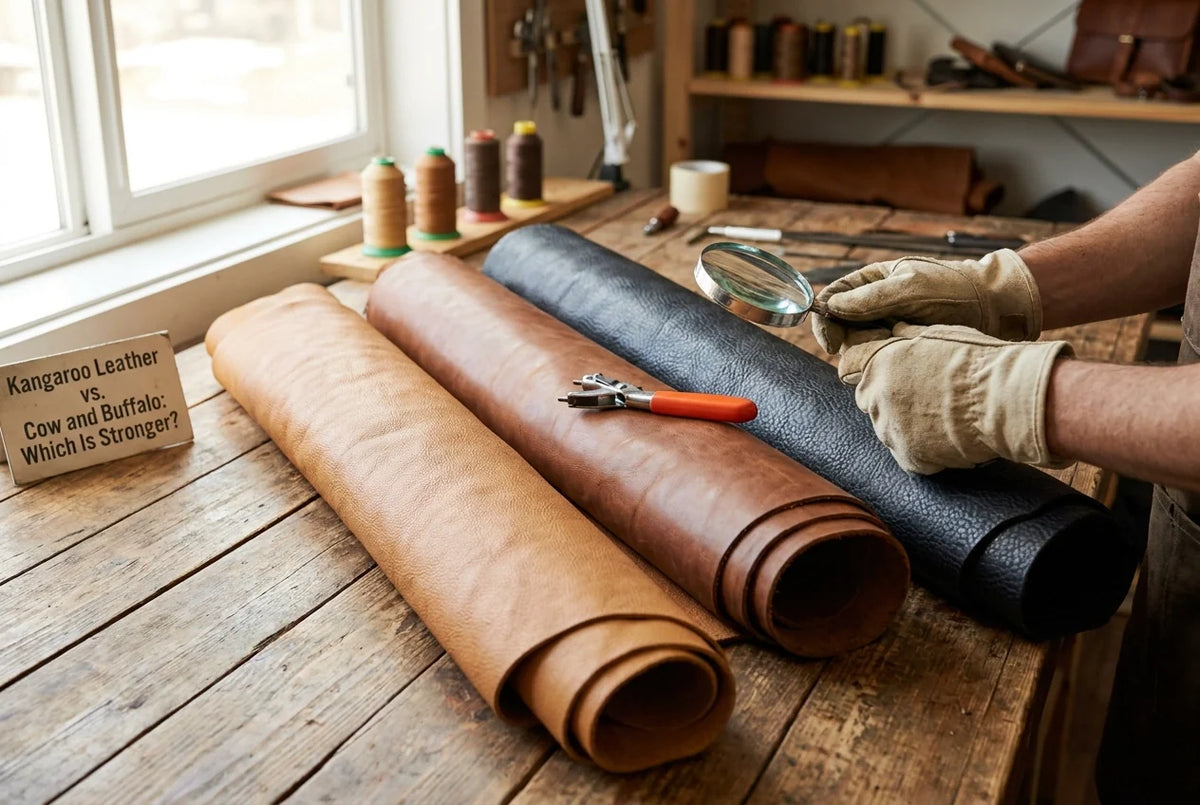
Kangaroo Leather vs. Buffalo Leather vs. Cowhide: The Real Differences
Not all Australian outback hat leathers perform the same way, and understanding the real differences between your options helps you invest in the right hat for your specific needs. Here is how the three primary materials compare across the characteristics that matter most.
1. Kangaroo Leather: Lightweight Strength That Outperforms Its Weight Class
Kangaroo leather holds one of the highest tensile strength-to-weight ratios of any commercially available leather. At equivalent thickness, it is significantly lighter than cowhide while delivering comparable or superior structural resilience. This translates directly to all-day hat comfort; a kangaroo leather outback hat sits on your head without the cumulative fatigue that a heavier cowhide alternative can produce over a full day in the field. The material is also notably flexible, conforming naturally to the wearer without sacrificing shape retention. For serious outdoor use, these properties are not incidental. They are decisive. You can explore Jacaru's dedicated kangaroo leather hat collection to see how this material translates into finished outback headwear.
2. Buffalo Leather: Built for Rugged Conditions and Heavy Use
Buffalo leather is thicker and more prominently grained than standard cowhide, giving hats an unmistakably rugged surface character that visually signals durability before you even handle the product. More importantly, the denser fibre structure delivers superior resistance to surface abrasion. If your hat is going to encounter scrub, fencing wire, or sustained contact with rough surfaces, buffalo hide absorbs that punishment without degrading the way lighter materials can. The structural integrity holds across extended heavy outdoor use in ways that position buffalo leather as the serious working option within the premium tier.
3. Cowhide: Reliable, Accessible, but a Step Behind
Cowhide remains the global leather standard for good reason. It is durable, widely available, and consistent in quality across production volumes. For most buyers, a well-made cowhide outback hat delivers excellent long-term performance and represents strong value. However, cowhide lacks the weight efficiency of kangaroo leather at equivalent thickness and does not carry the pronounced grain character and abrasion resistance of buffalo hide. It is the capable benchmark against which the other two materials should be measured rather than the aspirational choice.
4. Jacaru Offers All Three, Including Materials No Mass-Market Brand Touches
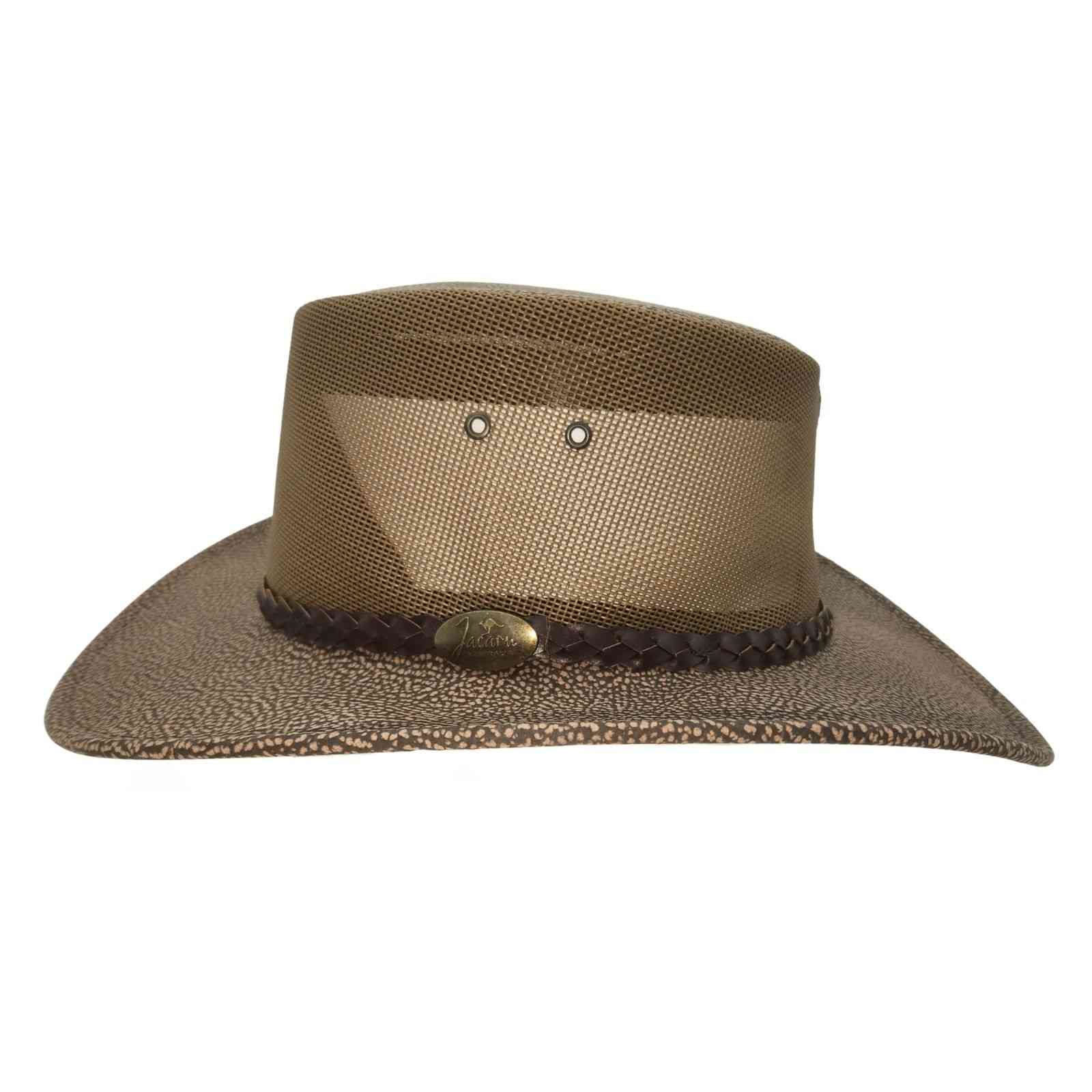
Jacaru's Australian outback leather hat range spans kangaroo, buffalo, and cowhide options, structured so buyers can match material to end use. Kangaroo and buffalo represent genuinely Australian premium options that mass-market hat brands do not currently offer at scale.
5. Kangaroo Leather Carries Sustainability Credentials Cowhide Cannot Match
Kangaroo leather is sourced through Australia's federally managed commercial harvest programme, conducted on wild populations under strict quota systems. The land-use and water footprint is substantially lower than cattle-derived leather. This gives kangaroo leather a verifiable sustainability narrative that imported cowhide alternatives simply cannot claim, a meaningful consideration for buyers who want premium performance aligned with responsible sourcing.
The Cultural Origin of the Australian Leather Outback Hat
The Australian leather outback hat is not a fashion invention. It is a working tool with a traceable origin rooted in some of the harshest occupational conditions on earth.
During the 19th and early 20th centuries, drovers, stockmen, and bushmen spending months at a time in Australia's interior needed headwear that could endure relentless sun, driving rain, red dust, and rough daily handling without losing its structural integrity or protective function. The wide brim was not a stylistic flourish; it was a calculated response to a landscape that offered little natural shade and no tolerance for equipment failure. The design persisted because it worked.
Leather emerged as the preferred construction material for the most demanding working conditions because it fundamentally outlasted alternatives. Wool felt, the other common hat material of the era, degrades under prolonged moisture and heat cycling. Repeated wetting and drying causes felt to shrink, distort, and eventually lose its shape entirely. Full-grain and treated leathers, by contrast, absorb and release moisture without structural collapse, maintain their form under heat, and develop a working patina over time rather than deteriorating. The material logic was practical, not aesthetic, and it produced a hat that could be described accurately as one of the most functionally durable hat forms in use.
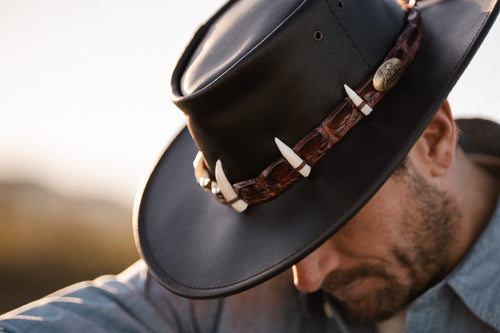
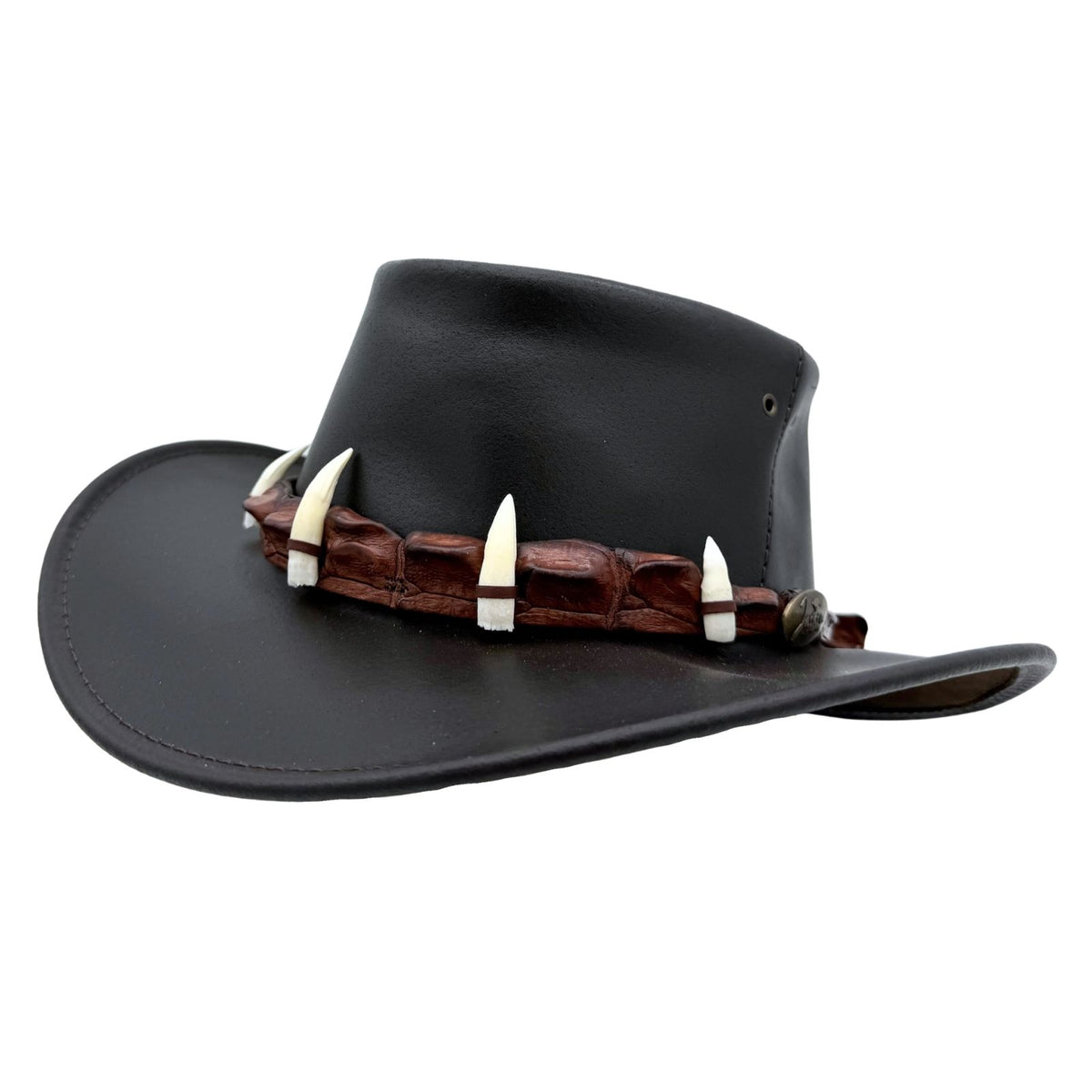
The 1986 release of Crocodile Dundee compressed decades of bush identity into a globally recognised symbol and introduced the Australian outback leather hat to an international audience overnight. Jacaru, established in 1968 and producing authentic working hats well before the film's release, carries this heritage directly through its Crocodile Dundee-style range featuring genuine crocodile teeth and backstrap hatbands. These are not novelty reproductions; they are functional hats built on the same construction principles that predated the film's cultural moment by nearly two decades. You can explore an authentic Jacaru outback bush hat to see how closely the contemporary design maintains its original working proportions.
The design has remained functionally unchanged because it was perfected for purpose before it became iconic. The wide brim shades the face, neck, and shoulders simultaneously. The leather construction survives the elements across seasons. The hatband and puggaree provide practical attachment points for pins, corks, and regional decoration that working wearers have relied on for generations.
This functional and cultural lineage is what separates the Australian leather outback hat from the fashion-driven leather caps and fedoras that dominate mass-market search results. Those products are designed around appearance. The Australian outback hat was designed around survival in a specific landscape, then earned its cultural meaning through sustained practical use.
How to Identify an Authentically Australian-Made Leather Outback Hat

The outback hat market is saturated with products borrowing Australian imagery without any genuine connection to Australian manufacture. Knowing how to separate authentic from imitation protects your investment and ensures you receive the performance and provenance you are paying for. Five concrete criteria make this distinction reliable.
1. Country of Manufacture Is the First Filter
Terms like "Australian Outback," "Dundee style," and "Aussie-inspired" are marketing descriptors, not country-of-origin certifications. A hat carrying these labels may have been produced entirely offshore using imported materials. Always look for explicit "Made in Australia" labelling and verify it against the manufacturer's own documentation rather than relying on product naming. Hats Made in Australia: What to Look For and Why It Matters outlines precisely what distinguishes a domestically produced hat from a styled imitation. Jacaru explicitly hand-finishes its hats in Australia, which is a verifiable, documented claim rather than a branding choice.
2. Material Labelling Signals Quality and Origin
Authentic kangaroo leather and buffalo leather hats specify the hide source precisely, because the material itself is part of the value proposition. Kangaroo leather is harvested under government-managed quotas in Australia and is recognised for exceptional tensile strength relative to its weight. Vague terms like "genuine leather" without naming the species or sourcing region typically indicate lower-grade imported cowhide of indeterminate quality. Explicit material naming is the industry standard for transparent, premium products.
3. Construction Markers Separate Premium from Mass-Produced
A hand-finished Australian outback hat exhibits specific physical characteristics: clean hand-finished edges rather than raw or machine-cut margins, a structured crown with an internal sweatband, a secure and adjustable hatband, and consistent stitching tension across every seam. Irregular stitching tension is a reliable indicator of automated, low-oversight production. The Best Leather Cowboy Hats: Materials, Style and Durability covers these construction standards in practical detail.
4. Crocodile Tooth Hatbands Must Be Verified as Genuine
Resin and acrylic replicas of crocodile teeth are common in the decorative hat market. A genuine crocodile tooth hatband should be explicitly confirmed as real, not "crocodile-style" or "decorative." Jacaru sources real crocodile teeth through licensed Australian suppliers, operating within state and federal wildlife regulations. This is a verifiable authenticity marker that resin replicas cannot replicate under scrutiny. As Bernard Hats notes in their product description, a genuine Jacaru outback hat features real crocodile teeth as a confirmed distinguishing feature, not a decorative approximation.
5. Price Is a Reliable Indirect Signal
Authentic Australian-made leather hats require premium hide sourcing, licensed exotic materials, and skilled domestic labour. All three carry significant cost. Products listed substantially below AUD 100 on international marketplaces are almost certainly offshore-manufactured with imported materials, regardless of the outback branding applied. The average Amazon US leather hat lists at just USD 32.35, a price point incompatible with genuine kangaroo leather and Australian hand-finishing. When a price looks inconsistent with what premium materials and local craftsmanship actually cost, it is a direct indicator that one or both are absent.
How to Care for a Leather Outback Hat and Make It Last Decades

A premium Australian outback hat leather deserves care that matches its quality. Follow these five practices consistently, and your hat will outlast decades of hard use.
1. Condition the Leather Every Three to Six Months
Conditioning is the single most important maintenance habit for any leather outback hat. Sun exposure and sweat strip the natural oils from leather fibres, leaving the material prone to drying, cracking, and losing the structural flexibility that gives a well-worn hat its character. Apply a lanolin-based or beeswax leather conditioner on a clean cloth, working it into the leather in circular motions before buffing off any excess. In Australian conditions, where UV intensity is significantly higher than in temperate climates, consider conditioning every three months during summer rather than waiting the full six. Kangaroo leather, being denser and finer per fibre than cowhide, absorbs conditioner efficiently; buffalo leather may benefit from slightly more product given its thicker grain structure.
2. Waterproof Before First Use and Refresh Seasonally
Apply a water-resistant leather treatment before your hat is worn outdoors for the first time, and refresh this treatment at the start of each outdoor season. Choose a beeswax or lanolin-based waterproofer rather than a silicone-based product; silicone coatings clog leather pores over time, restricting the material's ability to breathe and accelerating long-term deterioration. This single product choice has a compounding effect on how well the leather ages over years.
3. Reshape the Brim While the Leather Is Slightly Damp
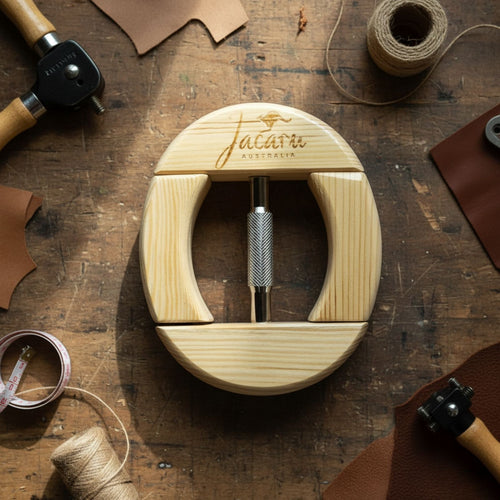
Leather responds well to controlled reshaping when lightly moistened. If your brim has lost its curve, dampen the affected area gently, hand-mould it back to its original position, and leave the hat to dry on a flat surface or hat stand away from direct heat. A dedicated tutorial on shaping outback leather hats has accumulated over 150,000 views online, confirming this is one of the most common care challenges owners face. Never use a hair dryer or place the hat in direct sunlight to speed drying, as concentrated heat causes irreversible shrinkage and stiffening.
4. Store Crown-Down or on a Wide Hat Stand
How you store a leather outback hat matters as much as how you clean it. Resting a hat brim-down on a flat surface for extended periods permanently distorts the brim curve, undoing the hat's shape over time. Store it crown-down on a padded surface or on a wide hat stand that supports the full circumference of the brim. If packing for travel, fill the crown with soft items such as rolled socks to maintain its structure during transit.
5. Clean Gently and Avoid Submerging the Leather
Remove surface dust weekly with a soft brush or lightly damp cloth. For deeper stains, use a leather-specific cleaner and always test it on a hidden area first to confirm no discolouration occurs. For a thorough walkthrough of stain removal techniques, American Hat Makers' leather hat cleaning guide provides reliable step-by-step guidance. Never submerge a leather hat in water; saturation breaks down the internal structure and leads to warping, cracking, and mould growth, particularly in humid storage environments.
Why a Leather Outback Hat Is One of the Most Considered Australian Gifts
Few gift categories combine cultural authenticity, functional longevity, and genuine craftsmanship the way an Australian outback hat leather does. For international buyers, particularly those in the United States, demand for leather hats peaks in January, October, November, and December, aligning precisely with the Northern Hemisphere's gifting season and the post-holiday travel period when people return home with considered purchases rather than impulse buys. This timing makes a premium Australian leather outback hat a natural fit for buyers who want to give something meaningful rather than something forgettable.
The distinction between a lasting gift and a disposable souvenir matters enormously. Most travel purchases lose relevance within months; a well-constructed leather hat does not. Quality leather goods, particularly those crafted from kangaroo or buffalo hide, are recognised for their durability across decades of regular use. A hat bought in Australia can still be worn, admired, and handed down years later, giving the gift a permanence that a fridge magnet or novelty item simply cannot match.
Jacaru's outback hat range addresses this through genuine material and style diversity. Options span kangaroo leather hats, buffalo hide, and cowhide, with styles ranging from the Boundary Rider through to the Dundee Croc, a hat featuring genuine crocodile tooth detailing that no mass-market product can replicate. That level of specificity is what separates a considered gift from generic merchandise.
For corporate gifting, this specificity carries professional weight. A premium Australian leather hat communicates cultural knowledge, sourcing intentionality, and craftsmanship in a way that branded pens or tote bags never will. Jacaru's wholesale access and corporate gift options make it practical for businesses to source these at scale without sacrificing quality.
International travellers face a specific constraint when buying gifts: the item must travel well, last the journey, and be unambiguously Australian. A leather outback hat is lightweight relative to its size, structurally resilient, and culturally unmistakable. No other single product category satisfies all three of those requirements as consistently or as elegantly.
The Sustainability Case for Australian Leather Outback Hats
Choosing an Australian outback hat leather carries more weight than most buyers realise. The sustainability credentials of these hats are built on five concrete pillars, not marketing language.
1. Kangaroo leather operates within a government-regulated framework
Kangaroo leather is a by-product of Australia's federally managed commercial harvest programme, administered to maintain ecological balance across pastoral landscapes. The harvest is subject to annual quotas set at the federal level, with population monitoring conducted to ensure long-term viability. This means buyers are supporting a supply chain with documented, government-regulated environmental oversight, something few leather categories anywhere in the world can genuinely claim. The benefits of kangaroo leather in hats are inseparable from this regulated origin story.
2. Australian-made goods provide full supply chain traceability
Offshore production in countries with weaker environmental and labour standards creates opacity at every stage of manufacturing. An Australian-made leather hat from a producer like Jacaru offers a traceable origin from raw hide to finished product, with domestic tanneries recognised internationally for their processing standards across energy, water, and waste management.
3. Premiumisation is reshaping how consumers spend
The global traditional leather market is growing toward USD 244.69 billion by 2035, driven significantly by buyers choosing fewer, higher-quality items with known provenance over disposable fast fashion. Australian leather outback hats sit precisely at this intersection of quality, heritage, and intentional purchase.
4. Longevity is the strongest sustainability argument
A Jacaru hat worn consistently for 20 years displaces dozens of lower-quality alternatives that would otherwise be manufactured, shipped, and discarded during the same period. According to the Australian Hide Skin and Leather Exporters Association, genuine leather lasts approximately eight years on average versus two to three years for synthetic alternatives, and the carbon footprint of genuine leather production is near parity with synthetic leather, undermining the assumption that synthetics are inherently greener.
5. The full lifecycle comparison favours natural leather
The life cycle assessment of leather reveals that mass-produced synthetic alternatives carry hidden environmental costs across production, durability, and end-of-life disposal. PVC-based products can take up to 500 years to decompose, while finished leather breaks down within decades. On durability, traceability, and material origin, a premium Australian leather outback hat makes a compelling case that holds up to genuine scrutiny.
Choosing an Australian Outback Hat That Will Actually Last
Four criteria determine whether a leather outback hat is worth your money: material type, verified Australian manufacture, authentic construction markers, and intended use. Get all four right, and you own a hat that improves with age. Compromise on any one of them, and you are likely purchasing a fashion accessory dressed in outback vocabulary.
The mass-market leather hat segment averages USD 32 per listing on Amazon US, with no verified cultural provenance, no specified hide origin, and no traceable Australian manufacture. That category is a different product entirely. Buyers seeking a genuine Australian leather outback hat are not comparison shopping against those listings; they are making a considered investment in a different tier of craftsmanship altogether.
Jacaru's range of leather outback hats sets the benchmark for authentic Australian-made construction. Options span kangaroo leather, known for exceptional tensile strength at low weight, through to buffalo leather for rugged heavy-duty wear, and the iconic Crocodile Dundee-style hats featuring genuine crocodile tooth detailing. Each material choice suits a specific use case, whether daily outdoor wear, international gifting, or a serious collection of Australian-made pieces.
Longevity should factor into every purchase decision at this tier. A well-conditioned Jacaru hat moulds to the wearer's head over time, develops a distinctive patina, and remains structurally sound across decades of use. That is the nature of full-grain leather from a verified Australian maker.
Explore Jacaru's outback hat collection to match the right material, style, and size to your needs, or to find a gift that carries genuine Australian provenance.
Conclusion
Choosing the right australian outback hat leather comes down to four essentials: quality hide selection, proper tanning methods, reliable weatherproofing treatments, and genuine regional craftsmanship. A hat built on these foundations will not just look the part; it will perform when the sun is relentless and the conditions are unforgiving.
Do not settle for leather that cracks after one season or trims that fade before the trail ends. The real thing rewards you with years of dependable service and a character that only deepens over time.
Now that you know what separates authentic craftsmanship from cheap imitation, put that knowledge to work. Inspect your next hat with confidence, ask the right questions, and invest in leather that earns its place under the Australian sky. Your head, and your adventures, deserve nothing less.


Our friends at Bocchetta Plush Toys have a great range of lifelike plush animals that make great gifts for people of all ages.