









7 Things Worth Knowing Before You Buy a Leather Belt

So you've decided it's time to upgrade your wardrobe with a quality leather belt. Maybe your old one is falling apart, or perhaps you just want something that actually looks good and lasts more than a season. Either way, you're in the right place.
Here's the thing, though. Walking into a store or scrolling through options online can feel surprisingly overwhelming. With so many styles, materials, and price points out there, it's easy to grab the wrong one and regret it later. A good leather belt should last you years, maybe even decades, but only if you know what to look for.
The good news is that buying a leather belt doesn't have to be complicated. A little bit of knowledge goes a long way, and that's exactly what this guide is here to provide. Whether you're shopping for your first real leather belt or just want to make a smarter choice this time around, these seven tips will help you feel confident before you spend a single dollar. Let's break it all down in a way that actually makes sense.
1. Not All Leather Is Created Equal
Walk into any shop selling leather belts and you'll see price tags ranging from $15 to $250 for what looks like basically the same product. Here's the thing: the difference isn't just branding. It comes down to what the leather actually is, and understanding this one thing will save you from buying a belt that falls apart before your next adventure.
The leather hierarchy works like this. At the top sits full-grain leather, cut from the outermost layer of the hide with all its natural fiber structure intact. No heavy sanding, no artificial grain stamped on top. This is the stuff that lasts decades with occasional conditioning and develops a rich patina the longer you wear it. Think of it as heirloom-grade material. Just below that is top-grain leather, which is sanded smooth to remove surface imperfections. Still strong and durable, still a solid choice, but it won't age quite as beautifully as full-grain. Then comes "genuine leather," which sounds reassuring but is actually a warning sign. It refers to the lower split layers of hide, heavily processed and finished to look presentable. Lifespan under regular use? A few years, if you're lucky. At the very bottom sits bonded leather, which is essentially leather scraps and fibres ground up and glued together. It peels, it cracks, and it gives up entirely when exposed to moisture or repeated flexing. You can read more about how these leather grades compare in durability if you want the full breakdown.
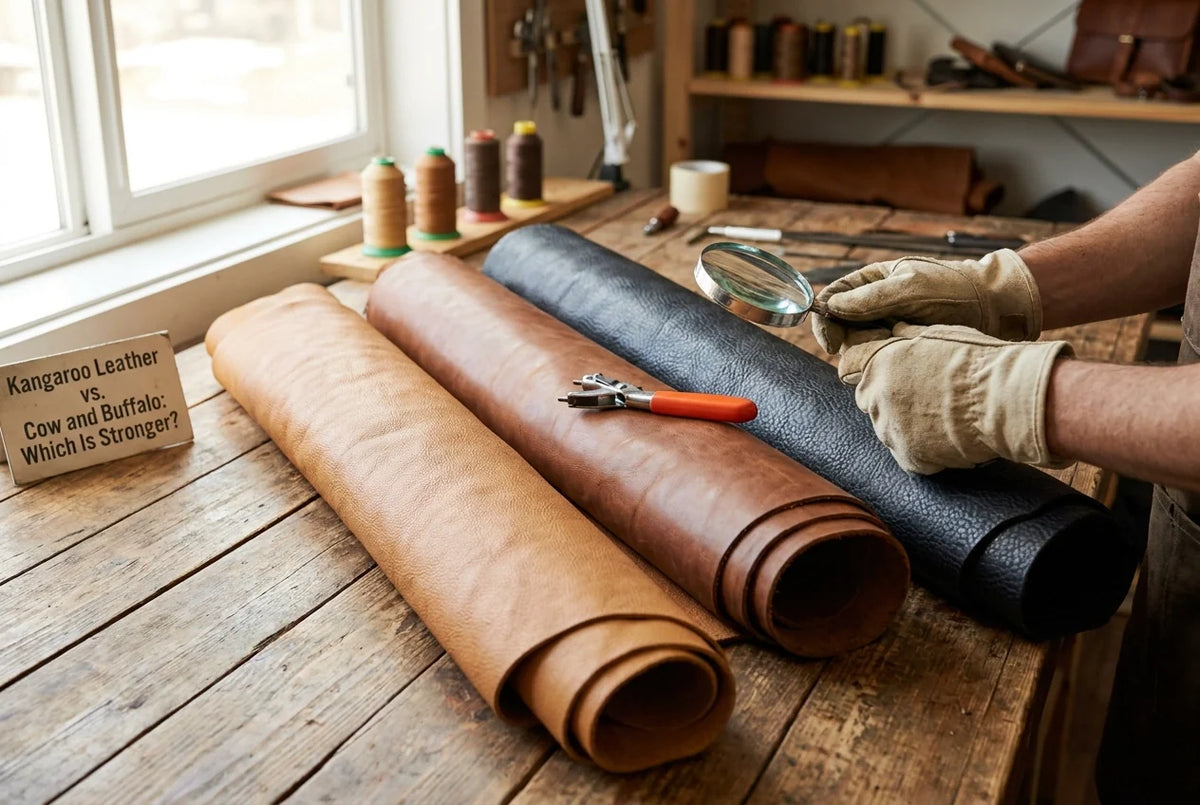
Now here's where it gets interesting for the adventurous buyer. Beyond the standard cowhide spectrum, two hides deserve serious attention. Kangaroo leather is pound-for-pound the strongest natural leather available, with tensile strength roughly ten times greater than cowhide at equivalent thickness. That means a thinner, lighter belt can outperform a thick cowhide one under stress. Buffalo leather goes the opposite direction, offering thick, heavily grained hide that develops serious character with wear. The texture is bold and distinctive, and the extra cross-section means a buffalo leather belt holds its shape brilliantly under load. For outdoor use, travel, and anything involving genuine physical activity, buffalo is a rugged and satisfying choice. Understanding the difference between full-grain and top-grain leather also helps you evaluate buffalo products correctly, since it comes in both grades.
Use this as your buyer's filter. The moment you identify what tier of leather a belt is made from, you know whether you're looking at a lifetime purchase or something you'll be replacing by next summer. Full-grain cowhide, kangaroo, or buffalo leather? You're buying quality. Anything labelled simply "genuine leather" or with no hide specification at all? Walk away. The label "genuine leather" is legally accurate but quality-misleading, sitting at the bottom of the real-hide ladder rather than signalling authenticity. Knowing this simple hierarchy puts you ahead of most buyers immediately.
2. The Australian Difference: Why Origin Actually Matters
So we've established that leather quality varies wildly depending on what animal it came from and how it was processed. But here's something most belt buyers never think about: where that animal lived actually changes the leather itself at a structural level.
Australia's wildlife is genuinely unlike anything else on the planet, and that shows up in the hides.
Kangaroo leather isn't just "exotic" for the sake of it. Kangaroos have evolved over millions of years to survive in one of the harshest environments on Earth, and their hides reflect that. The fibre structure of kangaroo leather delivers a strength-to-weight ratio that cowhide simply can't match. We're talking up to three times the tensile strength of cowhide at the same thickness, while still being remarkably lightweight. For a leather belt that needs to hold its shape under daily tension without adding bulk, that's genuinely useful, not just a fun fact for the packaging.
The sustainability angle is equally solid, and this one you can feel good about without squinting. Kangaroo hides are a by-product of government-regulated wildlife management programs, harvested under strict federal quotas to manage wild populations. These aren't factory-farmed animals. The hide exists because the animal was already part of a regulated management system, which gives kangaroo leather genuinely credible ethical credentials compared to conventionally farmed leather. For buyers who care about where their products come from, that's a meaningful distinction.
Australian-made production also means a much shorter, more transparent supply chain. In conventional global leather manufacturing, a hide might travel through three or four countries before it becomes a finished belt, with limited visibility at each handoff. Australian provenance compresses that story considerably, making it easier to know what you're actually buying.
That transparency is increasingly what the market wants. The global leather belt market is growing at a 5.5% CAGR through 2033, with ethically sourced, premium products identified as a primary driver of that growth. Australian-made leather sits squarely in that lane.
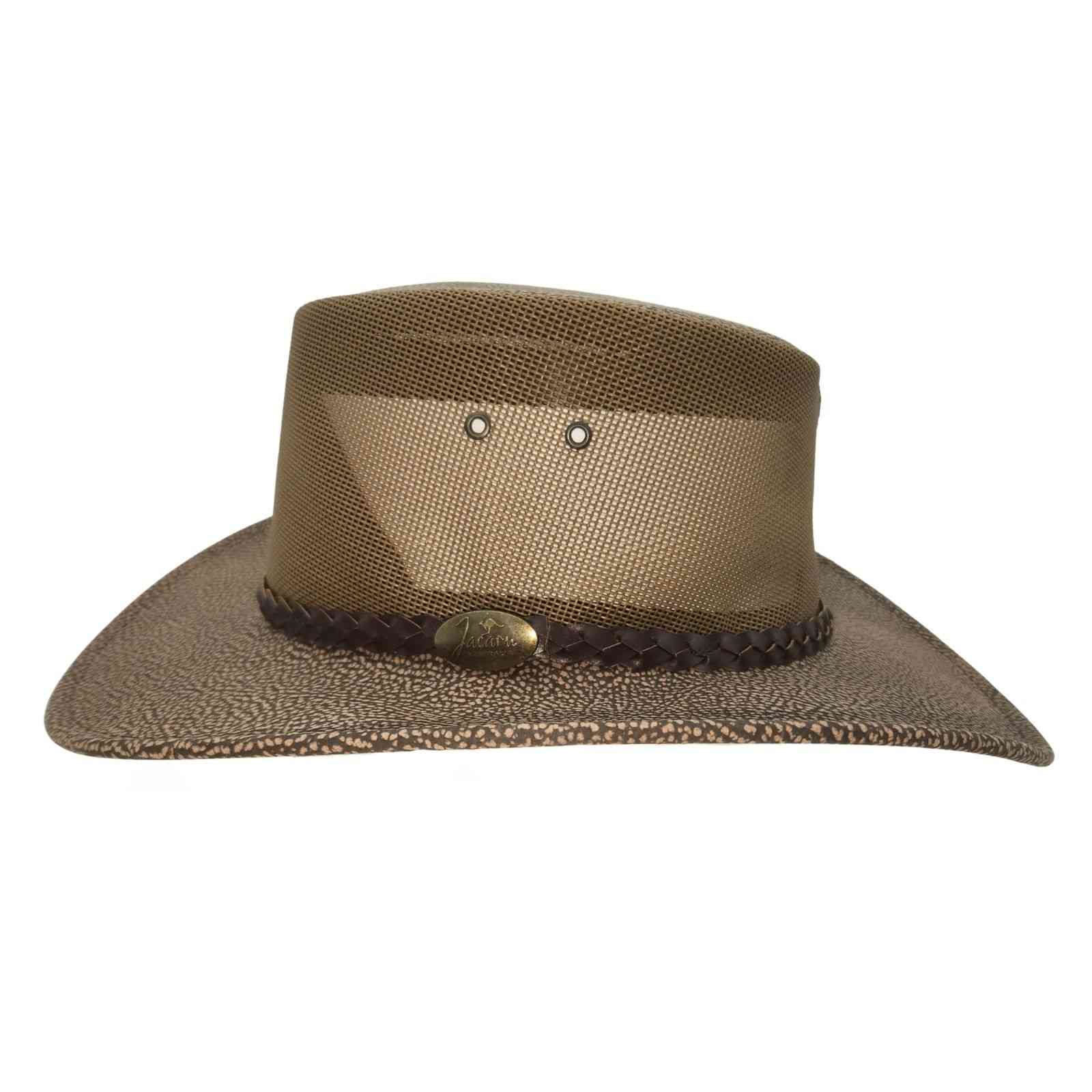
Jacaru puts this philosophy into practice across a full range of accessories, from their iconic outback hats crafted from kangaroo and buffalo leather, to belts and keyrings, all carrying that same Australian provenance. It's a cohesive approach: the same traceable, distinctive materials running through everything they make.
3. Formal, Casual, or Outback Ready -- Picking the Right Style for Your Life
Here's the thing about leather belts in 2026: they've broken out of their formal-only box in a big way. What was once strictly a dress accessory has crossed over into everyday casual wear and full-on outdoor use, which means there are genuinely different belts built for genuinely different lives. Knowing which category fits your needs saves you money and saves you the frustration of wearing the wrong belt in the wrong place.
Formal Belts: Clean, Slim, and Understated
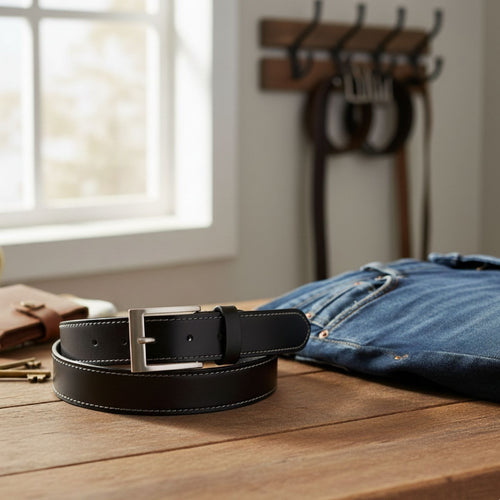
If you're buying a belt for suits, dress trousers, or business attire, keep it simple. Formal leather belts sit around 30mm wide, feature a smooth, polished finish, and use a plain single-prong buckle. Nothing ornate. The goal is a belt that disappears into your outfit rather than competing with it. Black leather pairs cleanly with grey or black formal wear; brown works better with navy and earth tones.
Casual Belts: Your Everyday Workhorse
Step up to around 35mm width and suddenly you've got a belt that looks great with jeans, chinos, or casual trousers. Texture is totally fair game here; distressed leather, pebbled finishes, and contrast stitching all work well. Per this 2026 style guide, casual belts are the practical workhorse most people actually reach for daily.
Outdoor and Adventure Belts: Built for Real Conditions
This is where things get serious. Wider gauge leather, robust brass or steel hardware, and full-grain construction that handles sweat, red dust, UV exposure, and long days on the trail without falling apart. These belts aren't just tougher; they actually improve with hard use, developing a patina rather than degrading.
For travellers specifically, the smart move is one quality belt that bridges casual and outdoor use rather than packing three mediocre ones that each do one job poorly. A well-chosen leather belt at this level, as Permanent Style notes in their belt capsule guide, will outlast cheaper alternatives by years, making the cost-per-wear argument pretty hard to argue with.
4. How to Read a Belt's Quality Before You Buy It
So you've narrowed down the style and you know your leather grades. Now comes the fun part: actually inspecting a belt before you hand over your money. Here are five quick checks you can do in under two minutes, no expertise required.
1. Run your finger along the edge. A well-made leather belt will have a smooth, slightly rounded edge that feels burnished and sealed. If the edge is fuzzy, raw, or looks like it's been painted over with a thick coat of dye to hide rough fibres underneath, walk away. That unfinished edge will start fraying and peeling within months of regular wear, and it's one of the clearest signs that shortcuts were taken in production.
2. Look closely at the stitching. Good stitching is tight, even, and consistent all the way around. Quality belts often use a saddle stitch with waxed thread, where each stitch is independent, meaning if one breaks, the rest hold firm. By contrast, a machine lock stitch can unravel entirely from a single break. Loose, decorative, or widely spaced stitching is a red flag; it's there to look nice in the shop, not to hold up under daily use.
3. Check how the buckle is attached. Flip the belt over and look at the keeper end. Solid attachment points with both rivets and stitching will outlast anything glued or heat-bonded, especially once the belt starts flexing every single day. If it looks flimsy or you can feel the buckle shifting, that's your answer.
4. Give it a gentle flex. A quality full-grain hide should feel slightly stiff when new but bend without cracking. If it's floppy straight out of the box, it's likely split or bonded leather. Think of it like a good hiking boot; a little resistance upfront is a sign of substance, not a flaw.
5. Trust your nose and fingertips. Genuine full-grain leather has a distinctive earthy, natural scent that's hard to fake. It also has subtle surface variation, small marks, grain shifts, and natural texture that tell the story of the hide it came from. A belt with a perfectly uniform, plastic-smooth surface and no natural markings has almost certainly been heavily processed or is synthetic entirely. For a deeper look at how leather grade and construction affect quality, it's worth doing your homework before you shop.
5. A Leather Belt Is One of the Best Gifts You Can Give (Seriously)
Here's a fact that might surprise you: the formal leather belt market alone was valued at USD 5.6 billion in 2024, and gifting and lifestyle purchasing are identified as genuine demand drivers behind that number. People aren't just buying belts out of necessity. They're buying them as considered, meaningful gifts, and honestly, it makes a lot of sense once you think about it.
A quality leather belt is one of those rare gifts that ticks every box. It's practical, it's universally wearable, and unlike a scented candle or novelty gadget, it actually gets better with age. Real leather develops a patina over time, softening and picking up character the more it's worn. That's the opposite of a gift that quietly disappears into a drawer by February.
For corporate gifting, this is where Australian-made leather really earns its place. Generic branded merchandise gets forgotten. An Australian-made leather accessory carries a story, a sense of place, and a level of craftsmanship that sparks actual conversation. When someone asks "where did you get this?" at a business lunch, that's exactly the kind of brand moment a generic USB stick will never deliver.
For travellers and souvenir hunters, kangaroo leather products are genuinely one-of-a-kind. You won't find them in every airport gift shop alongside the keychains and fridge magnets. Kangaroo leather comes from one place on earth, full stop. That makes it a souvenir with real meaning, not just a mass-produced trinket dressed up in Australian colours.
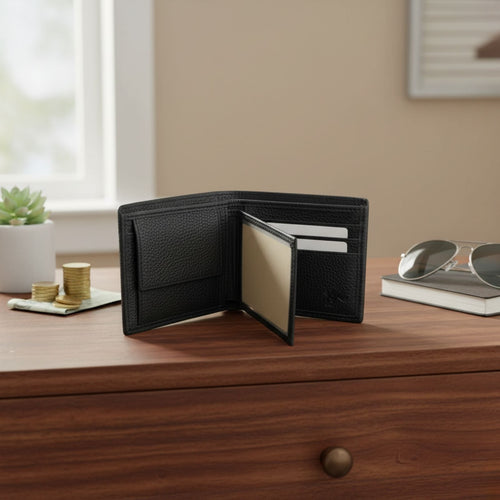
The smartest move for gifting is bundling. Pair a leather belt with a kangaroo keyring and a leather wallet, and suddenly you've got a premium gifting set that feels considered and cohesive without blowing the budget. It's the kind of gift that makes people think you put in serious effort, even when the whole thing came together pretty easily.
6. How to Care for a Leather Belt So It Lasts Decades
You've invested in a quality leather belt, so let's make sure it sticks around for the long haul. The good news is that leather care is genuinely simple once you know the basics.
1. Condition it regularly. This is the single most important thing you can do. A quality leather conditioner applied two to four times a year replenishes the natural oils that daily wear gradually strips away, keeping the hide supple and crack-free. Think of it like moisturising your skin after a long day in the sun. Look for beeswax-based or lanolin-based conditioners rather than anything petroleum-heavy. Not sure if your belt needs conditioning? Check for slight colour lightening, surface stiffness, or a faintly dry texture; those are your early warning signs. This guide to caring for full-grain leather goes deeper on the specifics if you want the full rundown.
2. Keep it away from direct sun and heat. Australian conditions are genuinely brutal on leather. Prolonged UV exposure and ambient heat pull the natural oils right out of the hide and accelerate cracking. Don't leave your belt on a car dashboard or sitting in a hot vehicle on a summer day.
3. Let wet leather dry naturally. If your belt gets soaked on a trail or in a storm, resist the urge to speed things up with a hairdryer or heater. Forced drying causes irreversible warping and stiffening. Room temperature, away from direct heat, is all you need. This leather care resource covers this point well.
4. Clean before you condition. A slightly damp cloth to wipe off surface dust and grime is all you need before applying conditioner. Avoid household detergents or alcohol-based cleaners; they strip the leather's oils and can cause discolouration fast.
5. Store it hanging or flat. A belt coiled tightly in a drawer for months can develop a permanent curve that affects both fit and appearance. Hang it from the buckle or lay it flat.
Get these five habits right and a full-grain kangaroo or buffalo leather belt will genuinely outlast a decade of regular wear, developing a rich patina that makes it look better with age, not worse. That's the beauty of buying quality Australian-made leather once rather than replacing cheap alternatives every couple of years.
7. Sustainability Is Not a Buzzword When It Comes to Leather
Let's be honest: "sustainable" gets thrown around so much these days that it's easy to roll your eyes. But when it comes to leather belts, the sustainability conversation is grounded in real, measurable differences, and it's genuinely worth understanding before you buy.
The global leather belt market is growing steadily, projected to climb from USD 5.6 billion in 2024 to USD 8.9 billion by 2033. Researchers tracking that growth specifically flag ethical sourcing and premium materials as key demand drivers. Consumers aren't just asking for better-looking belts; they're asking where the leather came from and how it got here. That's a meaningful shift.
Kangaroo leather has one of the more interesting sustainability stories in the entire leather world. Kangaroo populations across Australia are managed under federal and state government programs, with regulated harvest quotas overseen by the Australian Department of Climate Change, Energy, the Environment and Water. The hides used in products like Jacaru's outback belts are a by-product of those population management programs, not a factory-farmed commodity. That makes them traceable in a way that imported, mass-produced leather rarely is. For context, leather sourcing linked to cattle ranching has been connected to significant deforestation in other parts of the world. Australian kangaroo leather sits in a very different supply chain category entirely.
Buying Australian-made also means shorter transport legs, greater visibility into how and where a product was made, and direct support for local craftspeople. That all adds up to a smaller overall footprint compared to a belt that's changed hands across four continents before reaching your wardrobe.
Then there's the fast-fashion alternative. Cheap belts are typically made from bonded leather (basically ground-up leather scraps glued together with polyurethane) or fully synthetic PU leather. Both materials have significantly shorter lifespans and create more waste over time. A full lifecycle assessment comparing real and synthetic leather confirms that durability over time is central to any honest environmental comparison. Synthetic materials also shed microplastics when they degrade, adding another layer to the waste problem.
The maths here is pretty simple. One quality leather belt that lasts 15 years beats five cheap replacements, both for your wallet and for the planet.
The Bottom Line on Leather Belts
Seven sections in, you've got everything you need to make a smart call. Know your leather tier (full-grain wins, every time). Check the physical quality markers before you buy. Match the style to your actual life, not some imaginary wardrobe. And buy for longevity, not the lowest price tag. These aren't rules; they're filters that save you money and hassle over the long run.
The Australian leather advantage is real and it goes beyond national pride. Kangaroo leather is lighter, stronger, and more tensile than conventional cattle hide, and it's harvested under a national wildlife management framework with no farming overhead attached. That's a sustainability credential with genuine substance behind it.
If you want a leather belt that passes every one of those filters, Jacaru's leather accessories range is the logical next step. Built for adventure and everyday wear, each piece carries that distinctly Australian story worth owning.
Here's the bottom line: a quality leather belt isn't a luxury. It's a decision you make once and then completely forget about for the next decade. That's the no-fuss, freedom-loving philosophy behind every Jacaru piece, built tough, built honestly, and built to disappear into your life in the best possible way.
Conclusion
Buying a leather belt the right way comes down to a few simple principles. Focus on genuine full-grain or top-grain leather for lasting quality. Pay attention to construction details like stitching, buckle hardware, and edge finishing. Make sure the width and style actually match the occasions you're dressing for. And always consider the long-term value rather than just the upfront price.
Armed with these insights, you're no longer guessing. You're shopping with purpose.
Now it's time to put this knowledge to work. Head back to those options you were considering and evaluate them with fresh eyes. The right belt is out there, and it will serve you well for years to come. A small investment in the right choice today means one less thing you'll ever have to think about again.


Our friends at Bocchetta Plush Toys have a great range of lifelike plush animals that make great gifts for people of all ages.