









Foldable Leather Hats: Which Material Holds Up When You Travel?

Stuffing a leather hat into your carry-on and pulling it out looking perfect on the other side of the world is not a guarantee. It depends almost entirely on which leather you chose before you ever left home.
The foldable leather hat market has matured significantly, with Australian brands like Barmah Hats leading the category for over three decades. But with multiple leather types now available across a range of price points, from affordable cattle leather options to premium kangaroo styles commanding top-tier satisfaction ratings, knowing the difference between materials is no longer optional for the serious traveler. It is the decision.
This guide breaks down exactly what separates the leather types competing for space in your bag. You will learn how cattle, kangaroo, suede, and crocodile leathers each handle the real demands of travel, what packability actually means beyond a marketing claim, and how to care for whichever hat you choose so it outlasts your passport. If you are ready to invest in a foldable leather hat that genuinely performs, start here.
Why the Leather Type Matters More Than the Fold
"Foldable" on a hat label tells you almost nothing useful. What actually determines whether a leather hat recovers its shape after being stuffed into an overhead locker is the leather grade and tanning method, not the marketing description.
Lower-grade splits and bonded leathers are more susceptible to permanent creasing under compression than full-grain hides. Full-grain hides retain structural memory across hundreds of compression cycles because the intact fibre network rebounds rather than deforming.
The tanning process also influences how a hat responds to moisture and compression, worth asking about when comparing specific products.
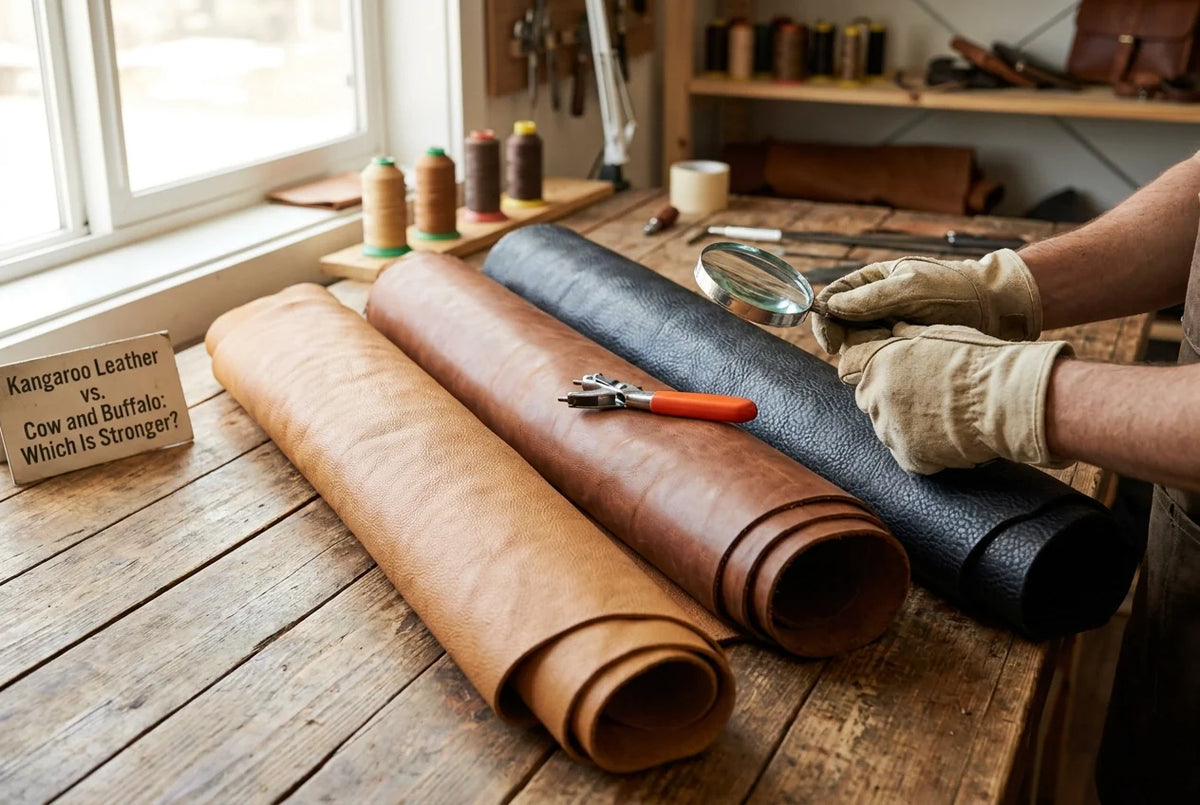
Weight is the variable most buyers overlook. A hat that compresses beautifully but adds 400g to a carry-on undermines its own purpose. Kangaroo leather is the standout here: its distinctive hide structure produces a material that is both lighter and stronger than cattle leather, making it the best weight-to-strength option in the foldable category. For a deeper look at how kangaroo compares against other materials, Outback Kangaroo Hat vs. Other Materials: What to Know Before You Buy covers the key differences.
Understanding what sits behind the label protects buyers from purchasing a hat marketed as packable that behaves like a rigid structured hat after one flight.
The Main Leather Types Compared for Travel
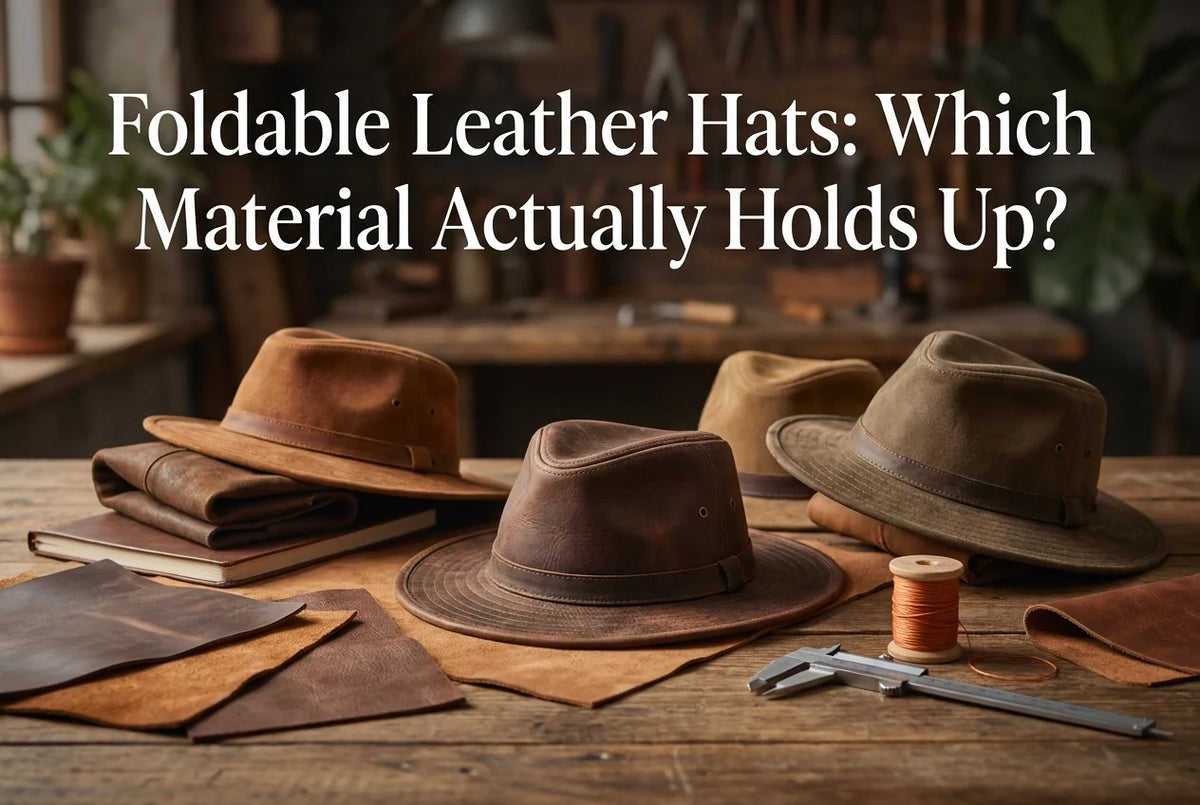
Four materials define the foldable leather hat category, each suiting a different traveller.
Cattle leather is the accessible workhorse: durable, weather-resistant, and widely available. Kangaroo leather is the premium travel performer, offering superior strength at significantly lower weight. Suede prioritises casual aesthetics over resilience. Crocodile leather suits buyers who want a genuine statement piece with heritage provenance.
The goal is to match your travel context to the leather that fits it, whether a multi-week expedition or a high-impact corporate gift.
That rigour extends to Jacaru's Australian-made leather belts and accessories, where material quality is consistent across the entire product range.
Cattle Leather: The Reliable Workhorse
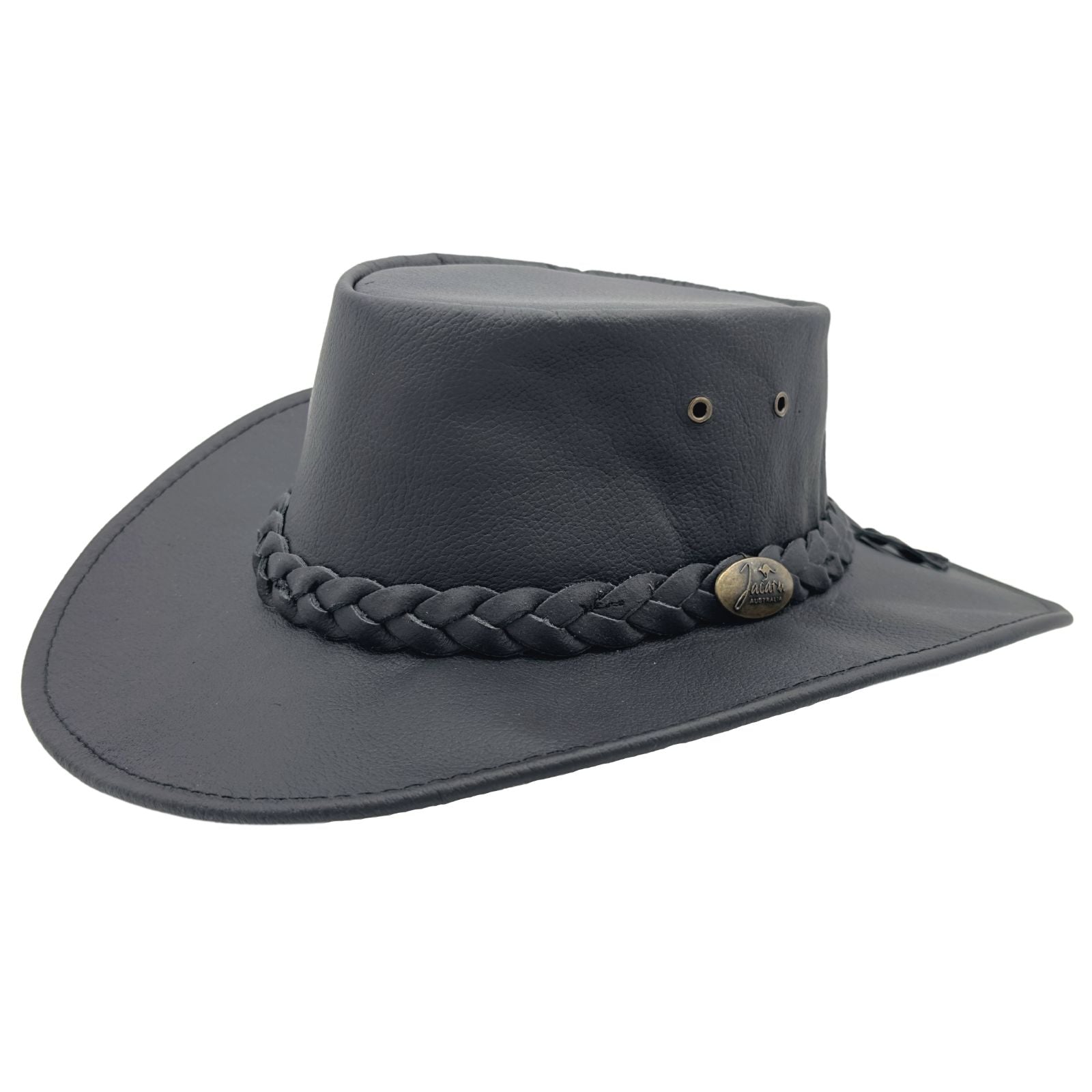
Full-grain cattle leather is the starting point for most buyers entering the traditional leather hats category. It is one of the most commonly used materials in foldable hat construction, and for good reason: it delivers solid weather resistance, a rugged aesthetic, and a proven track record across bush, farm, and outdoor environments.
Thickness works in cattle leather's favour when it comes to structural memory. A well-conditioned full-grain hide will hold its brim shape reliably through repeated folding, making it an honest choice for buyers who pack and unpack occasionally rather than daily. The trade-off is weight and stiffness; cattle leather is denser than alternatives, so shape recovery after hard compression can require a brief hand-reshape.
Suede cattle variants, produced from the buffed inner split of the hide, are softer and fold more easily straight out of the box. But that flexibility comes at a cost: the open nap surface absorbs moisture readily, offers less weather resistance than full-grain, and shows wear sooner over time.
On price, cattle leather sits at the accessible end of the premium leather range, making it a sensible entry point before committing to higher-cost materials.
Best travel use case: overland road trips, farm stays, and rural camping trips where the hat is removed and stowed regularly but is not compressed inside a packed backpack for days at a stretch.
Kangaroo Leather: Lightweight and Premium
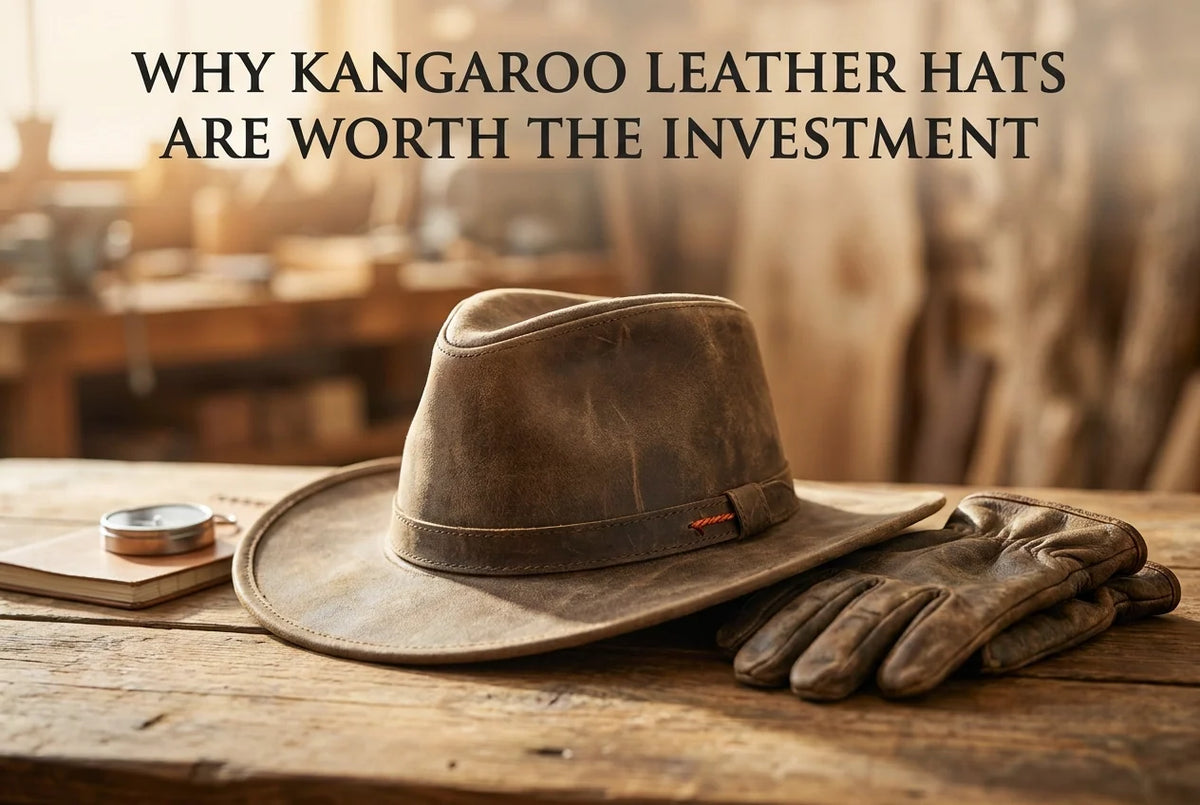
Where cattle leather offers durability and structure, kangaroo leather trades up on every performance metric that matters to frequent travellers.
The structural difference at the fibre level, well-documented in materials research on kangaroo leather, shapes how the finished hat performs under travel conditions.
For a foldable hat, that translates to exceptional shape recovery. Roll it, stuff it into an overhead locker, or sit on it at a campsite; kangaroo leather springs back with minimal intervention, where comparable cattle hide may need manual reshaping.
The weight advantage is equally tangible. Kangaroo leather hats are noticeably lighter than comparable cattle leather styles, a meaningful reduction across a long-haul itinerary. The material's breathability makes it a practical choice for humid environments: tropical Australia, Southeast Asia, and sub-Saharan safari destinations all test a hat's breathability hard.
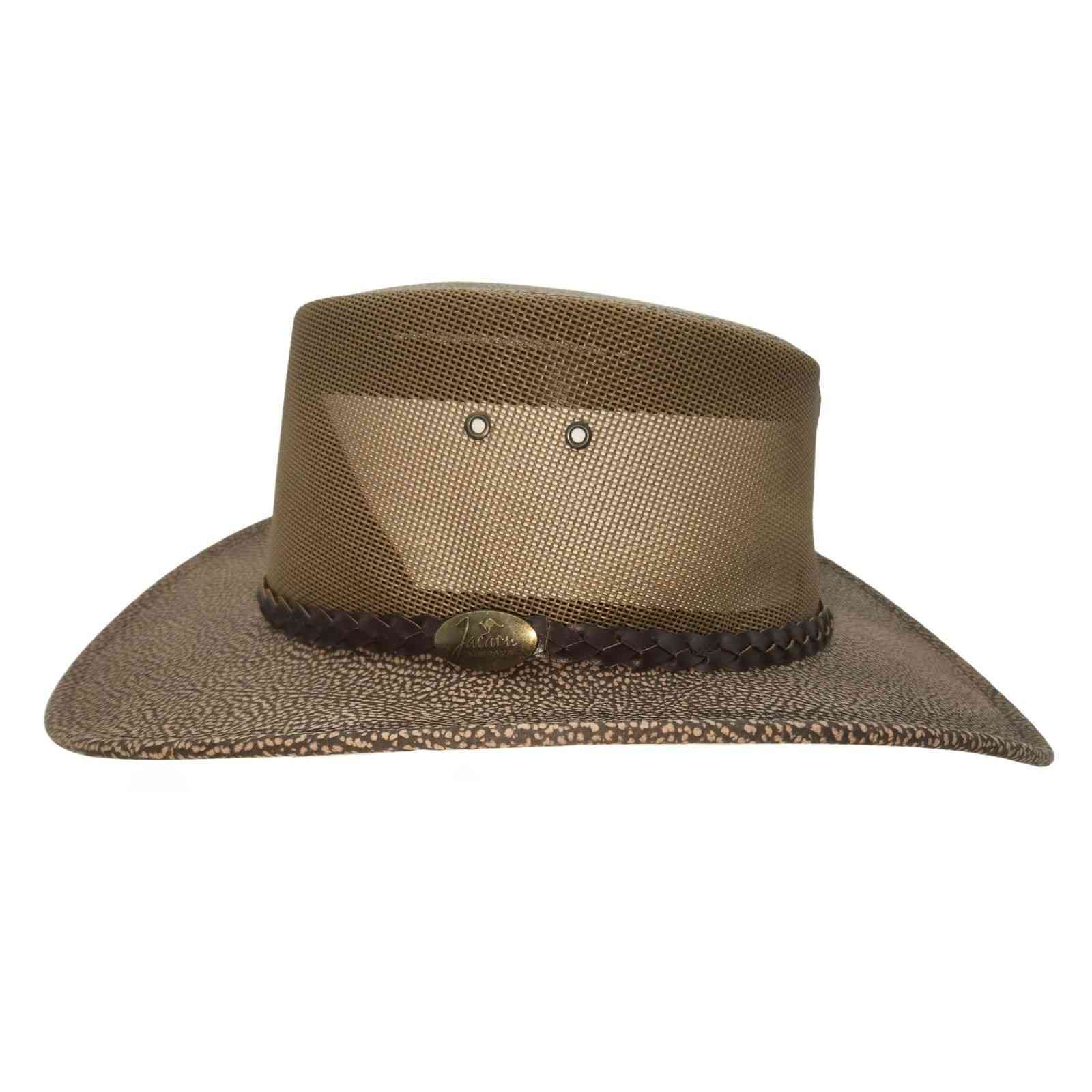
Kangaroo leather foldable hats earn strong buyer satisfaction ratings, the Barmah Crackle Kangaroo model, for example, holds a 5.0-star rating, with feel, durability, and packability cited as standout qualities. Jacaru's kangaroo leather hat collection reflects this premium positioning across its outback styles.
Suede: Style Versus Practicality Trade-Offs
Where kangaroo leather excels on performance, suede trades that advantage for aesthetics. The napped surface produces a softer, more relaxed look that suits urban environments and travellers who want a leather hat without the full outback silhouette. That visual appeal comes with meaningful compromises.
Suede's open-grain structure absorbs moisture, dust, and skin oils far more readily than smooth full-grain or top-grain finishes. A day of city walking in humid conditions can leave visible tide marks; a caught rain shower requires prompt attention. Regular treatment with a specialist suede protector spray is essential before every trip, not just seasonally.
On price, suede cattle leather sits at the most accessible point in the traditional leather hats category, with entry-level foldable options from around AU$75. Factor in ongoing protector spray costs and the total ownership figure closes the gap with smooth leather alternatives over time.
Packing suede requires more care than smooth hides. The napped surface is more vulnerable to abrasion in luggage than smooth leather finishes. A dedicated hat bag or crown-first placement with clothing buffers is necessary.
Best suited to: short-haul travellers, city explorers, and buyers prioritising casual styling. Suede is not the right choice for extended backcountry, expedition, or high-humidity travel where durability and low-maintenance performance matter most.
Crocodile Leather: A Distinctive Statement No Other Hat Makes
Where suede trades practicality for aesthetics, crocodile leather makes no such compromise. It occupies a category entirely its own in the foldable hat market, a rare distinction in the foldable hat category.
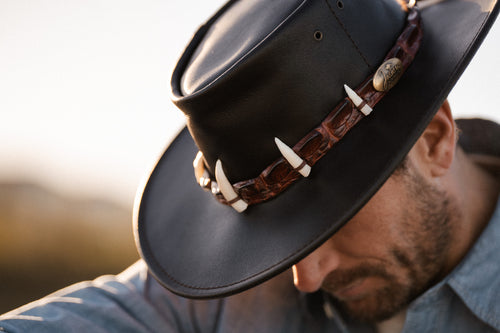
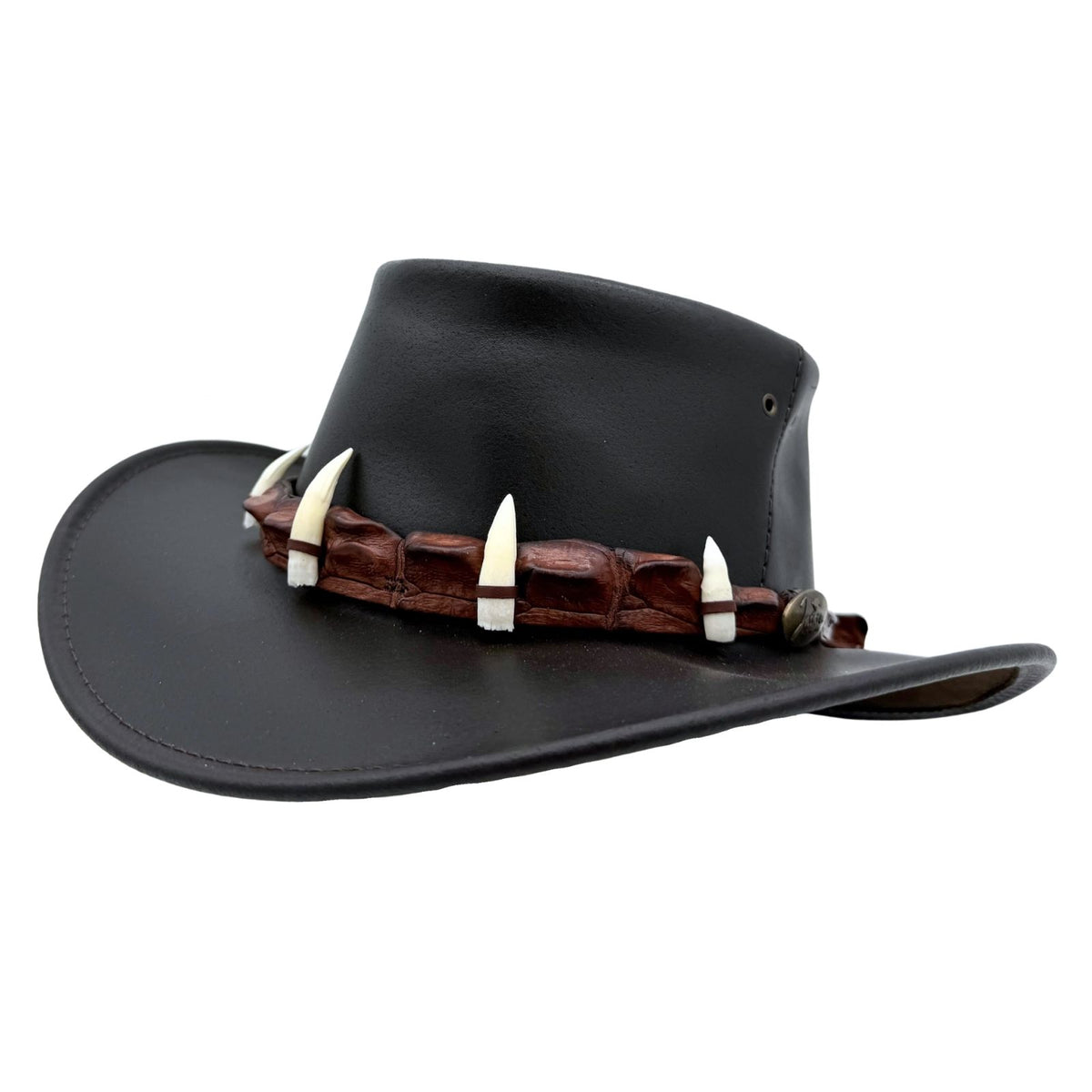
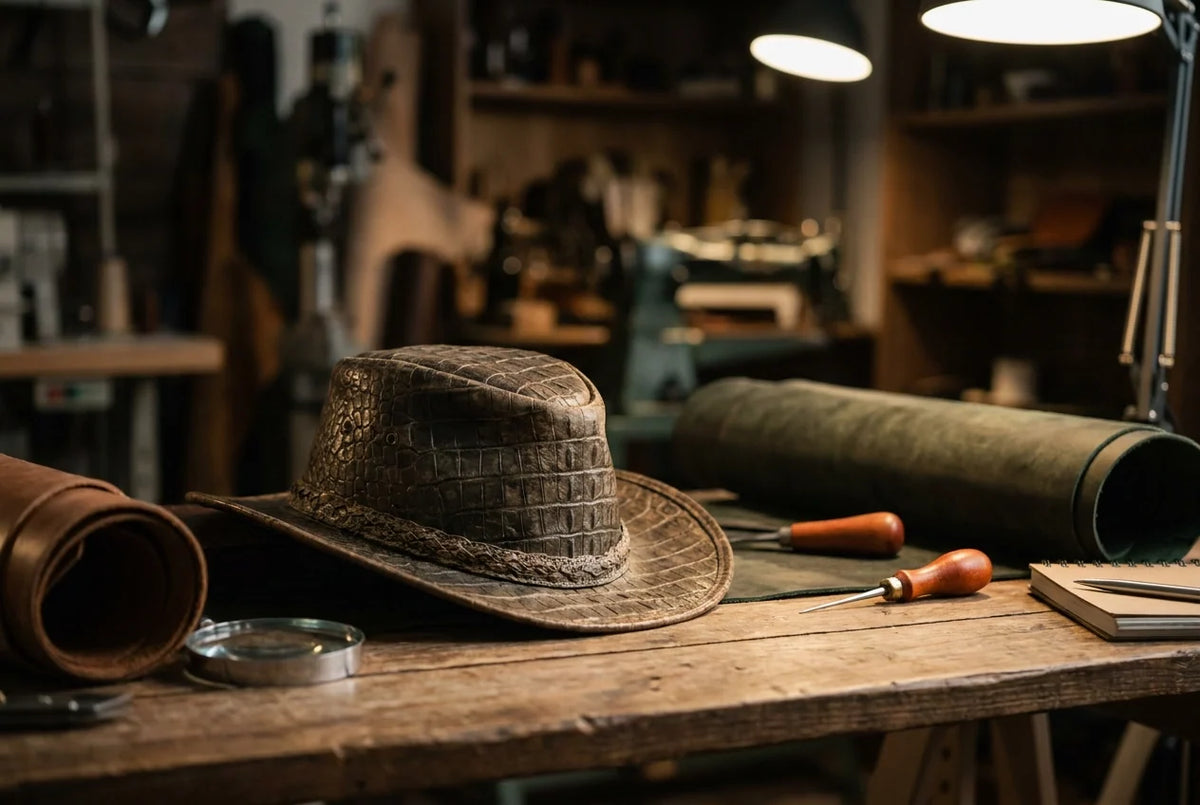
Jacaru's outback hats with exotic crocodile detailing feature genuine crocodile teeth and backstrap hatbands, referencing Australian heritage in a way that is immediately recognisable worldwide. The Crocodile Dundee aesthetic is not a costume reference; it is a cultural shorthand that opens conversations from London to Nairobi to Tokyo.
The material itself earns its place beyond visual impact. Crocodile leather's distinctive scale pattern and natural oils provide inherent hydrophobic surface properties and moisture resistance, making it resistant to surface scuffing and incidental wet exposure. Function matches form.
For gift buyers and collectors, the exclusivity argument is straightforward: this is a considered acquisition, not a commodity purchase. No competing brand can replicate it at any price.
Best suited to:
International travellers seeking a hat that works as both travel accessory and statement piece
Corporate gift buyers requiring a high-impact, unmistakably Australian-made gift
Adventurers who want gear with a story worth telling
Packability in Practice: What to Actually Look For

Choosing the right material is only half the decision. How you pack and store a foldable leather hat determines whether it performs as advertised across a long trip.
Shape recovery is the single most important test. A quality foldable leather hat should return to its original brim shape within minutes of being removed from a pack, without any manual coaxing. If it needs reshaping by hand, the leather grade or construction is working against you.
Consider fit carefully when buying for travel: leather softens with wear and conditioning, so a hat that fits precisely in-store may feel different after extended use.
Carry-On Packing
Place the hat crown-down and fill the crown with soft clothing, a buff, or a rolled t-shirt. This maintains the crown's shape and prevents the brim from being forced into an unnatural angle under the weight of items packed above it.
Checked Luggage and Backpacks
Use a dedicated hat travel bag where possible. If not, stuff the crown firmly with socks before packing. Interior support prevents asymmetric collapse of the crown under sustained external compression.
Storage Between Trips
Never seal a leather hat in a plastic bag for extended periods. Leather requires airflow; sealed environments trap moisture and accelerate mildew and surface cracking, particularly after travel through tropical or coastal climates.
Caring for a Foldable Leather Hat So It Lasts Decades

Packing a hat well buys it years; maintaining the leather properly buys it decades.
Conditioning frequency depends on leather type and how hard the hat works. Cattle and kangaroo leather hats used in regular outdoor travel benefit from regular conditioning with a purpose-made conditioner, consult the manufacturer's care guide for recommended frequency. Suede is more demanding: apply a specialist suede protector spray before every trip, not after.
Waterproofing is a separate step, not a substitute for conditioning. Before travelling to humid, coastal, or rainy environments, treat the hat with a quality waterproofing wax or spray. Reapply after extended wet exposure; conditioning alone will not repel water reliably.
Crocodile leather and hats with teeth detailing or metal hatbands need targeted attention. Wipe the scales with a damp cloth after dusty use and treat the leather portions with a light conditioning oil periodically. Avoid saturating the hardware. Full leather care instructions for Jacaru hats cover the specifics by material.
If the hat gets wet, patience matters more than heat. Air-dry it in a well-ventilated space away from direct sunlight or any heat source. Heat-drying causes irreversible brittleness and cracking in premium leathers regardless of prior conditioning.
Between trips, store the hat on a stand or with a crown support insert to prevent deformation. A breathable cotton bag keeps dust off without trapping moisture the way sealed containers do.
Matching Your Hat to Your Adventure
Care habits established, the final question is which leather suits your specific situation.
Outback and bush travellers need maximum weather resilience and sun coverage. Full-grain cattle or kangaroo leather hats in a wide brim are the practical choice for extended time in remote Australian terrain.
International safari and expedition travellers benefit most from kangaroo leather's weight advantage and superior shape recovery across varied climates. For post-safari dinners or city stopovers, crocodile detailing transitions the hat from trail to table without a wardrobe change.
Corporate gift buyers should look beyond generic options. A crocodile leather hat or a premium kangaroo style with distinctive Australian detailing signals cultural authenticity and genuine quality. If ordering in volume, confirm presentation packaging options before committing.
Urban travellers and collectors are well served by suede cattle leather or a structured kangaroo style. Prioritise silhouettes that move comfortably between outdoor settings and smart-casual environments.
First-time leather hat buyers should start with a mid-weight cattle leather foldable style. It reveals how leather responds to real travel conditions, building the care habits and informed confidence needed before stepping up to premium materials.
Why Australian-Made Still Matters in This Category
Once you've matched the hat to your adventure, the final question worth asking is where it was made, and why that still matters.
Australian tanning operates under some of the world's most demanding oversight. AHSLEA-accredited processors must comply with AUS-MEAT Limited audits and Department of Agriculture inspections, and they adhere to the Zero Discharge of Hazardous Chemicals manufacturing restricted substances list. The result is leather produced to standards that many overseas suppliers simply aren't held to.
Provenance is particularly significant for kangaroo and crocodile materials. Both are regulated under Australian national wildlife management frameworks, meaning every skin carries documented sourcing through government-registered channels. That traceability matters to international buyers, especially those purchasing a foldable leather hat as a high-value souvenir or corporate gift, who want confidence that the materials behind the product are ethically accounted for.
The "Made in Australia" provenance is a meaningful differentiator for international buyers seeking authenticity in premium leather goods.
Jacaru sits within a small group of makers that can claim a genuine Australian origin story across materials, manufacture, and design. That matters for longevity too: a well-made Australian leather hat, maintained correctly, is built to last for decades, a genuine advantage over shorter-lived synthetic alternatives.
Choosing the Right Foldable Leather Hat: Key Takeaways
All of the material and origin considerations covered above point toward one practical conclusion: match the leather to how you actually travel.
As covered above, the right choice depends on your travel context: cattle for durability, kangaroo for travel performance, suede for casual short-haul, and crocodile for statement impact.
Pack crown-down with internal support and always allow leather to breathe rather than sealing it in plastic, as detailed in the packability section above.
Conditioning and waterproofing remain essential to longevity; follow the guidance in the care section above to determine the right products and timing for your specific leather type.
For gift buyers, a crocodile or kangaroo leather hat made in Australia carries cultural and material storytelling that no generic gift can replicate.
Browse Jacaru's range of Australian-made foldable leather hats, including outback styles with genuine crocodile teeth detailing, to find the hat built for your next adventure.


Our friends at Bocchetta Plush Toys have a great range of lifelike plush animals that make great gifts for people of all ages.