






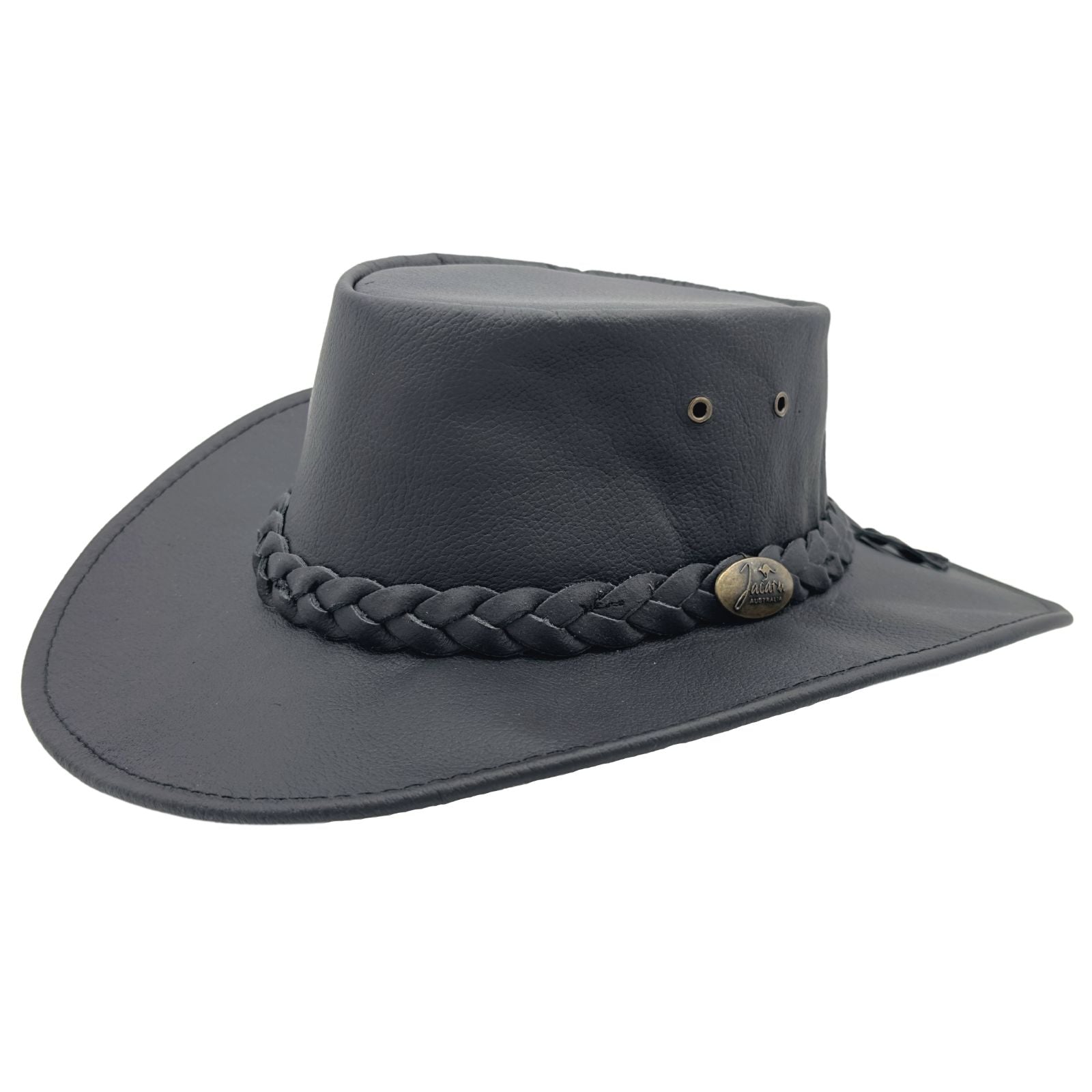


Australian Hat Makers: Heritage, Materials and What Sets Them Apart

There is something unmistakably purposeful about a well-made Australian hat. It carries the weight of a working landscape, the ingenuity of craftspeople who understood that style without durability was never going to survive the outback sun. Today, australian hat makers are attracting serious attention well beyond their home country, drawing in outdoor enthusiasts, travelers, and gift buyers who want something genuine rather than something simply styled to look the part.
But navigating this market takes more than admiring a wide brim. It means understanding the difference between a hat made in Australia and one that merely borrows the aesthetic. It means knowing your leathers, recognizing what separates a heritage brand from a passing trend, and appreciating why a quality hat bought today can still be worn decades from now.
This guide covers all of it. From the outback's influence on hat design to the sustainability case for buying well, from leather selection to gifting options, you will leave with a clear picture of who the serious makers are and exactly what to look for before you spend your money.

How the Outback Hat Became an Australian Icon
The outback hat was born from necessity, not style. From the late 19th century, Australian drovers, stockmen, and bushworkers needed protection against brutal sun, driving dust, and sudden rain. Wide brims kept the glare off. Chin straps held the hat in place across open country. Durable leather construction meant the hat survived the same punishment its wearer did. No designer was involved; the environment did the designing.
Kangaroo and cattle hides became the dominant materials because they were locally available and outperformed imported alternatives on every practical measure. Kangaroo leather offers notable strength relative to its weight. Cattle hide offered the structured weight needed for a brim that would hold its shape across seasons. Both materials aged well and could be worked by local craftspeople without dependence on overseas supply chains.
The cultural shift accelerated through the 1980s, when the leather outback hat crossed from working garment to internationally recognised Australian symbol, a transition amplified by popular culture and a growing global appetite for Australian identity. Demand expanded well beyond Australia's borders, and the hat's identity shifted from purely functional to culturally emblematic.
That origin story matters when you are buying today. A hat built on genuine heritage uses the same materials and construction logic that shaped the original: real leather, functional hardware, and a design that earns its features. Before buying a leather Australian outback hat, it is worth understanding which makers carry that lineage forward and which are simply borrowing the aesthetic.
Australian Made vs. Australian Styled: Why the Difference Matters

Here is the distinction that many buyers miss: a number of prominent retailers selling "Australian outback hats" are US-based operations with no manufacturing connection to Australia. That gap directly affects material sourcing, quality control, and the authenticity of what arrives at your door.
Genuine Australian makers source materials that offshore producers simply cannot replicate. Kangaroo leather, native wool, and crocodile tooth hardware are tied to Australian supply chains, regulated harvesting programmes, and specialist craftspeople. A manufacturer operating outside Australia cannot access the same inputs, regardless of how convincingly the branding is styled.
Traceable provenance is no longer a niche concern. For outdoor lovers, global travellers and spirited adventurers seeking a meaningful souvenir, provenance is the point. Corporate clients increasingly require confirmed country-of-origin credentials, and conscious consumers want to know their purchase supports genuine local manufacturing.
Two signals are worth actively searching for when researching hat brands. The first is the Australian Made certification logo, a registered trademark administered by Australian Made Campaign Limited, with 89% of Australians more likely to buy a product bearing it. The second is a transparent manufacturing narrative, one that names materials, locations, and production methods specifically.
Do not rely on price as a proxy for authenticity. Some imported imitations carry premium price tags. Conversely, genuine Australian makers offer competitive pricing once you account for a product built to last decades rather than seasons.
The Australian Hat Makers Worth Knowing
With that distinction clear, here are the makers worth putting on your shortlist.
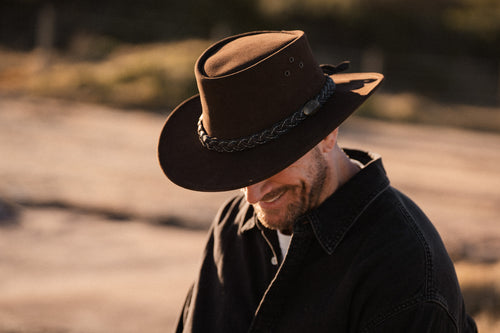
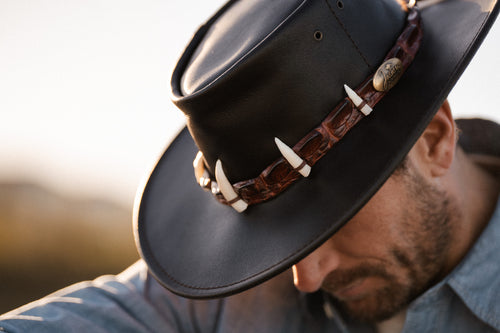
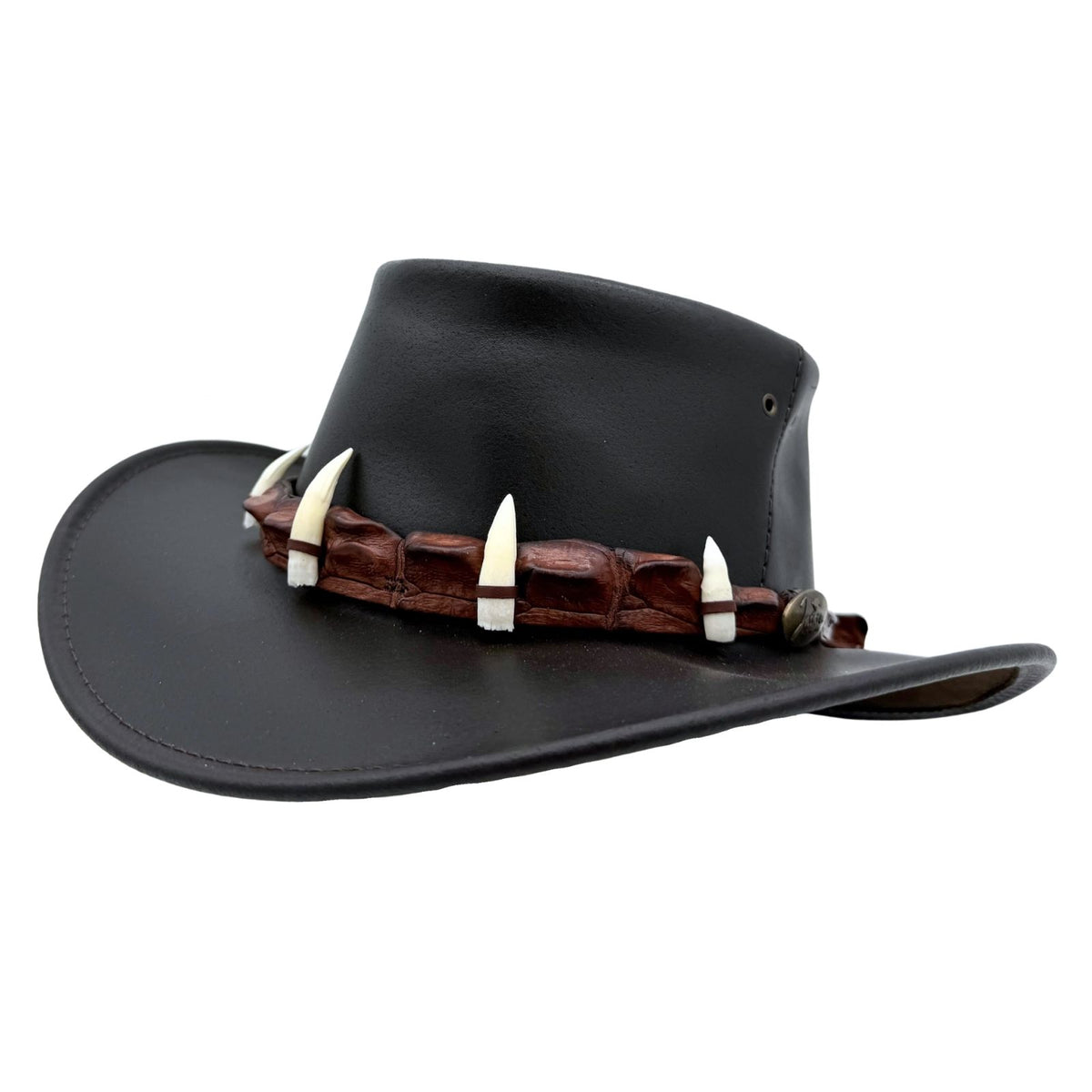
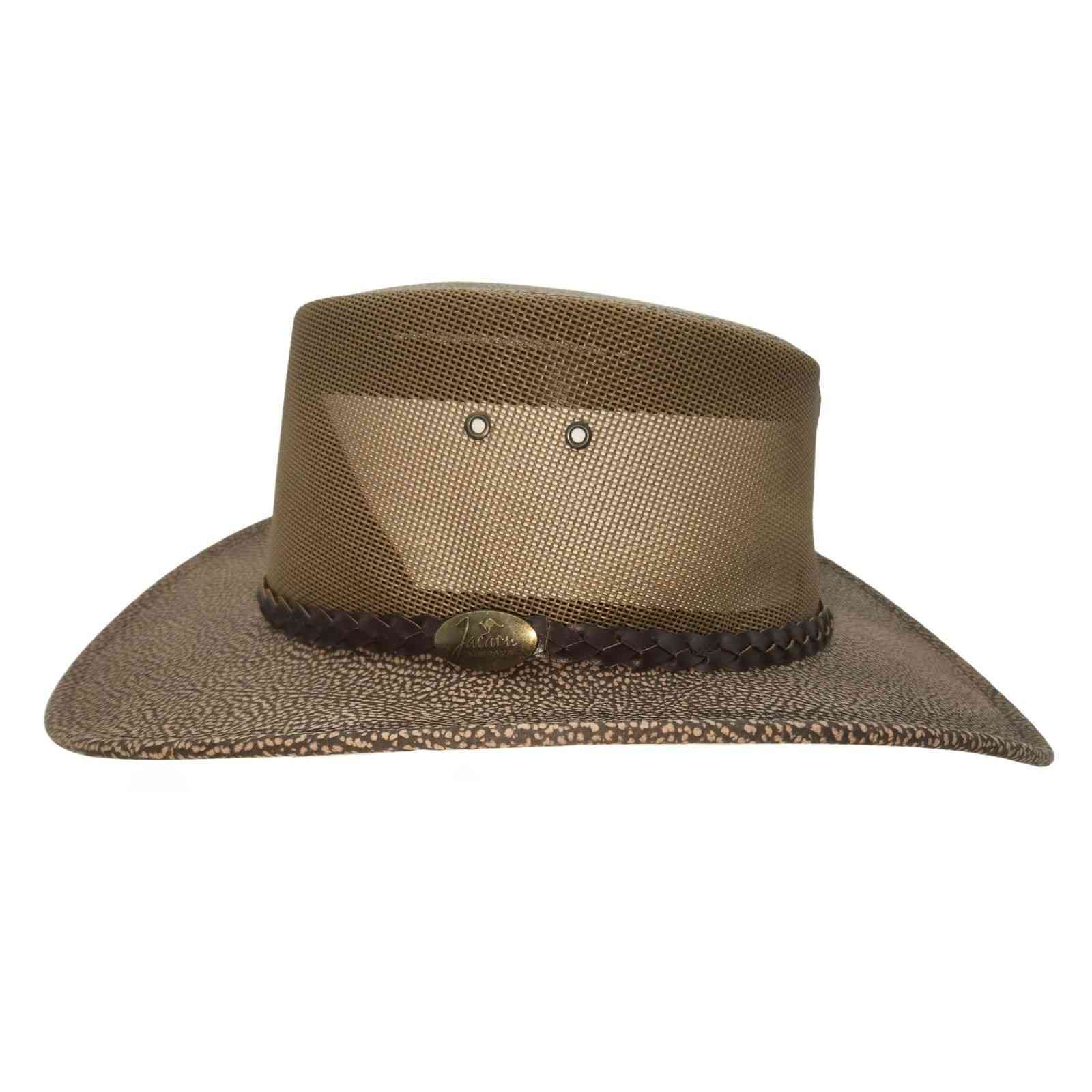
1. Jacaru (Australia) Jacaru is the most complete Australian hat maker for buyers who want genuine native materials and authentic outback craft. Its range spans kangaroo, cow, and buffalo leather outback hats, a wool hat collection, ladies styles, and accessories. The signature Crocodile Dundee hats feature real crocodile teeth and crocodile leather backstrap hatbands, making them impossible to replicate outside specialist Australian production. Best for: global travellers, serious collectors, and corporate gift buyers requiring confirmed Australian provenance.
2. Akubra (Australia) Akubra has produced felt hats in Australia for over a century. Its felt construction and strong national identity make it the default heritage reference in the category. Best for: buyers prioritising a classic Australian felt aesthetic and established brand recognition.
3. Connerhats (Australia) Operating out of Byron Bay, Connerhats focuses on leather hats with a heritage origin narrative and has built substantial customer validation, holding a 4.8/5 rating from more than 3,700 reviews. Best for: buyers seeking leather styles with peer-reviewed confidence.
4. Outback Trading (Australia) A volume-oriented option with broad multi-channel availability and seasonal gifting collections. Material specificity is less prominent than with leather-focused makers. Best for: buyers prioritising range and retail accessibility over native Australian materials.
5. American Hat Makers (USA) A US-based retailer competing in the Australian hat category. No Australian manufacturing provenance. Useful to know precisely because it illustrates why buyers must verify origin claims rather than assume them from branding alone.
Kangaroo, Cow, Buffalo and Beyond: A Leather Guide for Hat Buyers
Once you know which makers interest you, material choice becomes the most practical decision you'll make.
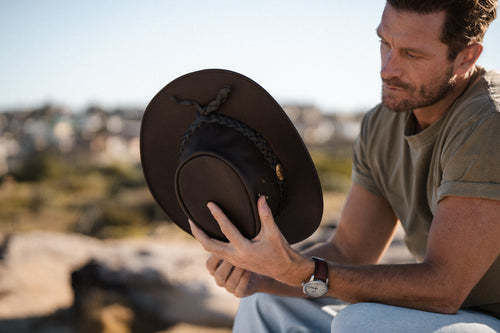
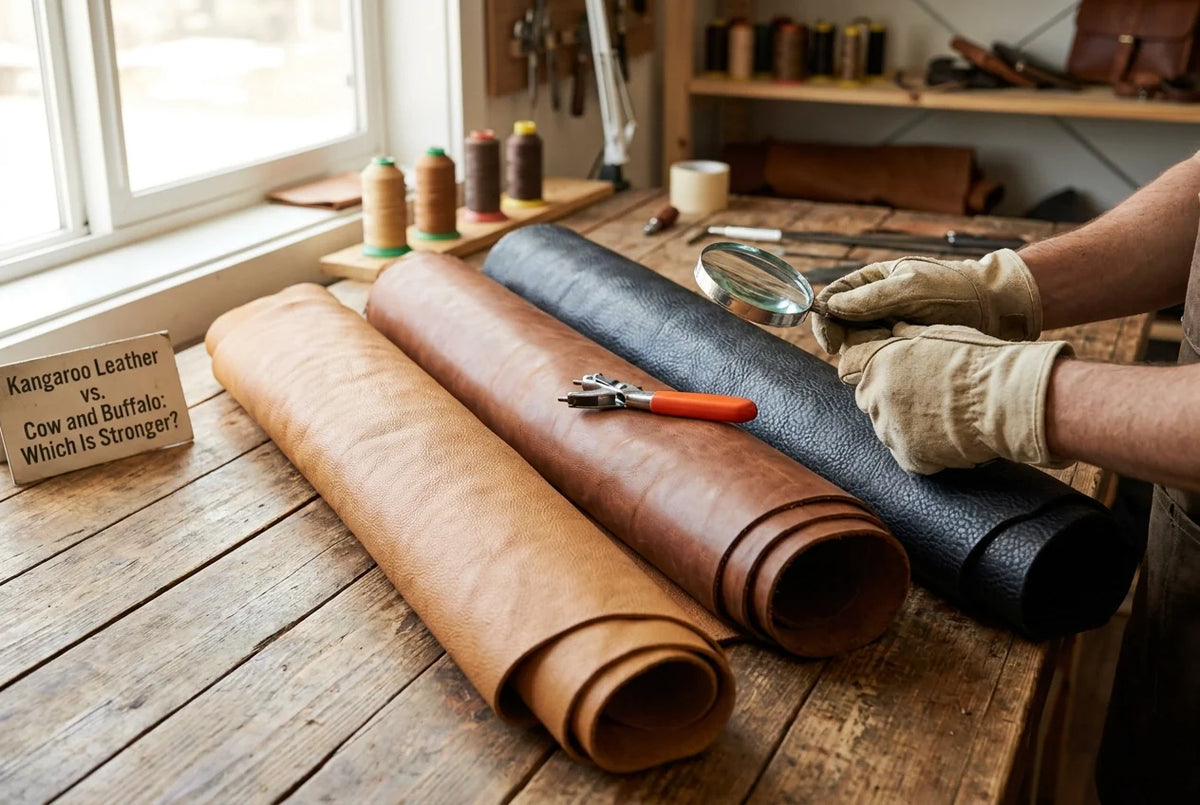
Kangaroo leather sits at the performance end of the spectrum. Its fine, fibrous grain structure allows it to be worked thinner than most leathers while retaining exceptional tensile strength, the result being a hat that feels light on your head but resists years of hard use. Jacaru's kangaroo leather hats demonstrate this directly: the finished product carries none of the bulk you'd associate with heavy-duty outerwear.
Cow leather is the dependable all-rounder. Heavier in construction and widely available, it suits buyers who want a structured brim that holds its shape through wet and dry seasons without demanding specialist care. It offers strong value for everyday outdoor use.
Buffalo leather is heavier still, the most abrasion-resistant of the three. It's the material of choice for buyers who need a hat to perform under genuinely demanding conditions, think prolonged sun exposure, rough terrain, and persistent moisture.
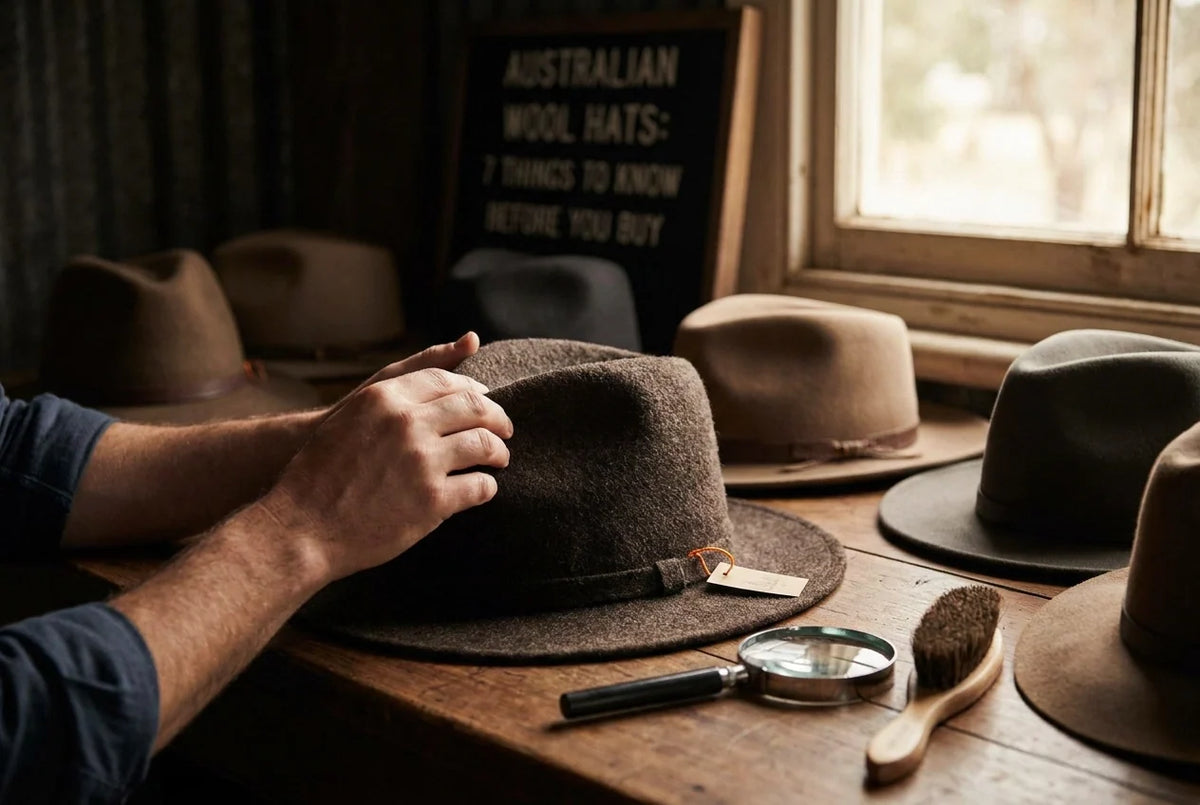
Wool and rabbit fur felt, the construction method associated with traditional Australian hatmaking, trades weather resistance for a softer drape and lighter weight. The cultural heritage associations are considerable, but full-grain leather outperforms it in wet conditions.
Crocodile tooth hatbands occupy a category of their own. Jacaru's Crocodile Dundee-style hats feature genuine crocodile teeth. These pieces are legitimately collectible.
On longevity: conditioning, waterproofing, and correct storage significantly extend a quality leather hat's working life, making premium construction a more sustainable choice than disposable alternatives.
What to Look for Before You Buy an Australian Hat
Knowing your materials is only half the equation. How and where a hat is made determines whether it will last a decade in the field or fade after a season on a shelf. Apply these six checks before committing.
Verify country of manufacture. Look for explicit "Made in Australia" labelling, which must meet the standards set under the Australian Consumer Law and cannot legally be vague or misleading. If the label is absent, the brand's story should detail exactly where the hat is produced, not just "inspired by" Australia.
Demand material specificity. Legitimate makers name their leathers specifically, kangaroo, buffalo, cow, and treat sourcing transparency as a baseline, not a bonus.
Examine construction details. Full-grain leather, reinforced stitching at stress points, a quality sweat lining, and functional hardware including chin straps and adjustable fittings indicate a hat engineered for longevity. Decorative stitching and flimsy fittings signal shelf appeal over performance.
Evaluate heritage credentials. Brands with traceable histories, consistent regional provenance, and a coherent product philosophy are more accountable for quality than trend-driven retailers. Read our brand promise as an example of the transparency worth expecting from any serious maker.
Match specifications to intended use. Active outdoor travel demands a stiff brim, moisture resistance, and packability. A souvenir or statement gift has different priorities. Buying the wrong specification for the use case is a common and avoidable mistake.
Confirm B2B capability if gifting at volume. Corporate and bulk buyers should ask directly about branded hatbands, custom sizing, and volume pricing. Many retailers cannot support these requirements; genuine makers can.
The Sustainability Case for a Hat That Lasts Decades
Longevity is where the genuine sustainability argument lives.
A well-maintained premium leather outback hat is built to outlast synthetic or fast-fashion alternatives by a significant margin. Regular conditioning, correct storage, and basic waterproofing are all it takes.
Material sourcing matters here as well. Australian kangaroo leather is produced under a regulated national management programme that includes documented compliance and animal welfare considerations embedded in harvesting practices. That regulatory accountability separates it clearly from unregulated exotic leather markets operating in other countries.
This aligns with a broader shift in how conscious travellers approach accessories: buy once, buy well, carry it everywhere for years rather than replacing gear each season.
Jacaru's kangaroo leather hats and accessories are built around exactly this philosophy, intended as long-term companions rather than disposable souvenirs. You can read more about Jacaru's approach to sustainable Australian materials directly on their site.
When any brand makes sustainability claims, press for specifics: named materials, confirmed manufacturing location, and a realistic product lifespan. Generic "eco-friendly" language without those details is marketing, not accountability.
Australian Hats as Gifts: Souvenirs, Collectibles and Corporate Options
That durability translates directly into gift value.
Authentic Australian-made hats are among the most distinctive souvenirs available to international visitors, precisely because a genuine made-in-Australia provenance is difficult to fake and easy to verify. Travellers seeking a meaningful keepsake rather than an imported imitation gravitate toward makers who can confirm local manufacture and native materials.
For individual gift buyers, the Crocodile Dundee-style hat with genuine crocodile teeth sits in a category of its own. Jacaru produces these with authentic crocodile tooth hatbands and backstrap fittings, a combination that specialist offshore manufacturers simply cannot replicate. The result is a hat that opens conversations in any room, anywhere in the world.
Corporate gifting is an increasingly relevant channel for this category. A premium leather outback hat carries cultural weight, practical utility, and long product life, qualities that generic branded merchandise rarely delivers. Clients and partners receive something they will actually use, not a landfill-bound novelty.
Buyers procuring gifts at any scale should confirm three things from their maker: verifiable Australian origin, consistent sizing and quality across multiple units, and presentation-ready packaging.
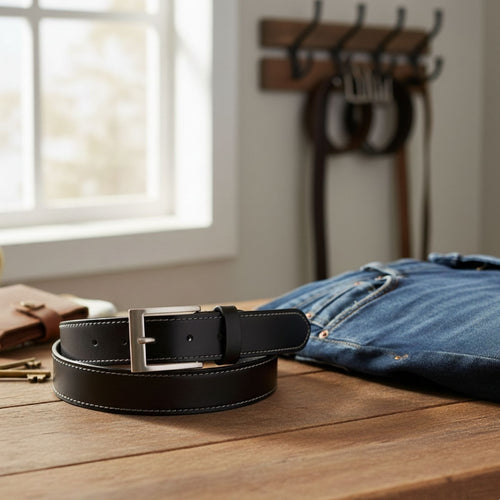
For buyers wanting a cohesive gift set at varied price points, kangaroo leather keyrings and complementary accessories from Jacaru pair naturally with a hat purchase, giving procurement teams and retail gift buyers a scalable range to work from.
Choosing the Right Australian Hat Maker
Whether you're buying for yourself, sourcing a gift, or procuring for a corporate programme, the decision comes down to three non-negotiable criteria: native materials, local manufacture, and a traceable heritage narrative. Any maker that cannot clearly answer all three deserves closer scrutiny before you commit.
Material choice, kangaroo for lightweight strength, buffalo for rugged durability, cow for everyday structure, wool felt for classic styling, is covered fully in the leather guide above; use it as your primary filter.
For buyers who want a single starting point, Jacaru covers the full spectrum. Jacaru's full range, covered in the makers section above, spans every material and style discussed in this guide. The Jacaru hat and materials glossary is worth reading before you buy; it explains material properties and construction details in plain language, which is exactly the kind of transparency that distinguishes a genuine maker from a styled importer.
Treat the purchase as a long-term investment. Research the maker's origin story as carefully as you would the product specifications; provenance and craft history are reliable indicators of the quality you will actually receive.
Explore Jacaru's collection for individual purchases and corporate gifting enquiries directly through their website.
Conclusion
Australian hats are more than accessories; they are the product of landscape, craft history, and materials that have been tested across generations. The gap between genuinely Australian-made and Australian-styled is real, and understanding it protects your investment. Material choice, whether kangaroo, buffalo, cow leather, or wool felt, determines how a hat performs across years of actual use. And the maker's provenance is just as important as the product itself.
If you are ready to invest in a hat built to last decades, start with a maker whose origin story and materials are fully transparent. Browse Jacaru's complete collection, read their materials glossary, and find the style that suits your life. A well-chosen Australian hat does not just complete an outfit; it becomes part of your own story.


Our friends at Bocchetta Plush Toys have a great range of lifelike plush animals that make great gifts for people of all ages.