









What to Know Before Buying a Safari Hat

Picture this: you're finally planning that dream safari adventure, and you want to look the part while staying protected under the blazing sun. The right safari hat can make or break your experience in the field, yet most first-time buyers have no idea what to look for beyond basic style.
A safari hat is far more than a fashion statement. It is a functional piece of gear that shields you from harsh UV rays, keeps you cool in extreme heat, and even helps you blend into natural surroundings. With so many options flooding the market, from wide-brimmed bush hats to classic pith helmets, choosing the right one can feel overwhelming for a beginner.
That is exactly why we put this guide together. In the following list, we break down the most important factors to consider before making your purchase. You will learn about materials, brim width, ventilation, fit, and more. By the end, you will feel confident and informed enough to choose a safari hat that truly serves you on your next outdoor adventure.
What Is a Safari Hat?
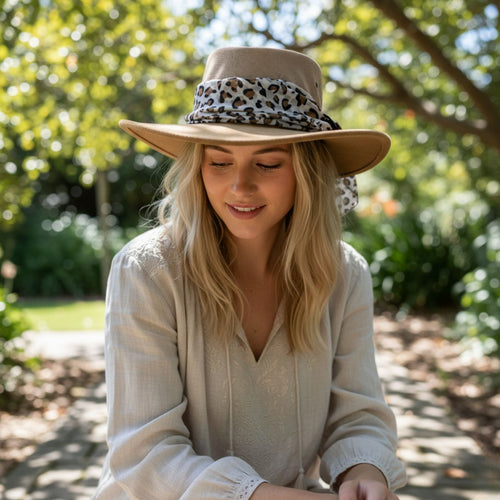
A safari hat is a wide-brim functional hat engineered specifically for sun protection, ventilation, and durability in outdoor and wilderness environments. Unlike fashion-only headwear, a genuine safari hat earns its place under a noon sun, across windy trails, and through long days in the field. The defining features are an all-around brim wide enough to shade your face, ears, and neck, a chin strap to secure the hat in wind, and construction materials tough enough to handle real outdoor conditions.
How Safari Hats Differ from Similar Styles

It helps to understand what a safari hat is not. A cowboy hat prioritises crown crease styling and cultural identity, with a brim curl shaped more by tradition than by all-around coverage. A bush hat tends to be lighter and less structured, suited to casual outdoor use rather than sustained field wear. A basic sun hat may offer shade but typically lacks the material integrity to survive rough handling. The real differentiators are material and construction, not the label on the tag.
A Catch-All Term with Real Distinctions
Consumers use the term "safari hat" loosely, applying it to everything from a $20 lightweight cotton hat to a premium leather outback hat priced well above $150. That broad range exists because the category spans wildly different constructions. As covered in this outback hat vs cowboy hat style guide, the trade itself separates Australian outback hats into their own distinct sub-category, recognising that provenance and material tell a story no generic label can. For a deeper overview of hat styles and construction tiers, the Ultimate Hat Guide is a useful starting reference.
Wide-brim and bucket-style hats are sustaining strong demand across outdoor and festival retail channels in 2026, with the global hats and caps market projected to reach $17.59 billion by 2033. Jacaru's Australian outback hats sit at the premium end of this growing segment, built from kangaroo leather, wool, and straw with a heritage and material story that no mass-market brand can replicate.
Safari Hat Style Variations and What They Do
Not all safari hats are built the same, and understanding the key style variations helps you choose the right hat for your specific environment and activity.
1. Wide-Brim Safari Hat
The wide brim is the defining feature of any genuine safari hat. Brim widths typically range from 3 to 5 inches, with narrower brims providing basic facial coverage and wider brims extending protective shadow across the neck and shoulders. For extended outdoor use in intense sunlight, a broader brim is the more practical choice. Beginners often underestimate how much difference an extra inch of brim makes during a full day in the field.
2. Upturned or Pinned Brim
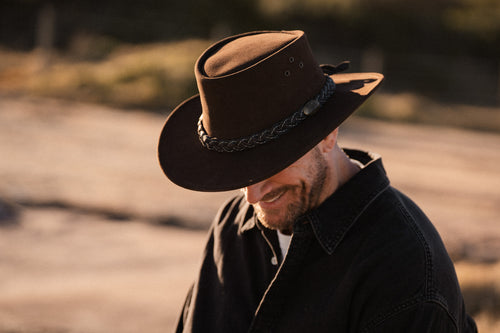
The pinned brim is a signature feature of the Australian outback hat, where one side is turned up and fastened against the crown. This design originated as a practical field solution, preventing the brim from obstructing a rifle when shouldered. Today it functions as a recognised cultural and style marker, carried forward in hats like those crafted by Jacaru. You can explore the full history of this style in the Safari Hat Primer from Gentleman's Gazette.
3. Chin Strap and Drawstring Features
Chin straps are a core functional element, not a decorative detail. In windy outback conditions or at altitude, a hat without a chin strap becomes a liability. A chin strap secures the hat beneath the jaw under active movement, while a drawstring toggle cinches the internal sweatband for fit adjustment. These are distinct features serving different purposes, and serious outdoor buyers should look for both.
4. Structured vs. Crushable Designs
Structured safari hats hold their crown shape under field conditions, making them the preferred choice for day-to-day use on safari or in the bush. Crushable designs pack flat without permanent creasing, suiting travellers moving between destinations. Your intended use case should drive this decision entirely.
5. Ventilation Eyelets
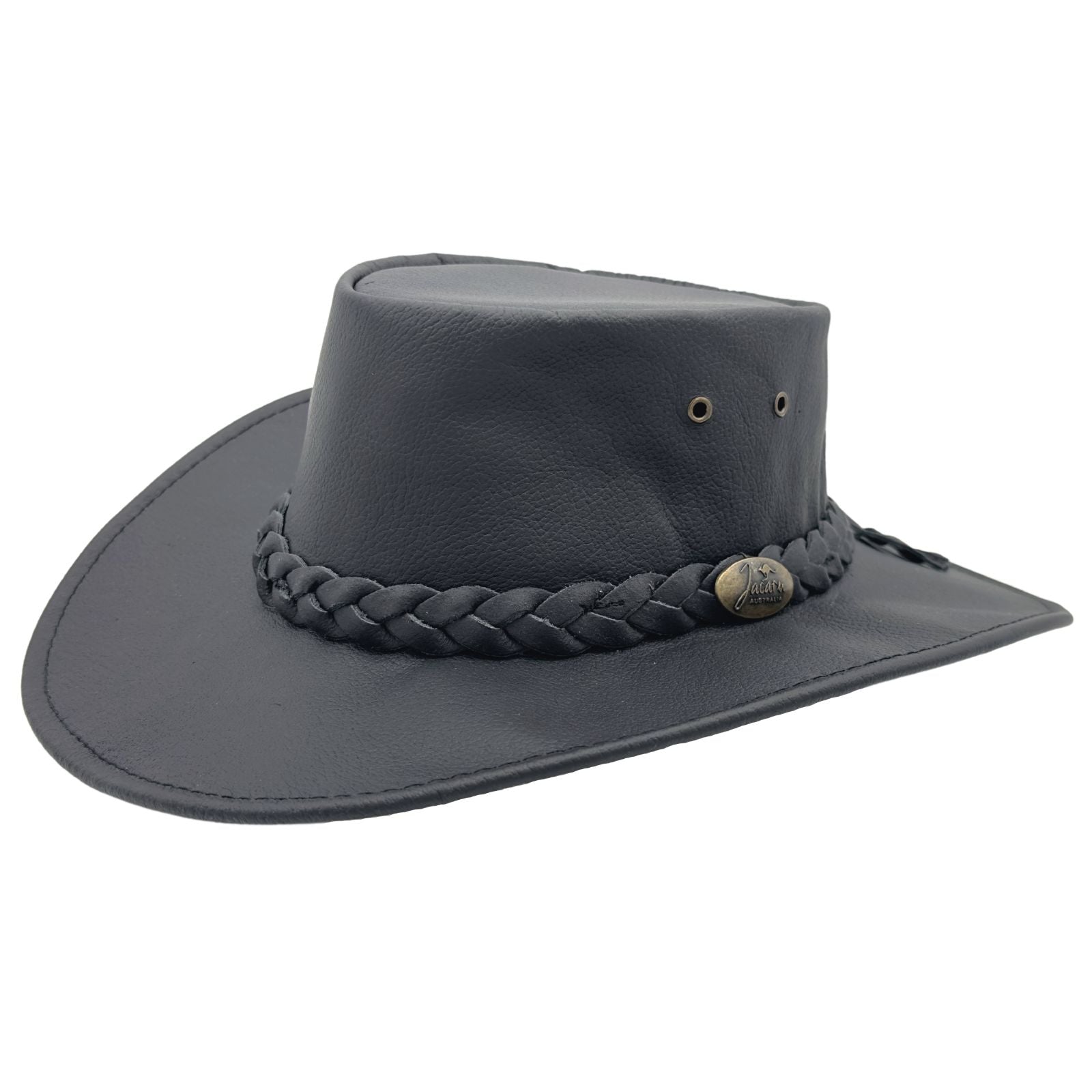
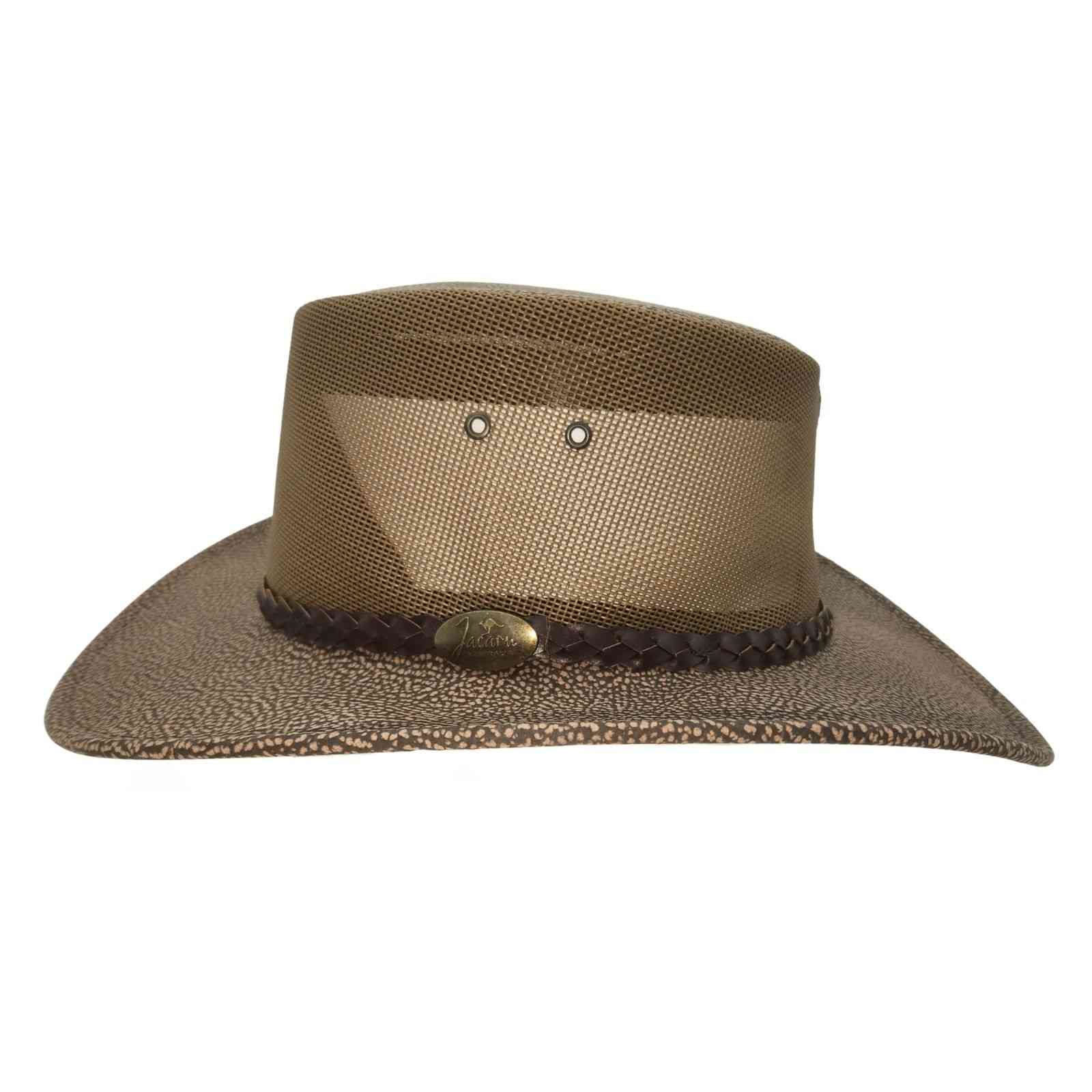
Eyelets are one of the most functionally important features that buyers frequently overlook when browsing safari hats online. Leather and straw hats in particular benefit from metal or leather-bound eyelets positioned around the crown, as these materials have lower natural breathability than cotton or mesh. Eyelets allow warm air to escape, reducing heat buildup during active outdoor use and significantly improving all-day comfort.
The Australian Outback Hat vs. the Generic Safari Hat
At first glance, the safari hat and the Australian outback hat appear to occupy the same category. Both feature wide brims, both shield the wearer from harsh sun, and both carry associations with rugged outdoor environments. Look closer, however, and the differences in material, construction, and cultural provenance become impossible to ignore.
The generic safari hat, rooted in colonial-era bush aesthetics, is typically manufactured from cotton canvas, nylon, or synthetic polyester. It is designed for lightweight packability and UV protection, qualities that make it a practical choice but not a meaningful one. The Australian outback hat, by contrast, is built from materials the land itself produced: kangaroo hide, buffalo leather, and cowhide. These materials were chosen by generations of Australian bushworkers for their exceptional resistance to sun, dust, and rain. Leather breathes differently to synthetics, and it ages with the wearer, developing a patina that tells a story no mass-produced hat can replicate. You can read more about this tradition in Australian Hats for Men: A Complete Guide to Outback Style.
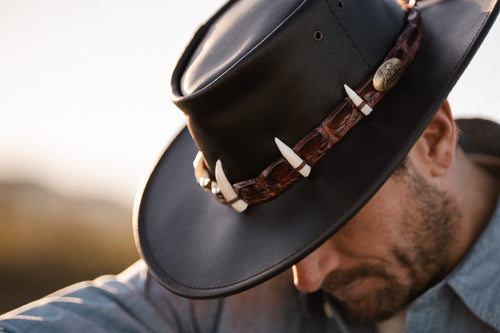
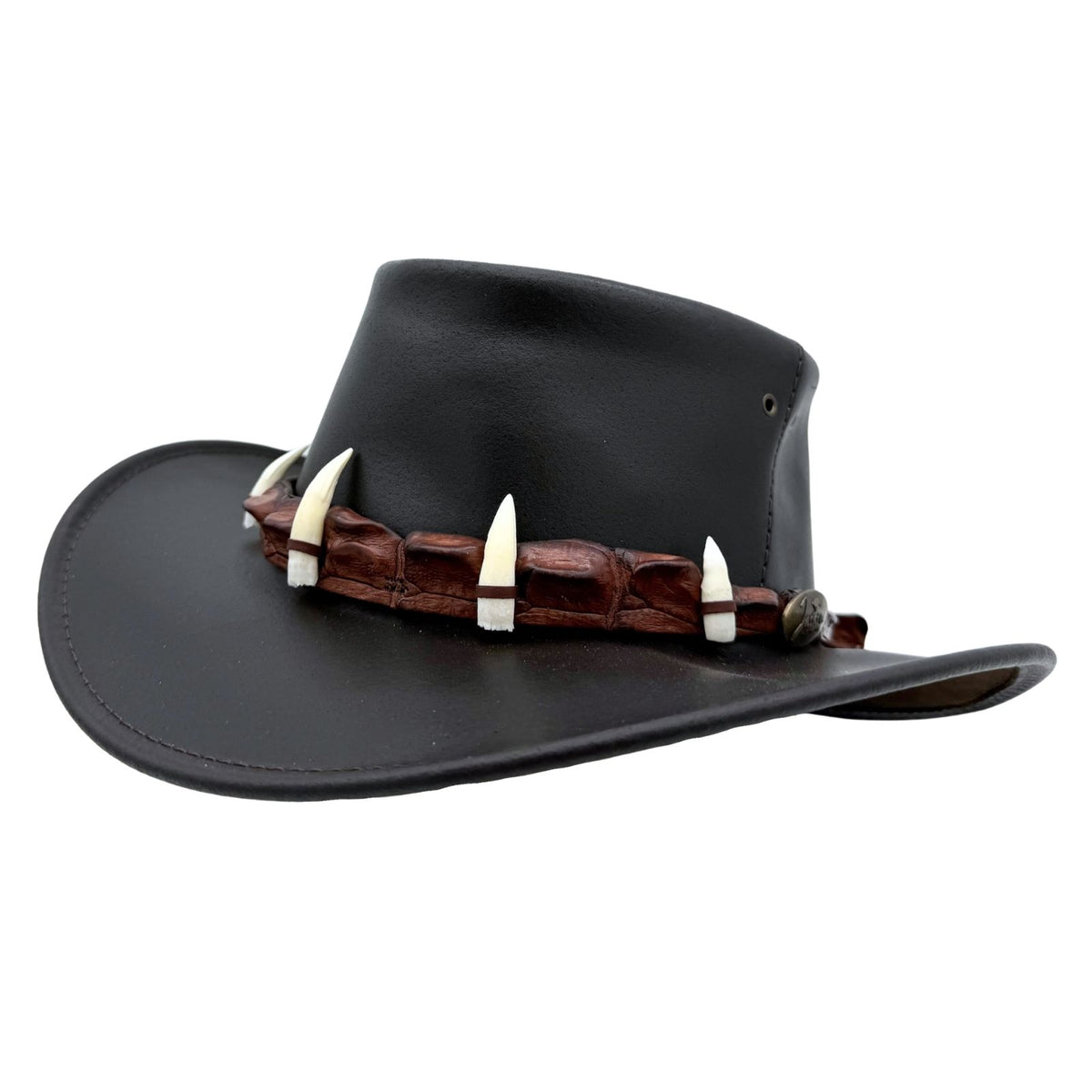
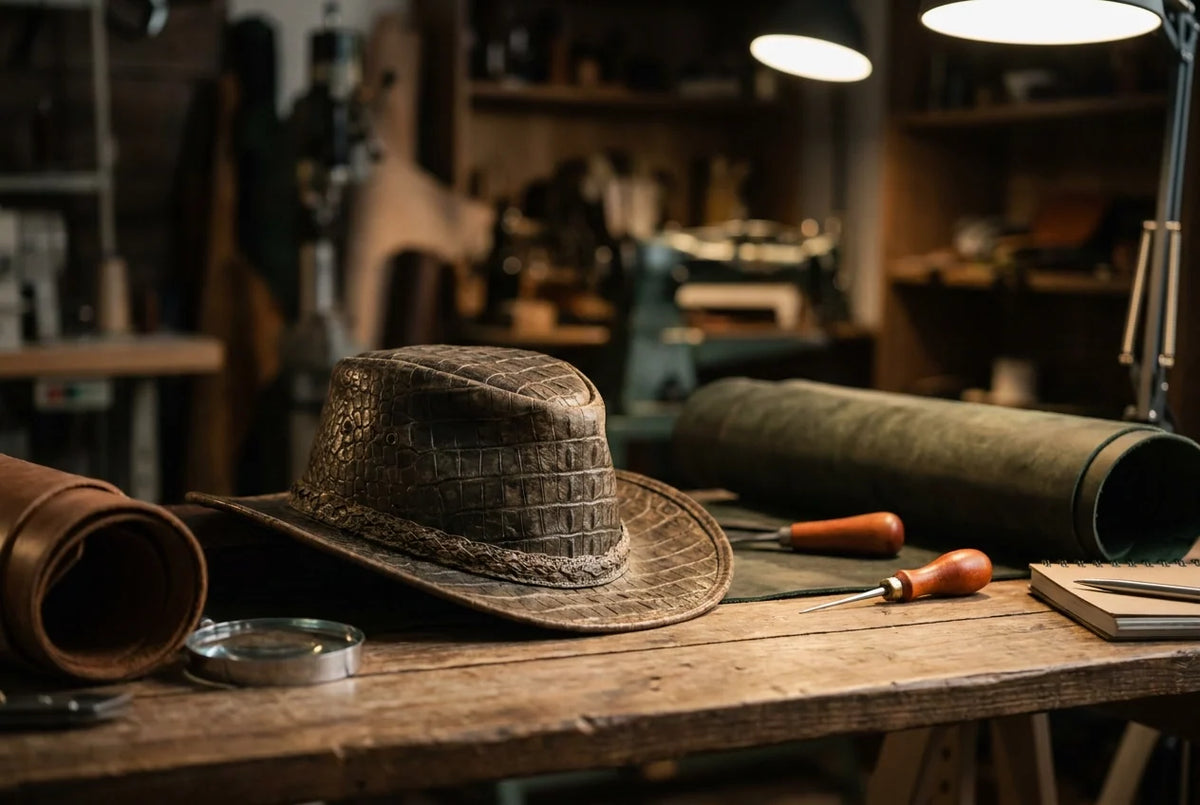
Culturally, the Australian outback hat is anchored by one of the most recognisable cinematic images in global popular culture: Crocodile Dundee. The wide-brimmed hat with genuine crocodile teeth and a backstrap hatband is not a costume accessory; it is a direct expression of Australian craft tradition. No mass-market brand can authentically reproduce this detail. As the Reddit community discussion on outback hat materials confirms, leather outback hats carry recognised souvenir significance even within Australia itself, purchased by travellers who understand they are acquiring something genuinely place-specific.
For international buyers and gift seekers, this distinction is commercially significant. Brands like New Era, Adidas, and Brixton operate at scale across the global headwear market, projected to reach approximately $25 billion in value, but none carry authentic Australian heritage positioning. A Jacaru kangaroo leather outback hat arrives with provenance: the material, the maker, and the country of origin all contribute to a purchase that functions simultaneously as a functional outdoor hat and a lasting keepsake. A generic synthetic safari hat, however well-made, simply cannot offer the same layered value.
Leather, Straw, or Wool: Choosing the Right Safari Hat Material
Material choice is one of the most important decisions you will make when selecting a safari hat, and each of the three primary options, leather, straw, and wool, serves a distinct purpose in the field.
Leather: Built for the Long Haul
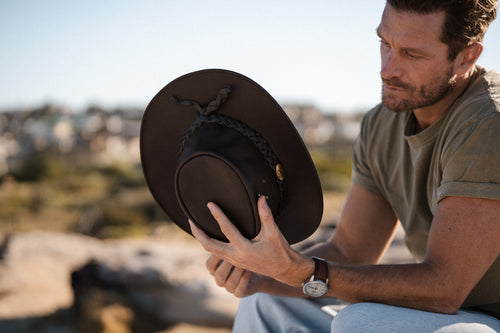
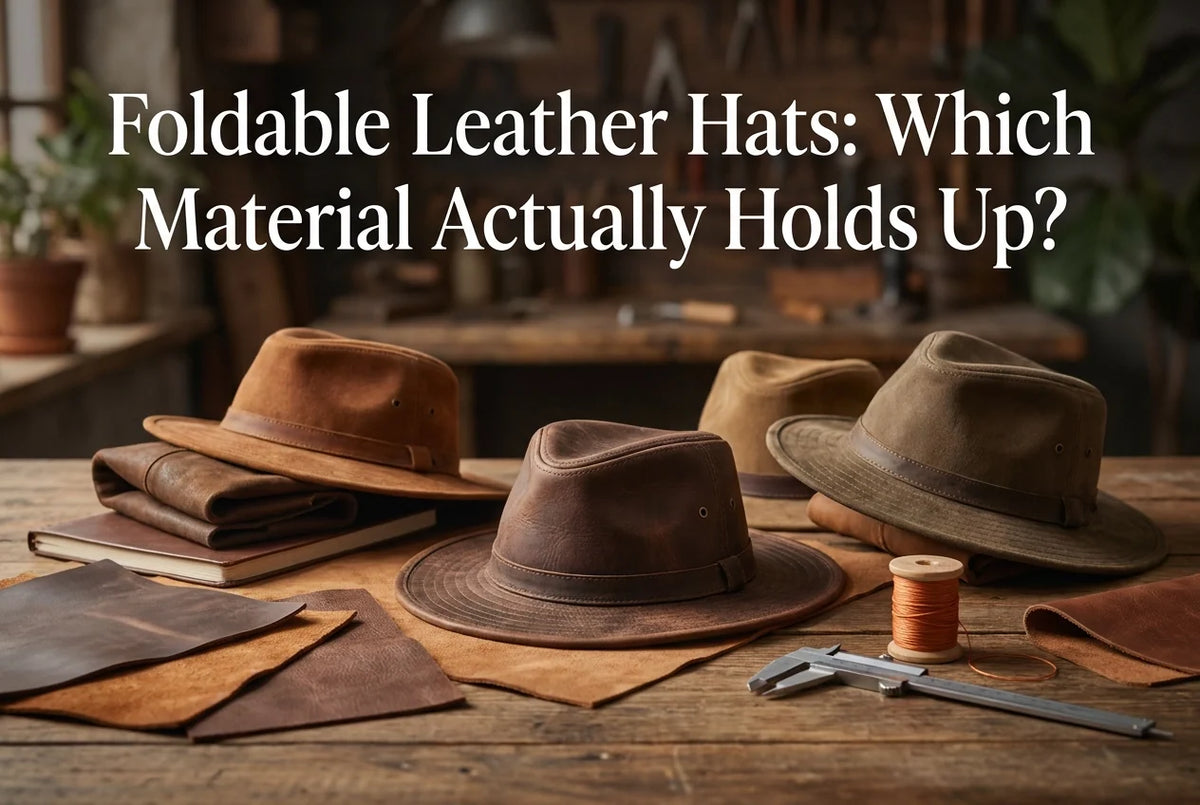
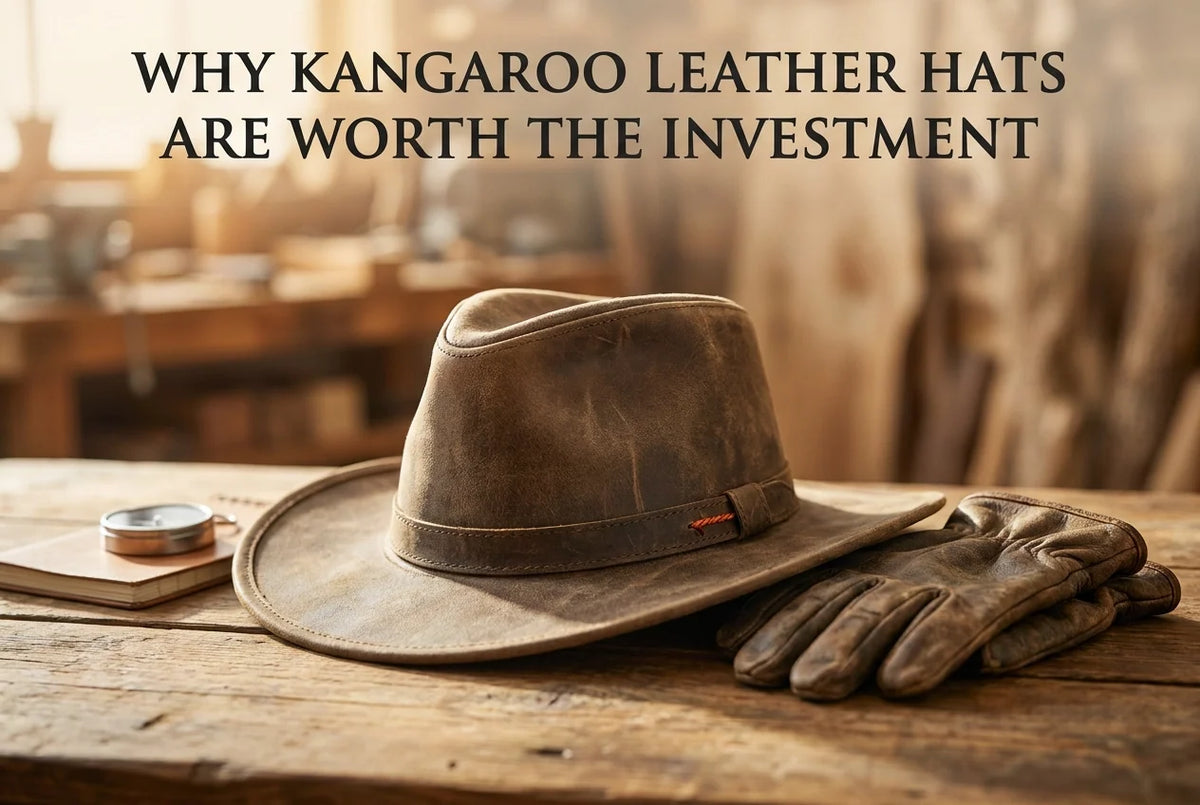
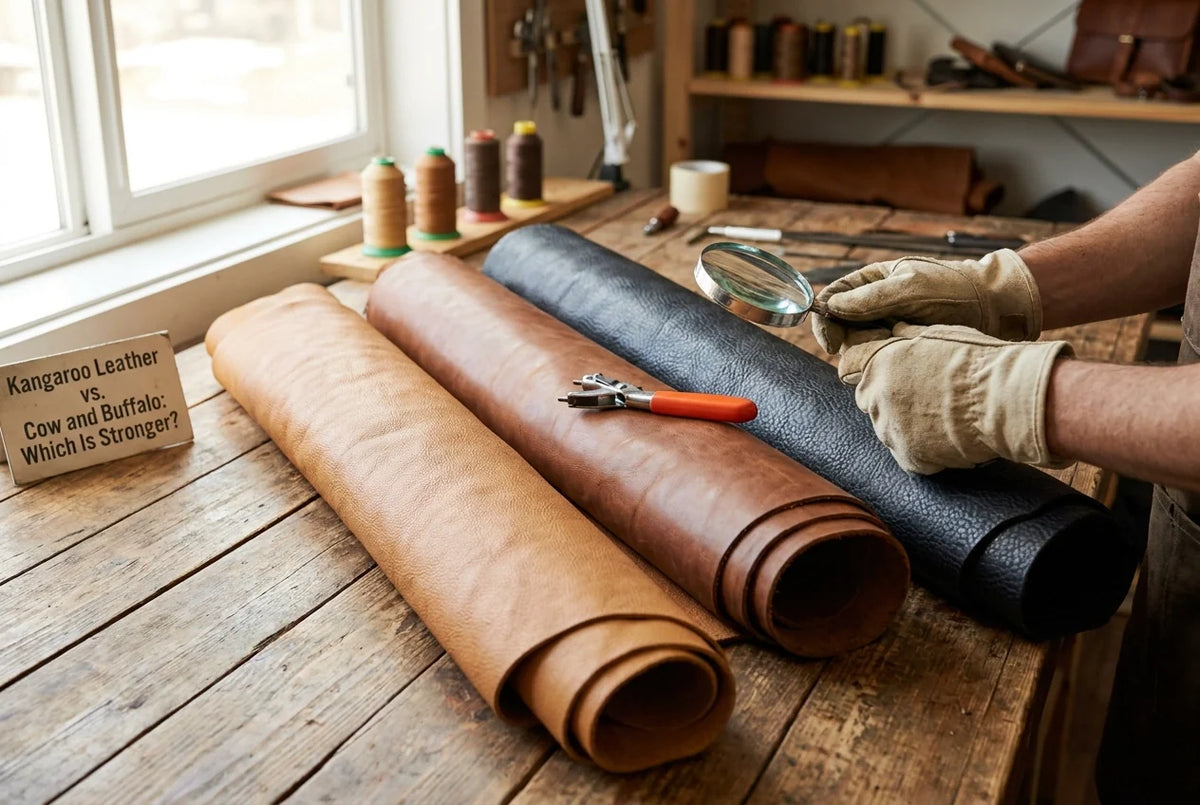
Leather safari hats, crafted from kangaroo hide, buffalo, or cowhide, represent the most durable option available. Leather is naturally resistant to wind and light rain, holds its shape under demanding conditions, and progressively moulds to the contours of the wearer's head over time. Unlike synthetic alternatives, a quality leather hat does not degrade with regular use; it improves with age, developing a patina and fit that becomes uniquely personal. This makes leather the clear material of choice for extended outback travel, serious outdoor adventure, or any situation where your hat needs to perform consistently across weeks or months of hard use. According to A Guide to Outdoor Hat Materials, leather hats earn their keep specifically in dry country and cool evening conditions where durability and weather resistance matter most.
Straw: Light, Breathable, and Warm-Weather Ready
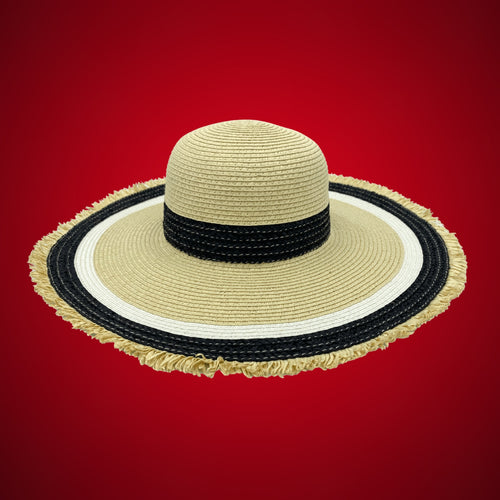
Straw safari hats are the lightest and most breathable option in the category. They excel in hot, sunny environments including beach settings, casual game drives, and warm-weather travel where ventilation is the priority. The finer the straw weave, the greater the flexibility and resistance to drying out, making weave quality a key indicator of overall hat performance. However, straw is generally less suited to heavy field conditions or wet environments, where leather holds a clear functional advantage.
Wool: The Cold-Weather Performer
Wool safari hats offer excellent insulating properties that make them well-suited to cooler outdoor environments, highland safaris, elevated game reserves, or winter travel where morning temperatures drop sharply. Wool felt brings structure and warmth that neither straw nor leather fully replicates in cold conditions. In 2026, wool blends are in particularly strong seasonal demand among eco-conscious buyers, driven by growing preference for natural fibres over synthetic alternatives.
Why Natural Materials Win on Sustainability
Leather, wool, and straw are all natural, biodegradable materials that align directly with the accelerating consumer shift toward sustainable, non-synthetic headwear. As the Ultimate Guide to Hat Materials confirms, natural materials support long-term product value through durability and reduced replacement frequency. This is an important purchasing consideration in 2026, as natural materials continue to outperform rPET and synthetic alternatives in premium outdoor headwear categories.
Leather also occupies a distinct premium tier within the global hats market, which is currently valued at approximately $25 billion and projected to grow at a CAGR of 5.4% through 2033. A leather safari hat sits at the higher end of the perceived-value spectrum, making it as compelling a gift choice as it is a functional outdoor accessory.
Sun Protection and UPF Ratings for Safari Hats
Sun protection is not a secondary consideration when choosing a safari hat; it is the primary function the hat must deliver. A brim width of 3 inches or more provides meaningful shade across the face, ears, and back of the neck, which are precisely the areas most vulnerable to UV damage during extended outdoor exposure. Caps and short-brim alternatives leave the ears and neck almost entirely unprotected, making them inadequate for safari environments, the Australian outback, or sub-Saharan Africa where UV indices regularly reach extreme levels.
Understanding UPF ratings gives you a clear, objective measure of how well a hat material blocks ultraviolet radiation. UPF 50+ is the benchmark for excellent protection, meaning the fabric blocks 98% or more of UV rays. Experts consistently recommend UPF 50+ rated headwear for anyone spending extended time in high-UV climates, and in 2026, UPF ratings have become a primary evaluation criterion in expert hat guides such as The Best Sun Hats of 2026 and GearJunkie's sun hat roundup, reflecting how seriously the outdoor community now treats solar protection.
Premium natural materials offer an additional advantage here. Leather and tightly woven straw block a high percentage of UV radiation through material density alone, without relying on chemical treatments. This makes them inherently reliable choices that retain their protective properties over years of use, unlike synthetic fabrics whose chemical UPF coatings can degrade with washing.
A chin strap works alongside the wide brim to keep the hat correctly positioned during active movement. Wind, physical activity, and uneven terrain can all shift a hat out of alignment. A secure chin strap eliminates constant readjustment and ensures the brim stays where it needs to be: shielding your face and neck continuously.
When evaluating which safari hat to purchase, weight sun protection equally alongside aesthetics and durability. Style matters, but a hat that looks the part while failing to protect you in the field is not fit for purpose.
What to Look for When Buying a Safari Hat
Knowing what features actually matter separates a hat that performs in the field from one that fails you on day two of a week-long trip. Use this checklist before you commit to any purchase.
1. Brim Width
Brim width is the single most important measurement on a safari hat. A minimum of 3 inches provides adequate shade across the face and ears, but for open-vehicle game drives, high-altitude environments, or extended daily wear, aim for 4 to 5 inches. At that width, the brim casts meaningful shadow over your neck and shoulders as well, reducing cumulative UV exposure during sessions that can run 4 to 6 hours without shelter. Most product listings state brim width in inches, so check the specification rather than relying on terms like "wide" or "oversized," which have no standardised meaning.
2. Fit and Sizing
A safari hat should sit firmly on the head without pressing uncomfortably at the temples. Leather hats in particular will stretch and mould with wear, so starting with a snug fit is the correct approach; a hat that feels loose from the outset will only worsen over time. Measure your head circumference in centimetres before ordering and cross-reference the manufacturer's sizing chart rather than guessing by clothing size.
3. Chin Strap or Drawstring
A chin strap or drawstring is non-negotiable for any outdoor or travel application. Wind, vehicle speed on open game drives, and physical activity can all displace an unsecured hat instantly. A 2023 African Travel Association survey cited chin strap security as one of the two most common purchase filters among safari travellers researching gear, confirming this is a widely recognised functional requirement rather than a minor accessory.
4. Interior Sweatband and Lining
A quality leather or cotton sweatband serves two purposes simultaneously: it absorbs moisture during active wear, and it protects the crown of the hat from sweat degradation over time. Hats without a proper sweatband tend to develop staining, structural softening, and odour at the crown after repeated use. This single feature often distinguishes a hat built for sustained field use from a budget alternative assembled for occasional wear.
5. Construction Quality Markers
Examine the brim stitching, eyelet reinforcement, and material labelling before purchasing. Double-stitched brims resist delamination after repeated exposure to wind, dust, and moisture. Reinforced ventilation eyelets maintain their shape and airflow function across extended use. Genuine material labelling, whether leather, wool, or canvas, matters because pressed-fibre and faux-leather substitutes degrade quickly under outdoor conditions. For a practical overview of style options that meet these standards, the Safari Store's safari hat advice guide is a useful reference point when comparing construction across categories.

Safari Hats as Gifts and Australian Souvenirs
A premium leather safari hat sits in a category of its own when it comes to gift-giving. It delivers genuine functional value that the recipient will use repeatedly, carries a compelling material and cultural story, and ages into something more personal over time. That combination is rare in the souvenir market, where most items are decorative at best and disposable at worst.
Australian outback hats take this gifting proposition further by embedding authentic provenance directly into the product. A hat crafted from kangaroo leather with genuine crocodile teeth detailing is not a replica or a novelty. It is a product built from materials that exist only in Australia, shaped by a manufacturing tradition rooted in the outback. For international travellers seeking a meaningful keepsake rather than a generic magnet or keyring, this level of authenticity carries real weight.
Corporate buyers are also taking notice. Wholesale purchasing trends in 2026 are shifting toward mixed MOQ orders, which opens the door for businesses in travel, hospitality, and outdoor sectors to order premium Australian safari hats in varied styles and sizes without committing to large uniform quantities. A distinctive, high-quality hat communicates far more about a brand than a printed pen or a tote bag.
Personalisation is reshaping gifting decisions this year. Buyers across retail and corporate channels are moving toward items that feel considered and individual rather than generic. Hatband choices, fit customisation, and provenance storytelling all give a premium safari hat an edge in this environment.
Sustainability adds a final layer of strength to the gifting case. Natural-material hats sourced from regulated Australian programmes are increasingly preferred by recipients and procurement teams paying close attention to material origins, particularly when measured against synthetic mass-market alternatives.
How to Care for a Leather or Wool Safari Hat
A premium leather or wool safari hat is a long-term investment, and proper care is what separates a hat that lasts decades from one that deteriorates within a season or two. Follow these five essential care steps to protect your hat and get the most from it.
1. Clean Leather Gently and Always Air-Dry
For routine cleaning, wipe the exterior surface with a soft, lightly dampened cloth to lift dust and surface grime. Never submerge a leather safari hat in water; soaking strips the hide of its natural oils, warps the brim, and causes the crown to lose its structure. For stubborn marks, saddle soap applied sparingly with a soft cloth is a reliable method. After any damp cleaning, allow the hat to air-dry completely at room temperature. Keep it away from radiators, heater vents, and direct sunlight, as intense or rapid heat causes leather to crack and the colour to fade permanently. You can read more about leather hat care and long-term shape retention if you want a deeper guide.
2. Condition the Leather Every Few Months
Cleaning alone is not enough. Apply a quality leather conditioner at least every three to six months to keep the hide supple and crack-resistant. Conditioning becomes especially important after rain, exposure to salt air, or prolonged sun, all of which draw moisture out of the leather and accelerate deterioration. Work the conditioner in with a soft cloth using circular motions, then buff lightly and allow it to absorb fully before wearing.
3. Store Your Hat to Preserve Its Shape
Heat and pressure are the two biggest threats to a leather hat's structure during storage. Place your hat on a hat block, or stuff the crown loosely with acid-free tissue paper or a clean cloth to maintain its form. Never stack objects on top of a stored hat or crush it into a bag, as this can permanently deform the crown and brim in ways that are difficult to reverse.
4. Care for Wool Safari Hats with a Light Touch
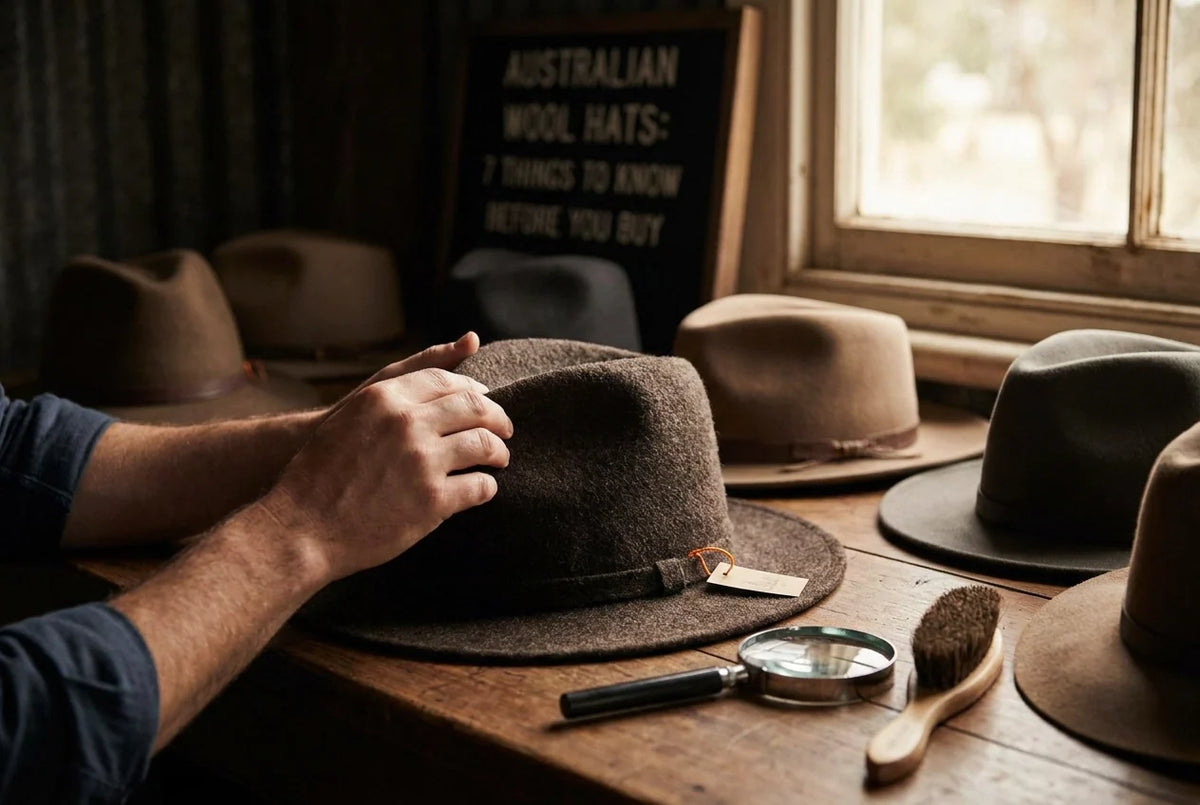
Wool safari hats require a different approach. Use a soft hat brush to gently remove dust, always brushing in a single direction to avoid matting the fibres. For stains, spot-clean only with cold water and a very mild detergent. Hot water will cause wool felt to shrink and lose its structure. After any damp cleaning, air-dry the hat flat on a clean surface; never hang it or rest it on its brim while wet, as the crown can collapse under its own weight. You can find additional guidance on wool hat care and maintenance from specialist hat brands.
5. Treat Longevity as a Sustainability Choice
A well-maintained leather or wool safari hat can realistically last decades with consistent care. Synthetic alternatives, by contrast, typically degrade within a handful of seasons of regular outdoor use due to UV breakdown and material fatigue. Choosing a natural-material hat and caring for it properly is one of the most straightforward ways to reduce your headwear footprint over time. Every application of conditioner and every careful storage decision extends the life of the hat and delays the need for replacement.
Finding the Safari Hat That Goes the Distance
The right safari hat comes down to three non-negotiable factors: brim width for genuine sun protection, material matched to your environment and values, and construction quality that justifies the investment over years of use. A brim of at least three inches shields your face, ears, and neck where sun damage accumulates fastest. Material determines whether your hat survives a decade of hard use or deteriorates after a single season. Construction, including stitching, crown structure, and hardware, determines long-term value.
Australian leather sits at the top of the material hierarchy for buyers who want a safari hat that works as both a serious outdoor tool and a culturally grounded piece. Rooted in the practical demands of the Australian outback, leather outback hats were built to handle harsh sun, unpredictable weather, and sustained hard use, and that heritage translates directly into modern field performance.
Jacaru's range of leather and straw outback hats represents the authentic Australian option within the safari hat category, spanning kangaroo leather, traditional full-grain leather, and breathable straw styles. Whether you prioritise durability on a multi-week expedition or lightweight ventilation in peak heat, there is a material and construction tier suited to your use case. Browse the full Jacaru range to find the hat that matches your purpose.
A premium Australian safari hat also carries genuine gifting weight. For international travellers, corporate buyers, and anyone seeking a souvenir with function and cultural meaning, a quality leather outback hat is a wearable, story-rich keepsake that outlasts generic alternatives.
The clearest takeaway: identify your use case first, choose your material accordingly, and invest in construction built to last.
Conclusion
Choosing the right safari hat does not have to be complicated. By focusing on the essentials, including material breathability, adequate brim width, proper ventilation, and a secure fit, you can find a hat that genuinely performs when it matters most. Remember that protection always comes before style, though the two can absolutely go hand in hand.
Now that you know what separates a great safari hat from a mediocre one, it is time to put that knowledge to work. Browse your options with confidence, compare features carefully, and never settle for a hat that checks only half your boxes.
Your dream safari deserves the right gear from head to toe. Start with the hat, protect yourself from the sun, and focus on what truly matters: experiencing the wild in all its breathtaking glory.


Our friends at Bocchetta Plush Toys have a great range of lifelike plush animals that make great gifts for people of all ages.