













Kangaroo Leather: Properties, Sustainability and Ethics Explained
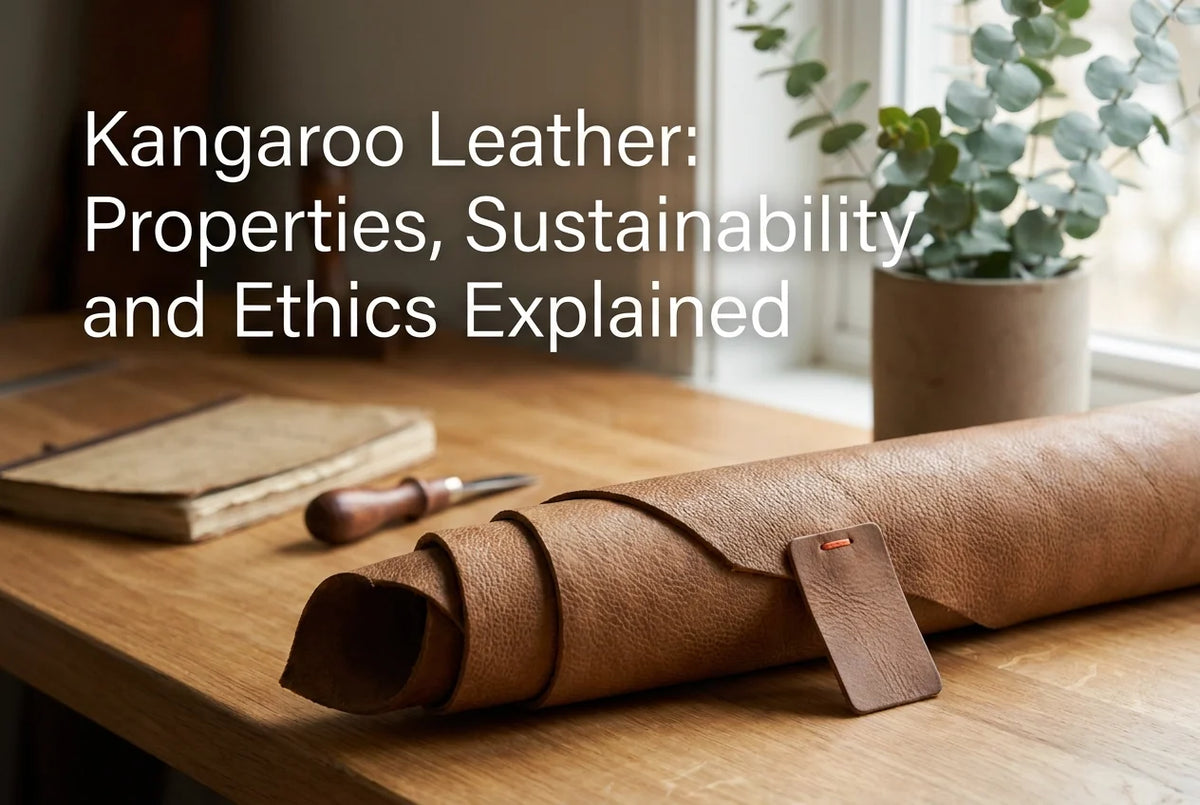
Few materials sit at the intersection of performance, controversy, and shifting consumer values quite like kangaroo leather. As the global leather industry repositions itself as a sustainable alternative to fast fashion and fossil fuel-derived synthetics, niche leathers are facing sharper scrutiny than ever before. Major brands are reconsidering their material choices, and at COP28, 28 representative organisations from across the world signed a manifesto recognising leather's potential role in slowing the fast fashion cycle. The conversation is no longer simply about defending leather; it is about proving which sources and supply chains can genuinely justify their place in a more responsible market.
This analysis cuts through the noise to give you a clear, grounded understanding of kangaroo leather: what it is, how it is sourced, and why it generates both enthusiasm and serious ethical debate. You will also find a direct comparison with cattle hide, buffalo leather, and synthetic alternatives, along with practical guidance on what to look for when purchasing kangaroo leather products. By the end, you will have the context needed to form an informed, nuanced view of this distinctive material.

What Is Kangaroo Leather?
Kangaroo leather stands apart from other hides at the structural level. The fibre bundles within kangaroo skin are reported to feature a more uniform parallel fibre orientation than bovine leather. This alignment gives the material exceptional resistance to tearing and stretching under stress, and contributes to a notably high tensile strength-to-weight ratio. In practical terms, kangaroo hide delivers meaningful strength at lower weight compared with cattle hide, a property that has made it a preferred material wherever weight and performance both matter.
The surface texture reinforces this advantage. Kangaroo leather is widely noted for its fine grain, producing a sleek, consistent finish that ages well with minimal cracking when properly maintained. Buffalo leather is thicker and more rigid; cattle leather, while versatile, shows a coarser grain. Kangaroo leather occupies a different category entirely, one defined by refinement as much as toughness.
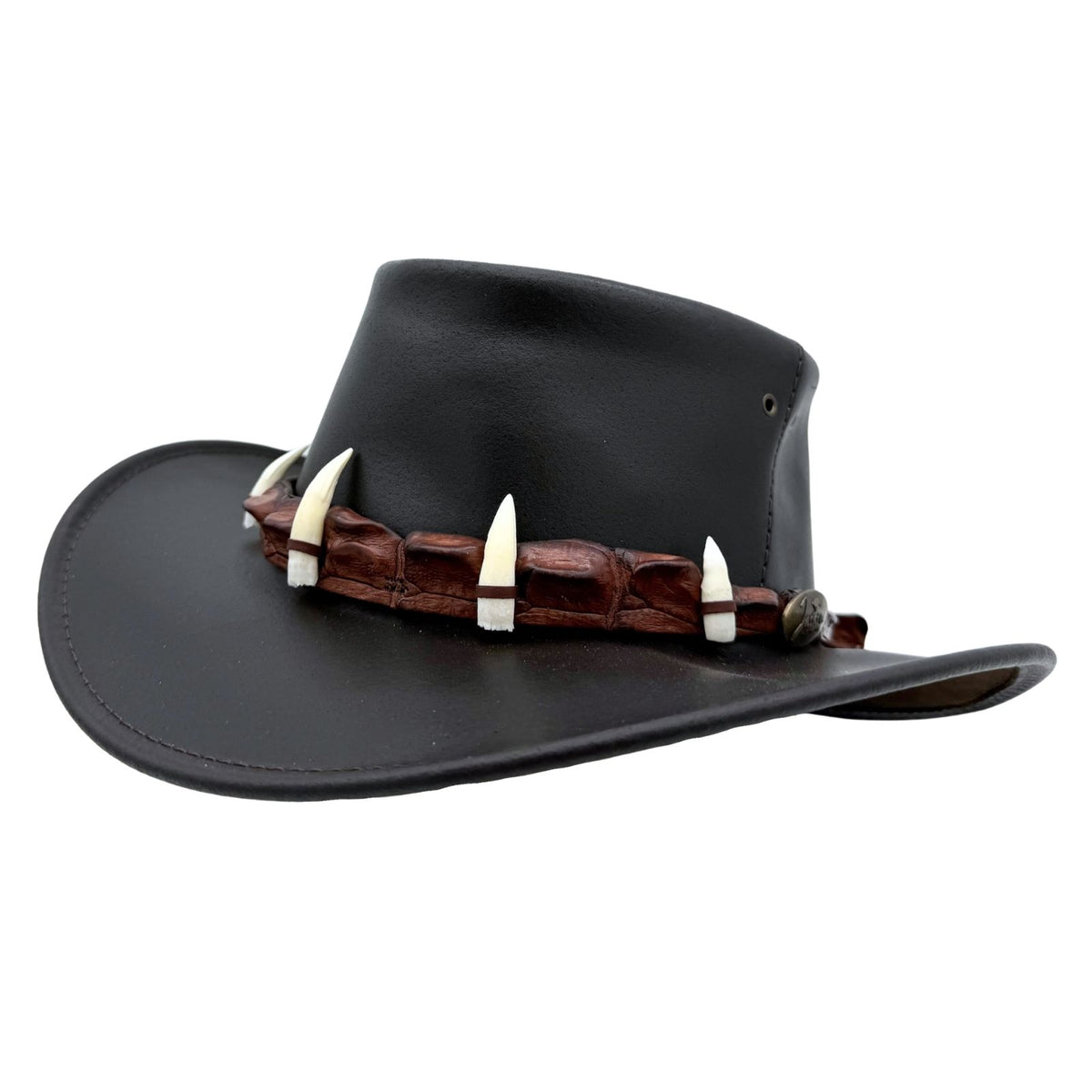
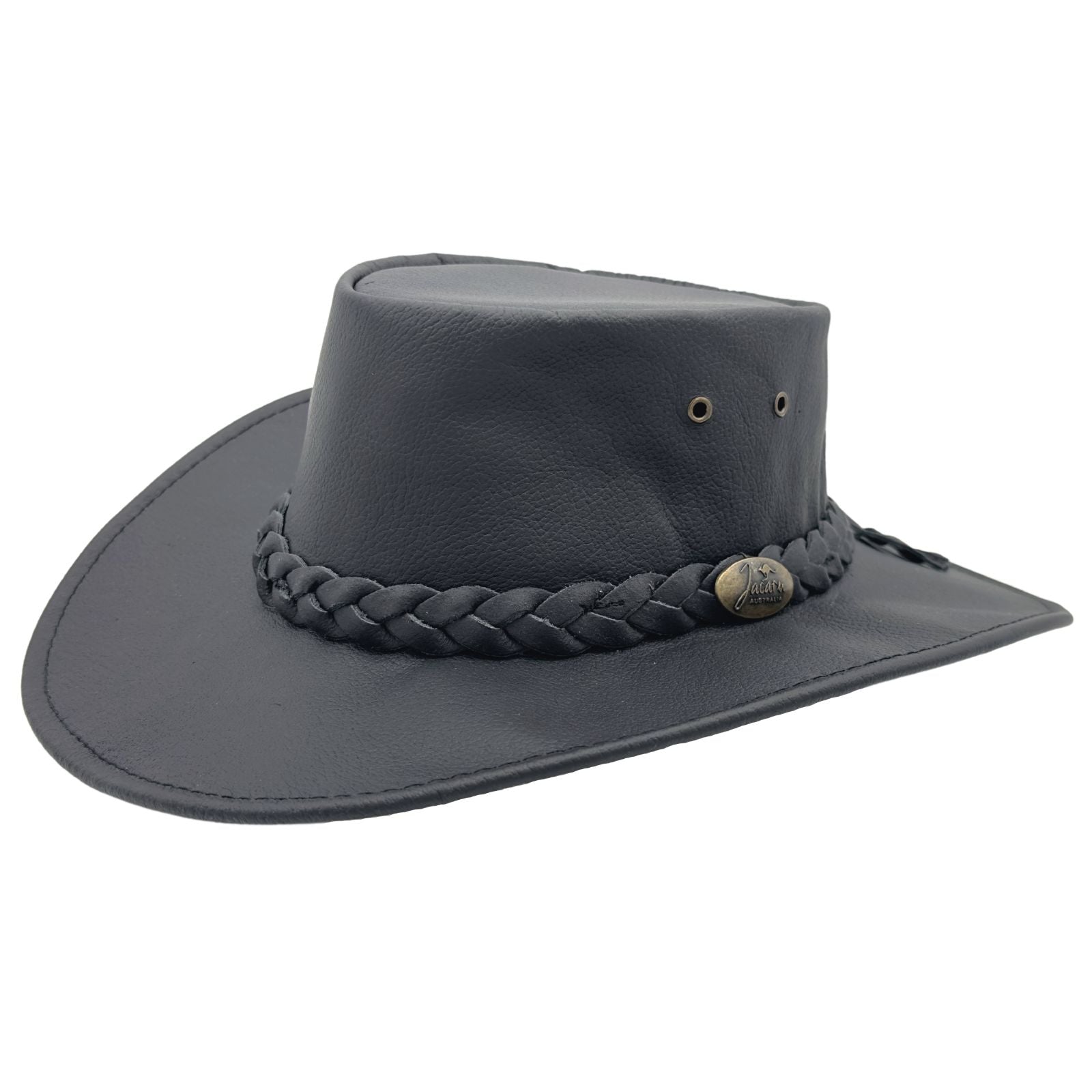
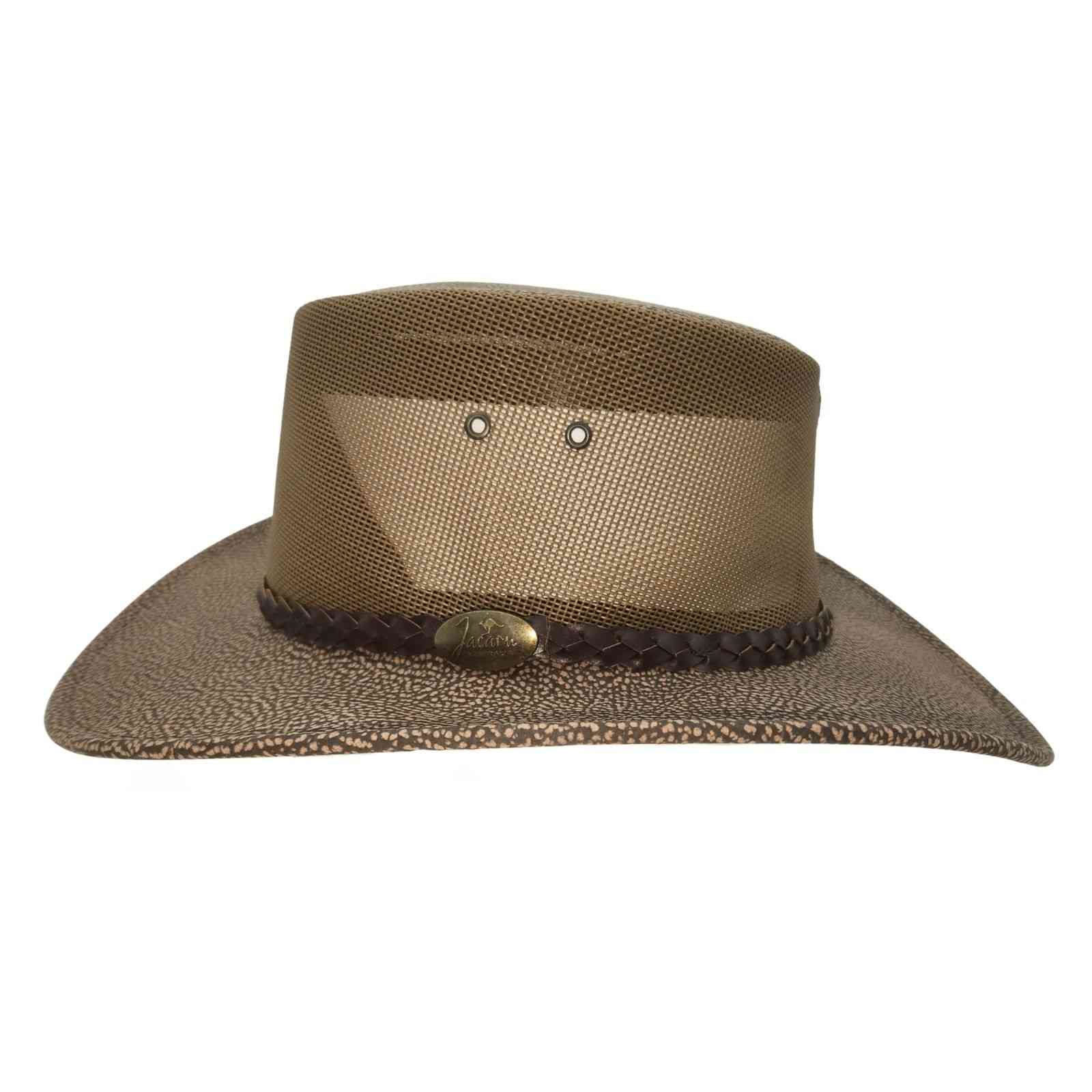
In Australia, the material has a long practical history, with contemporary applications extending into premium outback hats, gloves, accessories, and high-performance sporting goods such as football boots.

How Kangaroo Leather Is Sourced
That separate regulatory and sourcing framework has practical consequences, starting with how the animals are managed in the first place.
Commercial kangaroo harvesting in Australia operates under state-level management plans, each requiring federal approval under the Environment Protection and Biodiversity Conservation Act 1999. The Australian Department of Agriculture, Water and the Environment oversees the program nationally, with annual quotas calculated from population surveys conducted across harvest zones. Victoria's Kangaroo Harvest Management Plan 2024-2028 and equivalent plans in Western Australia, New South Wales, and South Australia each establish zone-specific limits, compliance requirements, and reporting obligations. This makes Australian kangaroo harvesting one of the most rigorously administered wildlife programs of its kind globally.
Critically, leather is not the primary driver of the harvest. The Victorian management plan frames commercial harvesting explicitly as an alternative management approach for reducing agricultural damage from overabundant populations. Hides are a secondary output; the animal would be culled regardless of market demand for leather. Every harvester must hold a valid licence and operate within the conditions of the applicable state framework, with population data informing quota adjustments year to year.
Processing quality is where significant variation enters the supply chain. Full-grain kangaroo leather, sourced from Australian-certified tanners, preserves the hide's parallel fibre structure and structural integrity. Split or corrected-grain hides are sanded and coated to mask surface imperfections, which degrades the very properties that make kangaroo leather worth buying.
Jacaru sources hides through established domestic supply chains. That domestic traceability matters increasingly to premium buyers, and it reflects a sourcing standard that offshore or unverified suppliers cannot credibly match.
The Sustainability Case for Kangaroo Leather
That regulated sourcing framework carries direct sustainability implications beyond the supply chain.
Kangaroos are not farmed, and are managed under wild-population controls rather than agricultural inputs. This removes several of the most resource-intensive inputs that define conventional cattle leather's environmental footprint before a hide ever reaches a tannery. Kangaroos are not farmed, which removes the land-use and feed-production inputs that define cattle leather's footprint, though peer-reviewed lifecycle comparisons are still emerging. Peer-reviewed lifecycle assessment frameworks, such as those published by the Leather Working Group, provide the methodological basis for comparing figures across species and production systems.
The leather industry has also begun making this case collectively, as signalled at COP 28 in late 2023. The argument is straightforward: durable goods displace short-lifecycle products.
That contrast with synthetics is stark. PVC and polyurethane-based alternatives are derived from petroleum feedstocks and are associated with microplastic shedding and faster material degradation than natural leather, though lifecycle data vary. Genuine leather, properly maintained, outlasts multiple replacement cycles of synthetic substitutes.
This is where the "buy once, buy well" principle becomes concrete. A kangaroo leather hat or accessory from Jacaru, including new kangaroo leather styles designed for long-term wear, is built to last decades, not seasons.
One caveat demands acknowledgment: sustainability claims require substantiation. Brands should reference lifecycle data from bodies such as the Leather and Hide Council of Australia or peer-reviewed environmental studies rather than making unqualified comparisons. Vague assertions erode the credibility that verifiable data builds.
The Ethical Debate: Animal Welfare and Regulation
Sustainability credentials matter, but they do not resolve every question a consumer or regulator will ask. The ethical debate around kangaroo leather is active, and brands that treat it as a distraction rather than a legitimate concern underestimate their audience.
Organisations critical of animal-derived materials in fashion raise concerns centred on the humaneness of field harvesting, the fate of dependent joeys when females are killed, and the principle that commercialising wildlife normalises its exploitation regardless of regulatory oversight.
The legislative dimension adds commercial weight to this debate. US legislative proposals, most recently proposals discussed around 2025, have sought to restrict the import and sale of kangaroo products, and any brand with US export exposure should monitor this space closely.
Proponents of regulated harvesting make a substantive counter-argument. Australia's state-based management frameworks require licensed harvesters, set annual quotas tied to independent population surveys conducted by state agencies, and mandate marksmanship certification before commercial licensure. That level of documented oversight is structurally different from intensive livestock farming, which operates without equivalent wildlife population monitoring.
The more important point for brands is this: the question is not whether criticism exists, but whether the sourcing framework meets independently verified welfare and sustainability standards. Evading that question is more commercially damaging than answering it directly.
Jacaru's domestic supply chain positions it materially closer to this regulatory framework than offshore importers sourcing hides outside Australian controls. That proximity is a genuine advantage, visible across products from outback hats to kangaroo leather wallets and purses. The consumer expectation is specific sourcing transparency, not category-level reassurance.
Kangaroo Leather vs. Cattle, Buffalo and Synthetic Alternatives
Setting aside sourcing questions and ethical debates, the material evidence stands on its own merits.
Strength-to-weight is where kangaroo leather most clearly outperforms its rivals. Kangaroo leather's structural advantage, its strength-to-weight ratio, makes it the preferred choice for applications where carried weight matters: outback hats, gloves, and equestrian gear that must perform without burdening the wearer.
Cattle leather remains the global default. It is produced at scale across every major tanning region, priced accessibly relative to its quality, and familiar to buyers worldwide. That ubiquity makes it the baseline against which all premium leathers, including kangaroo, are measured. Kangaroo hide surpasses it on strength-to-weight performance and grain fineness where those properties are the priority.
Buffalo leather occupies a different position entirely. Its raw toughness is genuine, but it occupies a different use-case from the refined accessories and hat bodies where kangaroo leather excels.
Synthetic alternatives, including PU leather, PVC, and emerging bio-based leathers, offer a lower entry price and sidestep direct animal welfare questions. However, their production relies on petroleum-based chemistry, they are associated with microplastic shedding, and they typically have shorter service lives than well-maintained natural leather. For buyers weighing total environmental cost, longevity matters as much as origin.
For outback hats and Australian-made accessories specifically, no imported cattle hide or synthetic material replicates what kangaroo leather delivers: a combination of measurable material performance and verifiable Australian provenance. Jacaru's new kangaroo leather styles demonstrate this across hat bodies, hatbands, and accessories such as kangaroo leather keyrings, where both the material and its origin are part of what the product offers.
What to Look for When Buying Kangaroo Leather Products
Knowing kangaroo leather outperforms competing materials is useful; knowing how to verify you're actually buying a quality product is essential.
Insist on full-grain. Full-grain kangaroo leather retains the hide's natural surface and original fibre structure, which is where the material's strength properties live. Split or corrected-grain products have been buffed or surface-coated to mask imperfections, sacrificing durability and the fine-grain finish the hide is prized for.
Verify Australian manufacture. "Kangaroo leather" on a label does not guarantee the hide was harvested under Australian wildlife management controls. Domestically manufactured products sit inside the regulatory framework governing licensed harvesting and processing. Offshore-manufactured items carrying the same label may source hides through supply chains with no equivalent oversight. Australian-made is a substantive quality signal here, not just a provenance preference.
Ask about tanning method. Vegetable-tanned kangaroo leather uses plant-based tannins and avoids the chromium compounds associated with conventional chrome tanning. For buyers weighing sustainability credentials, vegetable tanning represents a meaningfully cleaner process. It is a reasonable question to put to any retailer.
Plan for long-term care. Kangaroo leather benefits from periodic conditioning using a suitable leather balm, which preserves fibre flexibility and prevents surface cracking. Maintained correctly, it develops character with age rather than deteriorating, which underpins the long-term value case against short-lifecycle synthetics. This applies equally to hats, accessories, and kangaroo leather wallets and purses.
Choose retailers who can account for their supply chain. A quality retailer should be able to speak directly to sourcing origin, tanning process, and manufacturing location. Jacaru, as an Australian manufacturer with domestic supply chains, meets that standard. Generic importers typically cannot.
Final Takeaways
Knowing what to look for at the point of purchase brings the broader analysis into focus. Across the evidence, four conclusions hold.
The material case is solid. Kangaroo leather's superior tensile strength-to-weight ratio, fine uniform grain, and multi-decade service life are consistent with leather industry performance data. These are not marketing claims; they reflect the hide's structural properties.
Sustainability credentials carry weight when they are specific. The state-managed harvesting plans discussed above, each assessed under the EPBC Act, provide a verifiable regulatory foundation. The comparative advantage over petroleum-derived synthetics is also defensible when framed around their petroleum-based origins and shorter service lives. Vague claims without these anchors weaken rather than strengthen the case.
The ethical debate requires direct engagement, not deflection. The welfare and legislative questions raised above have substantive, verifiable answers, but only if brands make their sourcing visible. Active legislative interest in kangaroo product imports, particularly in the US, signals that policymakers are scrutinising this category. Australia's compliance-monitored welfare codes and population management frameworks are legitimate responses to that scrutiny.
For buyers prioritising quality, origin, and durability, kangaroo leather offers a combination that neither imported cattle hide nor synthetic alternatives can replicate: measurable performance, traceable domestic sourcing, and an authentically Australian provenance. Jacaru's outback hats and accessories sit at the upper end of this category, where craft standards and supply chain integrity are built into every product.
Conclusion
Kangaroo leather is a genuinely complex material that rewards careful evaluation. Its tensile strength and weight ratio deliver measurable performance advantages. Australia's regulated harvesting framework provides a credible sustainability foundation when brands communicate it clearly. The ethical questions are real, but they have substantive, verifiable answers for buyers willing to look.
The decision ultimately comes down to priorities. If durability, traceable sourcing, and long service life matter to you, kangaroo leather stands apart from both cattle hide and synthetic alternatives in ways that hold up to scrutiny.
Start by asking the right questions before you buy: Where was the hide sourced? Which state harvesting program covers it? What welfare standards apply? Brands that answer these questions confidently are the ones worth supporting. Choose products built to last, sourced responsibly, and backed by transparent supply chains.


Our friends at Bocchetta Plush Toys have a great range of lifelike plush animals that make great gifts for people of all ages.