










Kangaroo Leather vs. Cow and Buffalo: Which Is Stronger?
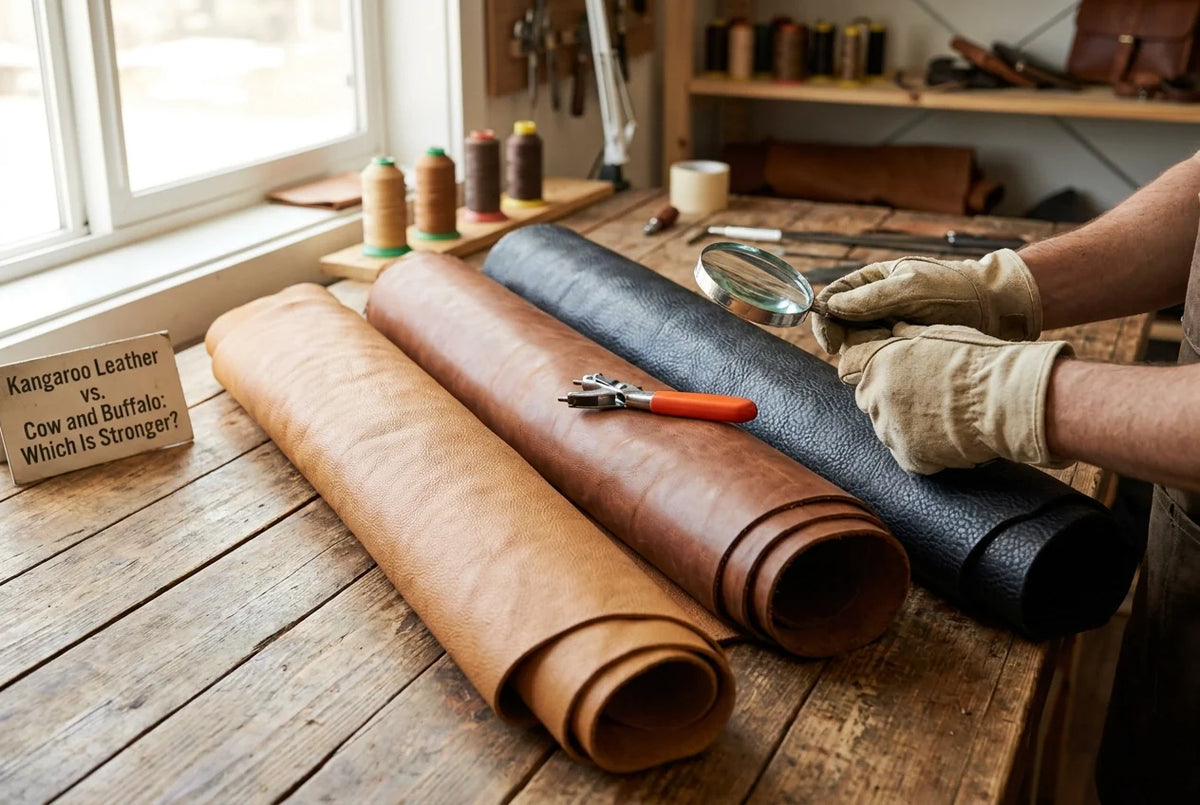
Not all leather is created equal. If you have ever wondered why some boots, belts, or hats hold up for decades while others crack and fade within a season, the answer often comes down to the type of leather used. Kangaroo leather has earned a reputation as one of the strongest and most technically impressive leathers available, yet many people know very little about what actually sets it apart.
In this post, we break down exactly how kangaroo leather compares to the more familiar options of cow and buffalo leather. Drawing on academic research from institutions including CSIRO Textile and Fibre Technology, we will walk you through the material properties, processing methods, sustainability considerations, and real-world durability of each type. You will also learn how to care for kangaroo leather products so they last as long as possible.
Whether you are shopping for your first quality leather accessory or simply curious about what makes certain products worth the investment, this guide gives you the clear, evidence-based answers you need to make a confident choice.
What Makes Kangaroo Leather Different
Kangaroo leather starts with a structural advantage built into the animal itself. Leather craftspeople and tanners commonly note that kangaroo hide has a uniform, parallel fibre arrangement running consistently throughout the full thickness of the hide. Because those fibres run in the same direction rather than crossing in irregular layers, the hide retains its structural integrity even when cut very thin. Cow leather cut to the same reduced thickness loses cohesion because you are effectively slicing through its layered structure. Kangaroo leather does not have that weakness, which is why it can be worked into lightweight hats and accessories without sacrificing toughness in the process.
Research funded by CSIRO Textile and Fibre Technology and RIRDC confirms a further distinction within the species itself: grey kangaroo skins exhibit higher tear strength compared to other kangaroo varieties. That positions grey kangaroo leather at the top of the performance hierarchy, ahead of other kangaroo types and well ahead of conventional alternative leathers.
That fibre consistency is widely associated with a more favourable strength-to-weight ratio, allowing it to be worked thin without sacrificing toughness. For a hat worn across a full day outdoors, that difference is not subtle.
Explore new kangaroo leather styles to see how these material properties translate into finished products built for Australian conditions.
Understanding this fibre structure is the necessary starting point before comparing kangaroo leather against cow and buffalo alternatives, which the next section covers in detail.
The Core Comparison: Kangaroo, Cow, and Buffalo Leather
Those fibre-level differences translate directly into performance gaps you can feel in everyday use. The following reflects broadly recognised material characteristics; individual results vary by tanning method and hide grade. Here is how the three leathers compare across the properties that matter most for outback hats and accessories.
Property |
Kangaroo |
Cow |
Buffalo |
|---|---|---|---|
Tear Strength (relative to thickness) |
Excellent |
Good |
Very Good |
Weight |
Lightweight |
Medium |
Heavy |
Flexibility |
High |
Moderate |
Lower |
Weather Resistance |
Excellent |
Good with treatment |
Good |
Best For |
Hats, keyrings, accessories |
General leather goods |
Heavy-duty applications |
Tear strength is where kangaroo leather separates itself. As noted above, that structural consistency supports a favourable strength-to-weight outcome, meaning a thinner, lighter piece of leather holds together under sustained stress that would compromise heavier alternatives.
Weight is the practical consequence of that strength advantage. Kangaroo leather is generally lighter than cow leather and lighter still than buffalo, a difference that becomes meaningful across a long day of wear.
Flexibility follows a clear hierarchy. Kangaroo leather retains high pliability after tanning, which helps it hold its shape without cracking under repeated flexing. Cow leather sits in the middle, with flexibility that depends significantly on the tanning method used. Buffalo leather tends toward stiffness, which suits applications where rigidity is an asset rather than a drawback.
Weather resistance matters enormously in outback conditions. Kangaroo leather handles heat, UV exposure, and moisture well without heavy pre-treatment. Cow leather performs adequately once properly conditioned. Buffalo leather is durable, though its heavier weight can create comfort and drying considerations in the field.
Best-use positioning follows logically from these differences. Kangaroo leather suits precision applications where strength-to-weight ratio is the priority: outback hats, keyrings, and travel accessories. Cow and buffalo leathers are well-matched to general or heavy-duty goods where mass is less of a concern.
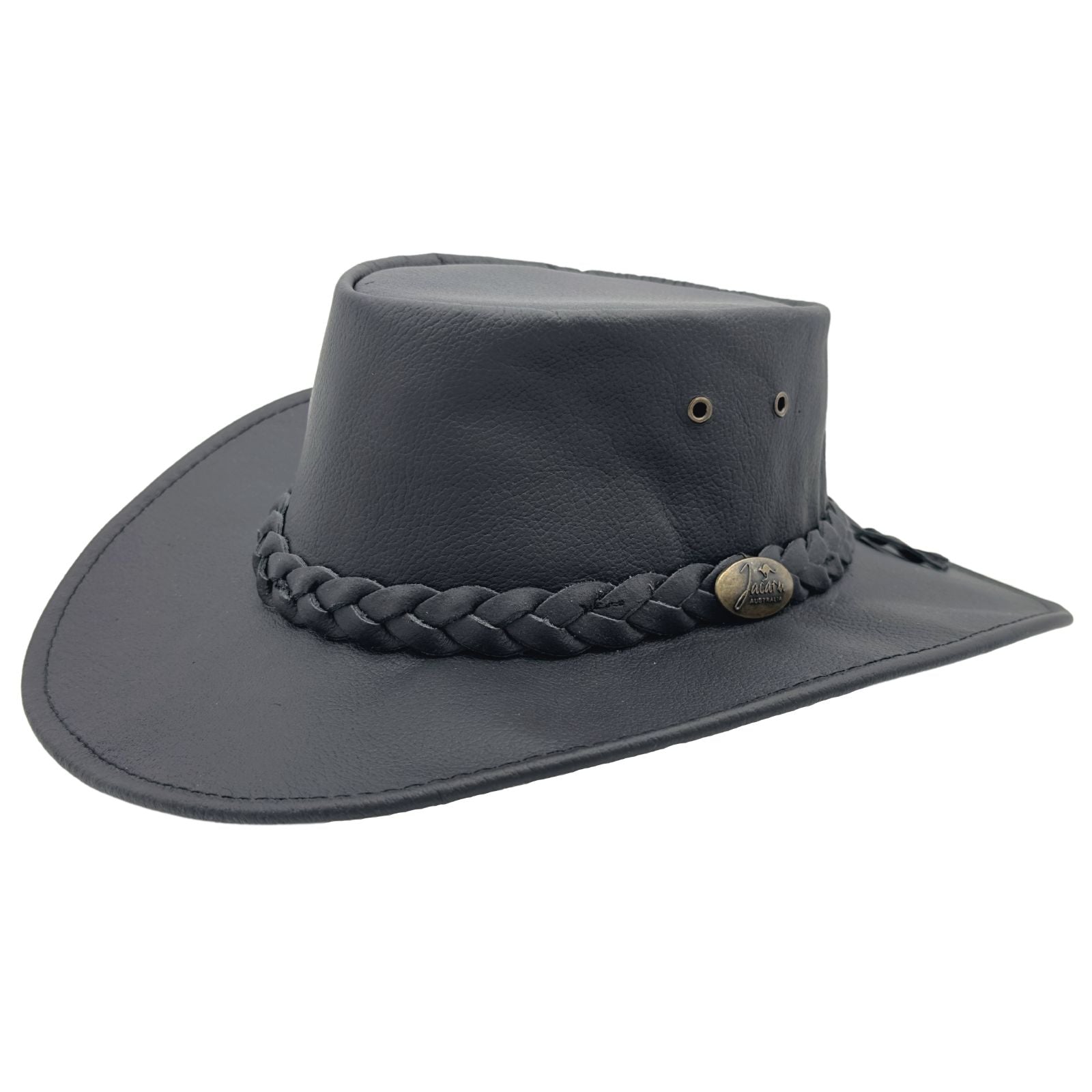
For Jacaru buyers, this is not a theoretical exercise. Jacaru's kangaroo leather hats collection sits alongside cow and buffalo options, so you can weigh these trade-offs against actual products before committing. For a deeper look at the materials side by side, the guide on outback hat materials and what to consider before buying is worth reading before you decide.
The Sustainability Case for Kangaroo Leather
Performance tells part of the story. The environmental credentials tell another.
Kangaroos are wild-harvested under state and federal management frameworks, with each state operating formal plans governing zone-based quotas and population monitoring. New South Wales, South Australia, and Victoria each maintain their own regulated programs. Because kangaroos are wild-harvested rather than purpose-bred, the production model does not require dedicated land clearing, feed-crop irrigation, or feedlot infrastructure. The animal is already present in the landscape.
Cattle and buffalo farming require cleared pasture, water, and concentrated infrastructure, inputs that wild harvesting avoids by design.
Buffalo leather typically comes from livestock already raised for other purposes, so its environmental footprint reflects the broader costs of large-scale animal agriculture.
What makes kangaroo leather genuinely distinctive is its place within a population-management system. Approximately 3 million adult kangaroos are commercially harvested annually in Australia, within quotas designed to keep wild populations at sustainable levels. The hide is a by-product of that program, not the reason the animal is raised. That is a structural difference from purpose-bred livestock, and it matters for buyers who want to understand what they are purchasing.
For eco-conscious buyers and global travellers seeking a product with authentic Australian provenance, that regulatory foundation is meaningful. Jacaru's commitment to sustainability reflects this directly. Cow and buffalo leather are quality materials, but neither can offer the same environmental story as a hide sourced from a wild, regulated, and population-managed harvest.
How Kangaroo Leather Is Processed and Why It Matters

Sustainable sourcing is only half the quality story. Once the hide leaves the field, how it is processed determines whether that natural fibre strength reaches the finished product intact or gets lost along the way.
Preservation comes first. Immediately after harvesting, the raw hide must be stabilised to halt bacterial degradation. The method used at this stage, whether salting, chilling, or drying, directly affects how much of kangaroo leather's native fibre integrity survives into tanning. A poorly preserved hide loses structural quality before the tannery even begins.
Chemical tanning defines the final product. The choice of tanning agents and the conditions of the tanning bath determine how the leather ultimately feels, flexes, and responds to moisture and heat. Different tanning methods, chrome versus vegetable, for example, are known to produce different outcomes in softness and moisture response. For kangaroo leather, tanning decisions matter more than with thicker hides, because there is less material to compensate for process errors.
Mechanical finishing shapes the surface. Staking, which physically works the leather to soften it, and buffing, which smooths the grain, both influence how uniformly the finished hide behaves across its full surface. Uneven mechanical finishing produces leather that stretches or wears inconsistently, which shows up quickly in precision items like outback hats and keyrings.
A collaborative research project funded by CSIRO Textile and Fibre Technology, Packer Tanning, and RIRDC examined exactly these stages, identifying which preservation, chemical, and mechanical factors most significantly affect kangaroo leather's strength in the finished product. That scientific foundation gives quality claims about kangaroo leather a basis that most leather goods brands simply cannot reference.
Sourcing from suppliers who apply processing methods designed to preserve the hide's native fibre properties is what separates a premium piece from a commodity one. If you are exploring new kangaroo leather styles, that processing difference is what you are investing in.
Care and Longevity: Getting the Most from Kangaroo Leather
That superior fibre structure and careful processing only deliver their full potential when you follow through with proper maintenance. Fortunately, kangaroo leather rewards straightforward care with exceptional longevity.
The structural integrity confirmed by CSIRO-linked research provides a strong foundation for longevity, but that potential is only realised with consistent maintenance.
Cleaning
Wipe the leather down with a soft, damp cloth after heavy use. For deeper cleaning, use a leather-specific cleaner only. Avoid harsh chemicals or prolonged soaking; both break down the tanning agents applied during processing, reducing the leather's flexibility over time.
Conditioning
Condition the leather regularly using a quality leather conditioner. This keeps the fibres supple and prevents the surface drying that eventually leads to cracking. Think of conditioning as protecting the fibre investment, not simply polishing the surface.
Storage
Store kangaroo leather hats on a hat stand or inside a breathable bag, away from direct sunlight. UV exposure and heat accelerate drying and can cause irreversible stiffness. A sealed plastic bag or a hot car boot are both poor storage environments.
Drying after wet conditions
If your hat or accessory gets wet, leave it to dry naturally at room temperature. Direct heat sources, such as a hair dryer or placing it near a heater, cause shrinkage and uneven drying across the hide, which can permanently distort the shape.
Jacaru's full leather care instructions provide product-specific guidance if you want step-by-step detail for your particular item.
With consistent care, a well-made kangaroo leather hat or accessory should last many years. That lifespan makes the premium price point a sound long-term investment rather than a short-term expense, particularly when compared to lower-grade materials that need replacing far sooner.
Which Leather Should You Choose?

Knowing how long your leather goods can last makes the purchase decision simpler. It comes down to matching the right material to what you actually need.
Kangaroo leather holds three clear advantages that no other hide replicates in combination. CSIRO-funded research confirms that grey kangaroo skins achieve higher tear strength than other kangaroo varieties, a structural advantage that translates into a favourable strength-to-weight ratio for finished goods. It is backed by Australia's regulated wild-harvest framework (detailed above). And it has a proven record of performing in harsh Australian heat, sun, and moisture without compromising structural integrity.
Cow and buffalo leather are genuinely quality materials and Jacaru uses both. If you prioritise heavier construction or a more traditional leather aesthetic, either is a sound choice. Buffalo in particular suits buyers who want substantial, heavy-duty goods where mass is not a concern.
For outback hats, keyrings, and travel accessories, however, the priorities shift. Lightness, toughness, and authentic Australian provenance all point to kangaroo leather as the frontrunner. A hat you wear across a full day outdoors benefits from that strength-to-weight advantage in a way that a static good simply does not.
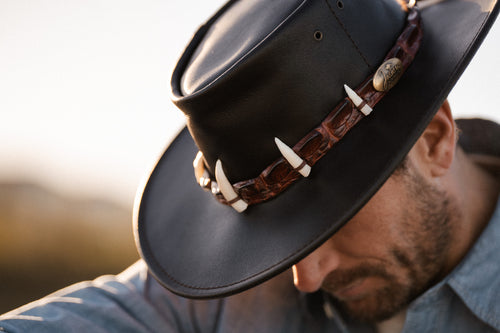
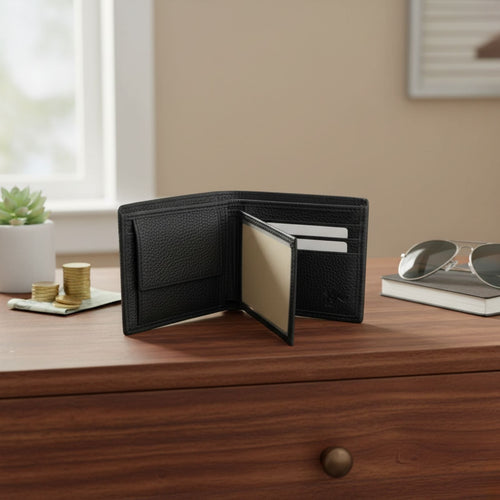
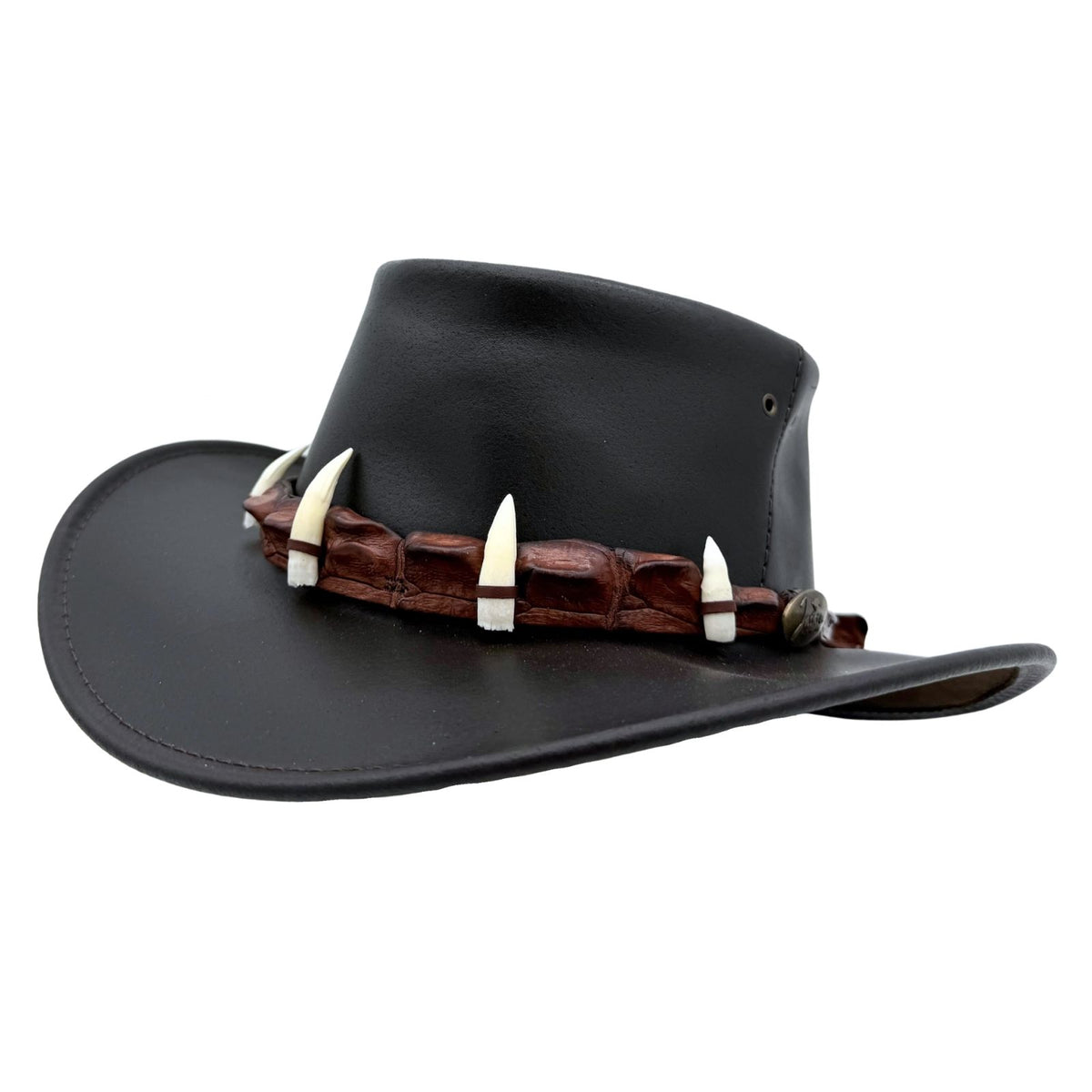
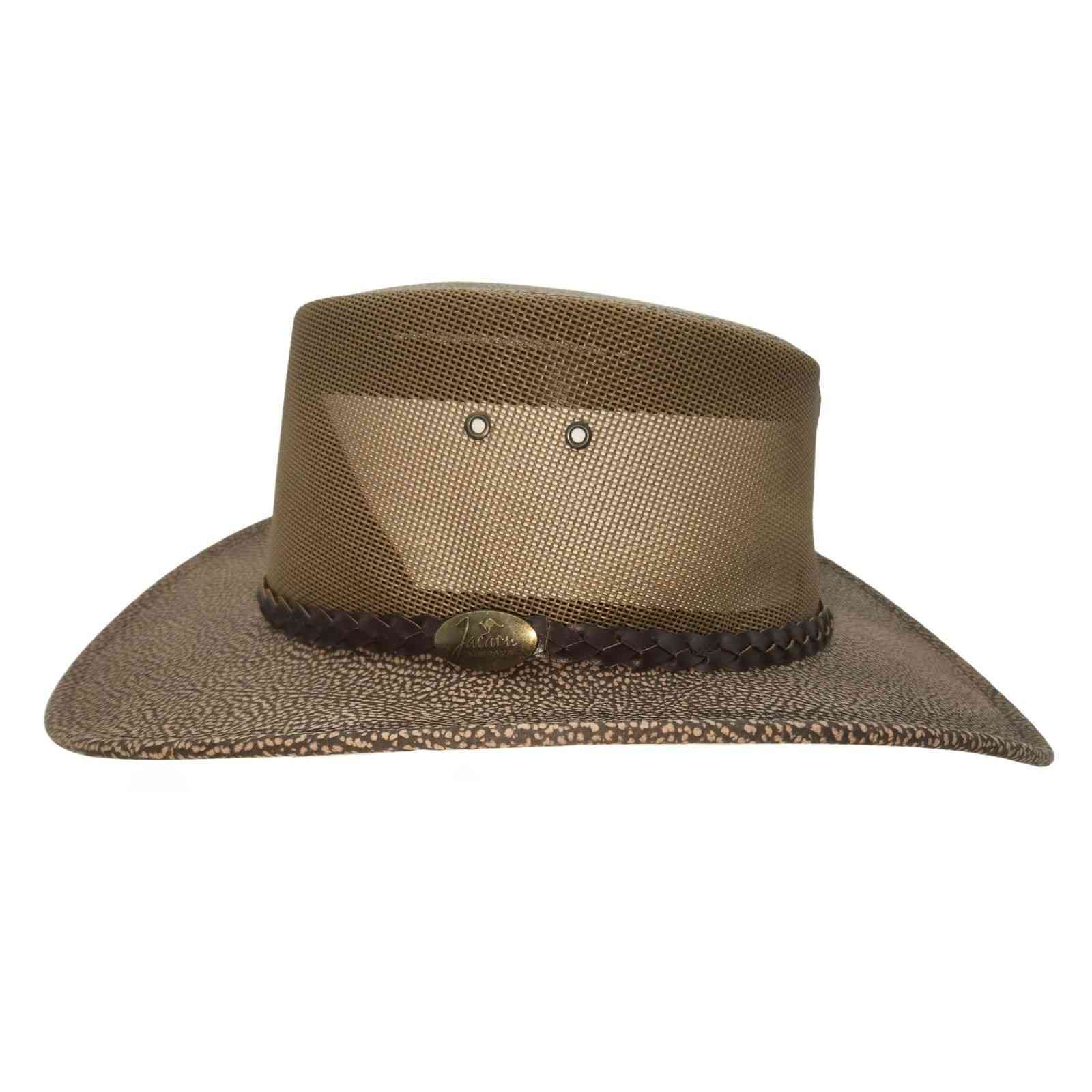
Jacaru's range covers all three leathers across its outback hat collection, including the iconic Crocodile Dundee style hat with genuine crocodile teeth and backstrap hatband. For smaller accessories, the kangaroo leather wallets and purses collection demonstrates how the material's fine grain and flexibility translate from headwear into everyday carry pieces.
Every Jacaru product is Australian-made and ethically sourced. That is not a marketing phrase. It reflects a supply chain built around regulated wild harvesting, domestic manufacture, and materials selected for genuine performance. For buyers who want a product that is authentically Australian in both origin and character, that assurance is a sound reason to buy with confidence.
Conclusion
Kangaroo leather outperforms cow and buffalo hide on the metric that matters most for wearable goods: strength relative to weight. It is thinner, lighter, and more flexible without sacrificing durability. For everyday accessories and outback hats built to handle real conditions, that advantage is meaningful. Kangaroo leather also carries genuine sustainability credentials, backed by regulated harvesting and a transparent Australian supply chain.
Cow and buffalo leather remain excellent choices for heavier, more traditional applications, and Jacaru crafts all three to the same standard of Australian-made quality.
If you are ready to experience the difference for yourself, explore Jacaru's full range of kangaroo leather hats and accessories. Each product is built to perform, sourced responsibly, and made to last. Choose the leather that fits your needs, and buy it knowing exactly where it came from.


Our friends at Bocchetta Plush Toys have a great range of lifelike plush animals that make great gifts for people of all ages.