










The Pork Pie Hat: History, Style and Why This Classic Refuses to Die
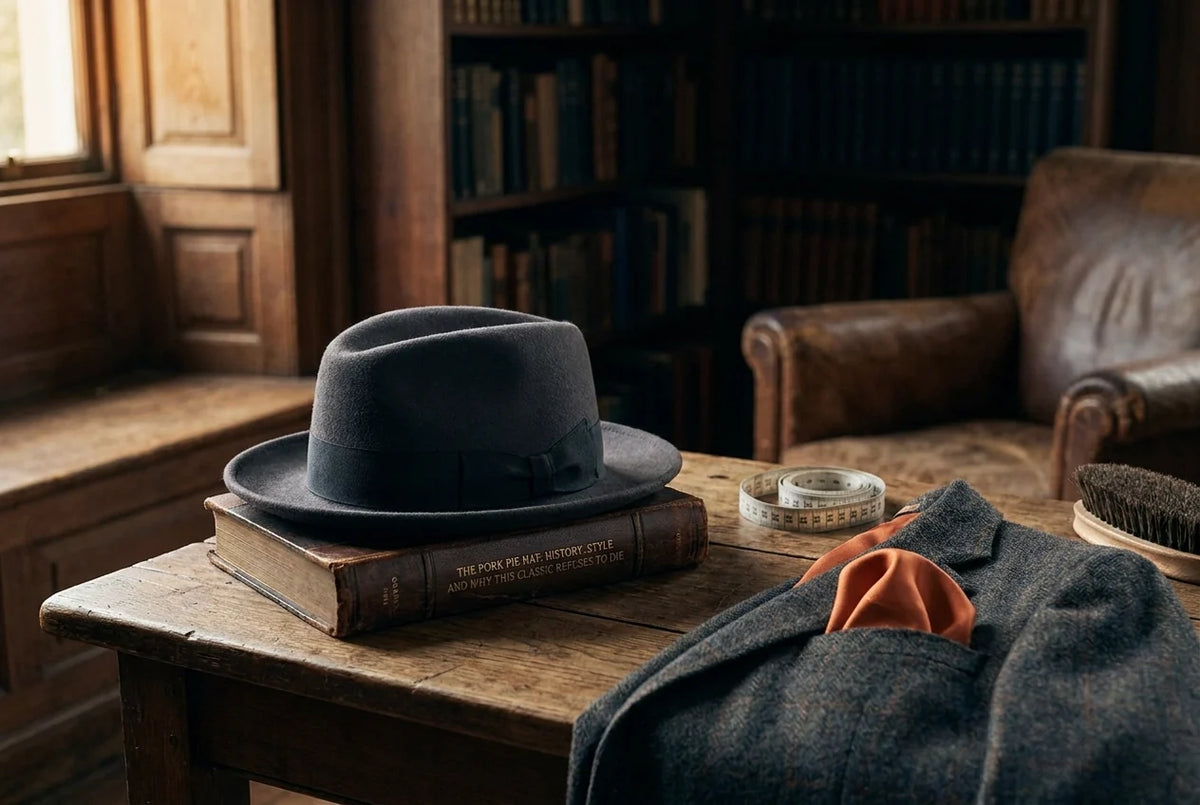
Picture this: you walk into a jazz club, the music is smooth, the lights are low, and the performer on stage is wearing the coolest hat you have ever seen. It sits flat on top, has a short brim turned up all around, and somehow makes everything look effortlessly stylish. That, my friend, is the pork pie hat, and it has been turning heads for well over a century.
Whether you have spotted one on a jazz legend, a movie character, or a fashion-forward stranger on the street, there is something undeniably magnetic about this little hat. But where did it come from? Why does it look the way it does? And why are people still wearing it today?
If you are new to the world of hats or just curious about this particular style, you are in the right place. In this post, we are going to break down everything you need to know about the pork pie hat, including its fascinating history, how to wear it, and the iconic figures who made it famous. Let's dive in.
What Exactly Is a Pork Pie Hat?
If you've ever stood in a hat shop squinting at three very similar-looking hats and wondered what on earth the difference is, you're not alone. The pork pie hat is one of the most misidentified pieces of headwear out there, and it deserves a proper introduction.
The three things that make a pork pie a pork pie come down to its crown, its brim, and that satisfying little detail where they meet. First, the crown is completely flat on top, not curved, not pinched, not domed. Just flat. Second, the brim is short and snaps up slightly all the way around. Third, and this is the bit people often miss, there's a pinched or creased edge running around the perimeter of the crown where it meets the brim. That crisp geometric line is the hat's signature move.
The name itself is wonderfully literal. Look at a traditional British pork pie pastry from above and you'll see exactly the same silhouette: a flat, round, crimped-edge form. The style was first documented in mid-19th century England and went on to become a cultural icon through jazz musicians, silent film stars, and eventually a certain chemistry teacher turned drug lord on television.
Now, here's where it gets practical. A fedora has a taller crown, a lengthwise crease pinched at the front, and a noticeably wider brim. A trilby sits closer in size to a pork pie but gives itself away with its steeply angled front brim, softer crown, and narrower overall shape. You can compare the key differences in detail here if you want to really nail your hat identification skills.
The pork pie also sits lower and more compactly on the head than either of its cousins, giving it a grounded, confident look that works across a surprisingly wide range of face shapes. It doesn't add the vertical height that a fedora's tall crown does, which is genuinely useful if you're not keen on hats that announce themselves from across the room.
The most common mistake people make is calling any short-brimmed felt hat a trilby or fedora. Nine times out of ten, if it has a flat top, it's a pork pie. That flat crown is always the giveaway, and once you know to look for it, you'll never mix them up again.
A Brief Cultural History of the Pork Pie Hat
Few accessories have lived as many lives as the pork pie hat. Its story is a genuinely wild ride through centuries of fashion, music, film, and street culture, and understanding that history makes wearing one feel a whole lot more interesting.
From Ladies' Fashion to Lads on the Street
The pork pie hat first popped up in the 1830s as a women's style, described at the time as a demure little round hat with a narrow, sometimes curled-up brim and a short flat crown, often finished with a small feather or bow. The name itself came from the hat's resemblance to a Melton Mowbray pork pie, the famous British pastry from Leicestershire. By the late 1880s, the style had crossed over into menswear, taken up by what one period source charmingly called "the man-about-town." Not a bad origin story for something that would eventually end up on a TV drug kingpin.
Buster Keaton Makes It Iconic
Before jazz, before ska, before Walter White, there was Buster Keaton. In the 1920s, Keaton turned the pork pie into his personal signature, famously custom-making his own versions by chopping up Stetsons and stiffening them with sugar water. He reportedly created over a thousand of these custom hats across his career, and his stone-faced comedic persona made the silhouette instantly recognisable to audiences worldwide. Keaton locked the shape into popular consciousness before the jazz world even got hold of it. You can read more about the hat's colourful history at Realize Magazine's deep dive into the porkpie hat.
Jazz, Cool, and Lester Young
The real cultural heavyweight moment came in the 1940s when tenor saxophonist Lester Young made the pork pie his absolute trademark. Young's version had a slightly broader brim but kept that definitive flat, creased crown, and the hat became inseparable from his identity as one of jazz's most inventive voices. Charles Mingus later paid tribute with his composition "Goodbye Pork Pie Hat," cementing the connection between the silhouette and cool, improvisational culture. Thelonious Monk also wore one regularly, and in African American communities the hat became deeply linked to the style and swagger of the era.
Mods, Scooters, and Working-Class Style
The 1960s UK Mod scene gave the pork pie yet another identity. Young working-class British kids paired slim-cut suits with scooters and a sharp attitude, and the pork pie fit perfectly into that aesthetic. It was compact, distinctive, and carried just enough of an outsider edge to feel like a genuine statement. The Mod movement was fundamentally about style as rebellion, and the pork pie was a quiet but pointed part of that uniform.
Ska Revival and the Rude Boy Connection
Before the British Mods adopted it, the hat had actually made its way to Jamaica, where it became central to the "rude boy" street style of the 1960s. That Jamaican influence then looped back to the UK in the late 1970s and 1980s when the ska revival exploded. Bands like The Specials and Madness wore pork pie hats as a deliberate visual nod to that Jamaican rude boy heritage blended with British street culture. The look was sharp, intentional, and politically charged. The Wikipedia entry on the pork pie hat covers this fascinating cross-cultural journey in solid detail.
The Breaking Bad Effect
Then came Heisenberg. Walter White's transformation from mild-mannered chemistry teacher to ruthless drug lord in Breaking Bad was visually anchored by a black pork pie hat, and after the show launched in 2008, mainstream interest in the silhouette surged noticeably. The hat became a kind of cultural shorthand for quiet menace and reinvention, which is quite the upgrade from its origins as Victorian ladies' millinery.
Why It Keeps Coming Back
The pork pie hat's secret weapon is its adaptability. Its compact shape sits comfortably between formal and casual, its subcultural associations span jazz, film, and music, and each generation finds a new reason to adopt it. Whether you are drawn to its history or just love the look, it is a hat that genuinely earns its place in the rotation.
Pork Pie Hat vs. Fedora vs. Trilby vs. Outback Hat
Not all hats are created equal, and if you've ever grabbed what you thought was a pork pie hat only to have someone tell you it's actually a trilby, you'll appreciate a clear breakdown. These four silhouettes get mixed up constantly, so let's sort them out once and for all.
The Fedora
The fedora is the heavyweight of the group in more ways than one. It features a taller, structured crown with a distinctive centre crease and pinched front, and a wide brim that typically runs 2.5 to 4 inches across. The brim usually angles slightly downward at the front, giving it that classic mysterious look. Historically, the fedora has been associated with formal and business-casual dressing, a reputation built up through decades of Hollywood glamour and old-world European tailoring. It's the most versatile of the four styles in terms of dress code range, sitting comfortably anywhere from a smart weekend look through to a dressed-up event. If you want one hat to cover the most occasions, the fedora is the obvious choice. You can read more about how the pork pie and fedora differ structurally if you want to dig into the finer details.
The Trilby
Think of the trilby as the fedora's younger, more casual sibling. It shares the same creased, tapered crown and front pinch but runs shorter and more streamlined overall. The defining feature is a narrow brim that turns up sharply at the back, which gives it a distinctly modern, almost cheeky energy. The trilby is strongly linked to British pop culture, music scenes, and dress-up events like the Melbourne Cup racing carnival, where it sits perfectly between smart and playful. It tends to suit a wide range of face shapes and works across seasons in straw, wool felt, and cotton versions. It reads as smart-casual rather than formally dressed, which makes it a strong choice for anyone who wants a bit of style without committing to the full formality of a fedora.
The Pork Pie
Here's where things get architecturally interesting. The pork pie is genuinely the most distinctive silhouette of the four, and it's the easiest to identify at a glance once you know what you're looking for. It has a flat top crown rather than a pinched or creased dome, a short even brim of approximately 1.5 to 2 inches with no upward or downward taper, and an overall structured, almost cylindrical shape. There's no ambiguity with a pork pie: that flat crown is impossible to mistake for anything else. In terms of formality, it sits comfortably in the casual to smart-casual zone, making it a brilliant choice for city days, urban travel, and anywhere you want to look intentional without overdressing. The Gentleman's Gazette guide to hat silhouettes is worth a look if you want a deeper dive into how these shapes compare historically.
The Outback Hat
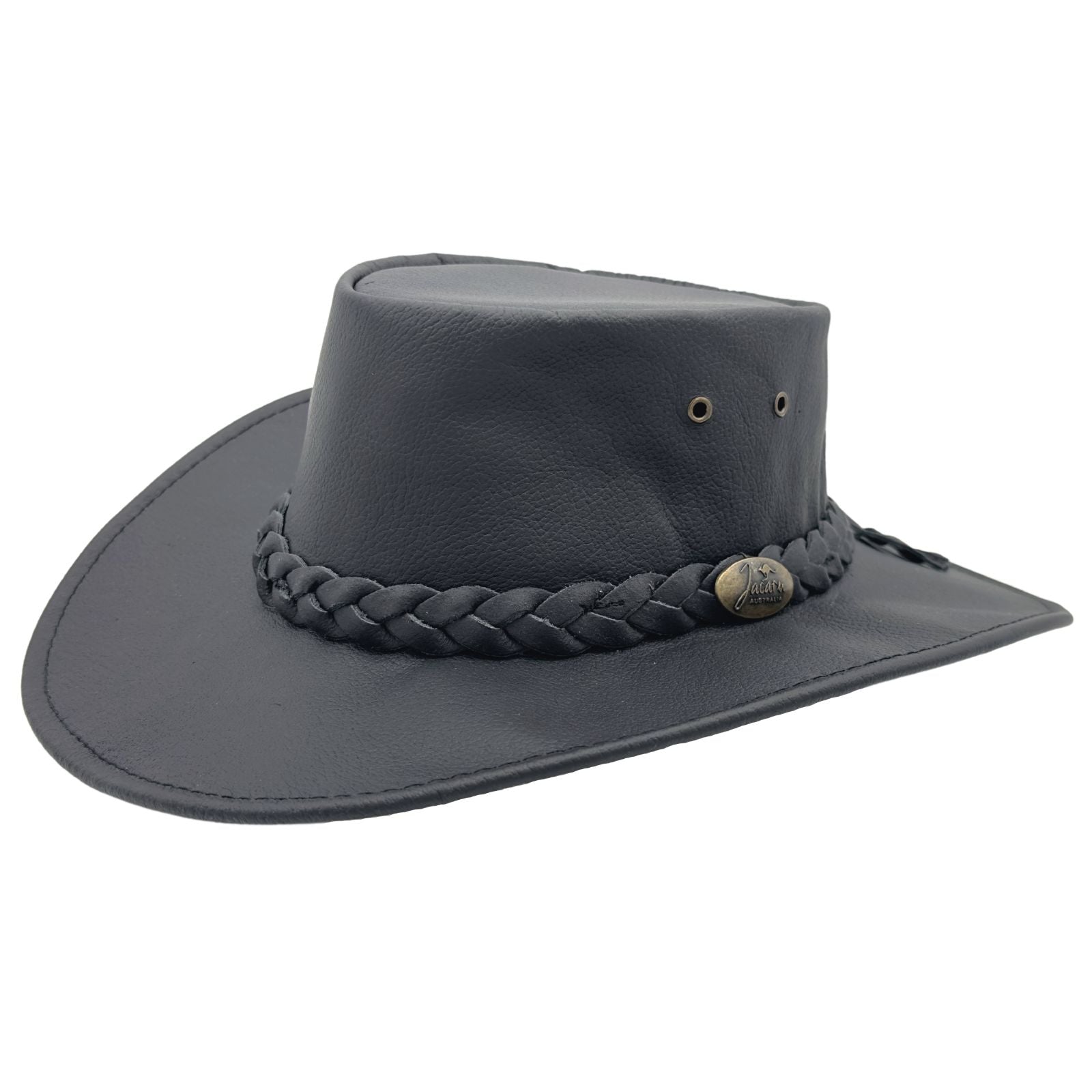
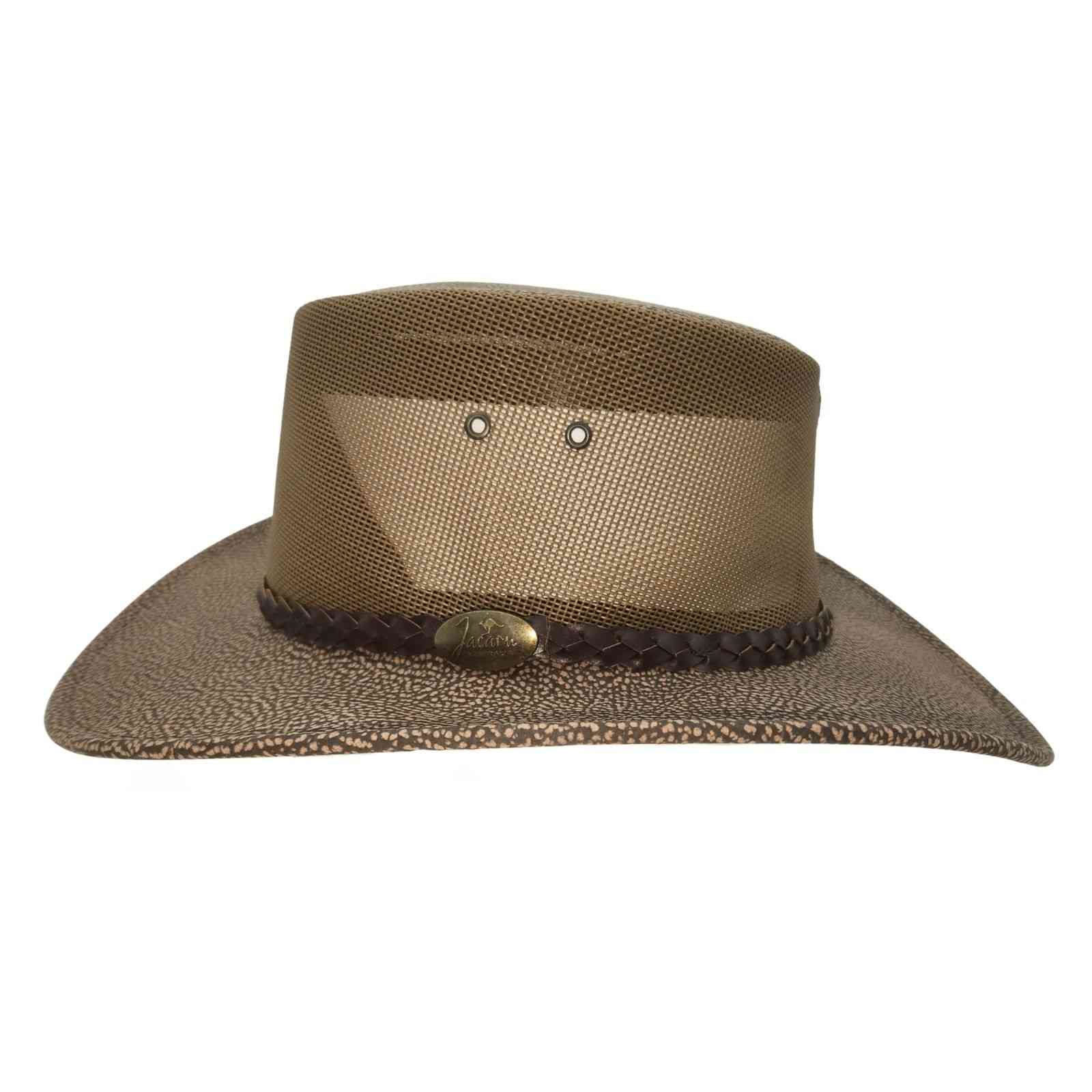
This is Jacaru's home territory, and it's a completely different animal from the other three. The outback or bush hat prioritises function over fashion without apology. Its brim is wide, often asymmetrical, and in classic Australian style sometimes features one side pinned up. It's built from rugged materials including leather and durable felt, designed to handle harsh sun, wind, dust, and the kind of conditions that would have a trilby weeping in the corner. At Jacaru, this means premium kangaroo leather, buffalo leather, and quality felt that's made to last decades rather than seasons. The outback hat sits at the casual end of the formality spectrum, but in the outdoors, it has an authority none of the other three can match.
How to Choose Between Them
Here's a practical framework. If you're dressing for a city event or a smart-casual occasion, the fedora or trilby will serve you well. If you want something compact, stylish, and easy to pack for urban travel, the pork pie is your hat. And if you're heading into the field, whether that's the Australian outback, a national park, or anywhere the sun is genuinely trying to win, the outback hat is non-negotiable.
The adventurous traveller's ideal setup? A pork pie for city days and an outback hat for time in the field. One covers your style, the other covers your head properly. Both earn their place in the bag.
Choosing Your Material: Leather, Wool Felt, or Straw?
Once you've fallen for the pork pie silhouette, the next decision is the one that actually determines how long your hat lasts and how well it serves you in the real world. Material choice sounds like a minor detail, but it's genuinely the difference between a hat you're still wearing in ten years and one you're quietly replacing every summer.
Wool Felt: The Classic Choice
Wool felt is the material most closely associated with the pork pie hat's long history. It's warm, naturally mouldable, and carries enough inherent water resistance to handle a light drizzle without drama. You can reshape wool felt with a bit of steam, which makes it forgiving if it gets knocked out of shape in a bag or on a shelf. It holds structure well across cooler months, and the texture has a richness that reads as genuinely classic rather than costume-y. If you're buying a pork pie hat primarily for autumn and winter wear in a temperate climate, wool felt is historically accurate and practically sensible. Just don't expect it to handle a sudden Australian summer downpour with any dignity.
Straw: The Warm-Weather Option
Straw is the lightweight, breathable choice, and it does exactly what it promises in the right conditions. Casual outdoor settings, warm afternoons, and relaxed summer environments are where straw earns its keep. The trade-off is durability. Straw is genuinely fragile compared to felt or leather; it doesn't cope well with being packed into a bag, sat on, rained on suddenly, or generally treated like a hat that needs to survive an actual adventure. Think of straw as a situational hat rather than an all-conditions companion. If the weather shifts unexpectedly (which, in Australia, it absolutely will), straw gives you very little to work with.
Leather: The Premium, All-Conditions Material
Leather is where the conversation changes entirely. A well-made leather pork pie hat is weather-resistant straight out of the box, holds its shape without any fussing or reshaping, and develops a unique patina over years of wear that no fast-fashion alternative can replicate. It improves with age in a way that felt and straw simply don't. Scratches soften into character. Sun and rain leave their mark in ways that make the hat look more interesting, not more worn out. For anyone who wants a hat that genuinely performs across conditions rather than just looking good indoors, leather is the only material that delivers that without compromise.
This matters particularly in the Australian context. The combination of intense UV exposure, high summer heat, and those completely unpredictable afternoon downpours demands a material that can handle all three rather than specialising in one season. Leather, properly conditioned, manages sun exposure without rapid degradation, repels sudden rain without structural damage, and doesn't wilt in heat the way straw can. Choosing the right hat material is genuinely more consequential in a climate like Australia's than it is anywhere with predictable seasons.
Kangaroo Leather: Distinctly Australian
Within the leather category, kangaroo hide deserves its own mention. It is lighter than cowhide, exceptionally strong for its weight, and has a fine grain structure that makes it naturally resistant to moisture. At equivalent thickness, kangaroo leather outperforms standard cowhide in strength while being flexible enough to conform comfortably to the head over time. It also carries genuine provenance that no imported material can claim. A kangaroo leather hat is a specifically Australian object, not a generic product made from materials that could have come from anywhere. Jacaru's dedicated kangaroo hat collection reflects exactly this; kangaroo hide isn't a marketing angle, it's a material choice backed by real performance characteristics.
The Slow Fashion Argument
There is a broader reason to think carefully about which material you choose, and it's tied to a shift that's been gaining momentum since around 2020. The slow fashion movement is essentially a reorientation toward buying fewer, better things that last decades rather than seasons. A premium leather or quality wool hat from a maker like Jacaru sits squarely in that philosophy. The difference between wool felt and other materials is real and worth understanding before you buy. A straw hat might cost less upfront, but if you're replacing it every couple of seasons, you're not actually saving money or being kind to the planet. A leather hat bought once and cared for properly is the opposite of disposable, and that's increasingly the kind of purchase people feel good about making.
How to Wear a Pork Pie Hat for Men and Women
Getting the wear right is half the battle. You can have the most beautifully crafted hat in the room, but if it's sitting crooked on your head or clashing with the wrong outfit, the whole thing falls flat. Here's how to nail it.
Fit and Placement First
The flat crown of a pork pie hat is its defining feature, and that geometry tells you exactly how to wear it: level on your head, sitting just above the ears, without tilting to one side. This is genuinely different from a fedora, which has a pinched crown that actually benefits from a slight rakish angle. Tilt a pork pie and the flat top looks wrong in a way that's hard to articulate but immediately visible. Keep it straight, centred, and resting mid-forehead without swallowing your eyebrows, and the silhouette does exactly what it's supposed to do.
Casual Men's Styling
For everyday wear, the pork pie is one of the more forgiving hats you can reach for. Well-fitted jeans, a linen or chambray shirt, and a pair of leather boots is the kind of combination that works at a weekend market, a coastal café, or even a long-haul airport layover. The hat adds intention to the outfit without requiring you to dress up around it. Keep the rest of the look simple and let the hat read as a considered finishing touch rather than a cry for attention. This approach to casual pork pie styling is consistently recommended across menswear guides for good reason: it works.
Smart-Casual Men's Styling
Step it up a notch with a slim blazer and tailored trousers, and the pork pie moves comfortably into smart-casual territory. The hat has genuine Mod heritage rooted in 1960s British street style, and this pairing nods to that lineage without veering into costume or theme-night territory. The key word here is slim; the hat's compact silhouette and short brim scale far better with fitted tailoring than with broader, more structured suiting. Keep the blazer unstructured if you can, and avoid the tie.
Women's Styling Options
The pork pie is genuinely unisex, and women's styling follows the same core principle: contrast the hat's structured geometry against softer or more relaxed pieces. Wide-leg trousers, relaxed summer dresses, and layered outerwear all work beautifully because the flowing or voluminous elements below let the hat's clean lines anchor the look. Stick to neutral tones like black, tan, or natural straw for maximum outfit flexibility across seasons.
Australian Outdoors and Travel Context
A leather pork pie is genuinely one of the better travel companions you can own, particularly if your trips move between city restaurants and outdoor environments. Premium Australian leather is robust enough to handle a dusty day on the road without losing its shape, and polished enough to wear into a decent dinner the same evening. That dual utility is harder to find than you'd think in a single hat.
Practical Rules Worth Keeping
Two rules apply universally. First, leave the pork pie out of very formal suit territory; that register belongs to other hat styles better suited to black-tie adjacency. Second, resist the urge to pile on accessories. The pork pie is a statement piece by nature, and the surrounding outfit works best when it steps back and lets the hat lead.
Why Australian-Made Matters When You Buy a Hat
Something shifted in how people buy accessories after 2020, and it wasn't subtle. Shoppers started asking harder questions: Where was this made? Who made it? Will it last longer than a season? The slow fashion movement pulled consumers away from cheap, disposable headwear and toward pieces with a traceable story and a longer useful life. A hat that costs more upfront but lasts a decade is a genuinely better deal than buying three forgettable versions of the same thing in the same period. That shift is real, it's documented, and it's why the "Australian-made" label on a hat means something worth understanding before you hand over your money.
It's Not Just About Patriotism
Australian-made credentials are often framed as a feel-good choice, which they can be, but the practical case is actually stronger than the emotional one. When a hat is genuinely made in Australia, the materials come from known suppliers operating under Australian standards, the manufacturing process is accountable to local regulations, and the supply chain is short enough that you can actually trace it. That's not something you can say about a hat that was assembled offshore and then had an Australian-sounding name attached to it at retail. The difference between a genuine local product and an imported hat with local branding is significant, and it's worth asking the question before you buy.
Closer to the Source Means Less Footprint
Leather and wool sourced and processed in Australia don't travel halfway around the world before they become a hat. That matters from a carbon footprint perspective because raw material logistics are a major contributor to the environmental cost of accessories. When the hide is processed close to where the animal lived and the wool is spun near where the sheep grazed, you're cutting out a large chunk of the international freight equation. It's a quieter kind of sustainability argument, but it holds up.
Kangaroo leather takes this further. Kangaroo populations in Australia are actively managed under national programs overseen by the Department of Climate Change, Energy, the Environment and Water. Utilising the hide from animals harvested under those programs means the leather isn't driving additional land use or separate farming impact. It's making full use of an existing resource rather than letting it go to waste, which is a genuinely sensible approach to materials.
What You Actually Get With Jacaru
Jacaru's position as an Australian maker of premium leather and wool hats means the materials, the craft, and the context are all local in a way that simply can't be replicated by importing a hat and sewing in an Australian label. The kangaroo leather comes from Australia, the manufacturing happens here, and the knowledge behind the construction reflects decades of working with these specific materials in this specific environment. That combination isn't available off a bulk wholesale catalogue, no matter how convincingly it's packaged.
For global travellers buying in Australia, there's one more angle worth considering. An Australian-made hat is a functional souvenir in the truest sense. It goes home with you, it keeps performing in real weather for real years, and every time you wear it somewhere else in the world, it carries that origin story with it. That's a different category of take-home entirely compared to a fridge magnet or a novelty keyring that ends up in a drawer by February.
Pork Pie Hats as Gifts and Australian Souvenirs
There's a reason people still talk about the hat they were given ten years ago. A well-made pork pie hat is one of the genuinely rare gifts that outlasts the occasion. Unlike a candle, a bottle of wine, or a novelty item that ends up in a drawer, a quality leather or wool pork pie hat gets worn. Regularly. For years. The gift becomes part of someone's life rather than a footnote to a birthday or Christmas morning, and that's a different kind of value entirely.
For corporate gifting, a premium Australian-made hat does something most branded merchandise simply can't pull off: it's actually useful. Nobody pins a quality hat to the office wall and admires it from a distance. They wear it to the weekend market, on a hiking trail, or while travelling. That wearability means your brand story travels with it. Choosing an Australian-made piece for a client or team gift adds a layer of provenance and craft that reflects well on whoever gave it, signalling that you thought beyond the generic gift hamper.
International visitors have a particularly compelling case for choosing a leather or wool pork pie from an Australian maker as a keepsake. It packs flat, survives a long-haul flight home, and carries genuine provenance in a way that a mass-produced souvenir simply doesn't. A hat made from Australian materials, by Australian hands, is a functional object with a real story behind it. That combination of portability, durability, and authenticity is hard to beat when you're choosing something to take home from a trip.
When you're buying a hat as a gift, a simple checklist saves a lot of grief. First, confirm the recipient's hat size or choose a style that offers adjustable sizing. Second, match the material to their lifestyle: leather holds up beautifully in active, outdoor use, while wool felt suits cooler climates and a more dressed-up day-to-day style. Third, look for makers who offer gift packaging or personalisation options. Even a simple touch like a custom engraved crown design can turn a great hat into a genuinely memorable gift.
Jacaru makes this even easier by offering a broader gifting ecosystem beyond hats alone. Kangaroo keyrings, fur items, and corporate gift options sit naturally alongside their pork pie hats, which means you can build a considered, cohesive gift bundle without sourcing from multiple places. A leather pork pie paired with a kangaroo keyring or another Australian-made accessory is a gift that tells a complete story about this country and the people who make things here properly.
How to Care for Your Pork Pie Hat
You've invested in a quality hat, so let's make sure it sticks around for the long haul. A few simple habits will keep your pork pie looking sharp for years, whether it's leather, wool felt, or anything in between.
1. Leather Care Basics
Leather pork pie hats are genuinely tough, but they do need a little attention to stay that way. After any exposure to dust, light rain, or a sweaty day on the trail, wipe the hat down with a clean damp cloth to stop grime from working its way into the grain. Every few months, apply a quality leather conditioner across the entire surface; leather is a natural material that loses moisture over time, and without that top-up it will start to dry out and crack. If you're heading somewhere coastal or somewhere with serious rainfall, hit the hat with a waterproofing spray before you go. Think of it like sunscreen for your hat: far easier to apply before the problem than to fix the damage after.
2. Wool Felt Care
Wool felt responds brilliantly to simple, consistent care. After each wear, run a soft-bristled hat brush across the surface to lift dust and lint before it settles into the fibres. The direction matters here: always brush counterclockwise, following the natural nap of the felt. Brushing against the nap raises the fibres and roughens the surface over time. If the flat crown of your pork pie has lost its crispness after being knocked around, a clothes steamer is your best friend. Hold it a few inches from the hat, let the gentle heat relax the fibres, and ease the crown back into shape with your hands. For more detailed guidance, this wool felt hat care guide from Hicks and Brown covers the process clearly.
3. Keep It Out of Direct Sunlight
This one applies to every hat, regardless of material. UV exposure fades dye, dries out leather, and breaks down wool fibres faster than almost anything else in your environment. Leaving a hat on the back seat of a hot car or on a sunny windowsill while it dries is exactly the kind of casual habit that quietly destroys a quality piece. Store and dry your hat in shade, and it will reward you with years of extra life.
4. Storage Options, Ranked
How you store your hat when you're not wearing it matters more than most people realise. A proper hat box is the gold standard; it protects the crown from crushing, blocks dust and light, and keeps the silhouette intact in three dimensions. A wide hat hook is a solid second option that lets the hat hang freely without pressure on the crown. The worst common habit is resting the hat on its brim on a flat shelf; sustained pressure on the brim edge will warp it over time, and the pork pie's flat top makes crown-down storage equally inadvisable.
5. The Cost-Per-Wear Argument
Here's the practical case for caring properly for a premium hat. A quality leather or wool pork pie hat maintained well will outlast ten cheap synthetic alternatives without question. Run the numbers: a premium hat at $200 that lasts a decade costs a fraction per wear compared to a $30 fast-fashion version you replace every year. The essential wool felt hat care guide from Novella Hats frames regular maintenance as protecting an investment, which is exactly the right mindset. The slow fashion shift is real, and proper care is what makes the premium price argument stick.
6. Quick Checklist for Travellers
Travelling with a pork pie hat doesn't have to be stressful. Pack it in a rigid hat box or dedicated hat travel case whenever you can. If you're working with soft luggage, stuff the crown firmly with rolled socks or a scarf to maintain its shape under compression. If the hat arrives looking flattened after a long flight, don't panic; reshape it while the material is slightly damp, work it gently back to its original form by hand, and leave it to air dry away from heat and sunlight. The hat will bounce back, and you'll arrive looking exactly like someone who knows what they're doing.
The Pork Pie Hat Deserves a Place in Your Rotation
The pork pie hat has earned its place in the hat world the old-fashioned way: through genuine staying power. It carries a silhouette that is immediately recognisable, a cultural history that runs from jazz clubs to silver screens, and a versatility that gets you through a casual Saturday and a smart-casual dinner without skipping a beat. If you have been reading through this guide wondering whether it is actually worth adding one to your collection, the answer is yes, and the only real question is which version suits your life best.
That is where buying Australian-made stops being a tagline and starts being practical advice. Premium leather and wool sourced and crafted in Australia means your hat is built for real conditions: sun, dust, travel, the kind of adventures that chew through cheap accessories in a season. Porkpie hats are actively discussed as a style worth investing in right through 2026, and the buyers who come out ahead are the ones who chose quality over convenience the first time around.
Jacaru's range of Australian-made leather and wool hats is worth exploring if you want a pork pie that actually fits the life you live, not just the look you are going for. Browse the collection and find the version that suits your style and your next adventure.
The best hat is not the trendiest one. It is the one with the timeless allure still on your head in ten years.
Conclusion
The pork pie hat is more than just a piece of headwear. It is a living symbol of cool, creativity, and timeless personal style. From its 19th-century origins to the jazz clubs of the 20th century and the streets of today, this hat has proven it belongs in every era. It carries a rich cultural legacy, looks sharp on almost anyone, and requires surprisingly little effort to style well.
Whether you are drawn to its musical history, its cinematic appeal, or simply its distinctive silhouette, there is a pork pie hat out there waiting for you.
So why not take the leap? Visit a local hat shop, try a few on, and see how one small accessory can completely transform your look. Once you put it on, you will understand exactly why this classic refuses to die.


Our friends at Bocchetta Plush Toys have a great range of lifelike plush animals that make great gifts for people of all ages.