








Derby Hat Explained: Styles, Materials and Why the Australian Outback Version Wins
Picture this: you walk into a room wearing a stunning hat that turns heads, sparks conversations, and somehow makes you look like you know exactly what you are doing. That is the power of a great derby hat.
But here is the thing, most people have no idea there is more than one version of this iconic style. From the classic round-bowler look that dominated European fashion to the rugged, wide-brimmed Australian outback variation, the derby hat has had quite the journey.
If you have ever wondered what makes a derby hat different from other styles, what materials hold up best, or why hat lovers seem to rave about the Australian outback version in particular, you are in the right place. This guide breaks it all down in a simple, easy-to-follow way that is perfect even if you are completely new to the world of hats.
By the time you finish reading, you will know the key styles, what to look for in quality materials, and exactly why the Australian outback derby hat deserves a spot at the top of your wish list.
What Is a Derby Hat? Clearing Up the Confusion
If you've ever searched "derby hat" and come back more confused than when you started, you're in good company. The term pulls double duty in the hat world, and knowing which version you're actually looking at makes a big difference before you hand over your money.
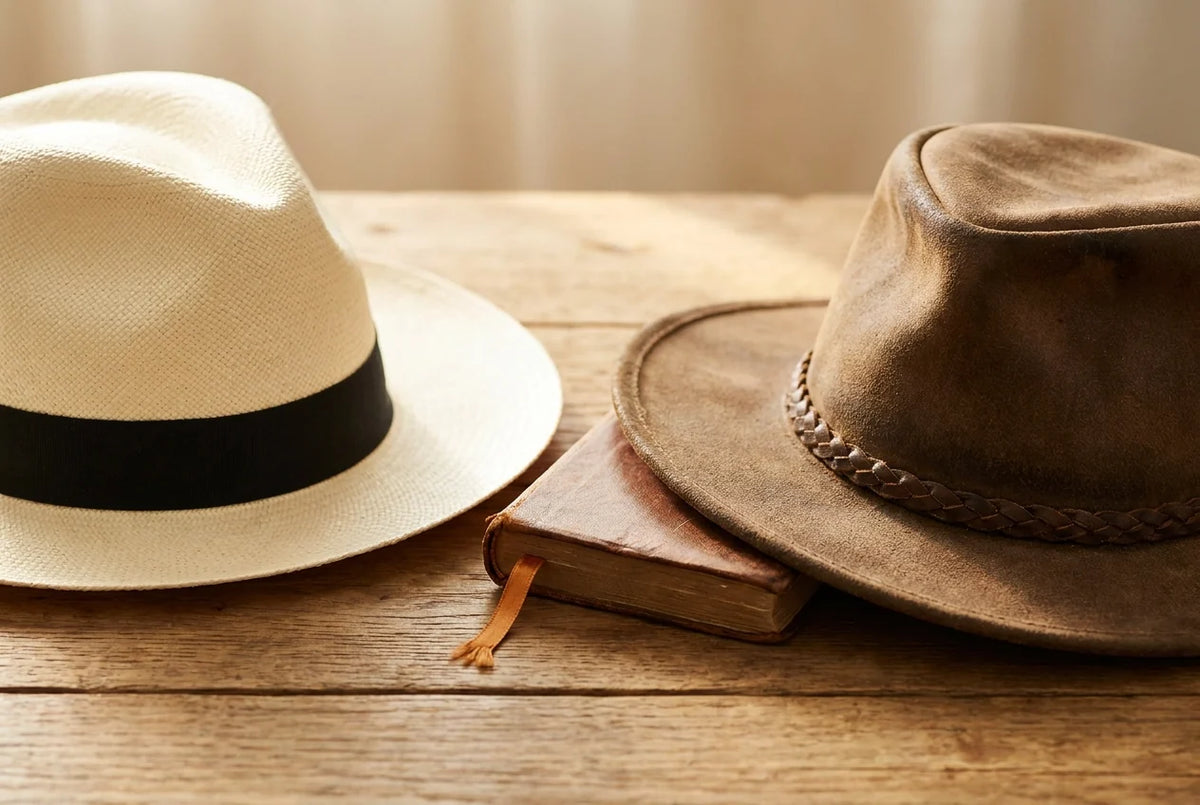
The classic derby hat is, in most dictionaries and fashion guides, simply another name for the bowler hat. It's a transatlantic naming quirk; Americans call it a derby, the British call it a bowler. As the folks over at Fashionable Hats explain in their breakdown of the two terms, these are two names for the exact same hard-felted, round-crowned hat. It originated in 19th-century Britain as a practical riding hat built to stay on a horse rider's head, and it became a symbol of formal urban dress from the 1880s through the early 1900s. These days, as the Gentleman's Gazette notes in their definitive bowler hat guide, it's increasingly rare in everyday wear, though it still shows up at events like the Kentucky Derby and Melbourne Cup as part of formal racing fashion.
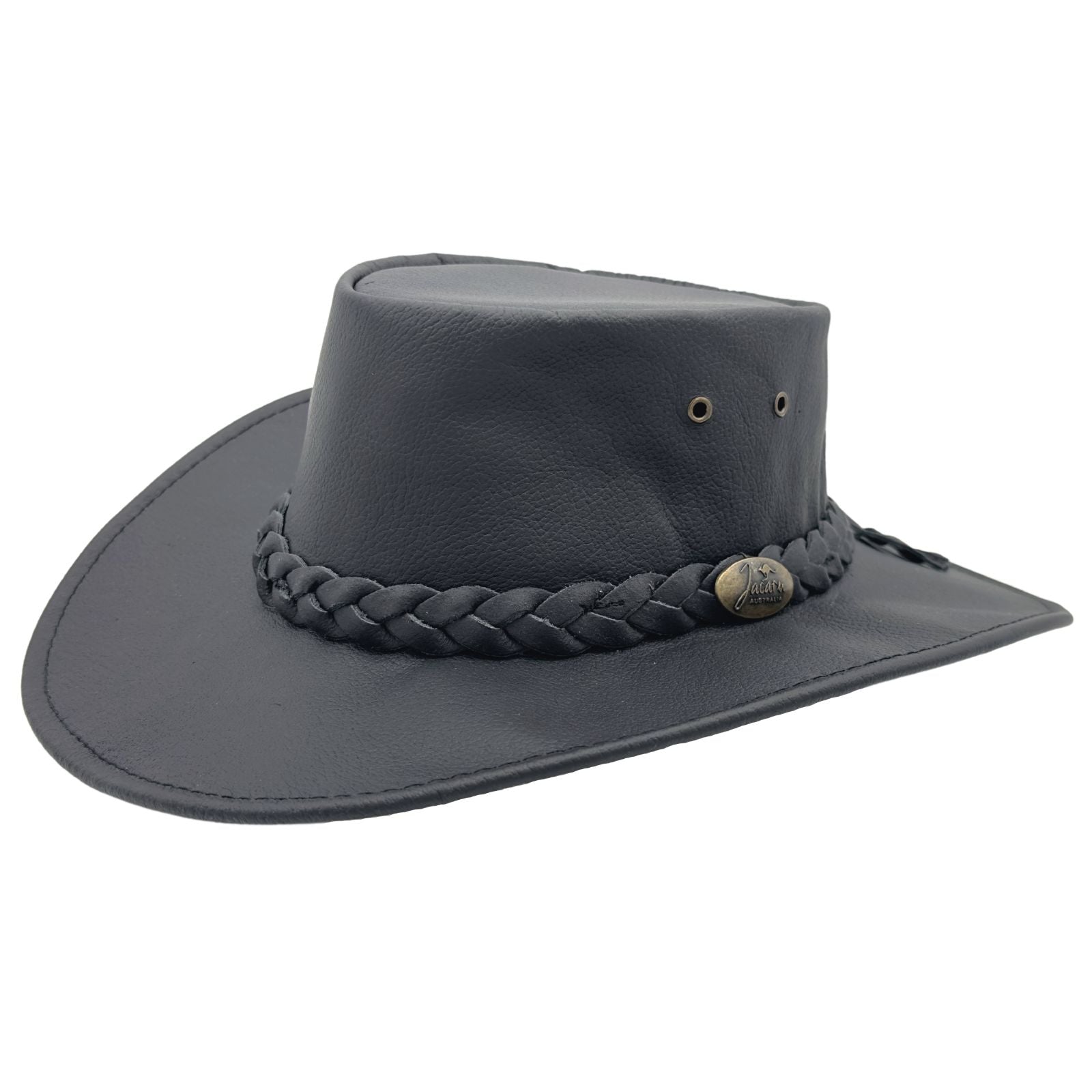
Then there's the other derby hat, the one that actually gets us excited. In outdoor and western hat circles, "derby" sometimes describes a wide-brimmed Australian outback-style hat that blends the structured crown of a cowboy hat with the cleaner, more refined lines of a modified fedora. It's rugged, practical, and built for people who actually go outside.
This article is firmly in that second camp. We'll be focusing on the outback-style derby because frankly, it's the more interesting hat to wear, talk about, and adventure in.
The Racing Derby Hat vs. the Outback Derby Hat: Two Worlds, One Name
Think of it this way: if a racing derby hat and an outback derby hat showed up to the same party, one would arrive in sequins carrying a champagne flute, and the other would roll in dusty from the trail, grinning and ready for anything.
Racing derby hats, the fascinators, bowlers, and elaborate structured millinery you see at the Kentucky Derby or Melbourne Cup, are pure theatre. They've been built for visual drama since the tradition kicked off in 1875, using materials like felt, satin, velvet, feathers, and netting chosen entirely for impact rather than practicality. They're one-day wonders: stunning on the lawn, completely useless under a midday Australian sun.
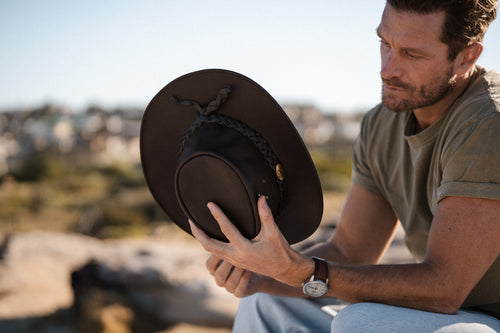
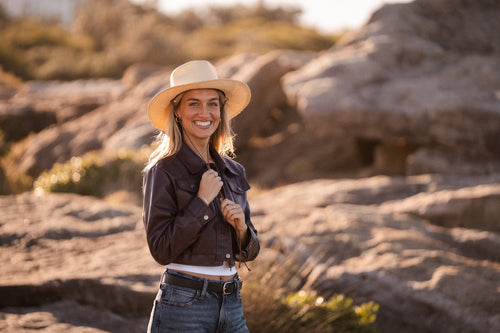
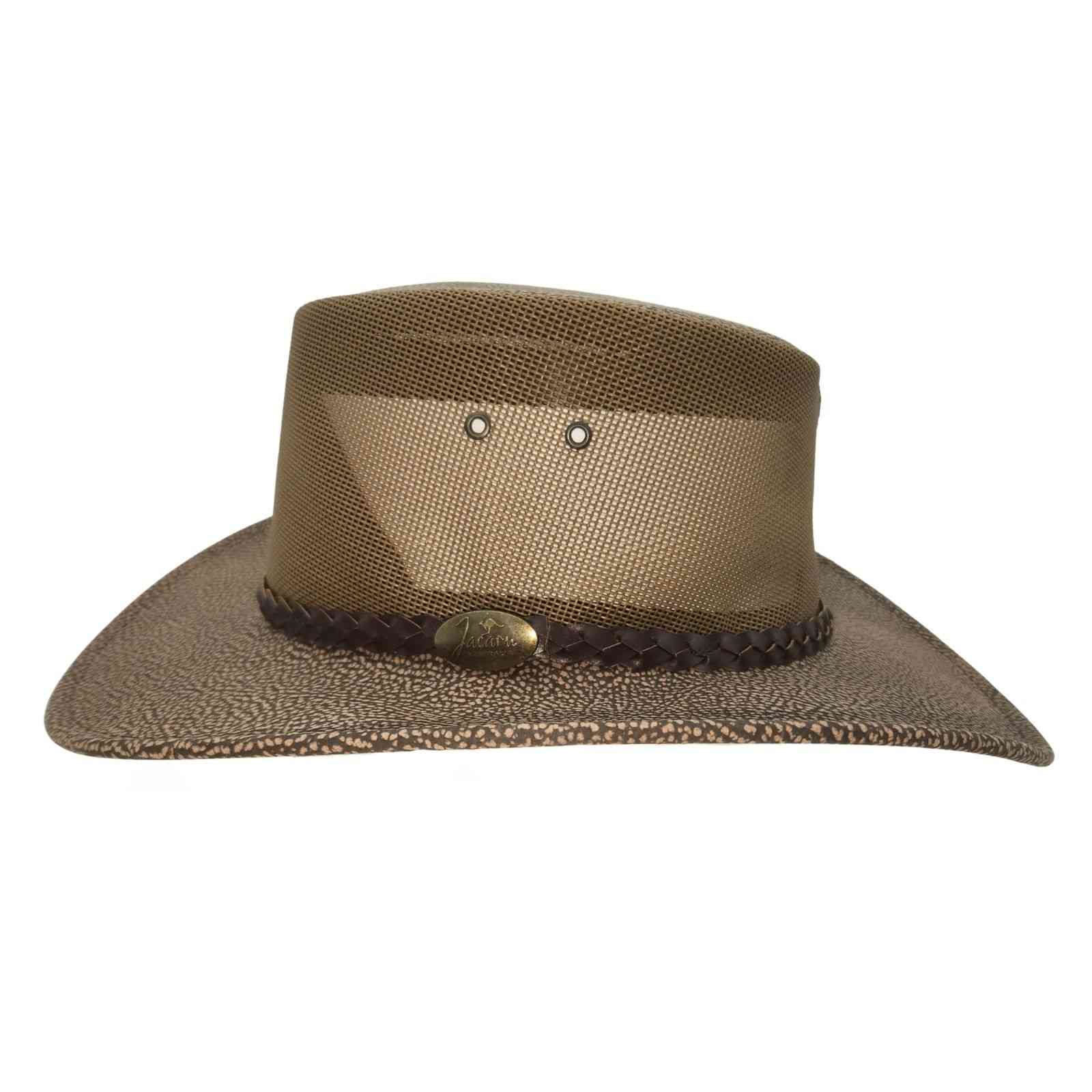
Outback derby hats are a different animal entirely. Wide brims, tall shapeable crowns, and premium leather construction mean these hats earn their character over years of real use. They offer genuine brim coverage against UV rays, hold up in wind and rain, and actually improve with age. That's the kind of hat that goes on adventures with you.
The crossover appeal here is real. Equestrian fashion fans who love the aesthetic but want something wearable beyond race day are discovering outback-style leather hats as a genuine alternative. So are travellers, hikers, and outdoor lovers who need actual sun protection rather than a decorative hair clip.
Key differences worth knowing:
Brim width: Outback brims run wide and functional; racing millinery brims vary wildly but prioritise shape over shade
Crown: Outback crowns are taller and often shapeable to your preference
Material: Leather versus felt, straw, or satin in racing styles
If you're sitting between both worlds, curious about the history of hats at the races but wanting something you can actually live in, an Australian leather outback derby hat gives you the style credentials without sacrificing a single degree of real-world utility.
Why Leather Is the Gold Standard for an Outback Derby Hat
Let's be honest: not all hat materials are created equal, and once you've worn a properly made leather outback derby hat, everything else starts to feel like a compromise.
Wool felt looks great on the shelf. Straw is breezy and cheap. Oilskin is fine in a drizzle. But leather? Leather gets better the harder you push it. Scuffs, creases, a bit of trail dust, some salt air from a coastal drive, these things don't ruin leather, they build its character. That slow, personal transformation is called a patina, and it means your hat gradually becomes a one-of-a-kind piece that nobody else in the world has. Felt and straw can't do that. UV exposure bleaches them, moisture warps them, and heavy use just wears them out. A leather derby hat, properly cared for, is genuinely a lifetime purchase. That's not marketing fluff; it's just material science.
Among leather options, three hides dominate the Australian outback hat world: kangaroo, buffalo, and cowhide. Each has its own personality.
Kangaroo leather punches well above its weight. It's famously strong for how light it is, with a fine-grained, naturally oily composition that handles moisture well. On a long hike or a dusty outback road, that lighter weight on your head matters more than you'd expect. It's also packable enough to fold and stash without panic.
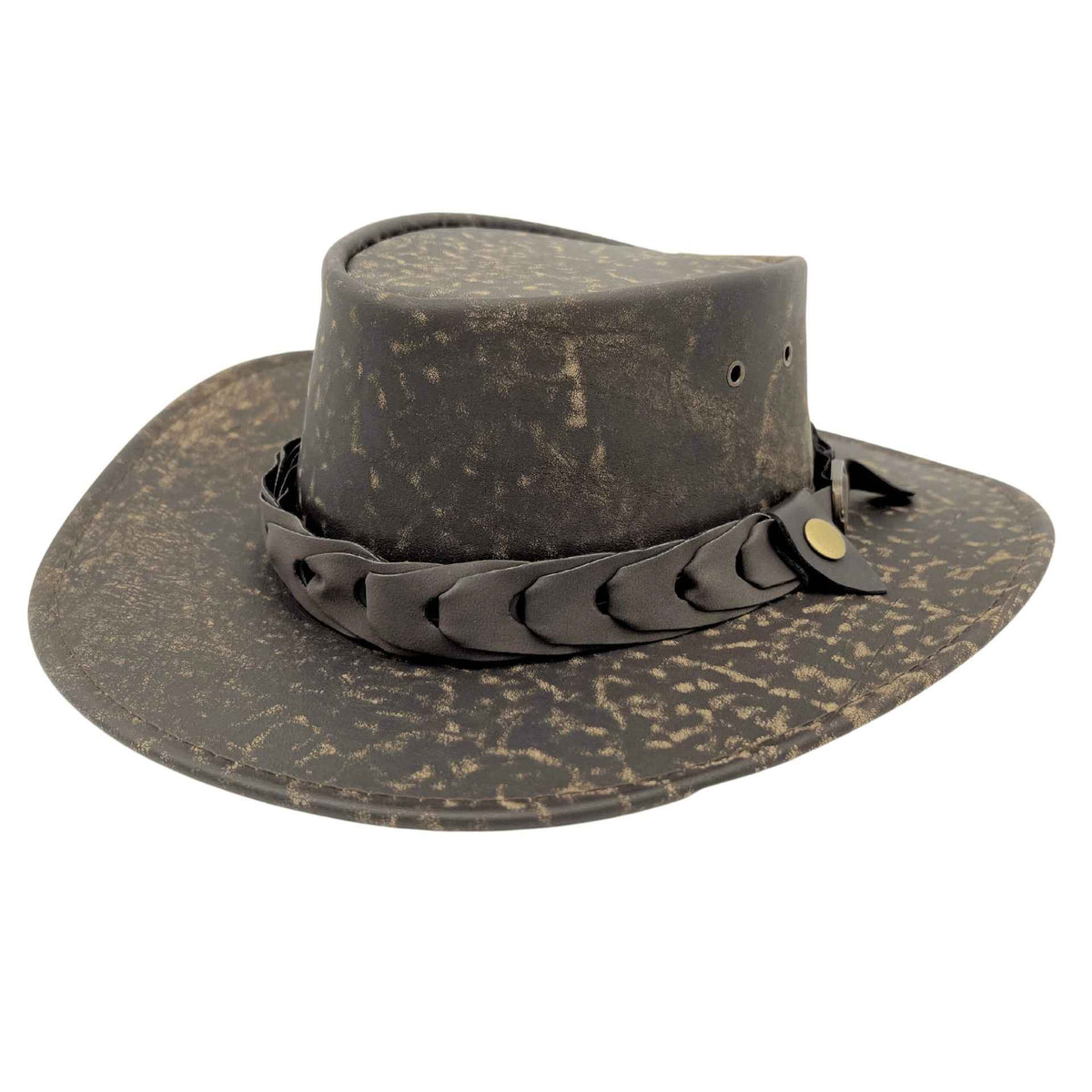
Buffalo leather is a different beast entirely. Thicker, tougher, with a distinctive textured surface that develops extraordinary character with sun, rain, and salt air exposure. It's the choice when you want raw durability and a hat that looks increasingly rugged over the years.
Cowhide sits in a reliable middle ground; accessible, durable, and still miles ahead of felt or straw for longevity. If you're just starting out, it's a solid entry point into the leather tier.
Hat-makers and outdoor content creators consistently point to leather outback hats as the aspirational benchmark in this category, and according to specialist retailers, a leather outback hat "feels at home in the woods, around town, at an outdoor event, or on a scenic drive with the windows down." That kind of versatility is exactly what you want from a hat you plan to own for decades.
The Jacaru Difference: Kangaroo, Buffalo and Cowhide Leather Hats
So you've been sold on leather as the material of choice for a serious outback derby hat. Now the question becomes: whose leather, and where does it come from? That's where Jacaru steps into the conversation in a way that genuinely sets them apart.
Jacaru is an Australian company, and they make their outback hats from materials that are about as Australian as it gets: kangaroo leather, buffalo hide, and cowhide. Kangaroo leather in particular is a headline material for them, not an afterthought. It's lighter and stronger than most other hides, which makes it genuinely practical for outdoor wear rather than just a novelty. You can dig into the specifics in their Outback Kangaroo Hat vs. Other Materials: What to Know Before You Buy guide, which breaks down exactly why the material matters for durability and comfort on the trail.
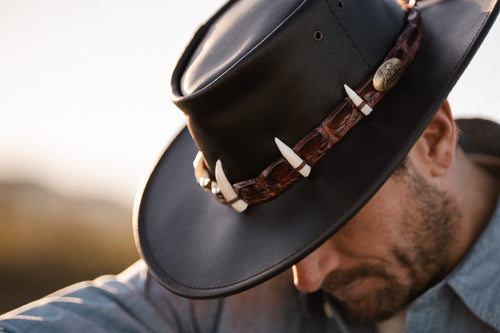
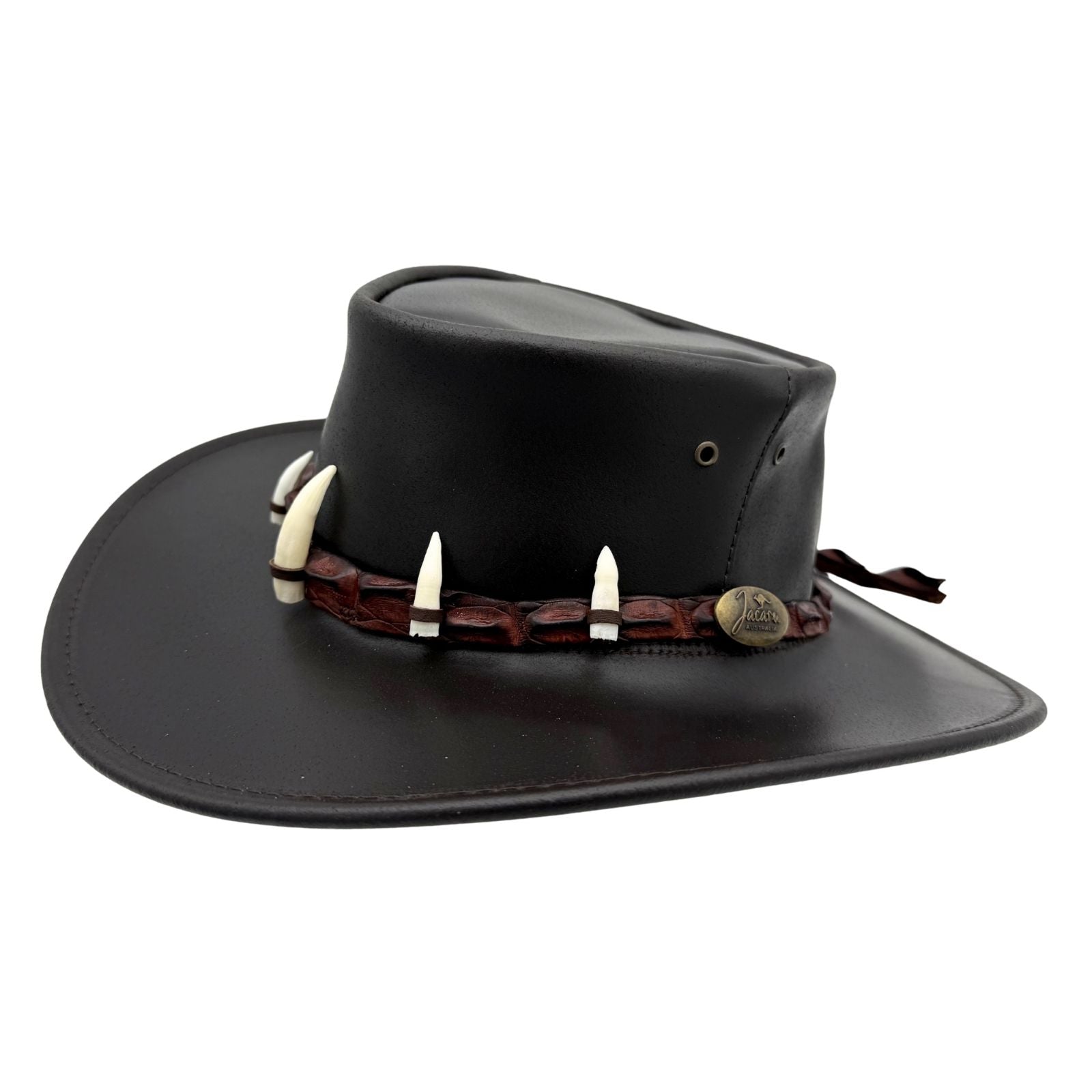
Then there's the crocodile teeth hatband. Yes, real crocodile teeth. This is Jacaru's signature design, inspired by the Crocodile Dundee aesthetic that Australians and international visitors have associated with the outback for decades. Paired with a backstrap hatband, it's the kind of detail that makes a hat genuinely memorable rather than just functional. It sits within their Exotic Hats collection and is distributed through stockists internationally, so it's not a limited prototype; it's a proper retail product.
From a sustainability angle, kangaroo leather is sourced under Australia's national wildlife management framework, making it one of the more ethically grounded leather options available. This is a genuine point of difference that nobody else in the outback hat market is currently foregrounding in their content or marketing. As the Australian Leather Hats Compared: Styles and Leathers guide explains, the material choice directly affects how a hat performs and lasts, which matters whether you're buying for yourself or as a gift.
And that brings up the gift angle. Jacaru's range covers men, women, and children, with practical outdoor hats, travel-ready styles, and gift cards all in one place. For travellers picking up a genuinely Australian souvenir, or for anyone buying a hat that actually means something, that breadth makes Jacaru one of the few outback hat makers genuinely speaking to a global audience.
Derby Hat Styles Worth Knowing: Cattleman, Gambler and Outback Fedora
Now that you know why leather is the material worth investing in, it helps to understand which actual hat shape suits you best. The outback derby world has three main silhouettes doing most of the heavy lifting, and each one has a distinct personality.
1. The Cattleman Crown
The cattleman is the one most people picture when they imagine a classic outback hat. It features a high, structured crown with three signature creases running along the top, paired with a wide brim that sits relatively flat. That tall crown and generous brim combination is not just for looks; it pushes hot air up and away from your head while throwing shade over your face, ears, and the back of your neck. It is wildly popular across Australia and in US western markets, and for good reason. If you want maximum sun coverage and that unmistakable outback presence, the cattleman delivers both without apology. You can read more about cowboy hat shapes and crown styles to see how the cattleman sits within the broader western hat family.
2. The Gambler (Outback Gambler or Planter)
The gambler takes a more laid-back approach. It swaps the tall crown for a lower, rounded one and pairs it with an exceptionally wide, flat brim. The result is a silhouette that feels relaxed and unhurried, sitting visually somewhere between a proper sun hat and a dressed-up fedora. It is a great choice if you want solid sun protection without the height of a cattleman crown, and it tends to suit people who prefer a slightly less rugged, more casual aesthetic.
3. The Outback Fedora
The outback fedora is the middle-ground option. It borrows the tapered crown and medium-width brim from a traditional fedora but is built from leather or wool felt instead of the finer materials you would find on a formal hat. That construction choice changes everything; it becomes genuinely outdoor-capable rather than something you baby at a cocktail party. Understanding the anatomy of a hat helps here, because crown height, brim width, and material all interact to affect everything from airflow to packability to how well the hat survives a surprise downpour.
For travellers and gift buyers trying to choose between the three, leather versions of all these silhouettes are the smartest call. They hold their shape on the road, develop a rich patina over time, and transition naturally from a dusty trail to a smart-casual dinner without missing a beat.
Hatbands and Personalisation: How to Make Your Derby Hat Truly Yours
Once you've chosen your leather and locked in your crown shape, the next question is one a lot of beginners overlook entirely: what's going on around the base of that crown? Hatbands are having a serious moment right now, and if you haven't been paying attention, the accessory side of hat culture has quietly exploded. Multiple makers were actively building out dedicated hatband and braid collections as of late 2025, and the consumer appetite for personalisation shows no signs of slowing down.
Here's the thing that makes hatbands so brilliant: a single derby hat becomes three or four completely different hats depending on what you wrap around it. Swap in a braided leather band for a rugged trail-ready look, swap it out for something dressed up with woven detail or a decorative feather accent, and suddenly your outback derby is doing double duty at a weekend event. You get maximum versatility without spending up for a second hat.
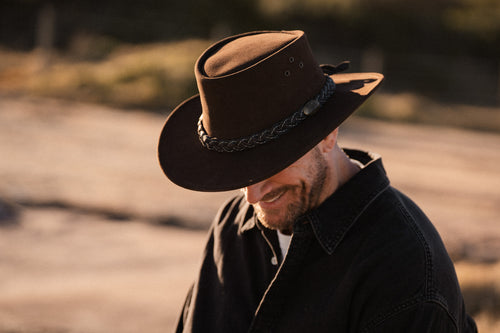
Jacaru's crocodile teeth hatband is genuinely in a category of its own. It's an Australian-made accessory featuring real crocodile teeth worked into the hatband, and it has the kind of storytelling power that no generic leather strip can match. Someone across the room notices it, they ask about it, and you've just become the most interesting person at the party. That's the whole point of a statement piece.
If you're shopping for gift ideas, this is actually a gap worth knowing about. Pairing a quality leather derby hat with a distinctive hatband from an artisan maker creates a gift that feels genuinely considered rather than just a hat in a box. Nobody in the mainstream market is packaging this combination as a curated gifting option right now, which makes it a smart move for anyone who wants to give something truly memorable rather than another gift card.
Derby Hats as Gifts: The Best Hat You Can Buy Someone Who Has Everything
Here's a dirty little secret about the outback derby hat world: not a single major retailer in this space talks about buying one as a gift. Every product page assumes you're shopping for yourself. Nobody is asking the better question, which is what do you buy the person who already has everything?
The Gift That Actually Gets Better With Age
A quality leather derby hat is one of the rare gifts that improves the more it gets used. Most souvenirs crack, fade, or end up in a drawer within six months. A well-made kangaroo or buffalo leather hat develops a patina over time, picking up the character of every adventure the wearer takes it on. It moulds to their head, weathers in their own particular way, and becomes genuinely personal. You cannot fake that with a novelty item from an airport gift shop.
A Hat With a Story Built In
Australian outback hats available through artisan marketplaces show that buyers are actively seeking distinctive, non-mass-produced options, and Jacaru delivers exactly that. The Crocodile Dundee-style hats featuring genuine crocodile teeth and kangaroo leather accessories carry real cultural provenance. For international visitors returning from Australia, or anyone wanting to give a gift that sparks an actual conversation, that story matters enormously.
Who Is This Hat Actually For?
The honest answer is: almost anyone. Travellers, festival goers, hikers, horse riders, outdoor workers, and sun-conscious adventurers all have practical use for a wide-brim leather derby hat. For corporate gifting specifically, an Australian-made leather hat is a genuinely memorable alternative to the branded pens and tote bags that pile up in office cupboards everywhere. It carries cultural prestige, practical everyday utility, and a quality that reflects well on whoever gave it.
How to Care for a Leather Derby Hat So It Lasts a Lifetime
A leather derby hat is genuinely a lifetime investment, but only if you treat it like one. The good news is that caring for leather is nowhere near as complicated as it sounds. Here are the five habits that separate a hat that lasts decades from one that cracks, fades, and warps within a few seasons.
1. Condition it regularly. Leather loses its natural oils over time through sweat, wind, and general wear. Apply a quality leather conditioner every few months, and more frequently if you live somewhere hot and dry or wear the hat daily. Work a small amount in using a soft cloth, let it absorb fully, and buff off any excess. It takes about ten minutes and makes an enormous difference to the flexibility and surface integrity of the leather.
2. Keep it out of prolonged direct sunlight when stored. Wearing your hat outdoors is obviously fine, but leaving it sitting in a sunny window or on a car dashboard is a different matter. UV exposure fades the colour and breaks down the leather surface gradually, and that damage is cumulative and largely irreversible.
3. Don't panic if it gets wet; just respond quickly. Water will not ruin a leather derby hat if you act promptly. Reshape the crown and brim by hand while the leather is still pliable, then let it dry naturally away from heaters, hairdryers, or direct sun. Once dry, give it a conditioning pass to restore moisture.
4. Store it properly between wears. A hat stand or breathable hat box keeps the crown shape intact and prevents brim warping. This matters especially during travel or longer storage periods. Avoid sealed plastic containers, which trap moisture and can lead to mildew.
5. Embrace the patina. A well-maintained leather hat will outlast multiple felt or straw alternatives and develop a rich, personal character over years of wear. That lived-in look cannot be bought off a shelf; it is built through consistent leather hat care and cleaning paired with proper hat storage habits. That is the whole point of buying quality leather in the first place.
Where to Buy an Authentic Australian Derby Hat
So you've done the hard work: you know your leather types, you've picked a crown shape, and you've got a hatband style in mind. Now the real question is where to actually buy the thing without getting burned by a knockoff or a hat that claims to be "Australian style" while being made somewhere entirely different.
Start by looking at who makes it and what they make it from. Authentic Australian outback derby hats are defined by their materials. Kangaroo leather, buffalo, and cowhide sourced in Australia are your benchmarks. If a retailer cannot clearly tell you where the leather comes from or where the hat is made, that's a red flag worth taking seriously.
International demand for Australian outback hats is genuinely growing, especially in the US and European markets. The upside is that more people can find them. The downside is that plenty of "Australian-style" hats are now floating around international marketplaces with limited transparency about materials or construction. You might get lucky, but you're also rolling the dice on provenance.
Buying directly from an Australian maker like Jacaru is the cleanest solution. You get access to their full leather hat range, including crocodile tooth hatbands and kangaroo leather accessories that international stockists simply do not carry. Jacaru ships internationally, supports multiple global currencies, and offers product care guidance alongside the purchase. No flight to Australia required.
When comparing options, keep your checklist simple: leather type and origin, hand-finished versus mass-produced construction, hatband options, and after-sales care support. Any hat worth buying should tick all four boxes.
The Bottom Line on Derby Hats
Here is the bottom line, and it is a simple one: the term "derby hat" covers a lot of ground, but if you want something you will actually pull off the rack and wear on a real adventure, the Australian outback leather version is the one worth your money.
When it comes to leather, go kangaroo or buffalo first. Both are lighter than cowhide, tougher than felt, and they develop that beautiful worn-in character the longer you wear them. A good leather derby hat does not just survive your adventures; it records them.
Personalise with a hatband, especially if you are buying for someone else. And pick up a quality leather conditioner while you are at it. Two minutes of care every few months is all it takes to keep the leather supple for decades.
Buy Australian-made where you can. The provenance is real, the materials are genuinely premium, and you can get accessories that simply do not exist anywhere else, including a crocodile teeth hatband that no international alternative comes close to matching.
A leather derby hat is one of the few purchases that actually gets better with time. Get it right from the start, and it will be with you for life.
Conclusion
The derby hat is far more than a fashion accessory. It carries history, personality, and serious staying power across every style it comes in.
Here is what to take away from this guide. First, derby hats come in distinct styles with very different purposes. Second, material quality determines how long your hat lasts and how good it looks over time. Third, the Australian outback version combines rugged durability with timeless style in a way no other version quite matches.
Now it is your turn to act. Browse a trusted hat retailer, feel the materials in person if you can, and try on the Australian outback derby for yourself. Once you do, you will understand exactly why hat lovers keep coming back to it.
A great hat does not just complete an outfit. It tells the world something about who you are.



Our friends at Bocchetta Plush Toys have a great range of lifelike plush animals that make great gifts for people of all ages.