









Foldable Leather Hats: Which Material Actually Holds Up?
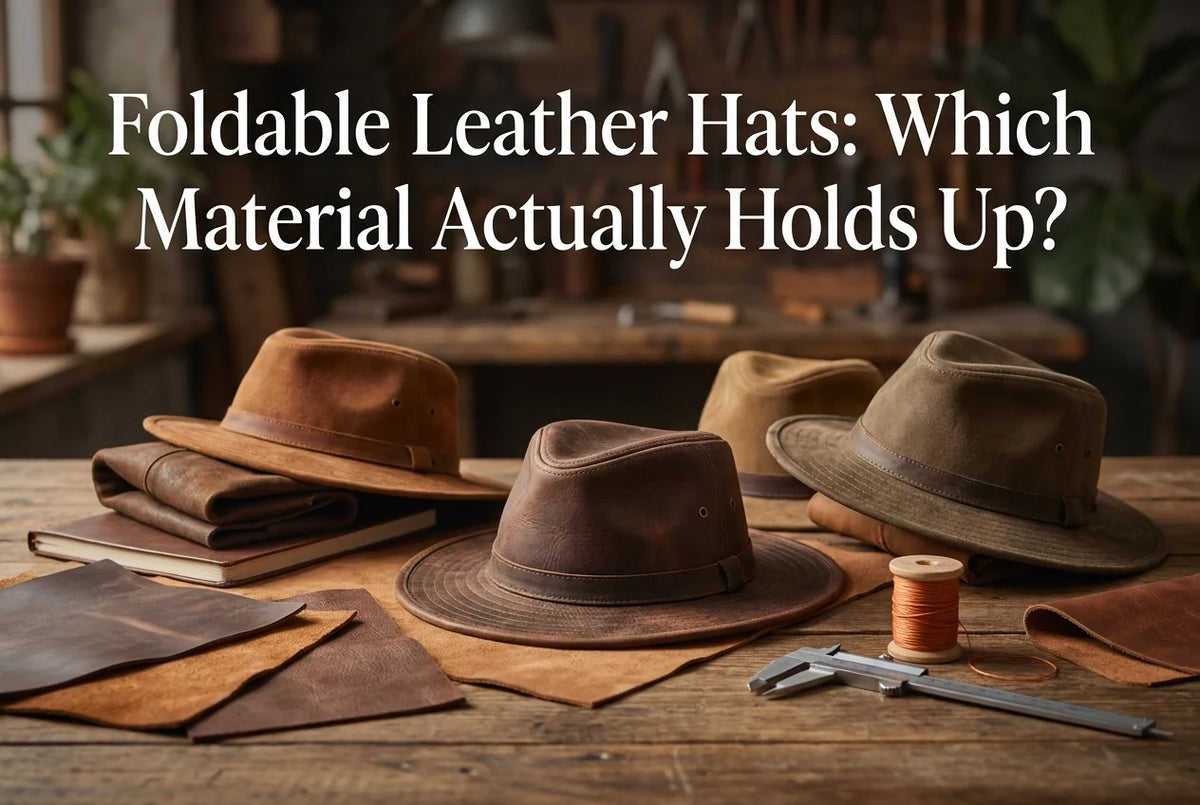
Not every hat earns the right to be packed into a carry-on, stuffed into a saddlebag, or pulled from a backpack looking like it just came off a shelf. A foldable leather hat makes that promise, but whether it actually delivers depends almost entirely on the material underneath the brim. With brands like Barmah and Akubra shaping what serious outdoor headwear looks like, the differences between materials are sharper than most buyers realize before they commit.
This guide cuts through the marketing to give you a practical, material-by-material breakdown. You will learn what structural properties actually make a leather hat foldable without cracking or losing its shape, how kangaroo, buffalo, cattle, suede, and canvas each perform under real travel and outdoor conditions, and how to match the right material to the way you actually use your hat. Whether you are investing in your first quality piece or upgrading from something that did not survive the last trip, the sections ahead will help you choose with confidence.
What Actually Makes a Leather Hat Foldable

Foldability in a leather hat is a product of material science, not marketing language. Three factors determine whether a hat can be packed flat and recover its shape: fibre density, hide thickness, and tanning method.
Fibre density and thickness work together. Thinner, denser hides compress under pressure and spring back because the fibres are tightly interlocked at a microscopic level. When those fibres are loosely structured or the hide is too thick, repeated folding causes delamination, where layers separate and the brim develops permanent creases.
Tanning method directly affects suppleness. Chrome-tanned leather retains more flexibility after processing, making it more forgiving under repeated folding stress. Vegetable-tanned leather, while prized for its patina and firmness, is more rigid and generally considered less forgiving under repeated compression.
Construction is equally critical. A hat built with rigid brim stiffeners, wire edges along the brim perimeter, or a fixed internal crown support cannot be packed flat regardless of the leather's inherent flexibility. Genuinely foldable hats are engineered without those elements, or with components designed to flex and return.
Buyers who understand these mechanics are better equipped to assess a hat's real-world utility. For a broader foundation before comparing specific materials, what to know before buying a leather Australian outback hat covers the essential purchasing considerations in full.
Foldable Leather Hat Materials at a Glance
Those mechanics translate directly into material choice. The table below maps five common foldable leather hat materials against the criteria that matter most to buyers.
Material |
Foldability |
Durability |
Weight |
Weather Resistance |
Price Range (AUD) |
|---|---|---|---|---|---|
Kangaroo |
Excellent |
Excellent |
Lightest |
High |
$72+ |
Buffalo |
Poor |
Outstanding |
Heaviest |
Very High |
$80+ |
Cattle |
Moderate |
Good |
Medium |
Moderate |
~$50 |
Suede |
Good |
Low |
Light |
Poor |
~$50 |
Canvas |
Good |
Low |
Lightest |
Poor |
~$50 |
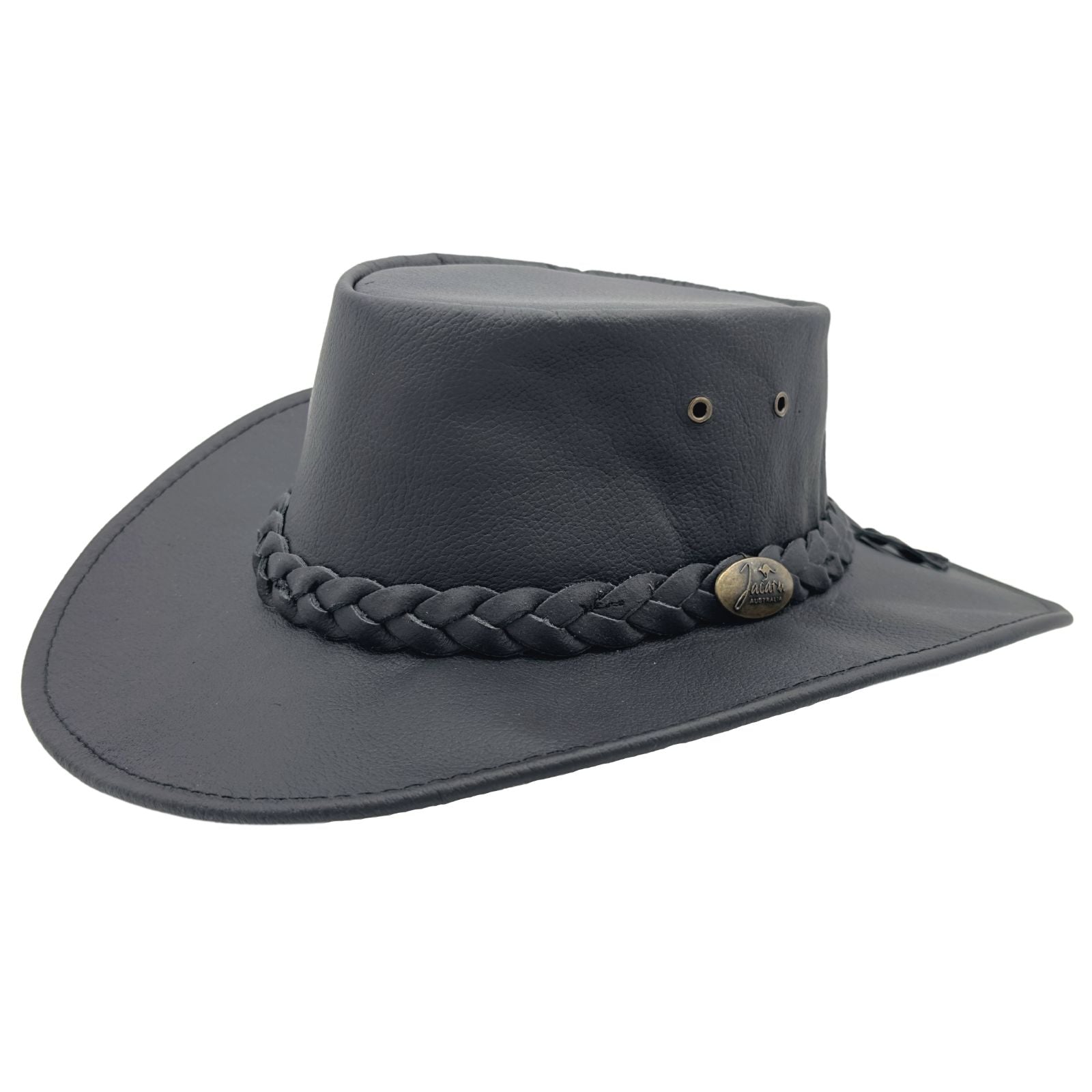
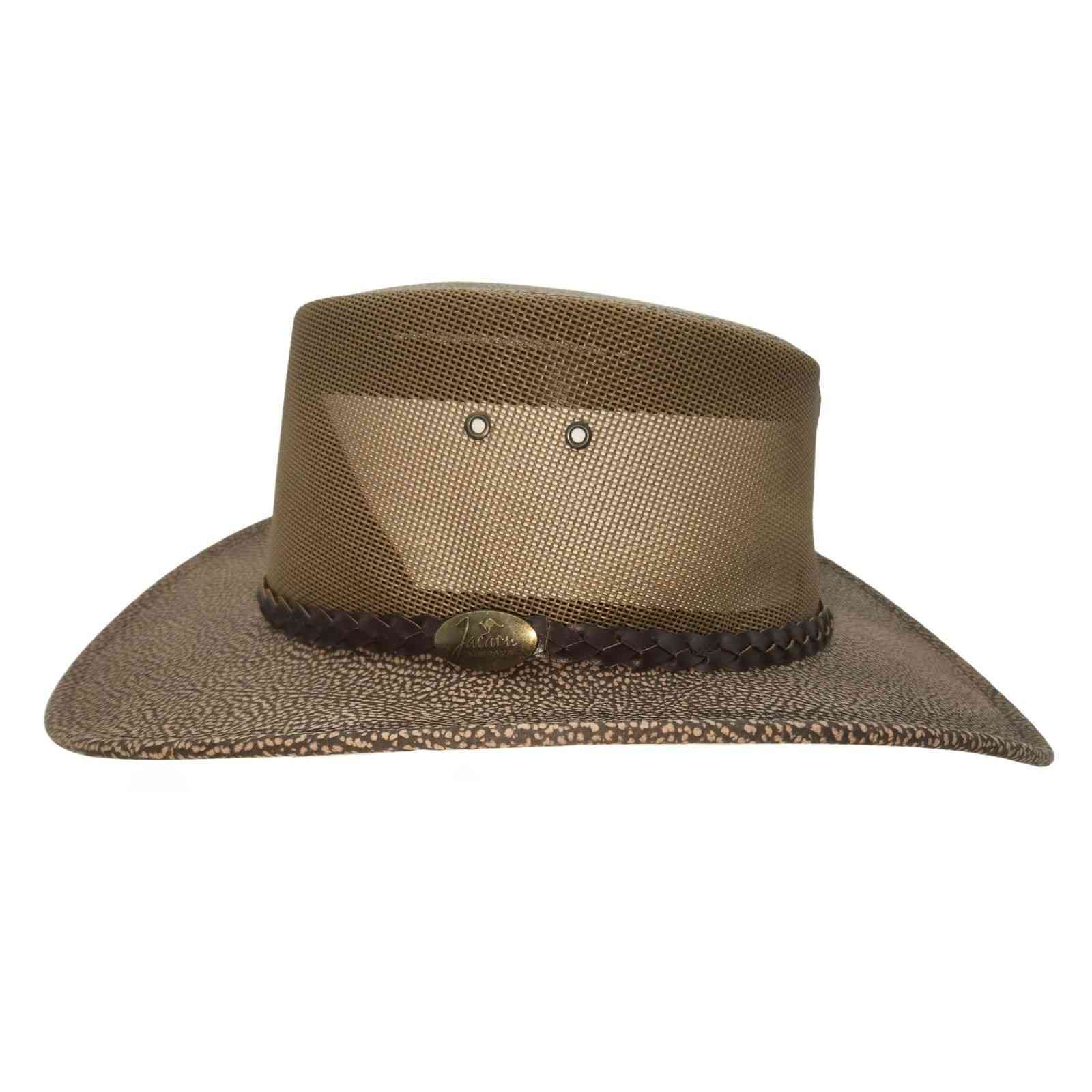
Kangaroo leather sits at the top of the category. Its uniformly dense fibre structure produces superior fold recovery at the lowest weight. Kangaroo leather hats at the premium end of the market typically start at $72 and above, and Jacaru's kangaroo leather hat collection is a strong example of that positioning.
Buffalo leather is exceptionally tough and wind-resistant, but its added mass and stiffness work against repeated packing, making it better suited as a stationary outdoor working hat rather than a travel companion.
Cattle leather is the most accessible entry point, available around the $50 mark. Foldability varies by tanning method and hide thickness, delivering moderate results across every criterion rather than excelling in any one area.
Suede and canvas round out the lower end of the market at similar price points. Both fold easily, but neither resists water effectively nor maintains structural integrity with sustained use, limiting their practical value beyond casual or occasional wear.
Kangaroo Leather: The Foldable Hat Benchmark
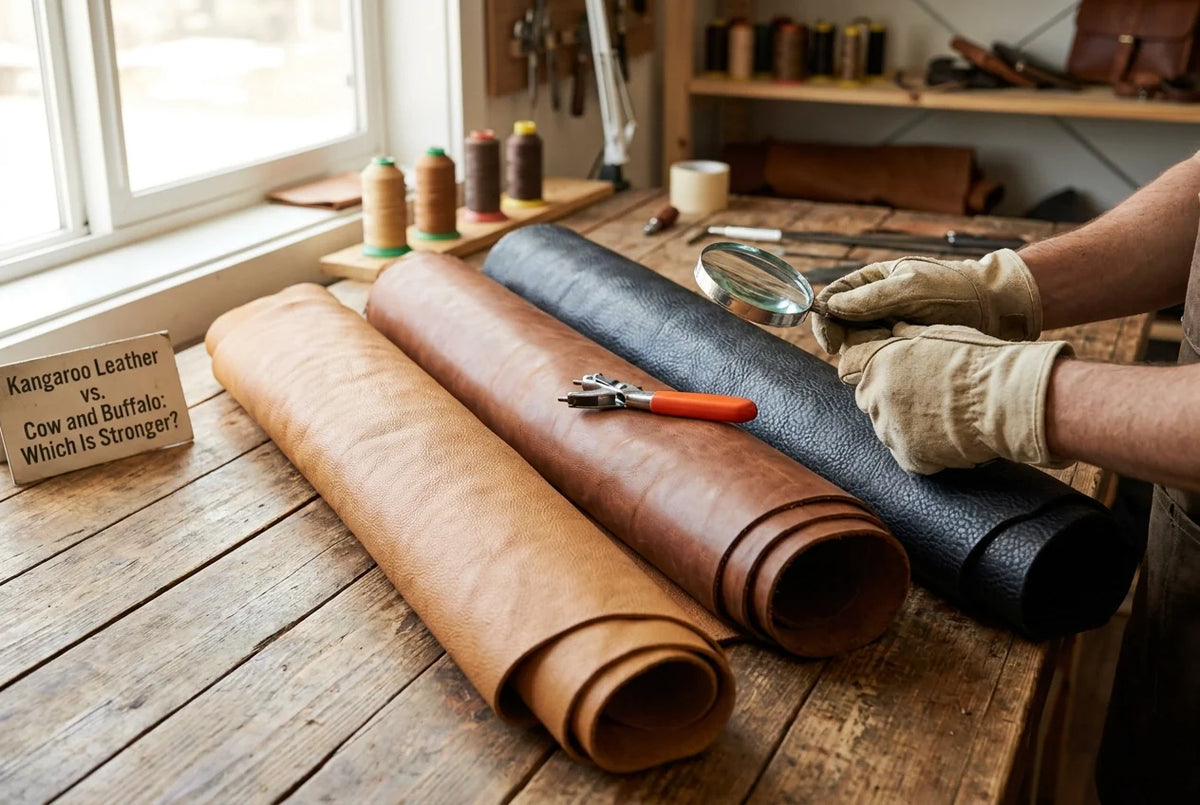
Kangaroo leather earns its benchmark status through material science, not marketing. Unlike cattle hide, which has a layered, multidirectional fibre arrangement, kangaroo leather's fibre structure is notably uniform compared to cattle hide. Kangaroo leather achieves greater tensile strength at equivalent thickness, which is why a kangaroo leather foldable hat tends to spring back to its original shape after packing rather than holding a crease.
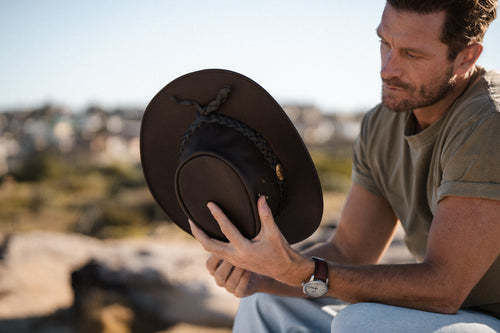
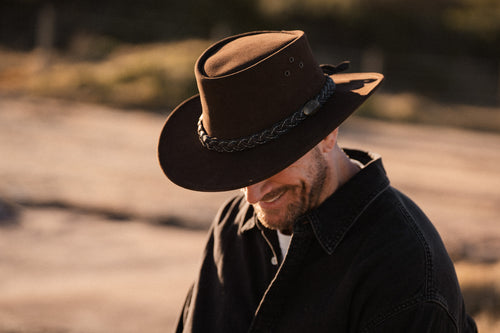
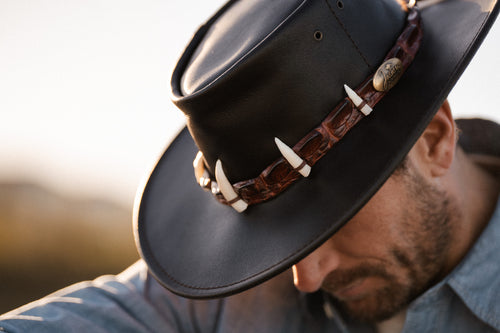
Jacaru's kangaroo leather hat collection is built around exactly this performance profile. Each hat is designed as a travel companion, not a display piece, with the expectation that it will be packed, unpacked, and worn hard across varied conditions.
The sourcing story adds appeal for ethically minded buyers: kangaroo leather is a byproduct of regulated wildlife management in Australia, supporting a sustainability narrative that differentiates it from conventional cattle hide.
Buffalo Leather: Tough but Built for Standing Still
Where kangaroo leather earns its reputation through suppleness and fold recovery, buffalo leather earns its through sheer resistance. Buffalo hide is known for its substantial weight and density, and that mass translates directly into durability under punishing conditions.
For working hats exposed to scrub, wind, and daily physical stress, that density is an asset. The additional stiffness helps buffalo leather hats hold their shape during horse riding, farm work, and other active outdoor use where a lighter hat might deform or lift. The brim stays down; the crown stays set.
The trade-off becomes apparent when packing enters the picture. Repeated folding places stress on buffalo hide that lighter leathers absorb more readily. Without regular conditioning, buffalo leather can become stiffer over time, making repeated folding inadvisable. A well-maintained buffalo hat lasts for years, but that maintenance commitment is ongoing, not occasional. Buffalo leather demands comparable attention to Jacaru's premium leather belts, which similarly require regular conditioning to prevent surface degradation.
This positions buffalo leather as a stationary working hat rather than a travel companion. It excels when it lives in one environment, whether on a station, in a ute, or hung in a shed between uses. Moving in and out of checked luggage shortens its functional lifespan.
Buyers who prioritise ruggedness above all else will find buffalo leather genuinely compelling. Those who need a foldable leather hat to travel reliably should weigh that portability cost carefully before committing.
Cattle Leather: The Versatile Middle Ground
Where buffalo leather trades portability for toughness, cattle leather occupies more practical territory for everyday buyers.
As the most widely used hide in the outback and Western hat category, cattle leather delivers a reliable balance of suppleness, durability, and weather resistance without pushing into specialist territory. It is the material most buyers encounter first, and for good reason.
The main variable to understand is consistency. Hide thickness differs considerably between producers and tanning methods, which means foldability in cattle leather hats is genuinely less predictable than in kangaroo or purpose-engineered buffalo options. A well-tanned, thinner cattle hide can fold cleanly and recover well; a thicker or poorly tanned one may crease permanently under luggage compression. Buyers should handle a hat before purchasing where possible, or buy from makers who specify their tanning process.
Aesthetically, cattle leather carries the authentic cowboy-fedora silhouette that defines the Australian outback style. For buyers drawn to traditional leather hats with that distinctively rugged character, cattle leather delivers the look and many cattle leather foldable hat models sit around the $50 mark, making them a natural entry point for first-time buyers exploring the category.
For occasional travellers who want the leather aesthetic on a modest budget, cattle leather is a sensible starting point. It is not a long-term investment piece in the way kangaroo leather is, but it performs adequately for lighter use.
Suede and Canvas: Accessible Alternatives Worth Knowing

Beyond cattle leather, two further options appear regularly in the foldable hat category: suede and canvas. Both carry appeal, but each comes with trade-offs that serious buyers should understand before committing.
Suede delivers a noticeably softer hand feel and a relaxed, casual silhouette. What it cannot deliver is the structural recovery of full-grain leather. When a suede hat is packed into luggage and compressed, the nap deforms and the brim rarely returns cleanly to its original shape without intervention. Suede is also a split leather product, which reduces its natural density and weather resistance compared to full-grain hides.
For buyers in humid or wet climates, this matters considerably. Suede absorbs moisture readily and stains with minimal exposure to rain, making it a poor candidate as a travel hat for tropical destinations or unpredictable outdoor conditions.
Canvas steps further outside the leather category altogether. It is genuinely packable and typically priced around $50, but it is a textile product rather than a hide, and it behaves accordingly: lighter on durability, shorter on lifespan, and entirely absent of the patina development that makes full-grain kangaroo or cattle leather more characterful over years of wear.
Neither suede nor canvas is without merit. For casual, occasional wear in dry conditions, both serve their purpose. If you are drawn to natural fibres but want something more weather-adaptable than suede, Jacaru's Australian wool hats offer a considered alternative.
For adventurers, outdoor workers, or long-haul travellers, however, neither suede nor canvas delivers the consistent performance that full-grain leather provides.
Matching Material to Your Travel or Outdoor Style
Knowing which material suits your situation cuts through the marketing noise and points you directly to the right hat.
Backpackers and long-haul travellers get the most from kangaroo leather. Its low weight reduces pack burden, and the fibre density means a hat compressed at the bottom of a bag for fourteen hours recovers its crown geometry on arrival. No reshaping ritual required.
Corporate travellers and gift buyers looking for a premium Australian souvenir will find kangaroo leather the most credible choice. The material's provenance, regulated sourcing, and premium price point signal genuine quality rather than tourist novelty. For those who also carry kangaroo leather wallets and purses, the matched material story strengthens the gifting proposition considerably.
Outdoor adventurers and horse riders who spend long days in wind and sun should lean toward buffalo leather. Its structural rigidity resists deformation during active work, making it a dependable field hat, provided it stays out of the luggage cycle.
Festival-goers, casual wearers, and first-time buyers exploring the outback aesthetic can enter the category through cattle leather without committing to a premium outlay. It delivers the silhouette and patina development at a lower initial investment.
Jacaru's range addresses the traveller and adventurer segments directly. Their kangaroo leather hats are built to depart and arrive in identical condition, treating packability as a design standard rather than an incidental benefit.
How Care Routines Extend the Life of a Foldable Leather Hat
Choosing the right material is only half the equation. How you maintain a foldable leather hat determines whether it performs across years of travel or deteriorates after a season.
Conditioning is the single most important routine. Dry fibres are the primary cause of cracking in folded brims, so applying a leather-specific balm or oil before cracks form keeps the hide supple under repeated compression. For most smooth leather hats, conditioning once or twice a year suffices, with additional treatments after heavy exposure to dry climates or sun.
Among full-grain options, the conditioning frequency will depend on your climate, use frequency, and specific hide -- always follow the maker's guidance.
After travel, allow the hat to rest in its natural shape; consult the maker's care instructions for reshaping guidance. Heat accelerates drying but weakens fibre structure, so avoid hair dryers or direct sunlight during any reshaping process.
Water repellent spray formulated for smooth leather adds a meaningful barrier against rain and humidity. Reapply periodically, particularly after sustained rain exposure or heavy outdoor use.
Store loosely to allow airflow rather than compressing in a sealed container. For full guidance, Jacaru's leather hat care instructions cover each of these steps in detail.
Choosing the Right Foldable Leather Hat for the Long Haul
Good care habits extend a leather hat's working life considerably, but only if you start with the right material for your needs.
Each material suits a distinct use case, as covered above -- the decision ultimately comes down to how often you pack, where you travel, and how much maintenance you can commit to.
The premium price argument deserves reframing. A quality full-grain leather hat, maintained properly, will outlast several canvas or synthetic replacements. Spread across years of reliable use, the higher upfront cost represents value rather than luxury.
For a genuinely Australian-made foldable leather hat built to the standard this category demands, explore Jacaru's kangaroo leather hat collection. Each piece is designed to arrive at your destination in the same condition it left home.
Conclusion
Not every leather hat is built to fold, pack, and recover reliably. The material you choose determines whether your hat arrives at your destination looking sharp or looking spent.
Choose the material that matches how you actually use your hat -- and maintain it properly -- and it will serve you for years.
If you are ready to choose a hat built to that standard, explore Jacaru's kangaroo leather hat collection. Australian-made, genuinely foldable, and designed to perform wherever your travels take you.


Our friends at Bocchetta Plush Toys have a great range of lifelike plush animals that make great gifts for people of all ages.