






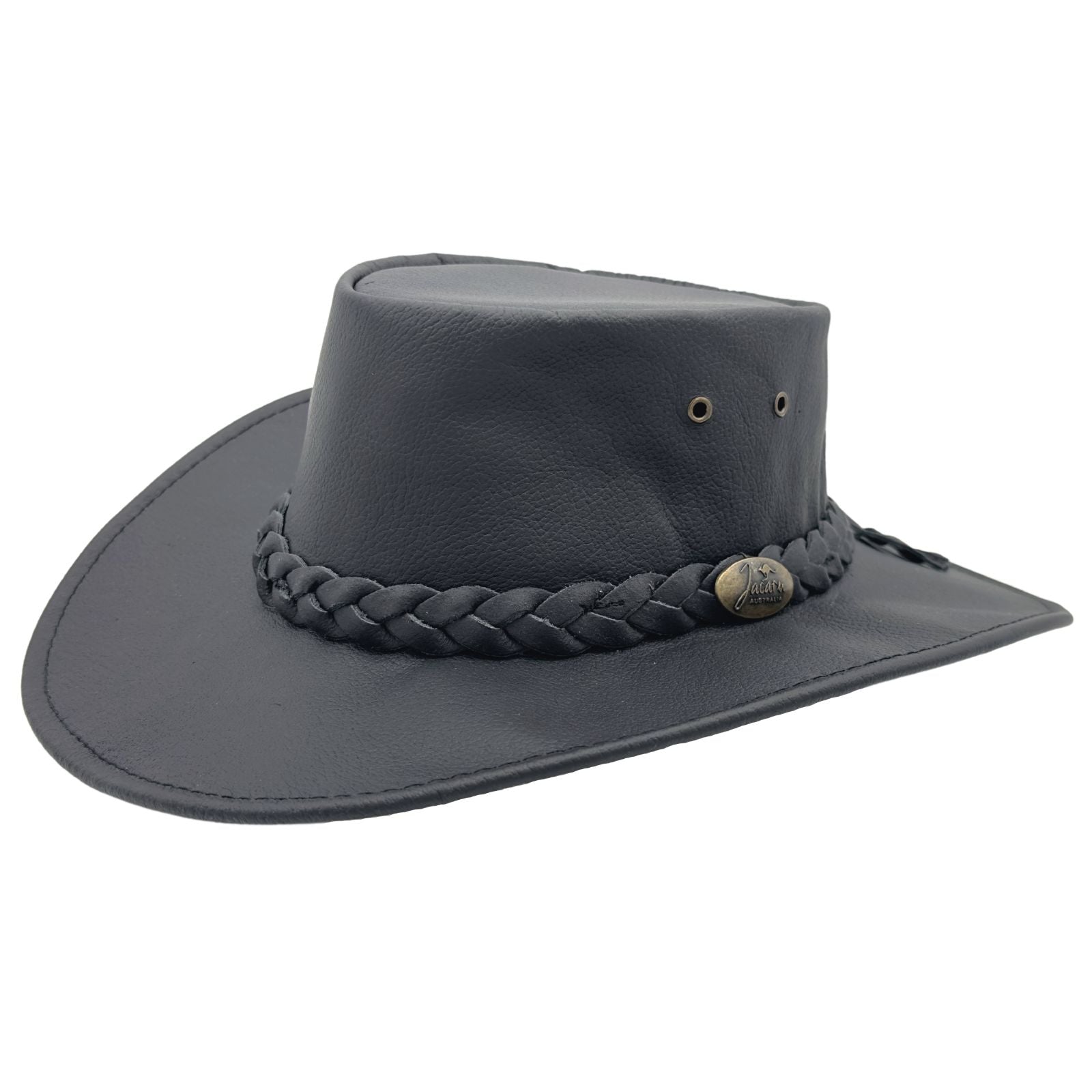


Kangaroo Leather Hats: The Complete Buyer's Guide

Few materials in the world of premium headwear can match the remarkable qualities of kangaroo leather. Lightweight yet extraordinarily tough, naturally water-resistant, and possessing a fine grain that only improves with age, it stands apart from conventional leather options in almost every measurable way. If you have been searching for a kangaroo leather hat that truly delivers on craftsmanship and durability, you have landed in the right place.
This guide was built for buyers who already understand the basics of leather goods and are ready to make a more informed, discerning purchase. We will walk you through the key differences between top manufacturers, break down the construction techniques that separate an average hat from an exceptional one, and highlight the specific features worth paying close attention to before you commit to a purchase. Whether you are drawn to the classic Akubra silhouette, a more contemporary Western brim, or a refined town hat, the comparisons ahead will give you the clarity and confidence to choose wisely. By the end, you will know exactly what to look for and why it matters.
What Makes Kangaroo Leather Different From Other Hat Materials
When choosing a hat that will genuinely perform in demanding outdoor conditions, the material matters more than most buyers initially realise. Kangaroo leather occupies a category of its own, and the reasons are rooted in biology as much as craftsmanship.
Strength That Outlasts the Competition
The structural advantage of kangaroo leather begins at the fibre level. Unlike cowhide, which features a complex, angled weave of collagen bundles that creates stress points vulnerable to tearing, kangaroo leather has a highly uniform, parallel fibre arrangement running consistently throughout the hide. The result is a material with 10 times the tensile strength of cowhide and 50% greater strength than goatskin, confirmed through research backed by Australia's CSIRO. For a hat that flexes, gets packed into bags, and endures years of outdoor abuse, that structural integrity translates directly into longevity.

Lighter Weight, All-Day Comfort
Despite this extraordinary durability, kangaroo leather is approximately 30% lighter than cowhide. That weight reduction is not trivial during long days in the field, on the trail, or under the open Australian sun. Heavier cowhide and buffalo leather hats can create noticeable pressure and fatigue over extended wear, whereas a well-crafted kangaroo leather hat sits lightly on the head without sacrificing any protective function.
Breathability and Sun Protection
The same fine fibre structure that delivers strength also permits natural airflow through the material. Denser cowhide and buffalo leather trap heat against the scalp, while kangaroo leather actively wicks moisture and allows ventilation. Combined with a UPF 50+ sun protection rating that blocks over 98% of UV radiation, this makes the kangaroo leather hat a genuinely functional tool for Australian and equatorial climates, not simply a style statement.
Weather Resistance and Shape Retention
Kangaroo leather is naturally water-repellent, handling unexpected downpours without the warping or cracking that can ruin lesser hides. When dried correctly after rain exposure, the material recovers its original form cleanly. This resilience makes it uniquely suited to unpredictable outdoor environments where conditions shift quickly and gear must keep pace.
Kangaroo Leather vs. Cowhide vs. Buffalo vs. Vegan Leather
With the material properties of kangaroo leather established, it helps to see how it stacks up directly against the alternatives most commonly used in leather hat construction. The table below compares four materials across six performance axes relevant to hat buyers.
Material |
Weight |
Tensile Strength |
Breathability |
Packability |
Environmental Footprint |
Price Range (Hat) |
|---|---|---|---|---|---|---|
Kangaroo |
Lightest |
Highest per thickness (up to 10x cowhide) |
Excellent |
Excellent |
Moderate (wild-harvested) |
$100–$300+ |
Cowhide |
Heavy/dense |
Good, degrades when thinned |
Moderate |
Moderate |
Higher (farmed cattle) |
$50–$150 |
Buffalo |
Heaviest |
Very high |
Moderate to poor |
Poor |
Higher (farmed) |
$70–$200 |
Vegan (PU/plant-based) |
Variable |
Lowest |
Poor |
Good to variable |
Mixed (plastic concerns) |
$30–$100 |
Cowhide: Reliable, But Built for Stillness
Cowhide is the most widely recognised hat leather and carries a well-earned reputation for rugged durability. However, its denser fiber structure makes it approximately 30% heavier than kangaroo leather at comparable thicknesses, and that weight accumulates quickly during extended outdoor activity. In hot or humid conditions, cowhide's tighter pore structure traps heat against the head rather than allowing airflow, making it poorly suited for long trail days, international travel, or sustained sun exposure. It performs better in cooler climates or lower-exertion settings where heat management is less critical, and its lower price point makes it accessible for buyers seeking a tough, traditional-looking hat without premium material costs.
Buffalo: Maximum Toughness, Minimum Flexibility
Buffalo leather, particularly water buffalo, is genuinely impressive in raw durability terms. Its wide fiber structure delivers exceptional abrasion resistance, and a well-made buffalo leather hat will absorb serious punishment. The problem is that buffalo leather shares cowhide's heat-trapping tendency and takes it further. The material's considerable thickness makes it rigid and stiff, which is workable in fixed-shape applications but makes it almost entirely unsuitable for packable or foldable hat designs. For a traveller needing a hat that fits into a carry-on without creasing permanently, buffalo leather is not a practical choice. It suits buyers who want maximum toughness for a specific, stationary-use application and are not concerned with portability.
Vegan Leather: Fast-Growing, But Not Yet Field-Ready
The vegan leather market is expanding at a projected CAGR of approximately 9.6% through 2030, driven by growing consumer demand for animal-free products. Synthetic and bio-based options are improving, and their lower initial price point and flexible construction give them genuine appeal. However, for sustained outdoor use, vegan leather currently lags behind kangaroo leather in every performance category that matters most. Breathability is noticeably limited; most synthetic materials trap moisture and heat rather than wicking them away. Durability under sustained UV exposure, moisture cycling, and physical stress also falls short, with typical lifespans of three to five years compared to ten to twenty or more for quality animal leather. Buyers prioritising animal-free sourcing above all else will find vegan options acceptable, provided they factor in more frequent replacement and reduced field performance.
Which Material Suits Which Buyer
The decision ultimately comes down to intended use. A kangaroo leather hat is the clearest choice for performance-oriented buyers: hikers, travellers, and outdoor adventurers who need lightweight comfort, genuine breathability, packability, and long-term durability in demanding conditions. Cowhide suits buyers in cooler climates who prioritise a classic aesthetic and solid construction without active performance demands. Buffalo leather is a niche choice for maximum toughness where portability is irrelevant. Vegan leather works for ethically-motivated buyers who accept performance trade-offs and are comfortable with a shorter product lifespan. Understanding where your priorities sit makes the right choice straightforward.
Jacaru vs. Barmah vs. Kakadu: Which Brand Should You Choose
When buyers reach this level of research, they are typically not asking whether kangaroo leather is worth it. They are asking which brand deserves their money. The three names that consistently appear together in Reddit threads and YouTube review comparisons are Jacaru, Barmah, and Kakadu Australia. Each brand uses genuine full-grain kangaroo leather and targets outdoor enthusiasts and travellers, yet they diverge significantly on warranty confidence, manufacturing transparency, product range, and where and how you actually buy them.
The table below distils the most decision-critical differences:
Jacaru |
Barmah |
Kakadu Australia |
|
|---|---|---|---|
Key Models |
1001P Premium, 1150 Breeze (vented), 1301K (children's) |
1018 Distressed/Squashy, 1019 Sundowner |
Karumba kangaroo leather |
Warranty |
10 years on select Australian-made leather hats |
Limited; 1-2 years or unspecified on most lines |
Standard manufacturer policy; not prominently featured |
Country of Manufacture |
Australia (direct-to-consumer model) |
Primarily Australia; some finishing noted outside Australia on certain variants |
Australia; US-facing storefront for accessibility |
Price Range (approx.) |
AUD $89-$140 |
USD $94-$130 |
USD $100-$150 |
Standout Features |
Broadest range, 10-year warranty, vented and children's styles, handcrafting emphasis |
Highly packable squashy foldable designs, strong Amazon and eBay presence |
US distribution convenience, solid performance messaging |
Best Fit |
Families, long-term owners, buyers prioritising Australian-made credentials |
Frequent travellers, packers, marketplace shoppers |
US-based buyers wanting kangaroo leather without import complexity |
Why Jacaru Stands Apart on Warranty and Range
Jacaru's 10-year warranty on select models, including the flagship 1001P Premium, is a direct statement of manufacturing confidence that neither competitor matches publicly. For a buyer investing in a hat intended to last a decade or more of outback use, that backing removes meaningful purchase risk. Beyond warranty, the product breadth sets Jacaru apart. The 1150 Breeze introduces vented construction for buyers working in sustained heat, while the 1301K extends genuine kangaroo leather quality to children, making Jacaru the only brand among the three with a credible family-focused range. The direct-to-consumer Australian manufacturing model also means buyers are purchasing closer to the source, with fewer intermediary markups and greater accountability on craftsmanship claims. Jacaru's own material guides reinforce this positioning with detailed transparency on sourcing and leather properties.
Where Barmah and Kakadu Have Their Strengths
Barmah's competitive edge is practical and distribution-driven. Models 1018 and 1019 fold into a supplied carry bag, a feature that resonates deeply with international travellers who need a quality hat that survives being stuffed into luggage. Their Amazon and eBay footprint gives casual buyers fast, familiar purchasing without committing to a brand-direct relationship. The trade-off is transparency; warranty terms are harder to confirm, and some finishing on certain lines occurs outside Australia, which matters to buyers for whom provenance is a priority. Kakadu Australia addresses a different gap entirely. Its US-facing storefront at us.kakaduaustralia.com simplifies purchasing for American customers who would otherwise navigate international shipping. The Karumba model carries comparable full-grain kangaroo leather performance messaging, covering lightness, water resistance, and UPF 50+ protection, but it does not differentiate meaningfully on warranty depth or handcrafting specificity. As active Reddit comparisons confirm, buyers are already evaluating these three brands side by side based on exactly these variables.
The practical takeaway is straightforward: prioritise Jacaru when long-term value, warranty assurance, and genuine Australian manufacturing matter most. Choose Barmah when travel packability and marketplace convenience outweigh origin transparency. Consider Kakadu when US-based purchasing logistics are the deciding factor. For most buyers seeking the full combination of craftsmanship, range, and backed longevity in a kangaroo leather hat, Jacaru's direct model is the most defensible choice.
Is Kangaroo Leather Actually Sustainable? The Honest Answer

The sustainability case for kangaroo leather is more nuanced than either its strongest advocates or harshest critics tend to admit. Understanding the actual data makes it possible to reach an honest, defensible position rather than simply accepting marketing claims or activist talking points.
The Environmental Case: What the Numbers Actually Show
As of 2023, population surveys across the six government-regulated commercial harvest zones in Australia confirmed at least 30 million kangaroos available for regulated harvest. Annual quotas are capped at roughly 10 to 20% of locally surveyed populations, a ceiling designed to prevent depletion while maintaining viable management programs across New South Wales, Queensland, South Australia, Victoria, and Western Australia. This is not an unmonitored extraction; it is a tiered, state-level regulatory system with aerial surveys, species-specific limits, and export licensing requirements. The resulting leather reaches approximately 70 countries, which reflects decades of established international trade rather than a marginal or unverified supply chain.
Critically, kangaroos are never farmed. Because the supply chain relies entirely on wild harvesting, there is no land clearing for pasture, no feed crop cultivation, no captive animal infrastructure, and no concentrated waste management burden. When compared directly to cattle leather production on environmental metrics, including land use, water consumption, and methane output, regulated kangaroo leather presents a meaningfully lower footprint. The hides are also largely treated as a co-product of the meat industry, meaning utilization reduces overall waste from harvesting activity.
Where the Ethical Debate Cannot Be Dismissed
The animal welfare dimension involves legitimate, substantive criticism that deserves direct acknowledgment. Critics raise specific concerns about harvesting methods conducted at night in remote regions, non-lethal wounding rates, and the treatment of dependent joeys when female kangaroos are killed. The Good On You ethical analysis of kangaroo leather documents these concerns in detail, and several major sportswear brands across the UK and Europe have phased out kangaroo leather in response to consumer and advocacy pressure, citing both welfare concerns and the improved performance of synthetic alternatives.
The Honest Position for Informed Buyers
For buyers purchasing a kangaroo leather hat, the most defensible conclusion is this: regulated kangaroo leather, sourced from Australian manufacturers with transparent, licensed supply chains, compares favorably to farmed cattle leather on environmental grounds. The wild-harvest model genuinely avoids the most resource-intensive aspects of conventional leather production. At the same time, the animal welfare question involves competing perspectives that are both reasonable and unresolved. Buyers who prioritize environmental metrics will find strong supporting evidence. Buyers whose primary concern is animal welfare will want to weigh that evidence against the welfare critiques honestly. Choosing a product from an Australian manufacturer with documented sourcing practices is the clearest way to ensure accountability on both fronts.
How to Choose the Right Kangaroo Leather Hat for Your Needs
Matching a kangaroo leather hat to your specific use case makes a significant difference in long-term satisfaction. The material's unique properties translate differently depending on whether you are packing for a three-week trip, working in desert heat, shopping for a gift, or outfitting a child for school holidays outdoors.
For travel and packability, prioritise designs with a crushable crown construction that springs back to shape after compression. Kangaroo leather's fine fibre structure allows it to flex without developing permanent creasing, unlike stiffer cowhide alternatives. Jacaru's range includes squashy styles specifically built for frequent flyers and adventurers who need a hat that fits into a carry-on or glove compartment without ceremony. If packability is your primary concern, check product descriptions specifically for crushable or foldable language before purchasing.
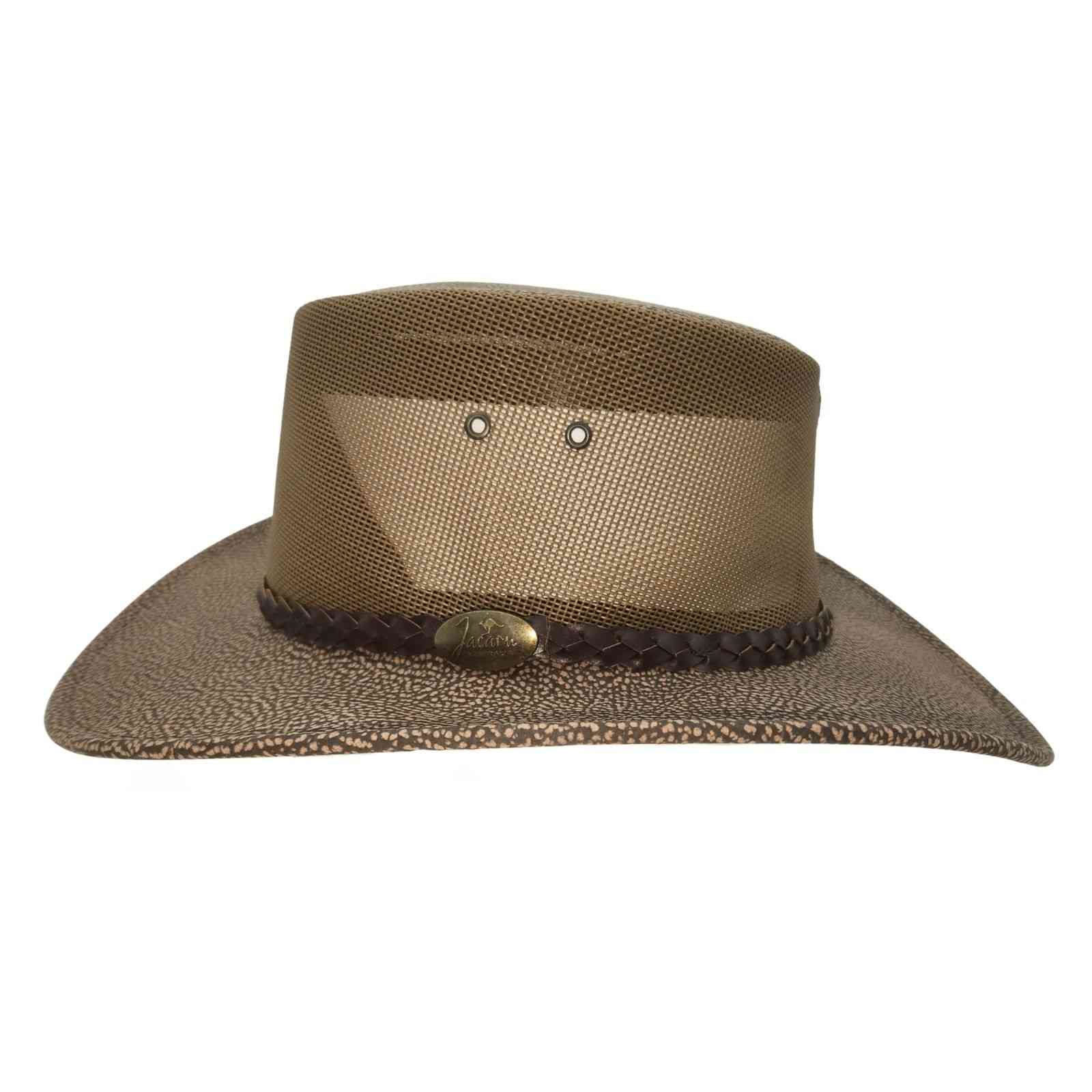
For hot weather and extended sun exposure, a vented design delivers meaningfully better performance than a standard full-leather crown. The Jacaru 1150 Kangaroo Breeze combines a kangaroo leather brim with a breathable mesh crown, creating airflow that reduces heat buildup significantly during high-humidity or desert conditions. Standard kangaroo leather hats already carry a UPF 50+ rating, but the added ventilation extends comfortable wear time during physically demanding activity.
For gifting and souvenirs, provenance matters as much as appearance. Handcrafted Australian-made hats with a documented 10-year warranty, such as the Jacaru 1001P Premium, carry a quality assurance that mass-produced alternatives simply cannot replicate. The warranty covers repairs free of charge and signals genuine manufacturer confidence in the product's longevity.
For families with children, the Jacaru 1301K fills a genuine gap. Children's kangaroo leather hats are rare; most manufacturers focus exclusively on adult sizing. The 1301K is purpose-built with proper proportions, UPF 50+ protection, and the same durable water-repellent leather as adult models, making it a practical choice for families spending extended time outdoors.
On sizing, kangaroo leather softens and molds to the wearer's head shape gradually over time. Buyers sitting between two sizes should size up and use a sweatband insert for an accurate initial fit, then allow the leather to conform naturally through regular wear.
Caring for a Kangaroo Leather Hat to Make It Last
A kangaroo leather hat is a long-term investment, and maintaining it correctly determines whether it lasts a decade or deteriorates within a few seasons. The care routine is straightforward once understood, and the payoff in longevity is significant.
Cleaning should happen promptly after heavy use. When mud or sweat accumulates, spot clean with a damp cloth and a small amount of mild soap, working gently in circular motions across the affected area. Full submersion is the most common mistake buyers make; soaking the entire hat causes uneven drying, which can permanently distort the brim shape and weaken the hide along stress points.
Conditioning is equally important and often overlooked. Because kangaroo leather's fine, tightly packed fiber structure lacks the density of cowhide, it loses natural oils faster in arid climates and air-conditioned environments. Applying a leather-specific conditioner every three to six months, or more frequently with heavy outdoor use, keeps the material supple and prevents surface cracking before it starts.
Drying and reshaping require patience. If the hat gets wet, reshape the crown and brim by hand while the leather is still pliable, then leave it to air dry naturally on a flat surface or hat block. Direct heat from a dryer or heater will shrink the hide and may crack it irreversibly.
Storage matters during off-season periods. Keep the hat in a breathable bag or hat box, away from direct sunlight, which causes both fading and accelerated drying.
Followed consistently, these steps allow a well-constructed kangaroo leather hat to outlast cheaper alternatives by years. Jacaru's 10-year warranty on the 1001P Premium model reflects exactly this expectation; that quality construction, paired with proper care, delivers genuinely long-term performance.
The Bottom Line on Kangaroo Leather Hats
Kangaroo leather consistently outperforms cowhide and buffalo on the metrics active outdoor buyers care about most: it runs approximately 30% lighter than cowhide, breathes more efficiently due to its even fiber distribution, packs and recovers without permanent creasing, and delivers tensile strength that rivals materials twice its thickness. These are not marginal gains; over a full day in heat or on the trail, they translate into real comfort and lasting durability.
Among manufacturers, Jacaru earns the strongest recommendation. Australian-made since 1969, sold direct-to-consumer at competitive prices, backed by a 10-year warranty on select models, and offering the broadest range available, including the vented 1150 Breeze for high-heat environments, the 1001P Premium for all-round outback use, and the 1301K for younger adventurers. Few brands match that combination in a single collection.
The sustainability case, while nuanced, is defensible. Government-regulated harvest quotas, population monitoring through annual aerial surveys, and transparent export records across roughly 70 countries position wild-harvested kangaroo leather favourably against the land, water, and emissions footprint of farmed cowhide or buffalo.
The practical next step is straightforward: browse Jacaru's kangaroo leather hat collection, compare the 1001P Premium, 1150 Breeze, and 1301K models side by side, and consult the size guide before ordering to secure the right fit from the first wear.
Frequently Asked Questions
Why is kangaroo leather considered better than cowhide for hats?
Kangaroo leather outperforms cowhide on several key metrics. It is approximately 30% lighter than cowhide, offers up to 10 times the tensile strength per thickness, and features a uniform parallel fibre structure that resists tearing. It also breathes more efficiently, wicks moisture away from the scalp, and packs and recovers from compression without permanent creasing — making it the superior choice for active outdoor use, travel, and extended wear in hot or demanding conditions.
Which kangaroo leather hat brand is the best — Jacaru, Barmah, or Kakadu Australia?
Each brand suits a different type of buyer. Jacaru is the strongest all-round choice, offering Australian-made craftsmanship, the broadest product range (including vented and children's styles), and a 10-year warranty on select models like the 1001P Premium — a level of backing neither competitor publicly matches. Barmah excels for frequent travellers thanks to its highly packable, foldable designs and wide availability on Amazon and eBay. Kakadu Australia is best suited to US-based buyers who want kangaroo leather without navigating international shipping, as it operates a dedicated US-facing storefront.
Is kangaroo leather sustainable and ethically sourced?
The sustainability case is nuanced but defensible. Kangaroo leather comes from government-regulated wild harvesting across six Australian zones, with annual quotas capped at 10–20% of surveyed populations. Because kangaroos are never farmed, the supply chain avoids land clearing, feed crop cultivation, and captive animal infrastructure, giving it a lower environmental footprint than cattle or buffalo leather. However, legitimate animal welfare concerns exist around harvesting methods and the treatment of dependent joeys. Buyers prioritising environmental metrics will find strong supporting evidence, while those focused on animal welfare should weigh both sides. Choosing a manufacturer with a transparent, licensed Australian supply chain provides the greatest accountability.
How should I care for a kangaroo leather hat to make it last?
Proper care significantly extends the life of a kangaroo leather hat. Spot clean with a damp cloth and mild soap after heavy use, and avoid fully submerging the hat, as soaking causes uneven drying and can permanently distort the brim. Apply a leather-specific conditioner every three to six months — or more frequently in arid or air-conditioned environments — to prevent surface cracking. If the hat gets wet, reshape the crown and brim by hand while still pliable and air dry naturally on a flat surface or hat block; never use direct heat. Store it in a breathable bag or hat box away from direct sunlight during off-season periods.
What kangaroo leather hat should I choose for my specific needs?
The right hat depends on your primary use case. For travel and packability, look for a crushable or foldable design that springs back to shape after compression. For hot weather and extended sun exposure, a vented model like the Jacaru 1150 Breeze — which pairs a kangaroo leather brim with a breathable mesh crown — delivers the best performance. For gifting, a handcrafted Australian-made hat with a documented warranty, such as the Jacaru 1001P Premium, offers the most confidence in quality. For families, the Jacaru 1301K is one of the very few purpose-built children's kangaroo leather hats available, featuring full UPF 50+ protection and durable water-repellent leather. If you are between sizes, size up and use a sweatband insert, then allow the leather to naturally mold to your head shape over time.


Our friends at Bocchetta Plush Toys have a great range of lifelike plush animals that make great gifts for people of all ages.