






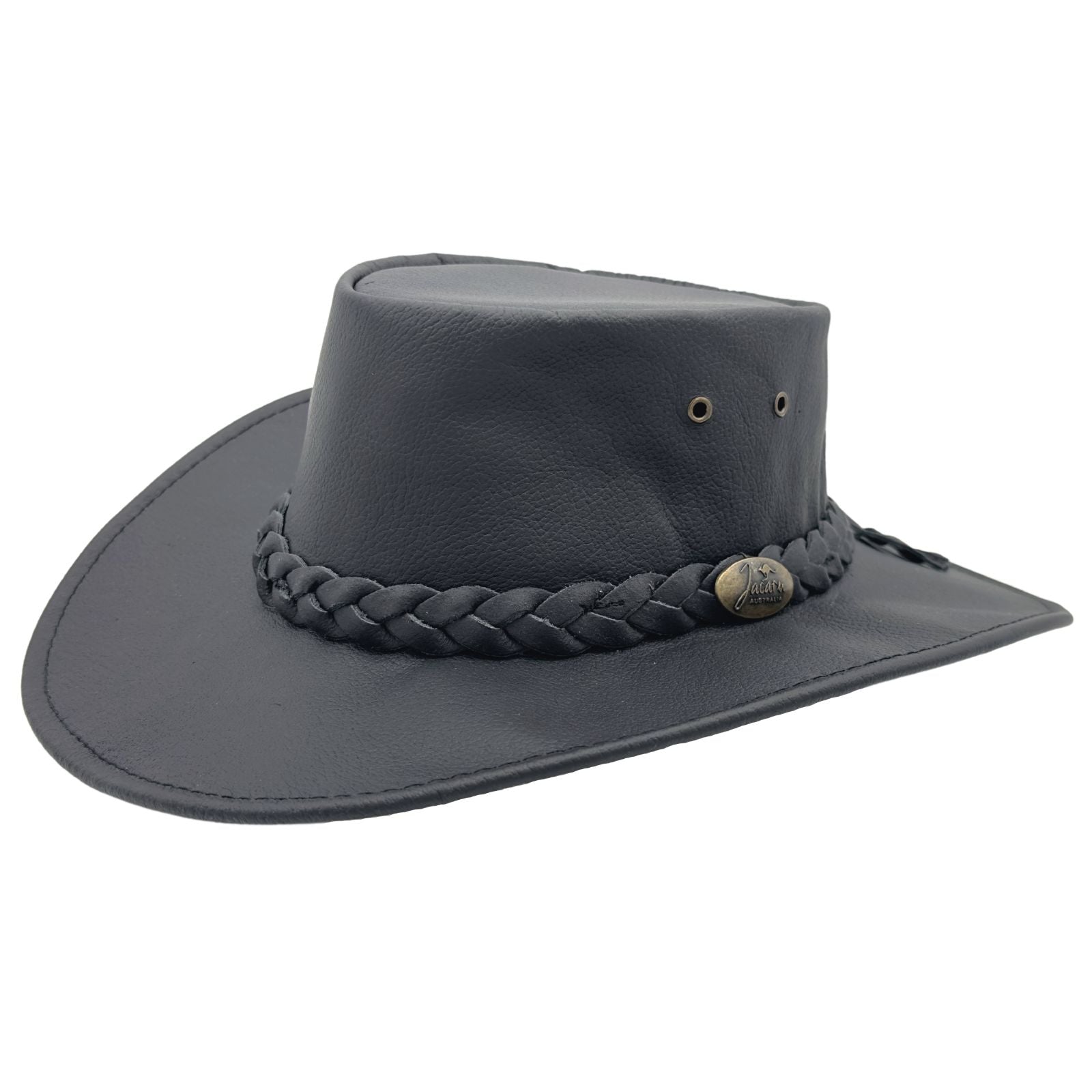


The Men's Leather Hat Guide: Styles, Materials and How to Choose

A great hat can transform an outfit, but few accessories carry the same timeless appeal as a well-crafted leather hat. Whether you are stepping out for a casual weekend or want to add a polished edge to your everyday look, a leather hat for men delivers a combination of style, durability, and character that other materials simply cannot match.
If you are new to leather hats, the sheer variety of options can feel overwhelming. Fedoras, flat caps, outback hats, and more are all waiting to become your next signature piece. Knowing what sets each style apart, and understanding which materials suit your lifestyle, makes the difference between a purchase you love and one that collects dust on a shelf.
This guide is built specifically for beginners. We will walk you through the most popular leather hat styles, break down the key materials you will encounter, and give you clear, practical tips for choosing the right hat for your face shape, budget, and personal taste. By the end, you will have everything you need to make a confident, informed decision.

Kangaroo, Cow or Buffalo? Understanding Leather Types
Choosing the right leather for your hat starts with understanding how each hide type behaves in real-world conditions. The three primary options you will encounter when shopping for a quality leather hat for men are kangaroo, cow, and buffalo, and each brings a genuinely different set of strengths to the table.
Kangaroo Leather: Lightweight Strength
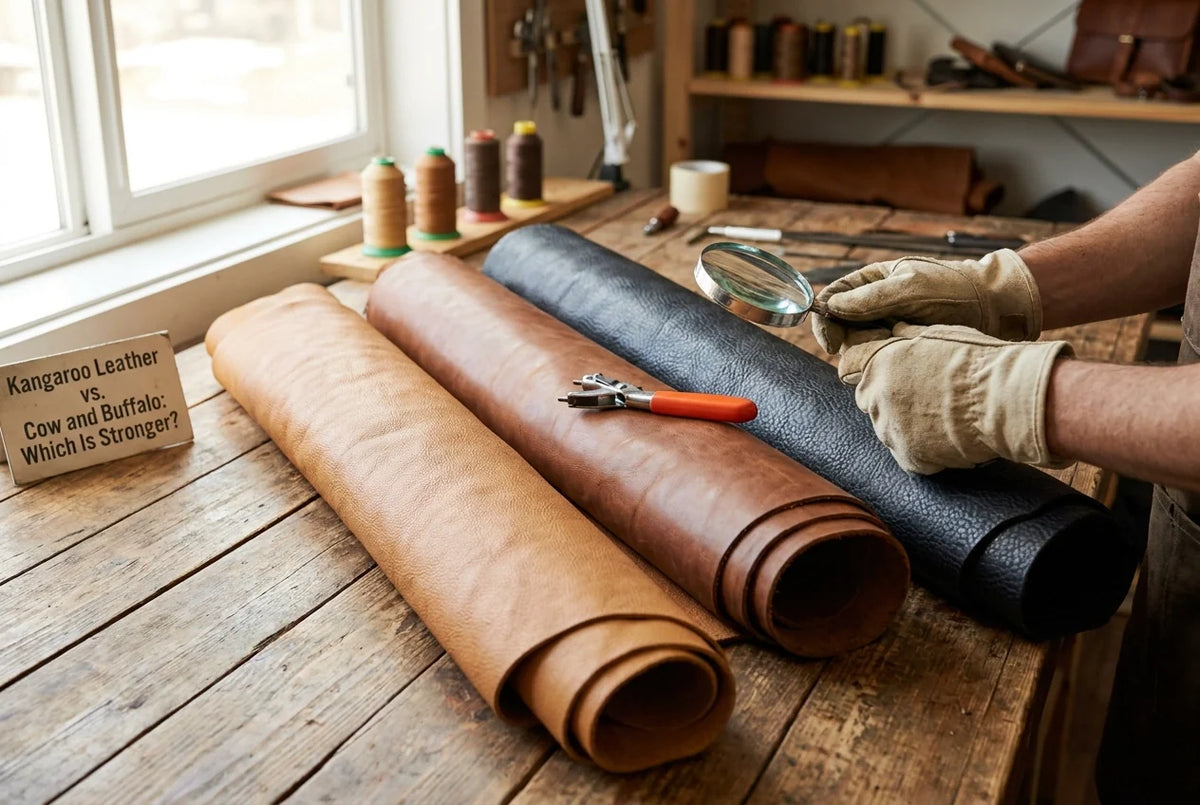
Kangaroo leather is widely regarded as pound-for-pound the strongest natural leather available. Its secret lies in a uniquely fine, densely packed fibre structure with a naturally oily composition that makes it exceptionally tough despite its low weight. For wide-brim outback hats designed to handle harsh sun, wind, and rain, this combination of lightness and durability is difficult to beat. Kangaroo leather also sheds moisture effectively due to its tight grain and natural oils, meaning it performs well in wet weather without losing its shape. As an added practical bonus, a well-made kangaroo leather hat can be folded and packed without permanent damage, making it a genuine travel companion. For anyone investing in a premium leather hat built for active outdoor use, kangaroo hide deserves serious consideration. To explore how different hides are graded and processed, this beginner's leather guide provides a useful foundation.
Buffalo Leather: Structure and Character
Buffalo leather sits at the opposite end of the spectrum in terms of weight and rigidity. It is notably thicker than both kangaroo and cow hide, which gives it an inherent structural integrity that holds crown and brim shape reliably over years of wear. This makes buffalo particularly well-suited to traditional outback and cowboy-style silhouettes where a defined, commanding shape is part of the appeal. Buffalo leather also develops a rich, deep patina with age, meaning your hat genuinely improves in character over time. Its thickness provides solid inherent water resistance, though it does not fold without creasing, so it rewards careful storage.
Cow Leather: The Practical All-Rounder
Cowhide sits comfortably between the two in terms of weight and flexibility. It offers consistent grain quality, wide availability, and reliable baseline weather resistance, making it the most practical and accessible choice for everyday leather hats for men. Cow leather responds well to regular conditioning and dedicated waterproofing treatments, which meaningfully improve its performance in wet or variable climates. For buyers seeking a dependable, hardwearing hat without the premium price point of kangaroo hide, cowhide delivers strong value. You can read more about understanding leather types and grades to sharpen your buying knowledge before committing.
Jacaru's range spans all three hide types across their Kangaroo Hats, Traditional Hats, and Exotic Hats categories, so buyers can match leather choice directly to their intended use, climate, and personal style rather than settling for a one-size-fits-all option.
The Key Styles of Men's Leather Hats
Now that you understand the materials behind a quality leather hat, the next step is choosing the right style. Men's leather hats fall into several distinct categories, each built for different purposes, environments, and personal aesthetics. Here is a breakdown of the key styles worth knowing before you buy.
1. The Classic Outback or Traditional Leather Hat
The traditional leather hat is the foundational style in this category. Defined by a wide, all-round brim that delivers full sun protection, it traces its silhouette directly to Australian stockman heritage, where function was everything and the design had to perform in harsh outdoor conditions. What makes this style enduringly popular is its crossover versatility. It reads as rugged and trail-ready, yet carries enough visual structure to work in casual social settings as well. If you are buying your first leather hat for men, this is the style most likely to serve you across the widest range of situations. You can explore the full range of Australian leather outback hats compared to see how the traditional form sits alongside other styles.
2. Breeze Hats
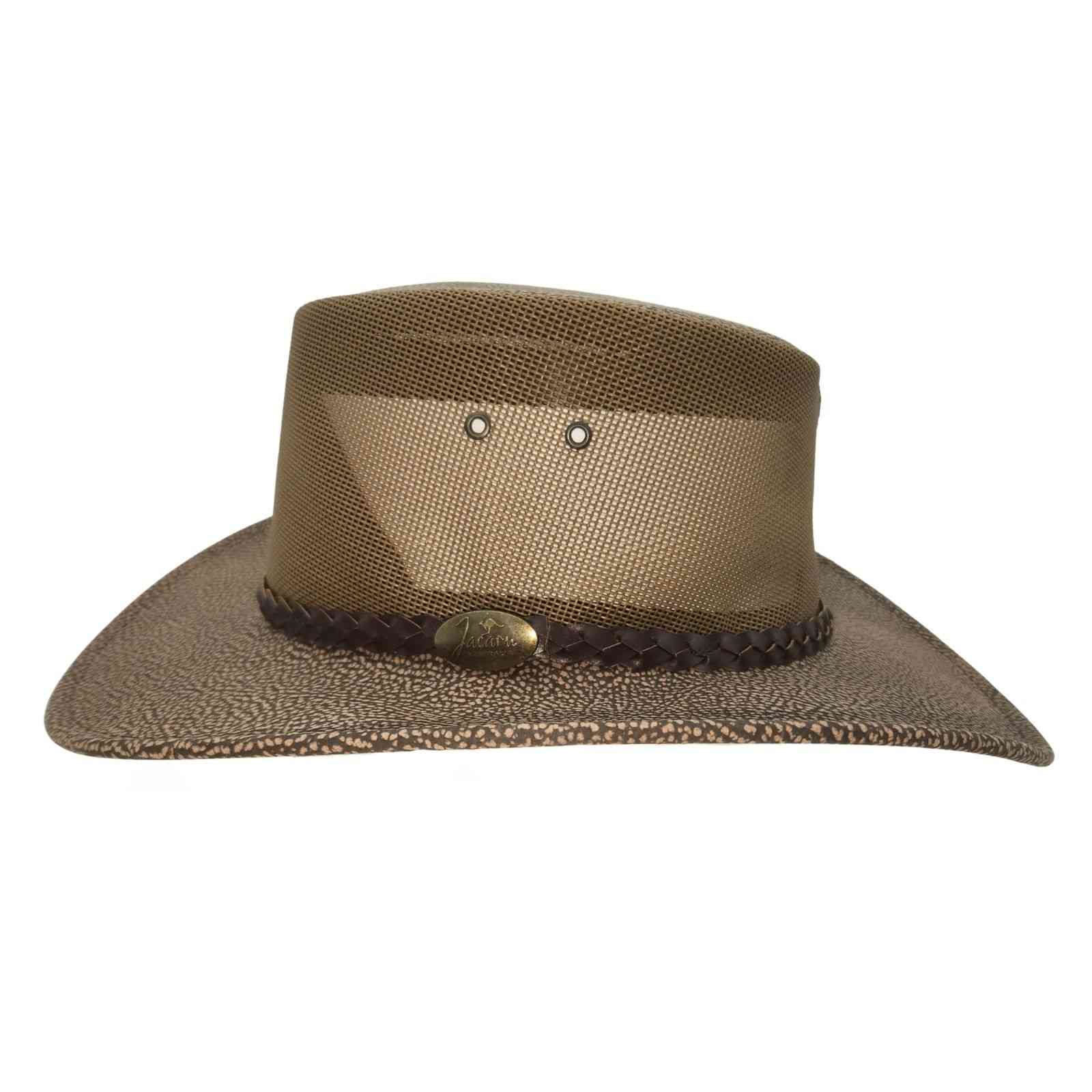
Breeze hats are a practical evolution of the classic outback form. They incorporate ventilation features, typically mesh panels or perforated leather sections, into an otherwise traditional silhouette. The result is a hat that manages heat and airflow in warm weather without losing the structured, premium look that makes leather hats appealing in the first place. If you plan to wear your hat during active outdoor use or in warmer climates, a breeze style is worth prioritising over a fully sealed leather crown.
3. Exotic Leather Hats
Exotic hats occupy the premium tier of the leather hat spectrum. Rather than prioritising everyday utility, these pieces incorporate distinctive hides or decorative treatments that shift the hat into statement accessory territory. Each piece tends to carry a uniqueness that mass-produced options simply cannot replicate, making them a strong choice for buyers seeking something genuinely individual or collector-worthy.
4. The Crocodile Dundee Style
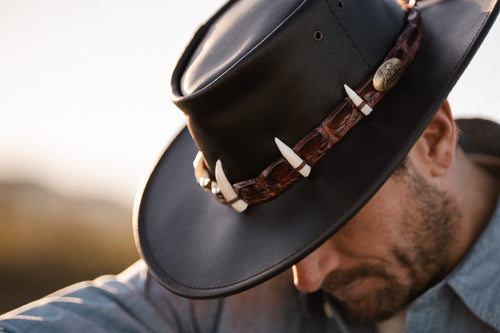
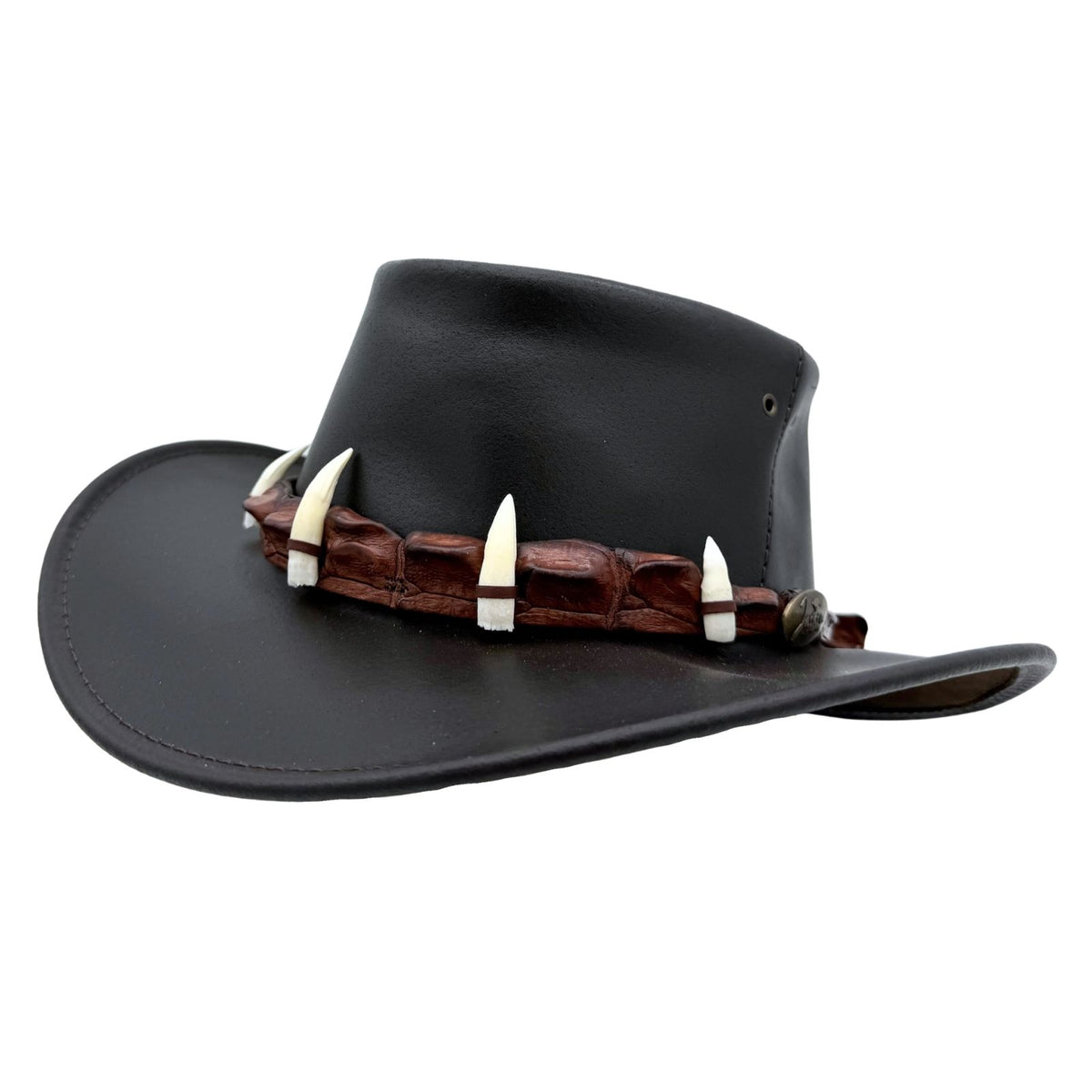
The Crocodile Dundee hat is a category of its own. Wide-brimmed and made from quality leather, it is distinguished by genuine crocodile teeth trim and a backstrap hatband, features that make it immediately recognisable as an icon of Australian culture. It is worth noting that authentic versions use real crocodile teeth, while novelty or costume variants often substitute cork. If you are investing in this style, the distinction matters significantly for both quality and collectability. This is a hat that functions equally well as a wearable piece and as a standout gift or souvenir.
5. How to Choose Between Styles
Narrowing down the right style comes down to three honest questions. First, where will the hat be worn most often? Outdoor and trail settings suit the traditional or breeze styles, while social or travel settings open up the full range. Second, how much ventilation do you need? Hot climates and active use point clearly toward a breeze hat. Third, are you after everyday versatility or a statement piece? If it is the latter, the exotic or Crocodile Dundee styles deliver far more character. Answering these three questions will cut through the options quickly and point you toward the right investment.
The Crocodile Dundee Hat: Australia's Most Iconic Style
Of all the leather hat styles available to men today, none carries the same cultural weight as the Crocodile Dundee hat. When the 1986 Australian film landed in cinemas worldwide, Paul Hogan's wide-brimmed leather hat adorned with crocodile teeth became an instant visual shorthand for Australian outback identity. The film was a global phenomenon, and the hat travelled with it, planting itself firmly in the international imagination as a symbol of rugged, distinctly Australian character. Decades later, that image endures, and so does demand for the genuine article.
Genuine Teeth, Not Replicas
The most important distinction to understand when shopping this style is the difference between authentic crocodile teeth and synthetic decorations. Jacaru uses genuine crocodile teeth on the hatband, not plastic substitutes designed to approximate the look. This matters for tactile quality, visual authenticity, and the simple satisfaction of owning something real. You can read more about how genuine croc teeth differ from cork-decorated alternatives directly on the Jacaru blog, where the distinction is addressed in practical detail.
The Backstrap: Function Meets Heritage
The backstrap hatband is not decorative afterthought. It originated as a working solution for Australia's open terrain, keeping the hat secured against high winds across vast outback landscapes. That functional history gives the hat a credibility that purely ornamental wide-brim styles cannot match. It also creates a visually distinctive silhouette that photographs exceptionally well, which matters for travellers documenting their experiences.
A Wearable Piece of Australian Culture
For international buyers and gift seekers, this hat occupies a category beyond ordinary headwear. It is a wearable cultural artefact with a documented story, crafted in Australia from authentic materials rather than manufactured offshore and rebranded. Jacaru remains one of the very few producers globally still making this style with genuine provenance, real materials, and the Australian heritage the hat demands. That combination of cultural resonance and authentic craft is genuinely difficult to replicate elsewhere.
Leather vs. Felt and Straw: Why Material Matters

When choosing a leather hat for men, understanding how different materials actually perform in real conditions separates a smart purchase from a costly mistake.
Felt hats are popular across the cowboy and Western hat market, but they carry a significant practical drawback. Felt absorbs moisture readily and loses its structured shape when thoroughly saturated. For anyone spending serious time outdoors in unpredictable weather, this is a genuine limitation. Properly treated leather, by contrast, sheds water rather than soaking it in, maintaining both its form and function through rain, humidity, and rough use.
Straw hats solve the breathability problem in hot conditions, but introduce new trade-offs. Natural straw variants, including palm leaf and raffia, offer excellent ventilation yet remain fragile compared to quality hides. The market has responded by developing synthetic straw blends specifically to compensate for natural straw's durability shortfalls, which is itself an acknowledgement of the material's limitations. A well-maintained kangaroo or buffalo leather hat will comfortably outlast multiple straw hats across years of regular use.
Where leather genuinely stands apart is in its capacity to develop a unique patina over time. A well-worn leather hat becomes more individual and characterful with each year of use, reflecting the owner's travels, environment, and personal history. Neither felt nor straw ages this way. Both materials degrade; leather matures. This makes a quality leather hat a long-term investment rather than a seasonal accessory.
For men who travel frequently, work outdoors, or want headwear that functions as both a practical tool and a genuine style statement, leather consistently outperforms the alternatives across every measure that matters: durability, longevity, weather resistance, and aesthetic presence that only improves with age.
Sustainability and the Kangaroo Leather Story
For eco-conscious buyers, the material story behind a kangaroo leather hat is one of the most compelling in the entire men's headwear category.
Kangaroo leather is sourced through a government-regulated wildlife harvesting programme in Australia, governed by the National Code of Practice and overseen by the Australian Department of Climate Change. This is a fundamentally different production model from conventional cattle farming. No habitat is cleared, no feedlots are operated, and no intensive agriculture is involved. The harvest manages wild kangaroo populations that are thriving across Australia, with well over 30 million animals across the landscape and 40 years of scientific monitoring confirming no adverse population effects on the four commercially harvested species. Quota levels are typically set at 10 to 20 percent of regional populations, adjusted annually based on current data.
The hide itself is a by-product of an existing food and population-management harvest, not the primary reason for culling. Without commercial use, hides are discarded as waste. Using them in premium leather goods, including men's outback hats, maximises the value of a resource that already exists within a tightly regulated system. This low-waste, by-product model compares favourably with most synthetic "vegan leather" alternatives, which independent lab testing shows contain less than 30 percent bio-based content, with the remainder derived from petrochemical sources.
There is also a practical sustainability dimension in the material's physical properties. Kangaroo leather's exceptional strength-to-weight ratio means less raw hide is required per finished hat at equivalent or superior durability, reducing the overall material footprint of each product. For more detail on what this means at the product level, Sustainability and Ethics for Kangaroo Leather provides useful background on the material's performance credentials.
The broader market context reinforces why this matters. The U.S. men's hats and caps market was valued at approximately $2.5 billion in 2023 and is projected to grow at around 4 percent CAGR through 2028, with eco-friendly production cited as a key growth driver. For buyers who want to make a considered purchase, a kangaroo leather hat from an Australian maker like Jacaru carries a traceable provenance and verifiable sustainability narrative. As a practical guide, Australian Kangaroo Hats: 7 Things Every Buyer Should Know outlines exactly what to look for when assessing authenticity and origin. Mass-produced or offshore alternatives simply cannot replicate that combination of regulated sourcing, material performance, and genuine Australian provenance.
How to Size and Fit a Leather Hat for Men
Getting the right fit is just as important as choosing the right leather. A well-fitted hat looks intentional and wears comfortably across long outdoor days; a poorly fitted one shifts, pinches, or simply looks wrong from the first wear.
Start with an accurate head measurement. Using a flexible tape measure, wrap it around your head approximately 2.5 cm above your ears and across the mid-forehead. This is the standard position hat manufacturers use to determine size. If you do not have a tape measure, a piece of string and a ruler produce the same result. Note your circumference in centimetres before consulting any size guide, as this single number is your most reliable reference point.
Do not rely on the hat stretching to fit. Unlike knit beanies or fabric caps, structured leather hats do not conform meaningfully to your head over time. Selecting the correct size from the outset is essential. Sizing down with the expectation that the leather will loosen is a common mistake that leads to discomfort and pressure points that will not resolve on their own.
Consider brim width as a secondary fit factor. Wider brims of 10 cm or more deliver maximum sun protection and suit taller, broader frames proportionally. Mid-width brims in the 7 to 9 cm range offer a more versatile profile across both casual and semi-formal settings.
When purchasing online, always use the retailer's specific size guide rather than relying on generic S/M/L labels alone. Sizing brackets vary between brands, so cross-referencing your measured circumference against the product page chart is the only reliable method. Resources like the Hat Size Chart and Head Measurement Guide provide useful conversion references between centimetre, letter, and numeric sizing systems.
A correctly fitted leather hat sits snugly above the ears with no pressure on the forehead or crown. On outback styles like the Crocodile Dundee hat, the adjustable backstrap adds a practical security layer, keeping the hat firmly in place during active outdoor wear without relying solely on circumference fit alone.
Caring for Your Leather Hat
A quality leather hat is a long-term investment, and the care you give it directly determines how many years it performs in the field. Follow these five essential practices to keep your hat in peak condition.
1. Clean After Every Outing
After each outdoor use, wipe down the exterior with a soft, dry cloth to remove surface dust and loose dirt before it works into the grain. For stubborn spots, use a very lightly dampened cloth and dab gently rather than rubbing. Never saturate the leather; excess moisture causes the hide to stiffen or distort if it dries unevenly or too quickly. Always test a damp cloth on a hidden area first to confirm no discolouration occurs.
2. Condition Two to Four Times Per Year
Leather loses its natural oils over time, particularly with regular outdoor exposure. Apply a dedicated leather conditioner two to four times per year to replenish those oils and prevent the hide from drying out, cracking, or losing suppleness. Heavy outdoor use or arid climates may call for more frequent treatment. For detailed restoration guidance, Angelus Direct's leather hat care guide covers both conditioning and repair.
3. Waterproof Before Wet Conditions
Premium hides like kangaroo and buffalo carry inherent water resistance, but applying a leather waterproofing product before heading into wet conditions adds a critical extra layer of protection. This step meaningfully extends your hat's working lifespan in the field.
4. Store Away from Heat and UV
Keep your hat on a dedicated hat stand or inside a breathable hat box, away from direct sunlight and heat sources. Prolonged UV exposure fades leather and dries out the hide, while sustained heat warps the brim or crown.
5. Reshape While Damp, Dry Naturally
If heavy rain leaves your hat misshapen, gently reshape it while the leather remains slightly damp, then allow it to dry naturally at room temperature on a hat stand. Never apply direct heat from a hairdryer or heater; rapid heat shrinks and cracks leather permanently. For a full overview of leather hat care that preserves shape and longevity, additional guidance is available from specialist sources covering Australian-made hides specifically.
Leather Hats as Premium Australian Gifts for Men
A men's leather hat sits in a genuinely rare category among gift options. It is functional, built to last decades, and carries a material story rooted in a specific place and culture. For birthdays, milestone celebrations, retirements, or corporate gifting occasions, that combination is difficult to replicate with a generic present. The recipient does not simply receive an object; they receive something tied to Australian craftsmanship and natural materials with a provenance that mass-market gifts cannot offer.
For international travellers or buyers purchasing on behalf of someone abroad, an Australian-made leather hat delivers a culturally specific gift with immediate recognition. The Crocodile Dundee hat replica is particularly effective in this context, carrying cross-generational global recognition that no generic retailer can authentically reproduce. Sourcing directly from an Australian specialist confirms both quality and origin, two factors that matter significantly in premium gifting.
For corporate buyers, Jacaru's wholesale and bulk gifting options provide a structured, practical pathway. Companies seeking a distinctively Australian gift for clients, event attendees, or staff will find a product range, including kangaroo, buffalo, and exotic leather styles, that communicates prestige without ambiguity.
Longevity is perhaps the strongest gifting argument of all. A quality kangaroo or buffalo leather hat does not wear out within a season. It develops character with use, moulds to the wearer, and remains relevant long after the occasion that prompted the purchase, keeping that association alive for years.
Choosing the Right Leather Hat for Men
With everything covered in this guide, making your final decision comes down to four practical steps.
Match leather type to your lifestyle first. Kangaroo leather suits active adventurers who want a lightweight, resilient hat for travel and outdoor use. Buffalo delivers a firmer, more structured profile suited to those who want presence and durability in a statement piece. Cowhide sits comfortably in the middle, offering versatile everyday wearability across both urban and outdoor settings.
Let your environment guide your style choice. A traditional outback hat provides maximum brim coverage for sun-exposed conditions. The Breeze style suits warm-weather wear where ventilation matters. For a genuinely distinctive look, the Exotic or Crocodile Dundee styles make an immediate impression that no other hat can replicate.
Measure carefully before buying online. Leather does not stretch to accommodate an incorrect fit, so accurate head measurement paired with your retailer's size guide is essential. Refer to a resource like The Ultimate Hat Guide for general sizing principles.
Invest in care from day one. A leather conditioner and a proper hat stand or storage box protect your investment and extend its lifespan significantly.
Jacaru's full range of Australian-made leather hats for men covers every hide type and style discussed throughout this guide. Browse the collection to find the hat that fits both your head and your story.
Conclusion
Choosing the right leather hat comes down to a few key decisions: picking a style that matches your lifestyle, selecting a material that suits your climate and budget, and finding a fit that complements your face shape. A quality leather hat is more than an accessory; it is an investment in your personal style that will improve with age and wear.
Remember that no single hat works for every man. Take your time, try different styles, and trust your instincts when something feels right.
Now that you have the knowledge to shop with confidence, it is time to find your perfect match. Browse our curated selection of men's leather hats and take the first step toward an accessory that will define your look for years to come. Your signature style is waiting.


Our friends at Bocchetta Plush Toys have a great range of lifelike plush animals that make great gifts for people of all ages.