






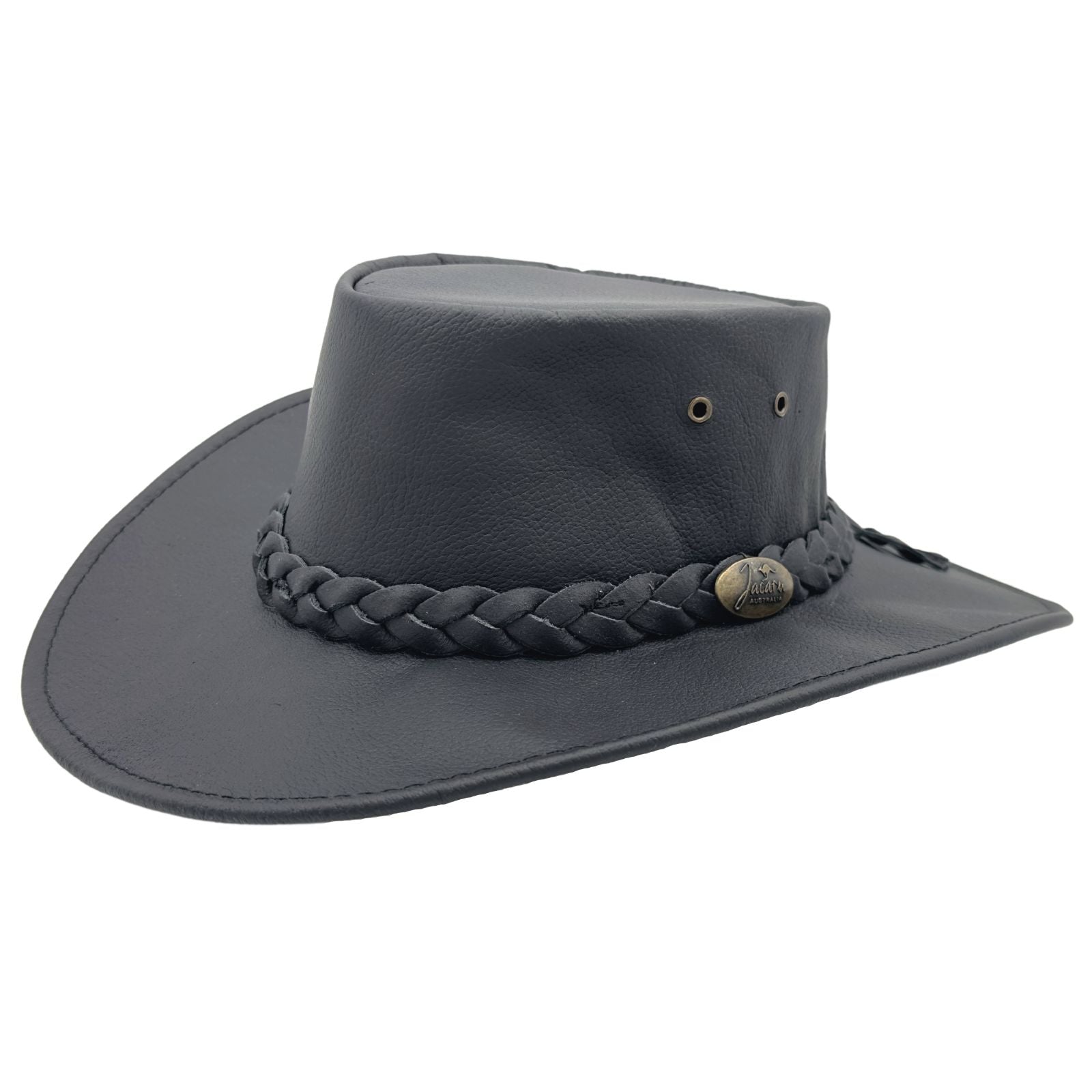


What to Know Before Buying a Leather Australian Outback Hat

There is something undeniably timeless about a well-crafted hat that tells a story before you even say a word. If you have been eyeing a leather Australian outback hat, you are already drawn to one of the most iconic and functional headwear styles in the world. Originally designed to withstand the harsh conditions of the Australian wilderness, this rugged yet stylish hat has found its way into wardrobes across the globe, and for good reason.
But before you make a purchase, there are a few things every beginner should know. Not all outback hats are created equal, and choosing the wrong one can leave you with something that looks great on a shelf but fails you when it matters most. From understanding leather quality and brim width to knowing how to care for your investment, the details make a significant difference.
In this guide, we will walk you through the most important factors to consider so you can shop with confidence and find a leather Australian outback hat that fits your needs, your style, and your budget perfectly.
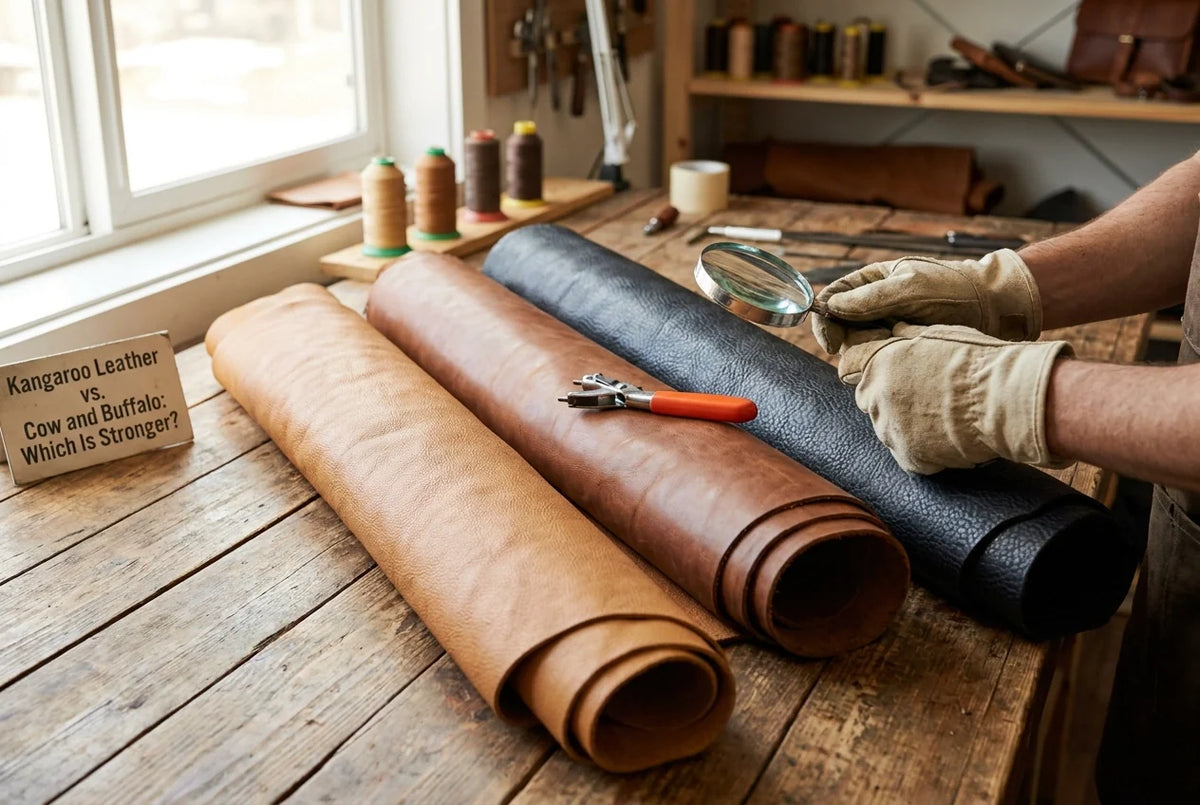
The Three Leathers: Kangaroo, Cow, and Buffalo Compared
Not all leather is created equal, and when it comes to choosing a leather Australian outback hat, the material you select will shape how the hat performs, feels, and ages across years of wear. Here is a clear breakdown of the three primary leathers used in outback hat-making, so you can make a confident, informed choice from the start.
1. Kangaroo Leather: Pound-for-Pound the Strongest Option
Kangaroo leather stands apart from other natural leathers due to its uniquely fine grain structure and high natural oil content. These properties give it an exceptional strength-to-weight ratio, meaning it delivers serious durability without adding bulk or heaviness to the hat. It is also naturally flexible and well-suited to wet conditions, making it an outstanding choice for hikers, travellers, and anyone spending extended hours outdoors. One practical advantage worth noting is that kangaroo leather hats can be folded and packed without suffering permanent damage, which makes them especially convenient for international travel. For the serious outdoorsperson, kangaroo leather consistently sits at the top of the material hierarchy.
2. Cowhide: The Reliable All-Rounder
Cowhide is the most widely used leather in outback hat-making, and for good reason. It offers a dependable balance of structure, thickness, and water resistance that suits a broad range of wearers and conditions. A quality cowhide hat delivers a classic, firm brim that holds its shape across changing seasons without requiring constant reshaping. Many cowhide outback hats also carry a UPF 50+ sun protection rating, reinforcing their credentials as genuine outdoor gear rather than purely decorative pieces. For beginners entering the leather hat category, cowhide represents a solid, accessible starting point.
3. Buffalo Leather: Character That Deepens Over Time
Buffalo hide is noticeably thicker and more textured than cowhide, giving buffalo leather hats a distinctly rugged presence from the moment you put them on. Over time, buffalo leather develops a rich patina that many wearers prize as evidence of genuine use and long-term ownership. This is a leather that tells a story. Because of its added weight and rigidity, buffalo leather suits cooler climates and less frequent wear rather than all-day outdoor shifts in warm conditions. It is a compelling choice as a statement souvenir or premium gift, where visual impact and lasting character matter most.
4. Weight and Wearability: Choosing for Your Lifestyle
Weight is a practical consideration that new buyers often overlook until they are three hours into a bushwalk. Kangaroo leather hats sit noticeably lighter on the head, reducing fatigue during long hikes or full outdoor working days. Buffalo leather's greater heft, while part of its appeal, is better suited to shorter wear occasions or cooler-climate adventures. Cowhide falls comfortably between the two. Matching your leather to your intended use case is one of the simplest ways to ensure your hat becomes a long-term companion rather than a shelf piece.
5. Jacaru's Range Covers All Three
Jacaru's collection spans kangaroo, cowhide, and buffalo leather across distinct product lines, giving buyers the flexibility to choose based on lifestyle, climate, and purpose. Whether you need a lightweight kangaroo leather hat for serious outdoor performance or a richly textured buffalo leather piece as a meaningful gift, the range is built to match material to moment. You can explore the full selection and learn more about Australian kangaroo leather hats to identify which option aligns with your needs before you buy.
The Crocodile Dundee Effect: Cultural Heritage and Authentic Style
Few pieces of popular culture have shaped the global perception of Australia quite like the Crocodile Dundee film series. Released in 1986, the original film introduced international audiences to the rugged, sun-weathered aesthetic of the Australian outback, and the wide-brimmed leather hat worn by its central character became an immediate symbol of that identity. Decades later, that cinematic association continues to drive genuine purchase interest from buyers across North America, Europe, and Asia who recognise the hat not merely as headwear, but as a piece of living cultural history.
From Screen to Souvenir: Why the Association Still Sells
The Crocodile Dundee hat occupies a rare position in fashion; it functions simultaneously as a working outback hat, a costume reference, and an Australian souvenir. Social platforms reflect this layered appeal clearly. Pinterest boards dedicated to the style attract ongoing engagement across costume, fashion, and accessories categories, while social commerce posts using the Crocodile Dundee label consistently generate strong reactions and comments from international buyers. The Corks vs Croc Teeth: Real Crocodile Dundee Hat Guide published by Jacaru directly addresses this demand, helping buyers understand exactly what makes an authentic version of this iconic style.
The Detail That Cannot Be Faked
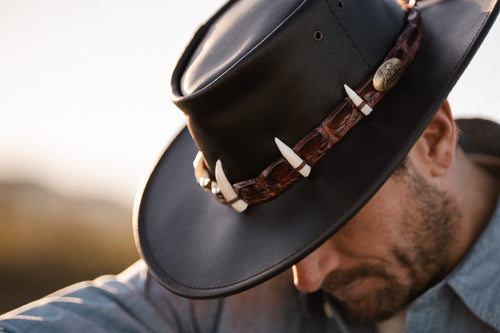
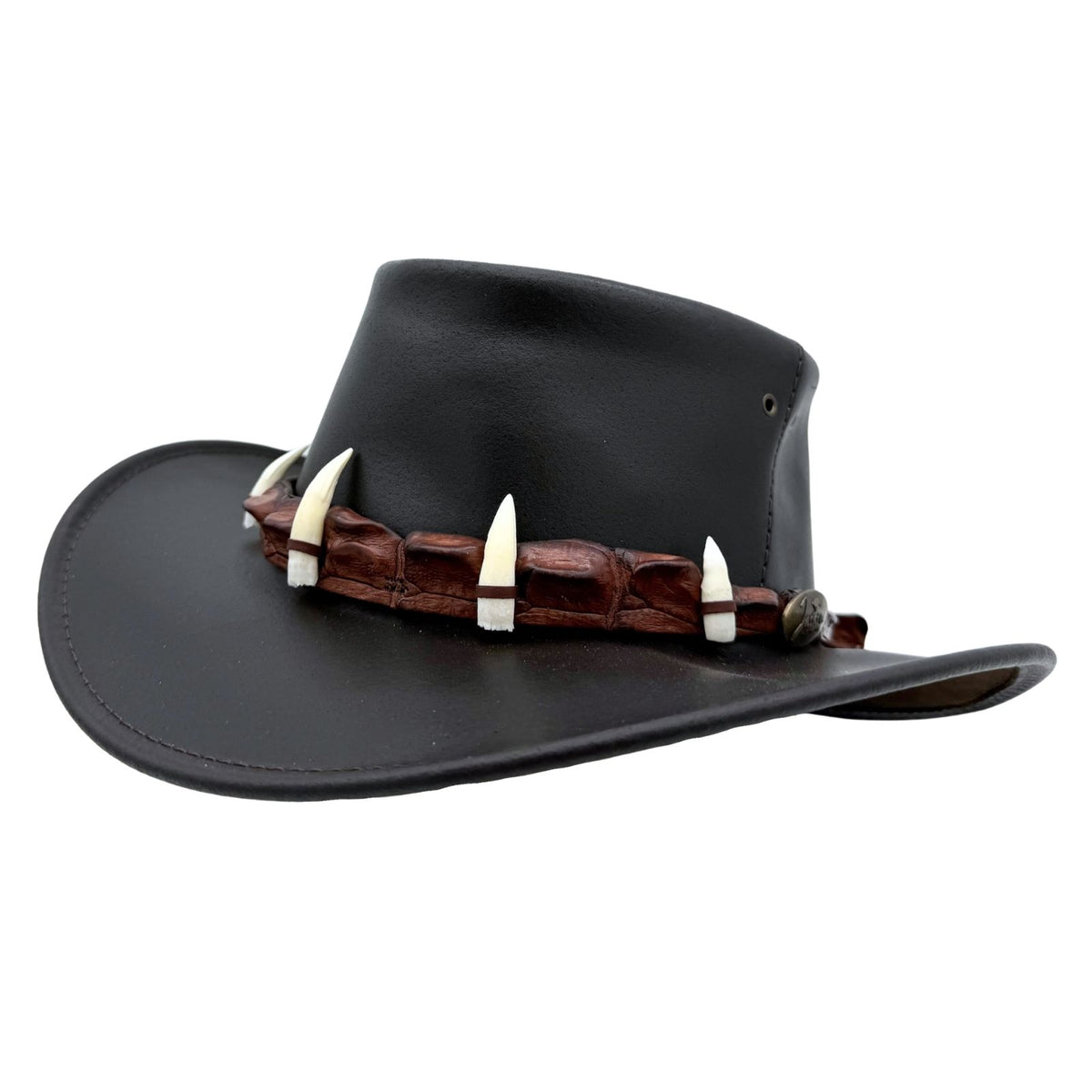
Jacaru's Crocodile Dundee style hats are fitted with genuine crocodile teeth and a backstrap hatband, a combination that transforms a functional leather hat into wearable cultural storytelling. This is the detail that separates a genuine Australian-made product from the many imitations available through international marketplaces. Offshore sellers regularly invoke the Crocodile Dundee name in product titles to capture search traffic, as seen with listings on platforms targeting North American shoppers, but provenance and genuine materials are not credentials they can credibly claim.
For tourists and corporate gift buyers seeking something unmistakably Australian, a leather outback hat fitted with real crocodile teeth delivers on every level: verified craftsmanship, cultural narrative, and a physical connection to the country itself. No replica can replicate that combination authentically, which is precisely why Jacaru remains the genuine source for this iconic style.
Why Leather Outperforms Felt in Real Outback Conditions
When most people picture an Australian outback hat, the name that comes to mind first is Akubra. That brand has built its legendary reputation entirely on fur felt, a textile that is genuinely impressive within its category. Fur felt is softer and more durable than wool felt, which is known to lose its shape quickly and perform poorly in moisture. Yet even premium fur felt remains a textile, and textiles operate in a fundamentally different performance tier from leather when conditions get serious.
Water resistance is where the gap becomes impossible to ignore. A well-conditioned leather hat sheds rain naturally; water beads on the surface and rolls off rather than soaking into fibres. Felt, including fur felt, absorbs moisture. One manufacturer with over two decades of experience describes the soggy, misshapen felt hat as a "common pain point" for outdoor riders caught in a sudden downpour. In the Australian outback, where weather can shift without warning, that distinction is not trivial. Regular conditioning with a beeswax or leather balm product reinforces the water-repellent surface and keeps the hide supple through heat and cold alike.
Structural rigidity also gives leather a meaningful edge in wind and movement. The outback hat silhouette was born in the saddle; riders needed headwear that stayed put at speed. Leather's firmer brim and heavier crown resist uplift in a way that lighter felt simply cannot match. As noted in this practical guide to outback hats that work hard outdoors, the outback hat's lower crown sits more securely on the head than a floppy sun hat, and the overall structure holds its shape across demanding conditions from riverbanks to bush tracks.
Over time, leather rewards consistent wear in ways felt cannot replicate. A quality leather outback hat gradually moulds to the wearer's individual head shape, developing a custom fit that only improves across years of use. The surface patina that builds with sun, sweat, and handling becomes a record of genuine adventure. Felt can soften pleasantly, but it does not physically conform and record use the way leather does.
For serious outdoor users, longevity transforms the economics entirely. Entry-level wool felt hats start around $50 and carry a short lifespan; fur felt commands closer to $150 but still requires replacement far sooner than a maintained leather alternative. Understanding how hat materials determine outdoor performance reframes leather's higher entry price as a long-term investment rather than a premium indulgence. Calculated across years of use, a well-maintained leather hat typically outlasts several felt replacements, making it the more economical choice for outdoor workers, serious hikers, and committed travellers.
How to Choose the Right Size and Fit
Getting the fit right is one of the most important steps before purchasing a leather Australian outback hat, and it begins with one simple measurement. Wrap a flexible tape measure around your head, positioning it approximately one centimetre above your ears and across the mid-forehead. If you do not have a tape measure, a strip of paper or a length of string works equally well; mark the point where it overlaps, then lay it flat against a ruler for your reading. Your head circumference in centimetres maps directly to your hat size, so a measurement of 57 cm corresponds to a Size 57. If your measurement falls between two sizes, size up rather than down, as a slightly larger hat can be fine-tuned with hat filler, while a hat that is too small cannot be adjusted.
Leather hats behave very differently from fabric or woven alternatives when it comes to fit. Leather has minimal natural stretch, which means the size you order is largely the size you will wear. This makes accurate measurement especially critical for online purchases, where trying before buying is simply not an option.
Brim width is another key decision. Wider brims in the 3 to 4 inch range deliver meaningful sun protection across the face, neck, and ears, making them the practical choice for outdoor work and travel in high-UV environments. Narrower brims suit a more casual or urban context where style takes priority over maximum coverage.
Jacaru's product pages include clear sizing guidance to help you convert your head circumference into the correct hat size, reducing the chance of a return or exchange. If you are buying the hat as a gift and do not know the recipient's head size, look for adjustable options within the Jacaru range or contact the Jacaru team directly for personalised advice before placing your order.
Caring for a Leather Outback Hat: What Every Owner Should Know
A premium leather Australian outback hat is a long-term investment, and the care habits you build early will determine whether it lasts a season or a lifetime. Follow these five essential practices to keep your hat in peak condition.
1. Condition the Leather Every Three to Six Months
Conditioning is the single most important thing you can do for a leather outback hat. Leather is a natural skin, and without regular moisture replenishment, it dries out, loses flexibility, and eventually cracks along stress points like the brim edge and crown. Apply a quality leather conditioner every three to six months under normal conditions, and tighten that interval to every three months or less if you live in an arid climate or spend significant time outdoors in high-UV environments. Always clean the hat with a damp cloth first to remove dust and sweat salts before conditioning; applying conditioner over grime traps abrasive particles against the leather and accelerates wear rather than preventing it.
2. Apply a Waterproofing Barrier for Rain and Sweat Protection
A waterproofing spray or wax formulated for smooth leather adds a protective layer that conditioning alone does not provide. Rain and perspiration both introduce moisture rapidly and unevenly, which can stress leather fibres and cause staining. Apply waterproofing treatment as a separate step from conditioning, following the manufacturer's guidance on your specific product. Be aware that some oil-based waterproofers can darken lighter-coloured leathers, so test on a discreet area first. For detailed cleaning and restoration steps before applying any treatment, this leather hat care guide from Angelus Direct outlines a reliable preparation routine.
3. Store on a Hat Stand or in a Hat Box
How you store your leather outback hat matters as much as how you clean it. Placing the hat crown-down on a flat surface, or compressing it inside a tight bag, puts sustained pressure on the brim and crown in ways that become difficult to reverse over time. A hat stand maintains the crown's natural shape, while a hat box protects the wide brim from being bent under the weight of other items. When packing for travel, stuff the crown with soft material such as rolled socks to help it hold its form.
4. Dry Slowly and Away from Any Heat Source
If your hat gets wet, resist the urge to speed up drying near a campfire, car dashboard, or heat vent. Rapid drying causes leather to stiffen and crack because the surface dries unevenly before internal moisture and natural oils can redistribute. Instead, blot away excess water with a clean cloth and leave the hat to dry naturally in a shaded, well-ventilated space at ambient temperature. Once fully dry, follow up with a conditioner application to restore any moisture lost during the drying process.
5. Reshape the Brim While the Leather Is Warm
One of the most forgiving properties of leather is its thermoplastic behaviour: it becomes pliable when slightly warm and holds a new shape once cooled. If the brim has been compressed during travel or storage, gently warm it with your hands or brief exposure to mild warmth, then hold the desired curve firmly until the leather cools and sets. This makes minor brim corrections straightforward without specialist tools. For a broader look at cleaning a leather hat step by step, the process pairs well with a reshaping routine after any extended storage period.
The Leather Outback Hat as a Gift and Corporate Keepsake
A leather Australian outback hat occupies a category of gift that very few objects can claim: it is functional, culturally rooted, and premium enough to become a genuine keepsake. Unlike a branded pen or a generic tote bag, it carries the weight of a specific place, a specific craft tradition, and a specific story. That combination is rare, and it is precisely why the leather outback hat consistently outperforms conventional souvenir options for buyers who want to give something that will actually be kept and worn.
For corporate gifting coordinators sourcing Australian-made items for international clients or visiting delegations, the outback hat represents a high-impact alternative to standard branded merchandise. A logo printed on a notebook communicates little beyond the company name. A premium leather outback hat, made in Australia from kangaroo or buffalo leather, communicates something far more resonant: a sense of place, craftsmanship, and cultural authenticity. It carries a story, not just a logo. Jacaru's wholesale programme is designed to support bulk orders, making it a practical option for organisations seeking a cohesive, distinctively Australian gift at scale. You can explore the full Jacaru leather hats range to assess the breadth of options available for group gifting.
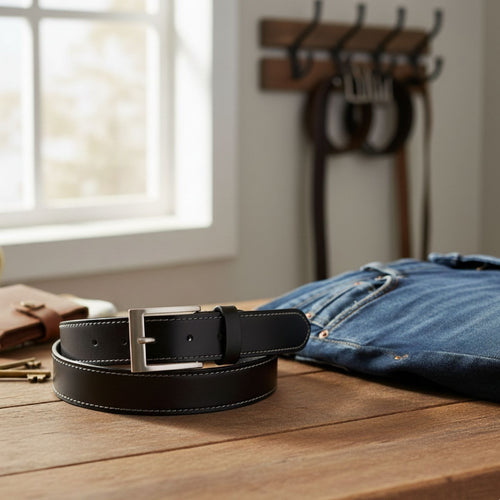
Building a curated gift set around a leather outback hat is straightforward with Jacaru's broader accessories range. Kangaroo leather keyrings, wallets, belts, and oilskin accessories can be grouped alongside a hat to create a thematically consistent Australian package. For international buyers, the Australian-made credentials behind each product add a layer of provenance that elevates the entire set.
International travellers should also factor in packability. Certain styles in Jacaru's range are designed to travel without a rigid hat box, which makes them a practical choice when luggage space is limited. For tourist buyers, the convergence of Australian-made provenance, premium leather construction, and the enduring Crocodile Dundee cultural heritage makes a Jacaru outback hat a convincing and memorable answer to the universal question: what do you bring home from Australia?
Australian-Made and Ethically Sourced: Why Provenance Matters

Where and how a hat is made shapes its value in ways that go far beyond aesthetics. For anyone new to buying a leather Australian outback hat, understanding provenance is one of the most practical decisions you can make before spending your money.
1. Leather sits in a premium, tracked segment of the global headwear market. Industry analysts actively segment the global headwear market by material, with leather classified as a distinct, premium tier separate from synthetic and felt alternatives. This is not just marketing language; it reflects sustained recognition at the industry level that leather carries different performance, durability, and value credentials. When you buy into leather, you are buying into a material category that has been independently assessed as a quality standard.
2. Kangaroo leather is a regulated by-product, not uncontrolled harvesting. Australia's kangaroo commercial harvest operates under national management plans administered through the federal government's environmental protection framework. Jacaru's use of kangaroo hide is governed by this oversight system, meaning the material is sourced within established population management quotas rather than through unregulated extraction. As explored in Why Kangaroo Leather Hats from Australia Are Worth It, this regulatory context transforms a purchase into a traceable, accountable sourcing decision.
3. Australian-made means quality control stays within a single regulatory environment. When craft skills, materials, and manufacturing all sit within Australia's regulatory system, the supply chain is far more transparent than offshore replica production allows. Hats Made in Australia: What to Look For and Why It Matters explains precisely why this distinction carries practical weight for buyers who expect accountability at every stage.
4. For ethically motivated buyers, the choice is both a values and a quality decision. Choosing a kangaroo leather hat made under national wildlife regulations, rather than a synthetic or imported alternative, reflects two simultaneous priorities: material performance and ethical sourcing. A longer-lasting hat also displaces multiple cheaper replacement purchases over time, making the complete buyer's guide to kangaroo leather hats a worthwhile resource for calculating genuine long-term value.
5. Verify Australian origin before you buy. Non-Australian brands, including US-based makers, actively replicate the outback hat style and sell comparable products at similar price points with no claim to authentic Australian provenance. When the origin of a product forms part of its value, confirming that origin is a non-negotiable step rather than an optional one.
Choosing the Leather Outback Hat That Is Built to Last
Making a final decision comes down to matching leather type to your intended use. Kangaroo leather suits travellers and gift buyers who want a lightweight, weather-resistant hat that folds for storage without losing its shape. Buffalo leather serves those who need rugged durability for serious outdoor work. Cowhide offers an accessible entry point for casual and tourist use. Each material represents a genuinely different product, not simply a style variation.
Authentic Australian-made construction using kangaroo or buffalo hide sits in a separate category from felt-based alternatives or internationally manufactured leather hats. The material sourcing, craftsmanship, and long-term performance differ substantially, giving buyers provenance and durability that mass-produced alternatives cannot replicate.
Jacaru's range is built to serve every type of buyer, from individuals and tourists to gift seekers and corporate clients, across kangaroo, buffalo, and cowhide styles. The iconic Crocodile Dundee hat remains one of the most recognised options in the collection.
Browse the full outback hat range and sizing guidance at your own pace, or explore the dedicated kangaroo leather hat collection for a deeper look at Jacaru's premium tier.

Conclusion
Choosing the right leather Australian outback hat comes down to a few essential decisions. Focus on leather quality, select a brim width that suits your lifestyle, and make sure the fit feels comfortable from day one. Do not overlook proper care; a well-maintained hat can last decades and only improve with age.
Armed with this knowledge, you are no longer guessing. You are shopping with purpose and confidence. Take the time to research reputable makers, handle the hat before buying when possible, and trust your instincts about craftsmanship.
A great outback hat is more than an accessory. It is a companion for adventure, work, and everyday life. Start your search today, invest wisely, and wear your hat knowing it was chosen with care and intention.


Our friends at Bocchetta Plush Toys have a great range of lifelike plush animals that make great gifts for people of all ages.