






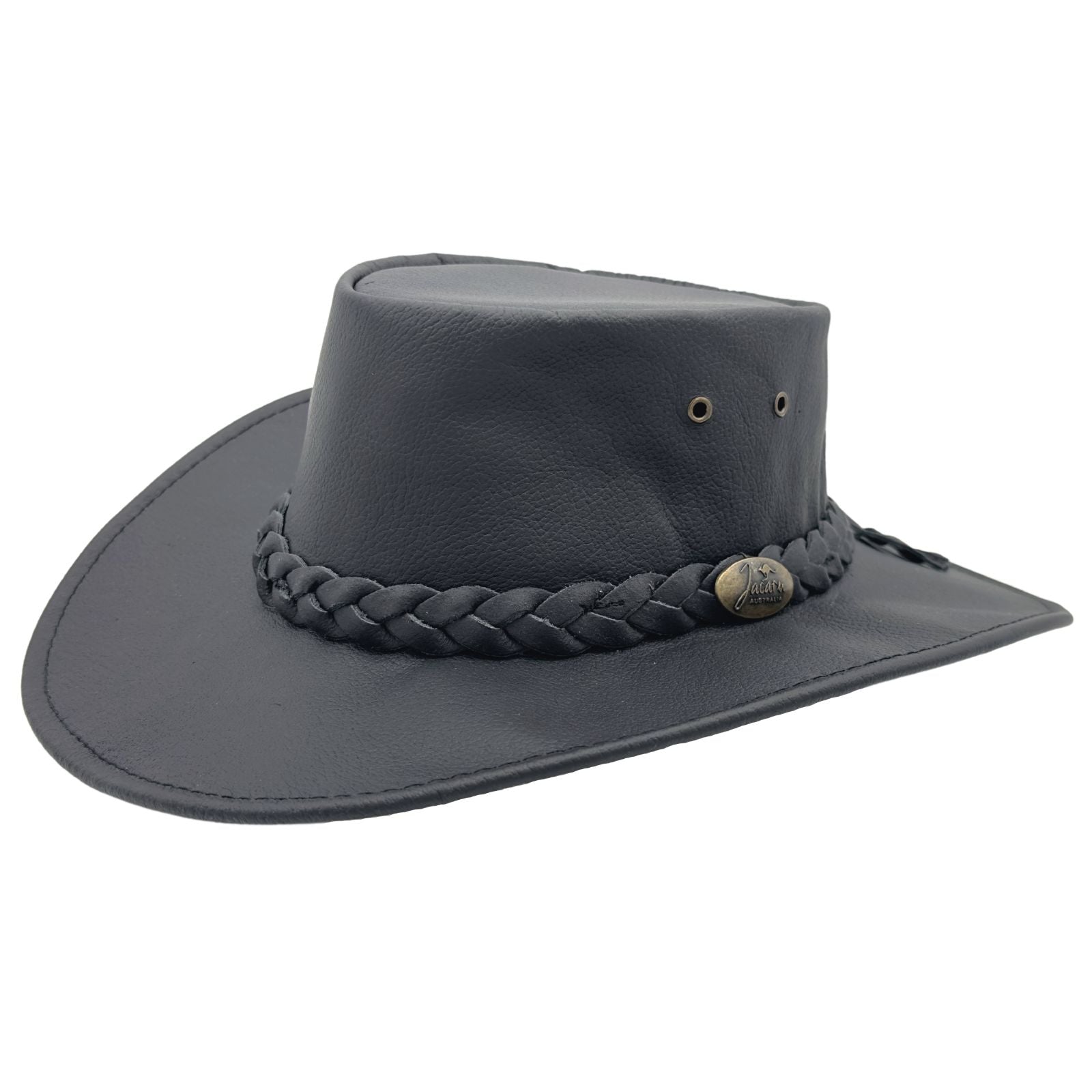


What to Know Before Buying a Crocodile Dundee Hat

G'day, mate! Whether you've just rewatched the classic 1986 film or you're simply drawn to that rugged, outback-inspired style, there's something undeniably cool about rocking a croc dundee hat. That wide brim, those iconic crocodile teeth around the band, the whole adventurous vibe. It's the kind of hat that makes a statement wherever you go.
But before you jump online or head to a store to grab one, there are a few things worth knowing first. Not all hats are created equal, and as a first-time buyer, it's easy to get overwhelmed by the options, materials, and price ranges out there.
The good news? We've got you covered. In this guide, we're walking you through everything a beginner needs to know before purchasing a croc dundee hat. From understanding the different styles and materials to knowing what size fits best and where to shop smartly, this list will help you make a confident, informed choice. So grab a cold one and let's dive in!
The Hat That Launched a Legend

When the 1986 film Crocodile Dundee hit cinema screens, one thing captured everyone's imagination almost immediately: that wide-brimmed leather hat with a band of crocodile teeth running around the crown. Worn by Paul Hogan as the larrikin bushman Mick Dundee, it became one of the most recognisable hat silhouettes in pop culture history. The crocodile teeth hatband was not just a costume detail; it was a visual shorthand for the entire character, signalling wildness, authenticity, and a deep connection to the Australian outback.
What a lot of people do not realise is that the style was not invented for Hollywood. Wide-brimmed leather hats adorned with animal-material bands were genuine working gear for Australian stockmen and outback workers long before any film crew showed up. The bush hat tradition runs deep in Australian culture, which is exactly why it felt so convincing on screen. As Bernard Hats explains in their breakdown of the Crocodile Dundee hat, the hat worn in the film is rooted in real Australian heritage, not a costume department invention.
Nearly four decades on, the fascination has not faded one bit. In August 2025, US hat-maker @wildhats posted a Crocodile Dundee-inspired hat video on TikTok that pulled in over 24,200 views and 1,946 comments, with the creator noting that "everyone has been asking for it." Pinterest boards dedicated to the hat are still being updated regularly, attracting shoppers interested in everything from outback fashion to Halloween costumes.
This cultural staying power matters practically when you are shopping. Understanding where the hat actually comes from helps you tell the difference between a genuinely crafted Australian hat and a cheap costume prop. Provenance is everything here. If you want the real thing, Jacaru's guide to Crocodile Dundee hat replicas is a great starting point for understanding what separates an authentic piece from an imitation.
Genuine vs. Replica Crocodile Teeth Hatbands: What Is the Difference?
If you've ever shopped for a Croc Dundee hat online, you've probably noticed that prices and quality vary wildly. That's because the market is split between genuinely crafted pieces and mass-produced replicas that look similar in photos but tell a very different story up close. Here's how to tell them apart.
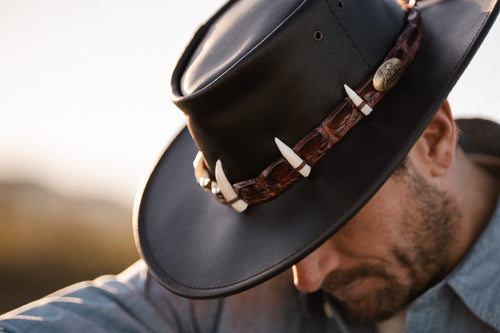
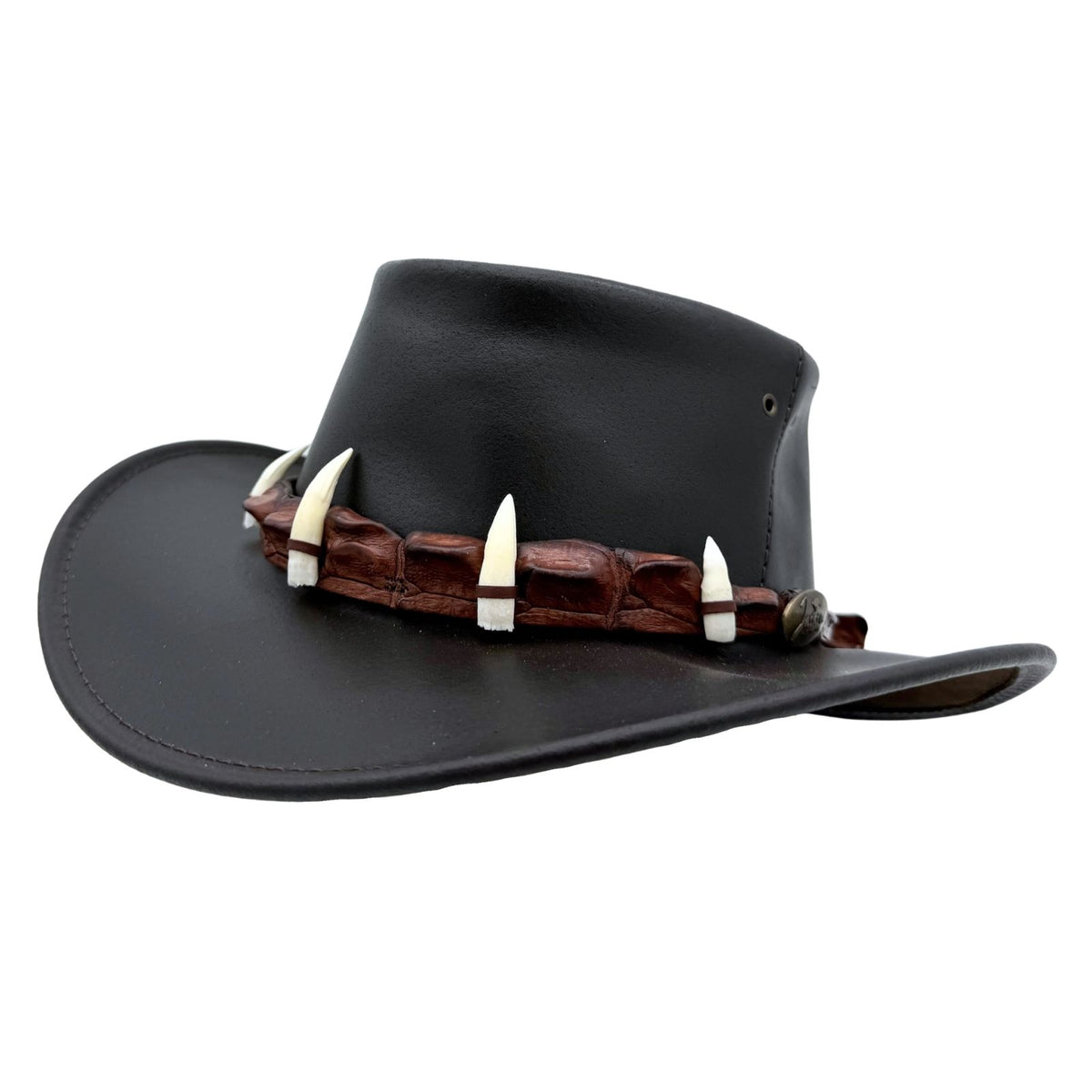
Real crocodile teeth are individually mounted, one by one, onto a leather strap that wraps around the hat's crown. Because every tooth comes from an actual animal, no two are the same. You'll notice natural differences in size, curve, surface texture, and colouration from tooth to tooth. That variation is exactly what makes each hat unique, and it's something no factory mould can replicate.
Replica and costume versions go a completely different route. They use resin-cast or injection-moulded plastic teeth that are churned out in identical batches. Every single tooth looks the same, because it was made from the same mould. The hatbands on these replicas are usually synthetic or low-grade material rather than genuine leather, so the entire construction falls short of what it's imitating.
The difference in feel is something you notice the moment you pick one up. Real crocodile teeth carry an ivory-like density, they feel solid and slightly cool to the touch, with a subtly rough surface that varies between teeth. Plastic replicas feel hollow and lightweight, and that uniform sameness gives them away immediately.
Provenance matters too, and it's worth taking seriously. Genuine teeth sourced from legally farmed or harvested Australian crocodiles come with verifiable origins, which is important given international wildlife trade regulations. Cheap imports often cannot confirm where the materials came from or whether they comply with those regulations. You can read more about how to spot the difference in this Crocodile Dundee hat replica comparison guide.
It's also worth clarifying a common point of confusion. Some hats sold as "Crocodile Dundee style" actually feature corks rather than teeth. If you want to understand exactly what separates the two styles, this guide on corks vs croc teeth breaks it down clearly.
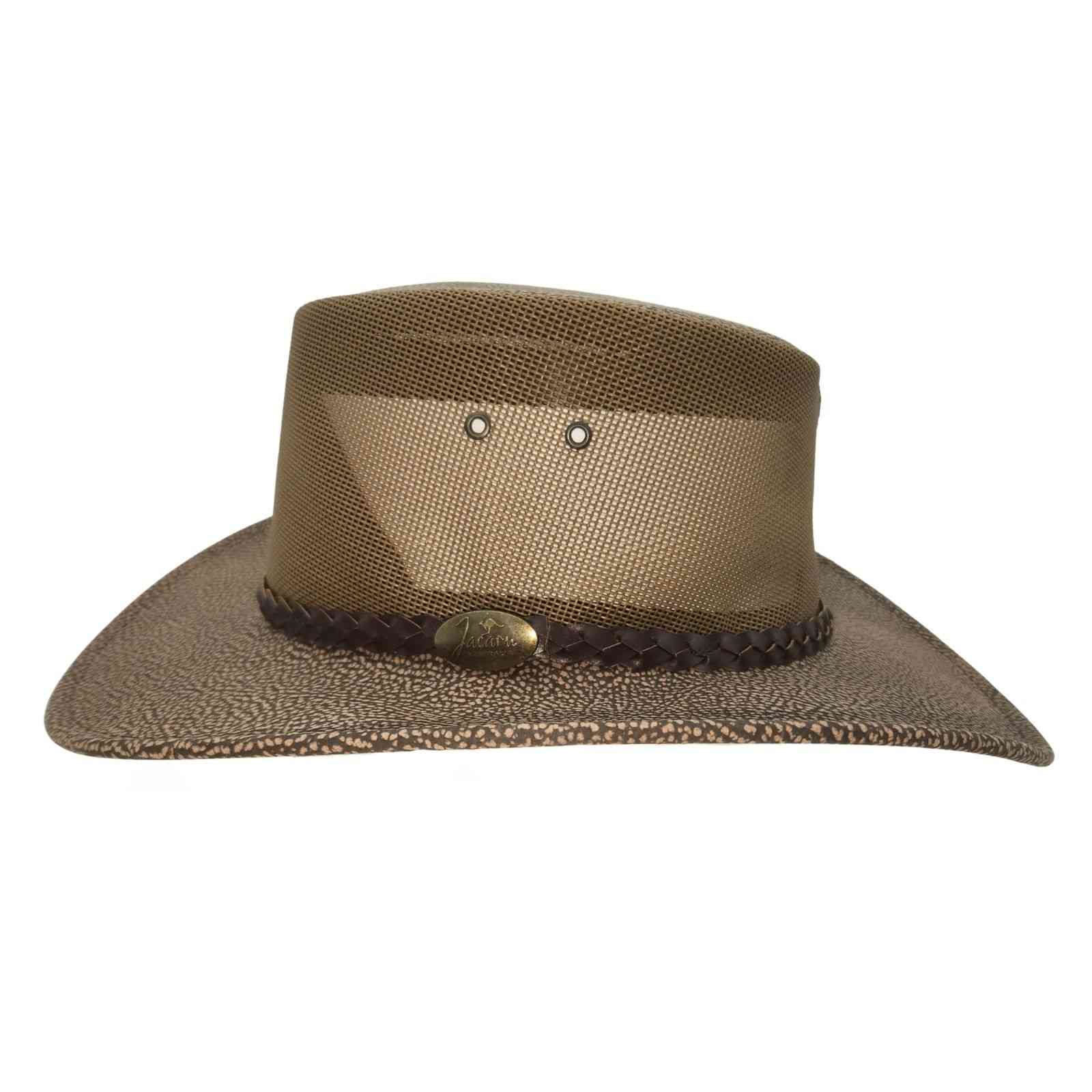
Jacaru's Crocodile Dundee style hats use genuine crocodile teeth paired with authentic Australian backstrap hatbands, cut from back hide leather known for its toughness and natural grain. That combination makes them one of the very few options on the market that can honestly deliver the complete, authentic package from tooth to brim.
Is It Legal to Buy a Hat with Crocodile Teeth?
It's a fair question, and one more buyers are asking as crocodile teeth hatbands become increasingly popular. The short answer is yes, it can be completely legal, but the key word is can. The legality depends entirely on where the teeth came from and whether the seller can back that up with proper documentation.
Crocodiles are protected under CITES (Convention on International Trade in Endangered Species), the international agreement that controls trade in wildlife and wildlife products. This means crocodile parts, including teeth, can only be bought and sold legally when they come from approved, regulated sources. Australia's saltwater crocodile was moved to CITES Appendix II back in 1985, which allows trade from farmed and ranched populations, provided the right paperwork follows the product every step of the way.
The good news for buyers is that Australia runs some of the most tightly regulated crocodile farming programs in the world. Operations in the Northern Territory and Queensland operate under strict federal and state wildlife laws, with compliance monitoring built into the system. Products sourced from these licensed farms are fully legal under both Australian law and CITES requirements.
When you buy from a reputable Australian maker with clear, documented sourcing, you are purchasing something backed by that regulatory framework. The supply chain is traceable, and export documentation can accompany the product internationally, making it perfectly straightforward to bring home as a genuine Australian souvenir.
Where buyers do need to be careful is on unbranded third-party marketplaces. On these platforms, the origin of crocodile material is rarely disclosed, and compliance simply cannot be assumed. In fact, New Zealand's Department of Conservation reported that over 2,100 travellers had crocodile products confiscated at the border in just two years, including items purchased at airports, highlighting that a receipt does not equal compliance at your destination.
Brands like Jacaru are transparent about their sourcing and can provide the documentation needed for international travel. That transparency is what separates a genuine, legal keepsake from a potential problem at customs.
The Hat Body: Leather Grades and What They Mean for You
So you've found the perfect crocodile teeth hatband, but here's something many first-time buyers overlook: the hat body itself is just as important as what wraps around it. A flimsy or poorly matched base can ruin the whole look and feel of a genuine outback hat. For a hat that will actually hold up to sun, wind, and the occasional downpour, the leather grade matters enormously.
Kangaroo Leather: Light, Strong, and Built for the Outdoors
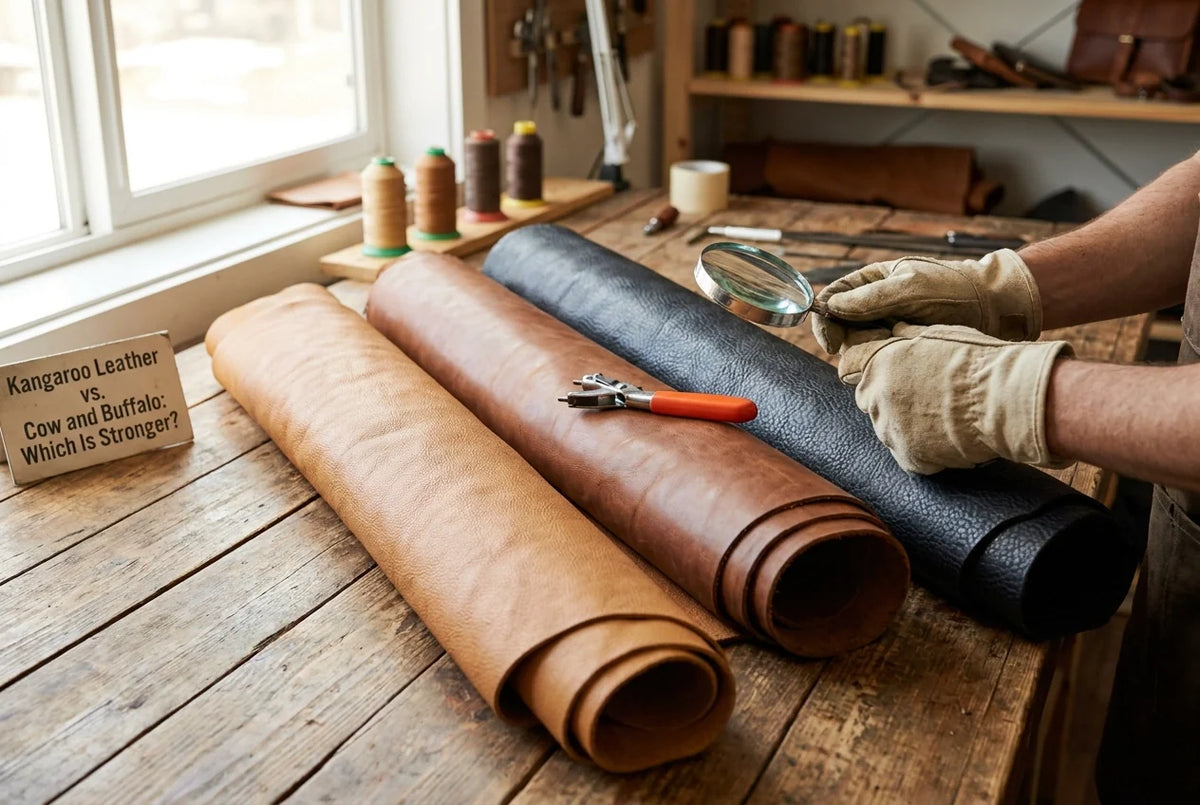
Kangaroo leather has a well-earned reputation in the Australian leather goods industry as the lightest and strongest hide relative to its weight. That combination might sound too good to be true, but it makes practical sense for a hat you plan to wear regularly in hot conditions. A lighter hat means less fatigue over a long day outdoors, while the strength ensures the brim holds its shape and the crown doesn't lose structure when things get sweaty. If you're buying a Crocodile Dundee-style hat for regular outdoor wear rather than occasional costume use, kangaroo leather is worth serious consideration.
Buffalo and Cow Leather: The Rugged, Traditional Choice
Buffalo and cow leather sit at the heavier end of the spectrum. These hides are thicker, more structured, and carry that classic, substantial feel you associate with old-school outback gear. The trade-off in weight is offset by how beautifully these leathers age. Over years of regular use, they develop a rich natural patina that actually makes the hat look better with time. It's the kind of character you simply can't fake with a cheap synthetic alternative.
Choosing the Right Leather for You
Jacaru produces Crocodile Dundee style hats in kangaroo, cow, and buffalo leather, giving buyers a genuine choice based on weight preference, intended use, and personal style. There's no single "right" answer; it comes down to what suits your lifestyle.
One thing worth flagging before you buy anywhere: straw and wool felt hats are also part of the broader outback hat category, but they are entirely different products. The Dundee look is specifically tied to a brown or tan leather hat body. If you search broadly for "outback hat," you could easily end up with a wool or straw version that simply doesn't deliver that iconic aesthetic. Always check the material description before you commit to a purchase.
Are You a Costume Buyer or a Genuine Outback Hat Buyer? Here Is How to Choose
Not everyone searching for a Croc Dundee hat wants the same thing, and that is completely fine. Social media data confirms two very different audiences are shopping for this style: people pulling together a Halloween outfit or themed party look, and people who genuinely want a wearable, high-quality outback hat they can use for years. Knowing which camp you fall into before you buy will save you money and frustration.
If You Are Building a Costume
For single-occasion use, your priorities are simple: visual impact and affordability. A replica hat with a resin or synthetic tooth hatband on a leather-look base will photograph brilliantly and hold up through one big night without putting a dent in your budget. You do not need genuine materials for a costume. What you need is something that reads as instantly recognisable in a photo. Budget-tier options are widely available online, and for this purpose, they genuinely do the job well.
If You Want a Hat You Will Actually Wear
This is where the decision changes entirely. A genuine leather hat with a real crocodile teeth hatband is a long-term investment. It will conform to your head over time, age beautifully with proper care, and carry the kind of story value that a plastic replica simply cannot offer. Whether you are packing it for an outback trip, wearing it outdoors regularly, or passing it on as a keepsake, authentic materials justify the higher price point. You can explore how genuine and replica versions compare in this detailed Crocodile Dundee hat replica comparison to understand exactly what separates them.
The Simple Question to Ask Yourself
How often will you wear it? If the answer is once, go affordable. If the answer is regularly, on travels, or as a gift worth keeping, invest in the real thing. Jacaru's hats are designed for genuine wear but are equally sought after as collector pieces and Australian souvenirs, meaning they serve both audiences well. You just need to be honest about which one you are before you add to cart.
Sizing and Fit: Getting It Right the First Time
Getting the size right on a leather outback hat is genuinely important, and it is worth slowing down before you click "buy." Unlike a knitted beanie or a casual fabric cap, leather does not stretch to accommodate a size that is slightly off. Once a leather hat settles, it holds its shape, which means an ill-fitting hat stays ill-fitting.
How outback hats are measured
Australian outback hats are sized by head circumference in centimetres, measured just above the ears and eyebrows where the hatband will actually sit. The standard adult range runs from around 55cm up to 62.5cm, covering most head sizes comfortably. If you are used to shopping for hats labelled S, M, L or by numbered US sizing, centimetre measurement might feel unfamiliar at first, but it is actually more precise and takes the guesswork out of ordering.
How to measure yourself at home
Grab a flexible tape measure and wrap it around your head at the hatband line, keeping it level all the way around. If you do not have a tape measure, a strip of paper works just as well; wrap it around your head, mark where it meets, then lay it flat against a ruler. When your measurement falls between two sizes, always round up rather than down. A slightly roomier hat can be adjusted with a foam hat-size reducer strip inside the crown; a hat that is too tight simply cannot be made comfortable.
Brims, sizing conventions, and international buyers
The wide brim is what defines the Dundee silhouette, and it serves a real purpose beyond the look. Outback-style brims typically measure 3 to 4 inches, providing genuine sun protection in harsh Australian conditions. Brim width does not affect your sizing measurement, but it is worth confirming when comparing products.
If you are ordering from outside Australia, pay close attention to sizing systems. A US size 7 does not translate directly to an Australian or European equivalent, and assuming it does is a common and costly mistake. Retailers like Lock and Co. Hatters list UK, US, and metric sizing side by side, which illustrates just how much the numbers diverge between systems. Always cross-reference the specific brand's own size chart before ordering, rather than relying on your usual hat size from another country or product category.
Buying from Australia: What International Shoppers Need to Know
If you have discovered the Croc Dundee hat through TikTok or Pinterest, you are in good company. International interest in the style is genuinely surging, with a single Crocodile Dundee-inspired hat video racking up over 24,000 views on TikTok in 2025 alone. What surprises many US and UK buyers, though, is that you do not need to hunt through Amazon or eBay to find the real thing. You can order directly from an Australian maker and have it shipped to your door, often faster and more affordably than you might expect.

The provenance question is worth taking seriously. When you buy direct from Australia, you are not simply purchasing a hat; you are buying into a genuine craft tradition, with traceable materials and authentic documentation. Reputable Australian makers supply official product identification tags with crocodile items, which serve as legal proof of origin. That is something a grey-market reseller on a major e-commerce platform simply cannot replicate, no matter how Australian-sounding their brand name appears.
CITES compliance is the one thing to research before you buy. Crocodile products are regulated under international wildlife trade rules, and requirements differ by country. If you are in Japan, a CITES export permit from Australia must accompany your goods. UK buyers should check current guidance from the Animal and Plant Health Agency before ordering. You can also check whether you need a permit via the Australian government's official wildlife trade portal. Most established Australian sellers are experienced with this paperwork and can advise you directly.
On shipping costs, the news is reassuring. International postage from Australian sellers is generally modest relative to the value of the hat itself, and dispatch times are typically fast. The incremental cost of buying from the source, rather than a domestic reseller, is genuinely small. When authenticity and legal compliance matter to you, buying direct from Australia is simply the smarter choice.
How to Care for Your Leather Outback Hat
You have invested in a quality piece of Australian craftsmanship, so it is worth taking a few minutes to understand how to look after it properly. Leather outback hats are genuinely built to last for decades, but only if you give them a little regular attention.
1. Condition the leather regularly
Leather dries out over time, especially after long days in the sun, exposure to saltwater, or a sweaty outdoor adventure. Conditioning prevents that drying from turning into cracking, which is difficult to reverse. Aim to condition your hat every few months under normal use, or after any particularly tough outing. Apply the conditioner in small, circular motions and let it absorb fully before wearing the hat again.
2. Choose the right product
A natural beeswax-based conditioner or a dedicated leather conditioner is your best option. Beeswax paste works especially well because it also adds a layer of water resistance as a bonus. Avoid anything petroleum-based; these products strip the leather's natural oils over time rather than restoring them, and the damage is gradual enough that you may not notice until it is too late. For more detail on product selection, this leather hat care guide covers what to look for and what to avoid.
3. Handle a wet hat correctly
If your hat gets soaked, resist the urge to speed up drying with a heater. Instead, reshape the crown and brim gently by hand while the leather is still damp, then leave it somewhere with good airflow at room temperature. Car dashboards and radiators are the two biggest culprits for causing leather to shrink and warp permanently.
4. Care for the crocodile teeth hatband gently
The hatband needs very little maintenance, but it does need some. Wipe it down with a dry cloth or a very slightly damp one to remove dust and grime. Do not soak it or leave it submerged in water; prolonged moisture can loosen the mounting of individual teeth over time.
5. Store it properly
Place your hat on a hat stand, or rest it upside down on its crown when not in use. Stacking things on top of the brim is the single most common cause of permanent brim distortion in leather outback hats, and it is entirely avoidable with the right storage habit.
The Bottom Line on Buying a Crocodile Dundee Hat
By now, you have everything you need to make a confident decision. The four filters that matter most are simple: genuine versus replica teeth, leather grade, accurate sizing, and sourcing transparency. Work through those four points in order and the right hat will become obvious pretty quickly.
Before you compare any products, settle the costume-versus-daily-wear question first. It genuinely changes everything else on your checklist. A one-night Halloween costume does not need a premium kangaroo leather crown or a CITES-compliant hatband. Everyday outback wear absolutely does.
If you want the real thing, good news: authentic Australian-made hats with genuine crocodile teeth hatbands are available and ship worldwide. You do not need to compromise on provenance just because you live outside Australia. Jacaru is a trusted Australian maker offering Crocodile Dundee style hats with genuine croc teeth and premium leather options across their range, with clear product information and international shipping.
The practical closing checklist is short. Grab a soft tape measure, measure your head circumference in centimetres, and check the size chart before ordering. Then buy only from a maker who can tell you exactly where the leather came from, where the teeth were sourced, and how the product meets export and import regulations. If a seller cannot answer those questions clearly, keep looking. Jacaru can, and that transparency is exactly what separates a hat worth owning from one that falls apart after a single wear.
Conclusion
Now that you know what to look for, you're ready to find the perfect Crocodile Dundee hat with confidence. Remember the essentials: choose quality materials that can handle real-world wear, get your sizing right for comfort and style, understand the difference between authentic and novelty options, and shop from reputable sellers who stand behind their products.
A great croc dundee hat is more than a costume piece. It's a bold style statement that carries the spirit of adventure wherever you wear it. Whether you're heading to a themed event, a festival, or simply embracing your inner outback explorer, the right hat will turn heads and spark conversations.
So don't wait. Use what you've learned here, set your budget, and start shopping with purpose. Your perfect hat is out there, mate. Go find it!


Our friends at Bocchetta Plush Toys have a great range of lifelike plush animals that make great gifts for people of all ages.