










Leather Hat with Crocodile Teeth: What Every Buyer Should Know

Few accessories make a statement quite like a leather hat with crocodile teeth. Whether you spotted one at a market, saw it on a traveler, or simply stumbled across it online, there is something undeniably bold and rugged about this unique piece. But before you pull out your wallet, there are several important things every first-time buyer should understand.
From the quality of the leather to the ethical sourcing of the crocodile teeth, purchasing one of these hats involves more than just picking a style you like. The details matter, and knowing what to look for can mean the difference between a lasting treasure and a regrettable impulse buy.
In this guide, we have put together a clear and practical list of everything beginners need to know before buying a leather hat with crocodile teeth. You will learn how to spot quality craftsmanship, understand legal considerations, care for your hat properly, and make a purchase you feel confident about. By the end, you will be fully equipped to make a smart, informed decision.

Real vs. Fake Crocodile Teeth: How to Tell the Difference
If you are new to shopping for a leather hat with crocodile teeth, knowing how to separate the genuine article from a plastic imitation is one of the most valuable skills you can develop. The market is filled with "crocodile-style" accessories that look convincing in photographs but fall far short on close inspection.
1. Look for natural irregularity
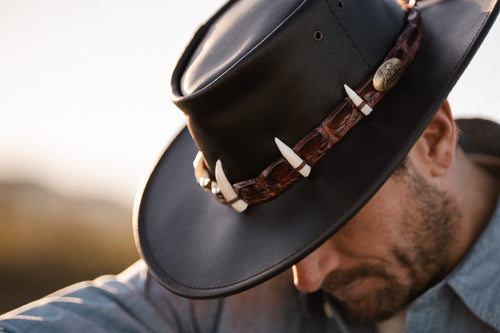
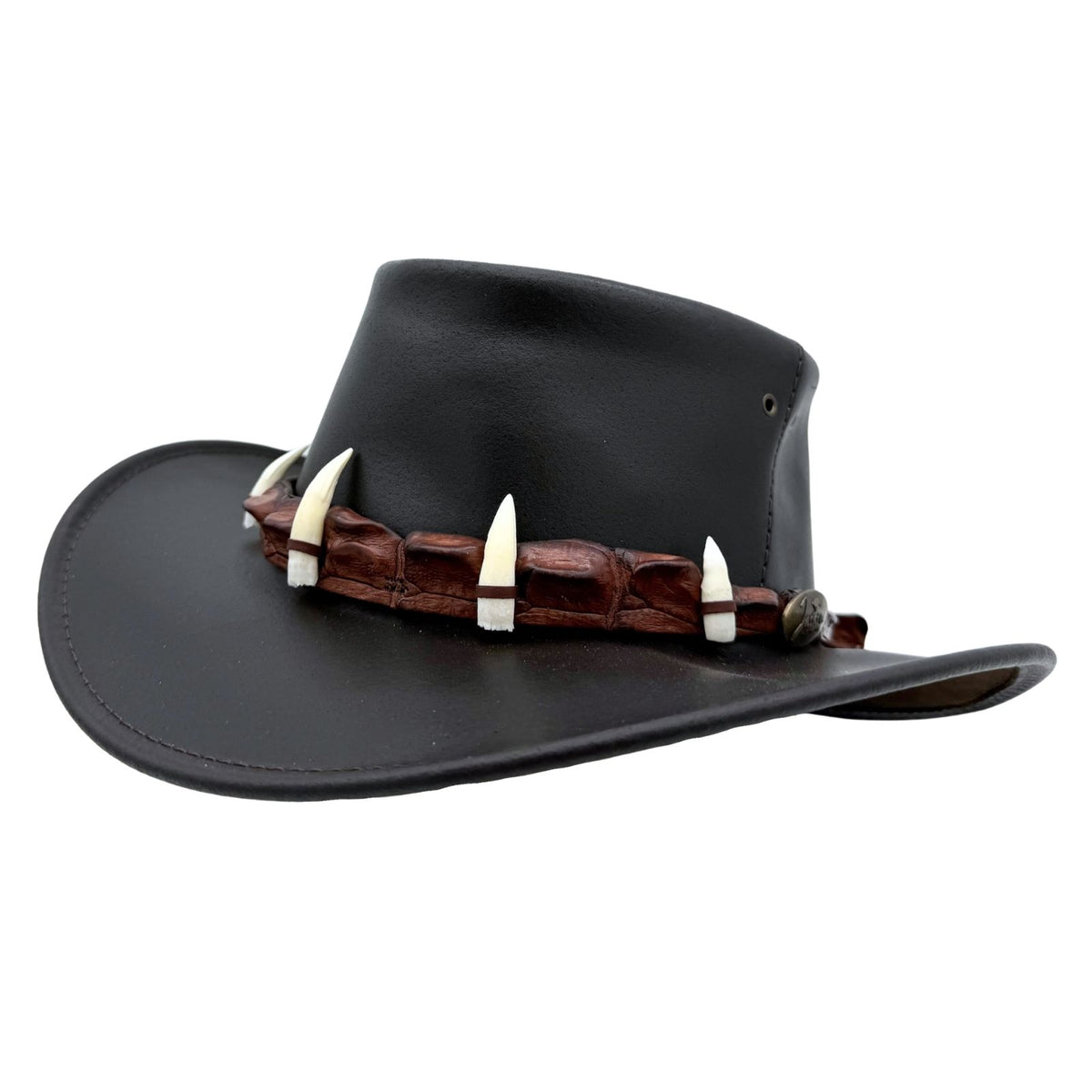
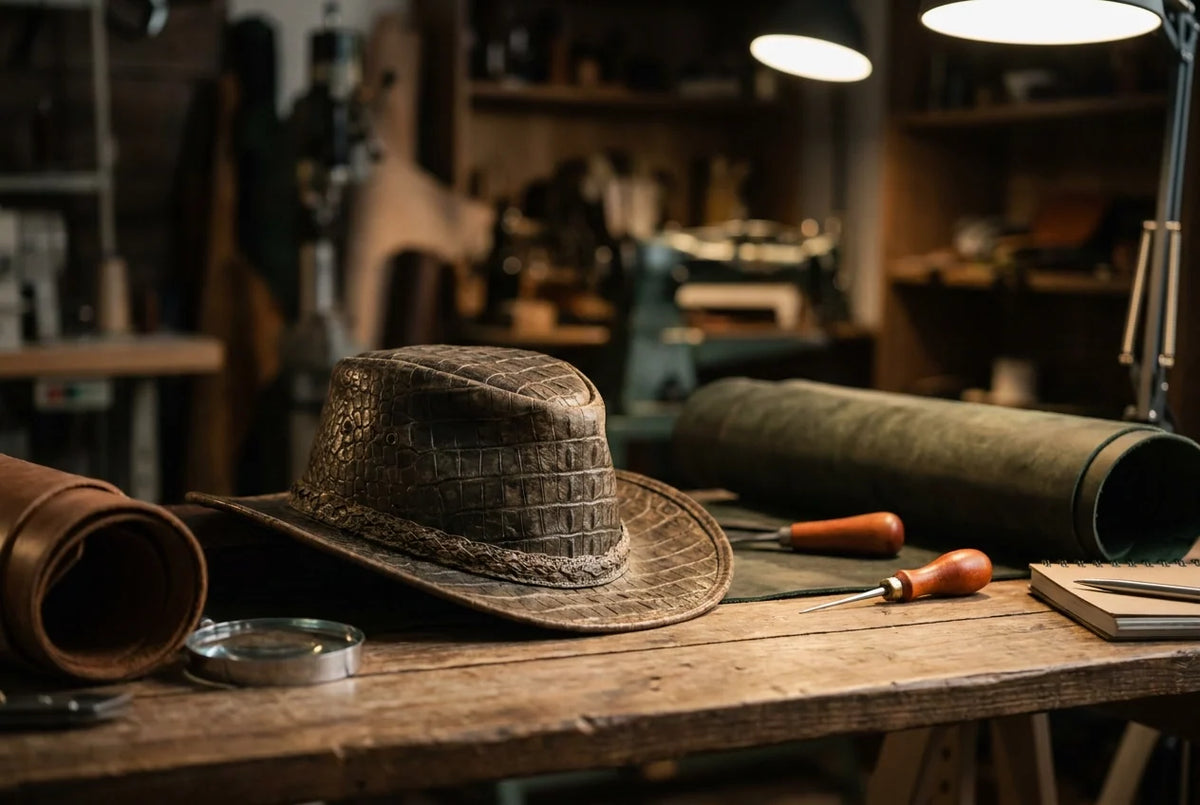
Genuine crocodile teeth are biological structures, which means no two are identical. Expect subtle differences in size, shape, and surface texture across a hatband. Injection-moulded plastic replicas are produced from a single mould, so every tooth shares the same uniform dimensions. Run your eye along the band; if every tooth looks like a perfect copy of its neighbour, that is a strong warning sign. A faint seam line running along the side of a tooth is another telltale indicator of plastic production. This same principle applies to authentic crocodile leather, as genuine exotic skins exhibit organic, irregular patterning that manufactured imitations cannot perfectly replicate.
2. Check the colour and translucency
Hold the hat under natural light. Real teeth have an ivory-toned root that is slightly translucent, graduating to a darker, denser tip. This gradient is a natural feature of dentine and enamel. Plastic replicas tend to be uniformly opaque throughout, or display an unnatural high-gloss sheen that looks artificial under light.
3. Test weight and sound
Pick up the hat and feel the density of the hatband. Solid dentine is noticeably heavier than hollow plastic. If possible, gently tap two teeth together; authentic teeth produce a soft, dry, muted sound, whereas plastic produces a sharper, hollow click.
4. Demand provenance documentation
Legitimate sellers of genuine crocodile teeth products can confirm where and how the teeth were sourced. If a marketplace listing uses phrases like "crocodile-style" without material confirmation, treat that as a red flag. Jacaru's hatbands use teeth from legally harvested saltwater crocodiles, a verifiable distinction clearly explained in their Corks vs Croc Teeth guide. When in doubt, ask the seller directly for sourcing documentation before purchasing.
Why CITES Compliance Matters When You Buy Crocodile Products
Knowing whether your hat is authentic is only part of the picture. Once you have confirmed the teeth are real, a second and equally important question follows: is the product legally documented for international trade?
The Convention on International Trade in Endangered Species (CITES) is an international agreement that governs the movement of wildlife products across borders. This includes crocodile teeth, crocodile leather, and any accessory combining both. If you are importing a leather hat with crocodile teeth into the United States, the United Kingdom, or the European Union, customs authorities may require documentation proving the product's legal origin. Without it, the item can be seized at the border, with no compensation to the buyer.
Australia's saltwater crocodile (Crocodylus porosus) is listed under CITES Appendix II, which means commercial trade is permitted but must be fully traceable through a licensed supply chain. Products sourced from regulated Australian crocodile farms are produced within a framework that generates the documentation customs authorities require. This traceability is built into the supply chain from farm to finished product. The New Zealand Department of Conservation has confirmed that even farmed or airport-purchased crocodile items require a valid CITES permit to cross international borders, and over 2,100 travellers had crocodile products confiscated at New Zealand's border in the two years prior to October 2025 alone.
Purchasing from an unverified third-party seller on an online marketplace does not guarantee CITES compliance. Platforms do not verify export documentation on behalf of sellers, which means the buyer assumes full legal and financial risk if undocumented goods are seized. Importing crocodile leather goods into Japan, for example, requires a CITES export permit from the country of origin; customs authorities inspect documentation on arrival and confiscate items that lack it. Similar enforcement applies across major destination markets.
Australian-made products from established manufacturers like Jacaru are produced within a regulated national framework. This means the provenance chain required by customs authorities is traceable and available. For buyers outside Australia, confirming both export compliance from the seller and import compliance for your destination country is a practical, transactional requirement, not simply an ethical preference. Before purchasing any hat featuring genuine crocodile material, contact the seller directly and ask for confirmation that CITES export documentation is provided with your order.
The Crocodile Dundee Hat: Where the Style Actually Comes From
Few items in cinema history have made as lasting a commercial impact as the hat worn by Paul Hogan in the 1986 film Crocodile Dundee. The wide-brimmed leather outback hat, fitted with a hatband of genuine crocodile teeth, became one of the most recognisable costume props in film history. It defined the character of Mick Dundee instantly and planted a cultural image of the Australian wilderness in the minds of audiences worldwide. The original prop hat is now held in the collection of the National Film and Sound Archive of Australia, confirming its status as a piece of genuine national heritage rather than just a movie costume.
The hat was not invented for the film. It drew on a real Australian tradition of wide-brimmed leather outback hats, worn by stockmen and hunters across Queensland and the Northern Territory long before Hollywood had any interest in the style. The crocodile teeth detail carried specific cultural meaning, communicating the wearer's connection to the rugged northern landscape. By anchoring that tradition to a globally distributed film, Crocodile Dundee effectively made Australian leather craftsmanship famous overnight.
That fame has proven remarkably durable. By August 2025, US-based custom hat makers were still receiving audience requests for Crocodile Dundee-inspired hats. One maker's TikTok response to that demand earned over 24,000 views and nearly 2,000 shares, an unusually high ratio that signals active purchase intent rather than passive nostalgia.
What this tells you as a buyer is straightforward. When most people search for a leather hat with crocodile teeth, they are searching for "Crocodile Dundee hat" first. The style's identity is cultural before it is commercial. If you want the authentic version of what the film made famous, Australian-made is the benchmark to look for. Jacaru produces Crocodile Dundee-style hats with genuine crocodile teeth and backstrap hatbands, continuing the same Australian leather craftsmanship tradition that gave the film its visual power in the first place.
What the Specifications Actually Tell You: Teeth Count, Leather Type, and Hatband Construction
Once you know the teeth are real and legally sourced, the next step is understanding what the product specifications actually communicate about build quality. These numbers and material descriptions are not marketing filler; they are practical signals that separate a hat built for serious outdoor use from one designed primarily for display.
Teeth count is the most immediately legible quality indicator on the hatband. A premium-tier hat typically features around 15 real crocodile teeth along the band, a specification confirmed by authoritative sellers including Bernard Hats in their description of a Jacaru outback hat. Entry-level products on the market can feature as few as 5 or 11 teeth, and while these are not necessarily poor quality in every respect, the reduced count often signals a lower overall build standard. Think of teeth count as a rough spectrum: 5 teeth sits in novelty territory, 11 teeth represents a mid-market offering, and 15 teeth indicates a product positioned at the premium end of the category.
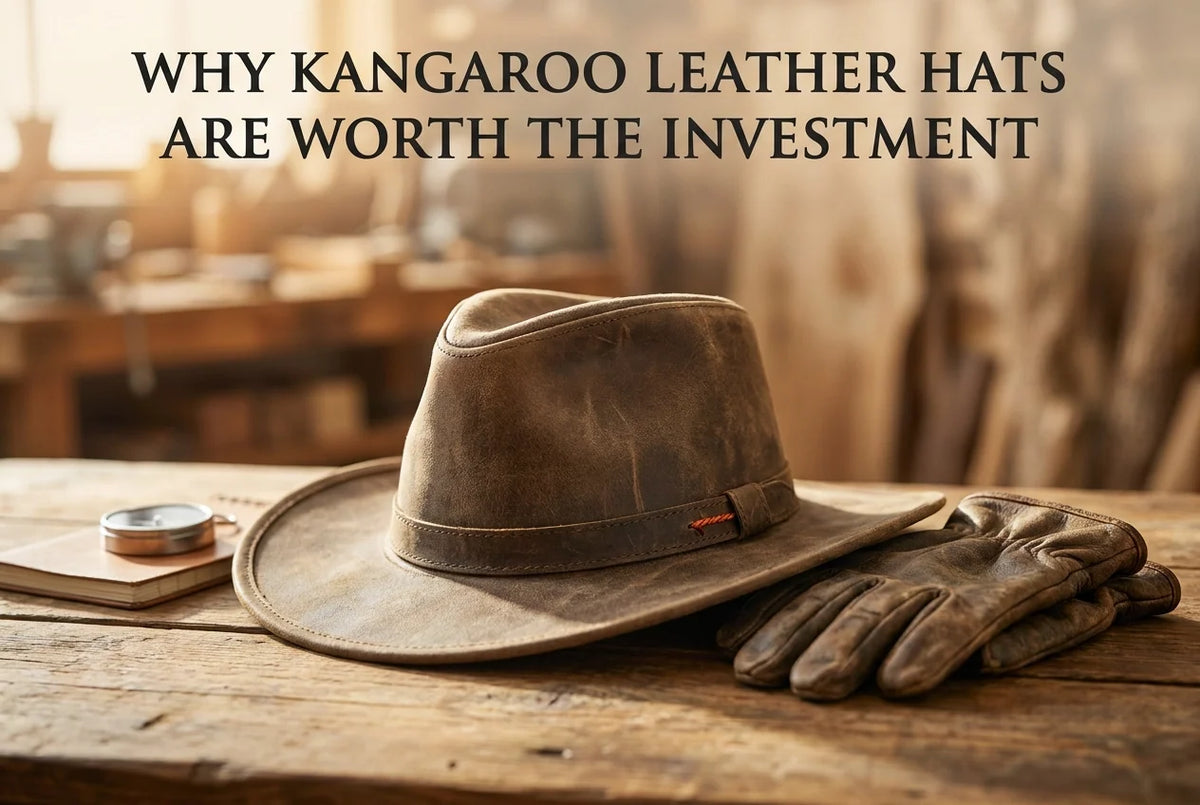
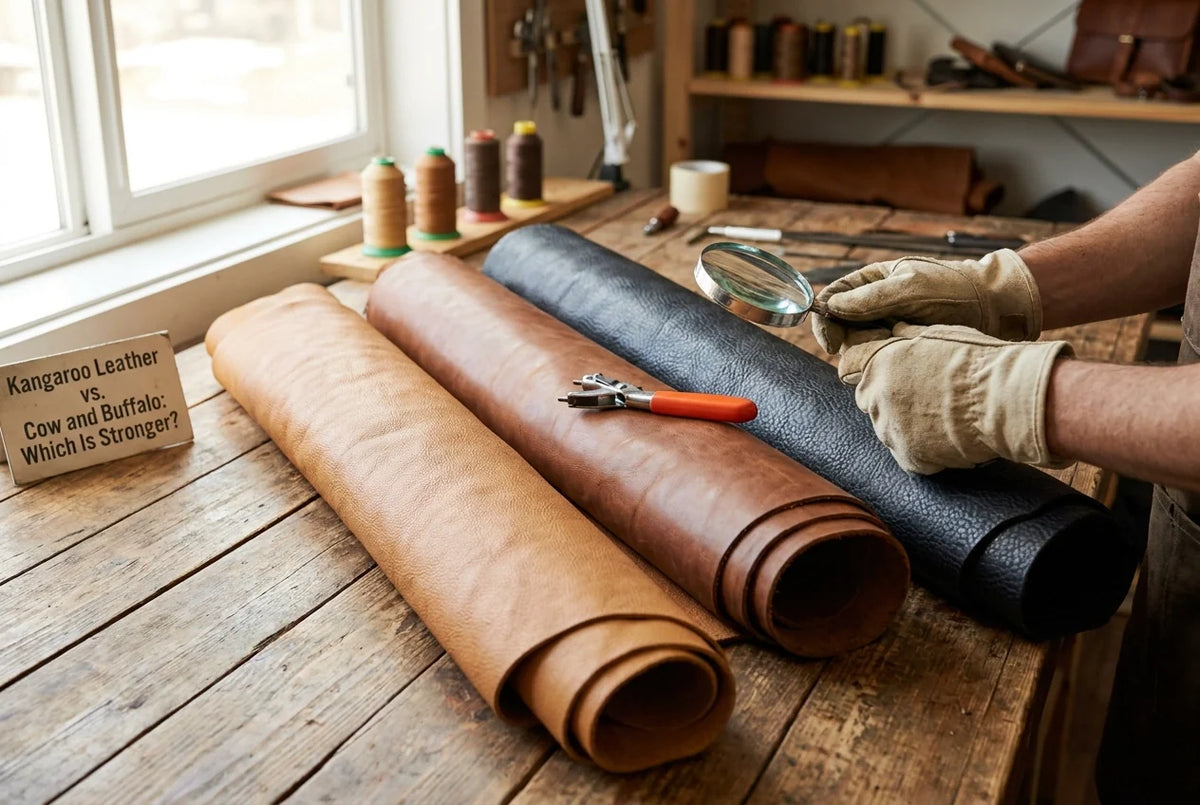
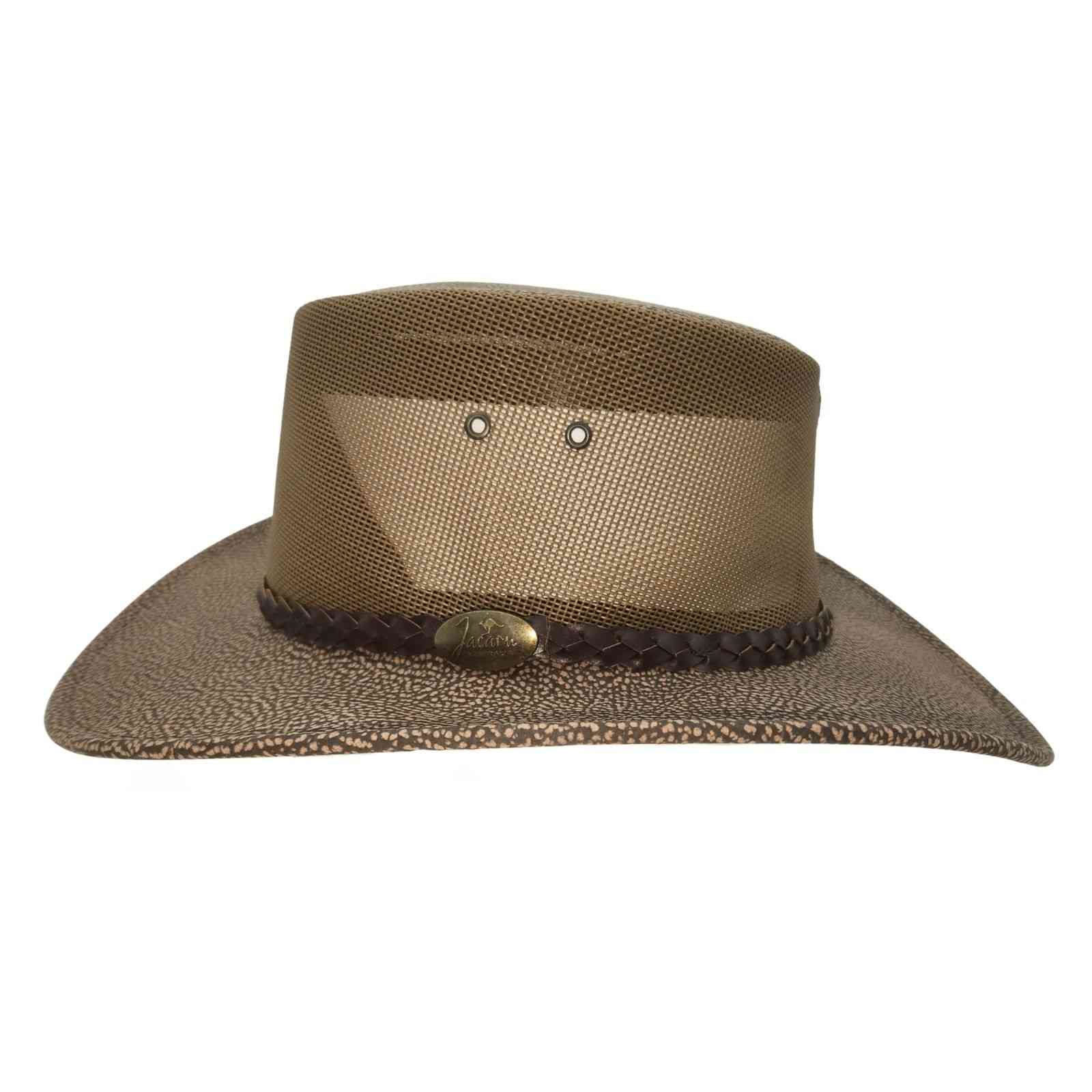
Leather type determines how the hat ages and who it suits best. Kangaroo leather is exceptionally strong relative to its weight and develops a rich, lived-in patina with regular wear, making it well suited to travellers and adventurers who want a hat that improves over time. Cattle leather is heavier and more widely available, offering proven durability for demanding outdoor conditions, as noted in multiple product reviews covering Jacaru-style hats. Buffalo leather provides a more textured, rugged grain that appeals to buyers who want a visually distinctive finish. Each material suits a different wearer profile, so matching leather type to intended use is a worthwhile step before purchasing.
Hatband construction and brim width are the two specifications most often overlooked by first-time buyers. A backstrap hatband anchors the band securely around the crown of the hat rather than depending on adhesive or stitching alone, both of which can weaken with repeated outdoor exposure. This method holds the crocodile leather band and its teeth firmly in place through heat, rain, and regular handling. On brim width, a measurement of 3 inches or more delivers genuine sun protection suited to Australian conditions and outdoor adventures, while a narrower brim functions primarily as a style detail.
Jacaru's crocodile teeth hats combine all of these specifications in a single, verifiable build. The crown is constructed from kangaroo or cow leather, the hatband uses genuine crocodile leather fitted with real teeth, and the whole assembly is secured with backstrap construction. Whether you purchase directly or through a retailer, each of these specifications can and should be confirmed before you commit to buying.
Corks vs. Crocodile Teeth: Which Hat Is Actually Australian?
When most people picture an "Australian hat," two images come to mind: a wide-brimmed hat strung with dangling corks, or a rugged leather outback hat adorned with crocodile teeth. These two items could not be more different in terms of cultural legitimacy, and understanding that difference matters if you are buying for yourself or choosing a gift that genuinely represents Australia.
The cork hat has no documented roots in outback working culture. It is widely regarded by Australians themselves as a caricature, the kind of item that appears in cartoons and comedy sketches rather than on the heads of people doing real work in the bush. No historical record firmly establishes it as a practical tool used by stockmen, drovers, or anyone else with a genuine connection to the land. It is, in plain terms, a novelty souvenir designed to signal "Australia" to international visitors, not to reflect how Australians actually lived or dressed.
The crocodile teeth hatband is a different matter entirely. With roots in the Northern Territory and Queensland, where saltwater crocodiles are a genuine presence in working environments, the teeth carry regional significance. They represent an encounter with one of the most formidable animals on the continent, not a prop from a gift shop.
The 1986 film Crocodile Dundee made this style internationally recognisable, cementing the leather hat with crocodile teeth as the authentic outback silhouette in the global imagination. That cultural imprint has proven durable; as recently as August 2025, hat-makers were producing Crocodile Dundee-inspired hats by popular request, confirming the style remains actively sought rather than merely remembered.
For anyone buying a gift, the practical takeaway is straightforward. A cork hat communicates comedy. A leather hat with genuine crocodile teeth communicates craft, heritage, and a real connection to the Australian landscape. Jacaru's range of crocodile teeth hats, available through their Etsy store for international buyers, reflects exactly this distinction: these are wearable, Australian-made objects built from premium leather and legally sourced materials, not tourist trinkets designed for a single photograph.
Buying a Crocodile Teeth Hat as a Gift: Sizing, Occasions, and Presentation
Gifting a leather hat with crocodile teeth is a genuinely memorable gesture, but a few practical considerations will determine whether it lands as a standout gift or creates an awkward return conversation.
Sizing is the single biggest obstacle for first-time buyers. Australian outback hats are sized in centimetres of head circumference, not the S/M/L labels common in clothing retail. Sizes typically run from 55 cm (Small) through to 62.5 cm (XX-Large), with the adult average falling between 56 cm and 60 cm. If you cannot measure the recipient's head discreetly, a Medium at 57 cm is the lowest-risk default for most adults. Better still, look for styles with an adjustable inner band, which removes fit risk entirely without compromising the hat's appearance.
Matching the hat to the right recipient makes the choice straightforward. This style suits Australia-bound travellers wanting an iconic souvenir before they depart, outdoor enthusiasts who will actually wear it in the field, film and pop-culture collectors drawn to the Crocodile Dundee connection, and anyone who genuinely values handcrafted, Australian-made items. If your recipient fits even one of those profiles, the hat is a strong match.
Corporate gifting is a legitimate and underused application. Jacaru produces corporate gift options, and a premium leather hat with genuine crocodile teeth functions as a high-recall, distinctively Australian gift for international clients or conference delegates. It travels well as a brand story and is far more memorable than standard conference merchandise.
Presentation and aftercare complete the gift. Seek suppliers who ship in a protective hat box or rigid carrier; a wide-brimmed leather hat arriving in a soft satchel risks permanent brim distortion in transit. Including a short care card adds real value: leather outback hats should be stored on a hat stand or placed brim-down, kept away from prolonged moisture, and conditioned with a quality leather balm once a year to maintain their shape and suppleness.

Ordering from Australia: What International Buyers Need to Know
Ordering a leather hat with crocodile teeth from Australia involves more than selecting a style and entering your shipping address. Because the product contains genuine crocodile material, it crosses into regulated territory the moment it leaves Australian shores.
1. Expect Customs Scrutiny Regardless of Your Country
Buyers in the United States, United Kingdom, Canada, and the European Union should anticipate customs inspection when importing products containing real crocodile teeth or leather. Each of these countries enforces CITES through its own national wildlife import legislation, meaning the rules are not uniform. What clears without issue in one jurisdiction may require additional documentation in another. Researching your country's specific import requirements before purchasing is a practical first step, not an optional one.
2. Documentation Is the Difference Between Delivery and Seizure
Products shipped by a licensed Australian supplier with proper CITES export permits are generally processed through customs without issue. The genuine risk lies in purchasing from unverified third-party marketplace listings. Sellers who cannot produce a documented paper trail leave buyers exposed to seizure at the border, with limited options for recovery. Reputable Australian suppliers build compliance documentation into the sale as a standard part of the transaction, as detailed in international shipping guidance from established Australian wildlife product exporters.
3. US Buyers Face USFWS Enforcement
American buyers should be aware that the US Fish and Wildlife Service actively enforces import restrictions on crocodilian products. Saltwater crocodile items sourced from CITES-compliant Australian operations are generally permissible to import, but undocumented shipments can be seized at the border with no guarantee of return. Community discussions among Australia travellers confirm that US buyers regularly encounter questions about bringing crocodile products across the US border, including teeth. Verifying USFWS declaration requirements before your order ships is strongly advised.
4. Build Shipping Time Into Your Planning
Transit times from Australia to international destinations typically range from 7 to 21 business days, depending on the carrier and how quickly customs processing moves at your end. If you are buying this hat as a gift for a specific occasion, ordering well in advance is essential. Dispatch from Australian retailers is usually prompt, often within 48 hours of payment, but destination customs processing introduces variability that no seller can fully control.
5. Buy Directly from an Established Australian Manufacturer
Purchasing directly from a verified Australian manufacturer like Jacaru is the most reliable way to receive your hat with correct documentation, accurate product descriptions, and appropriate packaging. Third-party marketplace listings for this product category vary significantly in quality and compliance. Buying at the source removes the uncertainty entirely.
The Bottom Line on Leather Hats with Crocodile Teeth
By this point, the checklist is straightforward. Verify the teeth are genuine, confirm CITES-compliant sourcing from the seller, check that the hatband itself is crocodile leather rather than a generic strip, and confirm the teeth count is stated explicitly in the product listing. Fifteen teeth is the specification associated with a properly constructed hat; a listing that omits this detail is telling you something. Buy directly from a verifiable Australian manufacturer with documented sourcing, not from an anonymous marketplace listing where provenance is impossible to trace.
The crocodile teeth hat is a legitimate piece of Australian craft heritage. It is not a costume accessory or a tourist novelty. That distinction carries real weight when you are buying for yourself or selecting a gift with lasting value. A hat sourced from a named Australian maker carries provenance that a generic platform product simply cannot replicate, regardless of how the listing is worded.
Global demand for the Crocodile Dundee style remains strong and is not limited to Australian buyers. International buyers need one additional step: check your country's wildlife import regulations before ordering, since crocodile products cross into regulated territory at most borders.
Jacaru's Exotic Hats collection is the most direct place to find genuine, Australian-made crocodile teeth hats with full specification transparency. Their guide to authentic Crocodile Dundee hats is also worth reading before you buy.
Knowing what to look for takes minutes. Getting it wrong means paying for plastic teeth on a hat with no verifiable origin. Buy once, buy right.
Conclusion
A leather hat with crocodile teeth is more than just an accessory; it is a statement piece that deserves a thoughtful purchase decision. Before buying, remember to prioritize quality leather craftsmanship, verify the ethical and legal sourcing of the crocodile teeth, and commit to proper care so your hat stays in excellent condition for years to come.
Armed with this knowledge, you are no longer just a casual shopper. You are an informed buyer who understands what separates a genuine, well-made hat from a cheap imitation.
Now it is time to put this guide to work. Browse with confidence, ask sellers the right questions, and trust your judgment. When you find the right hat, you will know it. Take the next step, make a smart investment, and wear your new piece with pride.


Our friends at Bocchetta Plush Toys have a great range of lifelike plush animals that make great gifts for people of all ages.