












Can a Kangaroo Leather Outback Hat Handle a Canadian Winter?
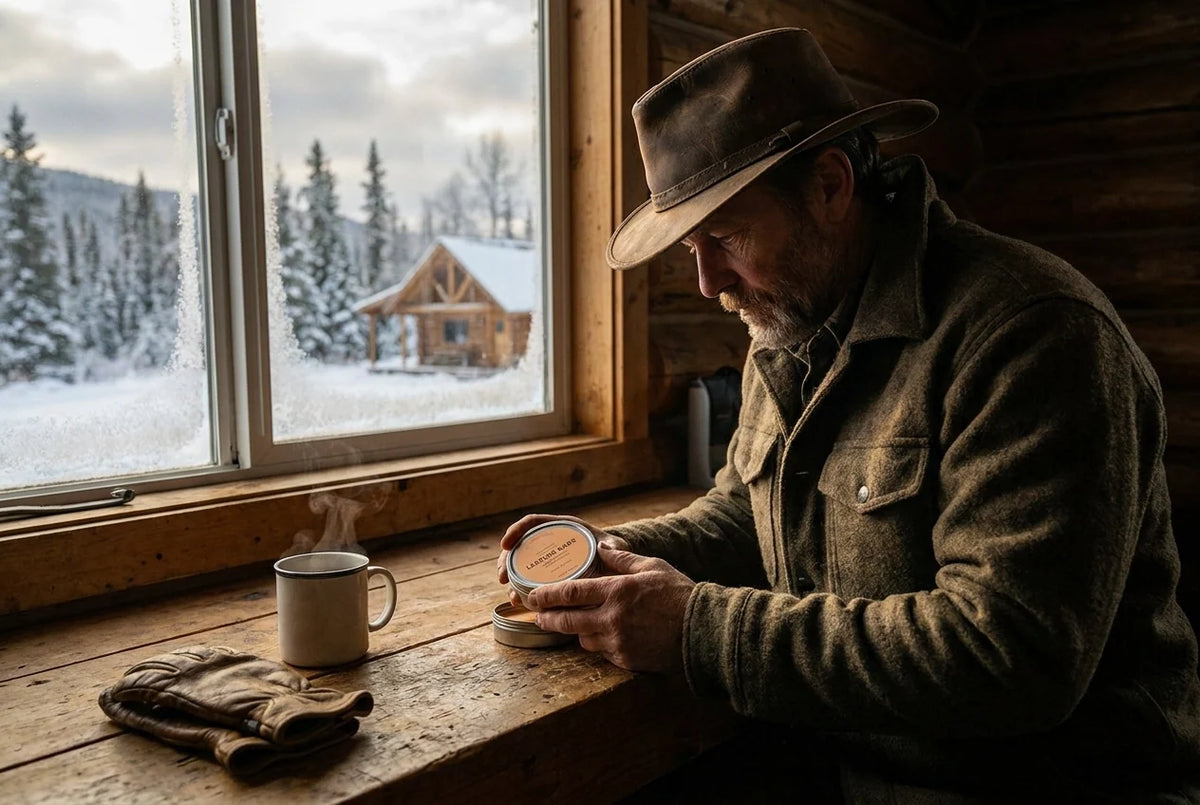
Canadian winter has a way of testing gear. One week it's slush, the next it's -30, and your furnace is quietly turning your living room into a desert. So can a kangaroo leather outback hat actually survive October to April? Short answer: yes, if you treat it like a piece of outdoor kit instead of a museum piece. That's the freedom-loving, get-out-there approach we like: wear it, learn its limits, and give it a little care along the way.
In this tutorial, we'll cover whether you can really wear an Australian outback hat through a Canadian winter, why kangaroo leather stays pliable when cowhide stiffens, and what road salt does to leather. We'll also look at freeze-thaw cycles, furnace-dry indoor air, an October-to-April care calendar, where this hat shines and where it doesn't, spring brim reshaping, and how long a kangaroo leather hat should last in Canada. If you want one hat for cool-weather hikes, shoulder-season fishing and everyday winter errands, here's what to expect.
Can You Actually Wear an Australian Outback Hat in a Canadian Winter?
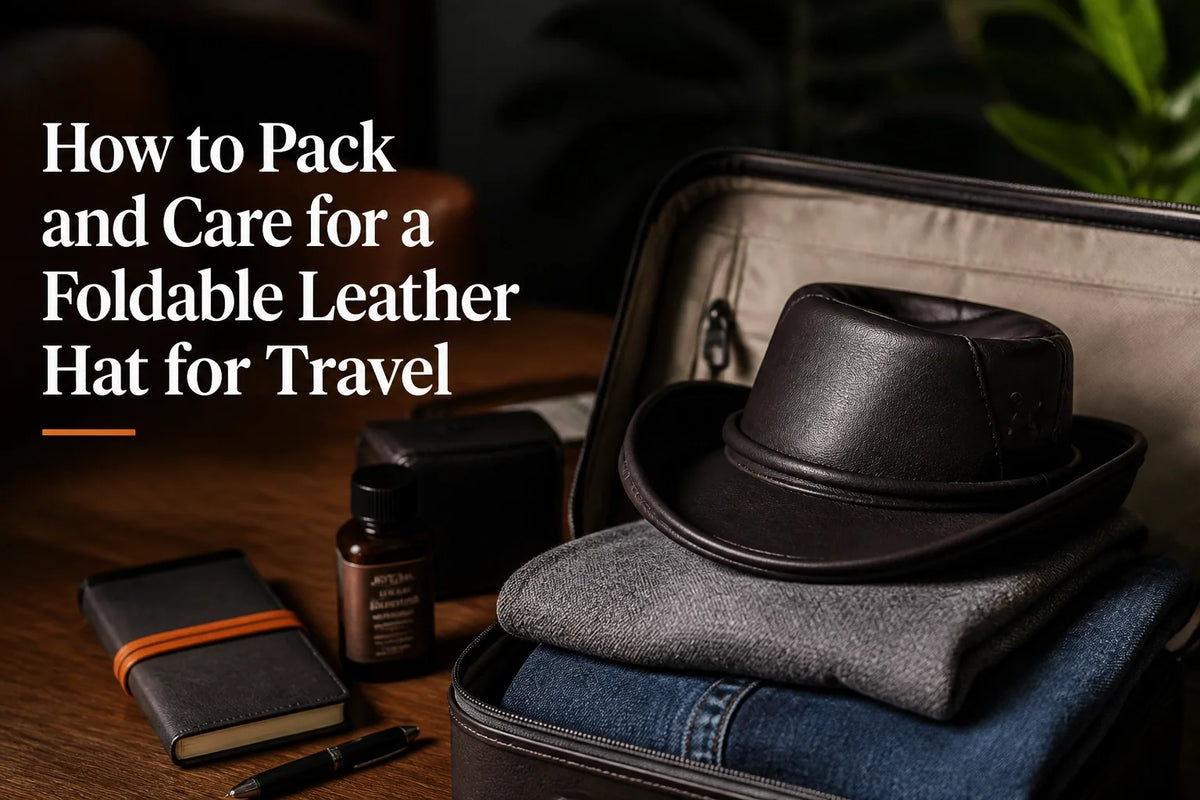
Short answer: yes. A kangaroo leather outback hat can realistically cover October to April in most of Canada, and not because it shrugs off water. It works because the leather stays flexible in the cold, where a heavier cowhide hat goes board-stiff and gets left on the shelf.
Three things actually do the damage: road salt residue drying the hide out, freeze-thaw cycles warping a brim that was wet when it froze, and furnace-dry indoor air pulling oil out all winter. Canada uses more than five million tonnes of road salt each winter, so avoiding it is not on the table.
A leather hat is not a sun hat swap-in. The Walkabout Company blog (April 2026) calls leather sturdier than lightweight sun hats but warmer and heavier, suited to cool-weather hikes and shoulder-season fishing. See our outback kangaroo hat vs. other materials comparison.
Honesty first: this research has no Canadian winter testing, no salt exposure data and no lifespan figure, so treat durability claims as the maker's expectation.
Set expectations early: one conditioning pass in the fall, one re-shape in the spring. No spray replaces either habit.
Why Kangaroo Leather Stays Pliable When Cowhide Stiffens
Kangaroo leather is unusually dense and finely fibred, which is why a kangaroo hat can be thin, light and still tough, and why it moves with your head and hands in cold instead of locking up like a thicker hide. The material science behind kangaroo leather digs deeper.
Honesty check: that cold-pliability claim isn't documented in this research set. What the sources do support is seasonal framing: Walkabout pitches leather for cool-weather and shoulder-season use, not for minus 20.
Cowhide and buffalo run thicker. They hold a brim shape harder out of the box, but that thickness is why they go stiff below freezing. On a long January walk, that's the difference between a hat you forget about and one you keep adjusting.
Do a fold test before winter. At room temperature, flex the brim edge. Smooth spring-back means enough oil; a creak or papery feel means condition now, before the first snow.
One caveat: a hobbyist in a kangaroo hat group said a kangaroo leather hat will be floppy without a liner supporting the brim. Opinion, not a test, but a fair reminder that brim stiffness comes from construction, not leather alone.
What Road Salt Does to Leather, and Why It Dries the Hat Out
Salt is hygroscopic: it pulls moisture toward itself. Left sitting on leather, it draws water out of the hide and leaves crystalline residue in the grain and around the stitching. Same reason winter boots and gloves go hard and pale after a salty season.
On a hat, watch for a whitish bloom or tide line near the brim edge, a crown that feels dry and matte instead of supple, and stitching that looks chalky where it once sat flush.
You don't have to step in a puddle to get salted. Slush spray thrown up by plows and passing traffic settles on a brim during commutes, shovelling and dog walks. A hat worn near roads gets salted whether you notice or not.
Brush dried salt off with a soft horsehair brush before you condition anything. Working crystals into the grain with a cloth or your fingers is how a surface bloom becomes abrasion damage. Then wipe with a barely damp cloth and air dry at room temperature, away from radiators and vents. Never dunk a leather outback hat in water to rinse salt out, and never dry it over a heat source.
Condition the salt-and-friction zones first: the hatband, brim edge and lower crown. Those are where salt sits longest and dryness shows up first. For the full sequence, a leather cowboy hat care guide walks through it end to end.
Freeze-Thaw Cycles: How a Wet Brim Loses Its Shape
Salt is the slow leak. Freeze-thaw is the faster one.
Water between leather fibres expands as it freezes, and repeat cycles push those fibres apart into a wavy brim, a drooping edge, or a crown sitting crooked. The physics shows up in porous materials, where freeze-thaw cycles expand pores and crack the bonds between them.
Worst case: a hat soaked in wet snow, left in a cold vehicle overnight. Whatever shape the brim froze in, it roughly keeps.
Fix it with timing, not force. Cold leather has less give, so bending a frozen brim risks cracking the finish. Stiff with cold? Bring it inside and leave it alone.
Dry it in shape: crown down on a towel or hat stand, brim flat and level, overnight at room temperature. Dried flat, it may stay flat. Dried on a hook, it comes back with a dent.
A brim already set into a wave is a spring re-shaping job, not a field repair. Caveat: wet-brim distortion came up in one anecdotal forum post, so treat the mechanism as physics, not a tested result.
A light water-repellent treatment might cut soak-through, but evidence is thin: one video showed it applied, one commenter said it does not hold water. Optional at best, and no substitute for how to care for a leather Derby hat.
Furnace-Dry Indoor Air Quietly Pulls Oil Out of the Leather
Freeze-thaw gets the drama. Furnace air does its damage quietly, all winter.
Forced-air heating drops indoor humidity hard through January and February. Leather gives up internal oil to the dry air around it, so a hat living in a heated house dries faster in winter than any other season.
Symptoms arrive in order: the surface goes matte and lighter, the leather feels papery rather than waxy, then crown creases stop springing back.
Placement beats product. A peg beside a forced-air vent, a radiator shelf or a sunny windowsill strips oil fastest. Store it away from heat, direct sun and crushing weight.
Check it monthly through heating season rather than one heavy treatment in November. Follow leather safari hat care and hit the band, brim edge and crown. Monthly passes beat a November soak that's gone by February.
Still, keep the stakes sane. Furnace air is slow aging, not sudden death. The hat won't fall apart in a week; it just loses suppleness, which is what makes it crack the first time you bend a frozen brim in March.
Your October to April Care Calendar for a Leather Outback Hat
Furnace air is slow aging, not sudden failure, so what follows is a calendar, not a rescue.
October, before the first snow: one full condition of the band, brim edge, crown and stitching. A full oil load in October gives the leather margin to absorb salt, wet snow and dry air without going stiff.
December to February: check monthly, wipe salt and slush off once you're inside, and re-condition the high-exposure zones. Stop leaving the hat in a cold car.
March and April: freeze-thaw peaks as daytime melt refreezes overnight. Keep drying the hat flat and in shape after wet days, and plan the spring re-shape once slush is gone.
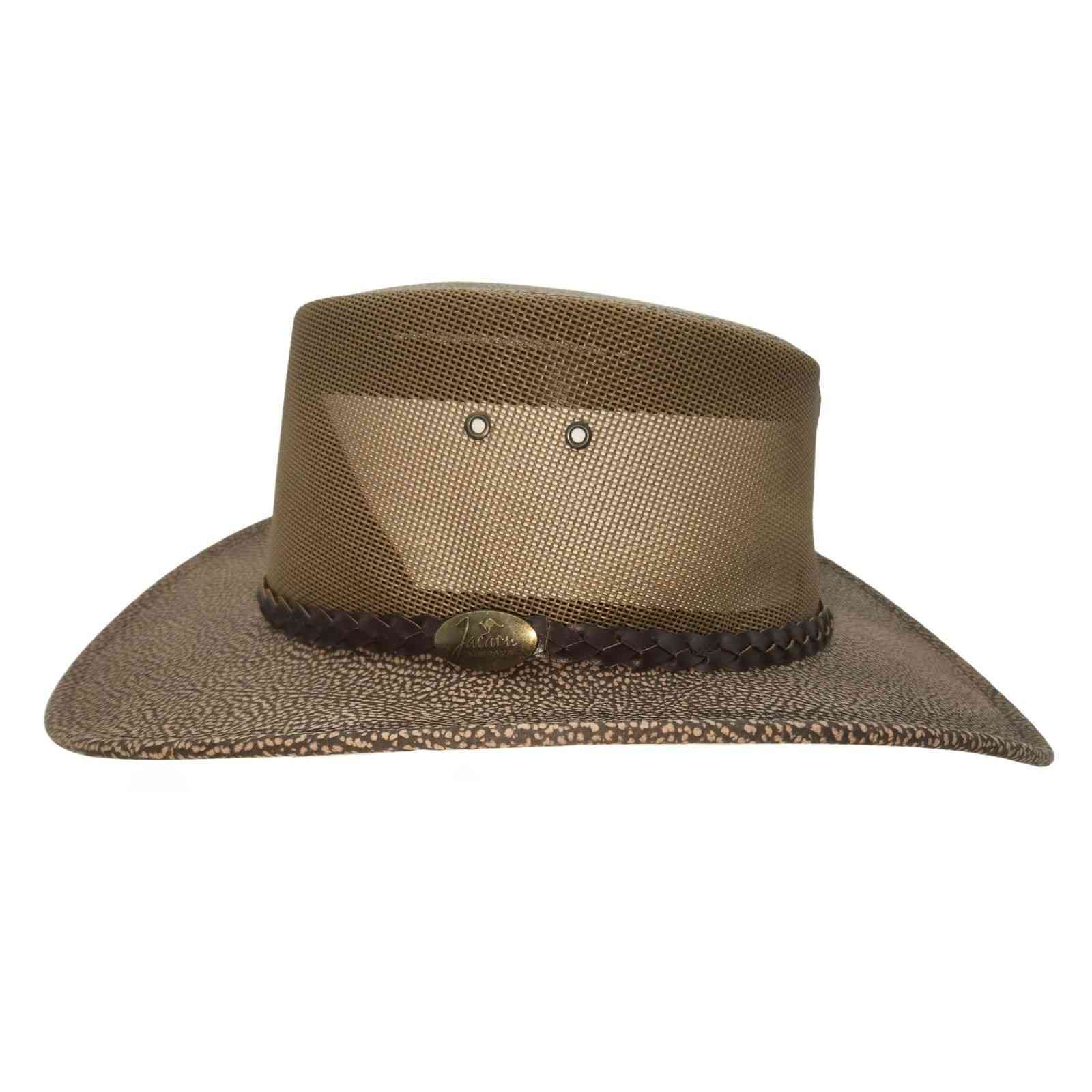
Read the instructions that came with your hat, since one schedule won't fit every finish. Jacaru makes outback hats in kangaroo, cow and buffalo leather and lists a product care collection; Barmah and Red Rock publish care pages too. Our How to Care for a Kangaroo Leather Hat guide is a good start.
Repellent sprays are optional insurance, never a substitute for drying. The evidence here is one video and one skeptical comment, nowhere near enough to make repellent central to winter care.
Unusual trim? Test any product on a hidden area first, since bands, liners and decorative details can finish differently from the main hide.
Where an Australian Outback Hat Earns Its Place in a Canadian Winter, and Where It Does Not
Winter days aren't all the same, so match the hat to the day.
Dry cold is home turf. Snowshoeing, ice fishing, winter camping, acreage chores and long walks in prairie or interior cold are where a leather Australian outback hat does its best work. No slush, no salt spray, just cold air and soft leather.
Wet snow, freezing rain and heavy slush are the weak spots. A leather hat tolerates one wet day. A hat that soaks through and then freezes is the scenario that costs you a brim.
Walkabout frames leather as the pick for dry, windy climates, warmer and heavier than lightweight sun hats, and points to mesh or soakable fabric for hot, humid weather. That maps onto Canadian winters and away from Canadian summers, so plan for a season, not a year-round rotation.
A wider outback brim blocks low winter sun and blowing snow. A soft brim without liner support folds in wind and stays folded.
Salt marks come with the territory. Walkabout notes that scuffs, creases and darkening often add character, which is a sensible attitude when a Canadian road season marks any hat you actually wear.
Spring Re-Shape: Getting the Brim Back After Salt Season

Once the slush is gone, the brim usually needs a nudge back to level. Sequence matters: clean the hat, dry it flat and in shape, condition it lightly, then work the brim. Bending leather that is dry, gritty or still cold is how you crack a finish. Same patience applies to caring for a straw hat, just different materials.
Work by hand against a flat surface, pressing gently at the brim edge rather than the crown, and support it with both hands so the load spreads. Small increments, checked in daylight. Let it rest flat overnight before wearing it outside. Still off? Another small pass beats one dramatic bend.
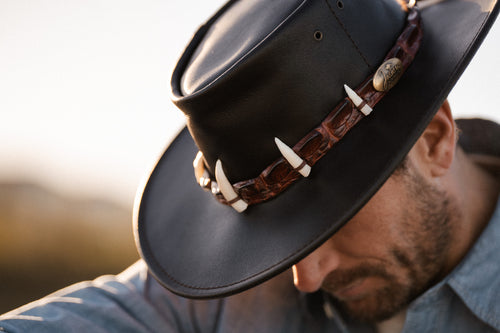
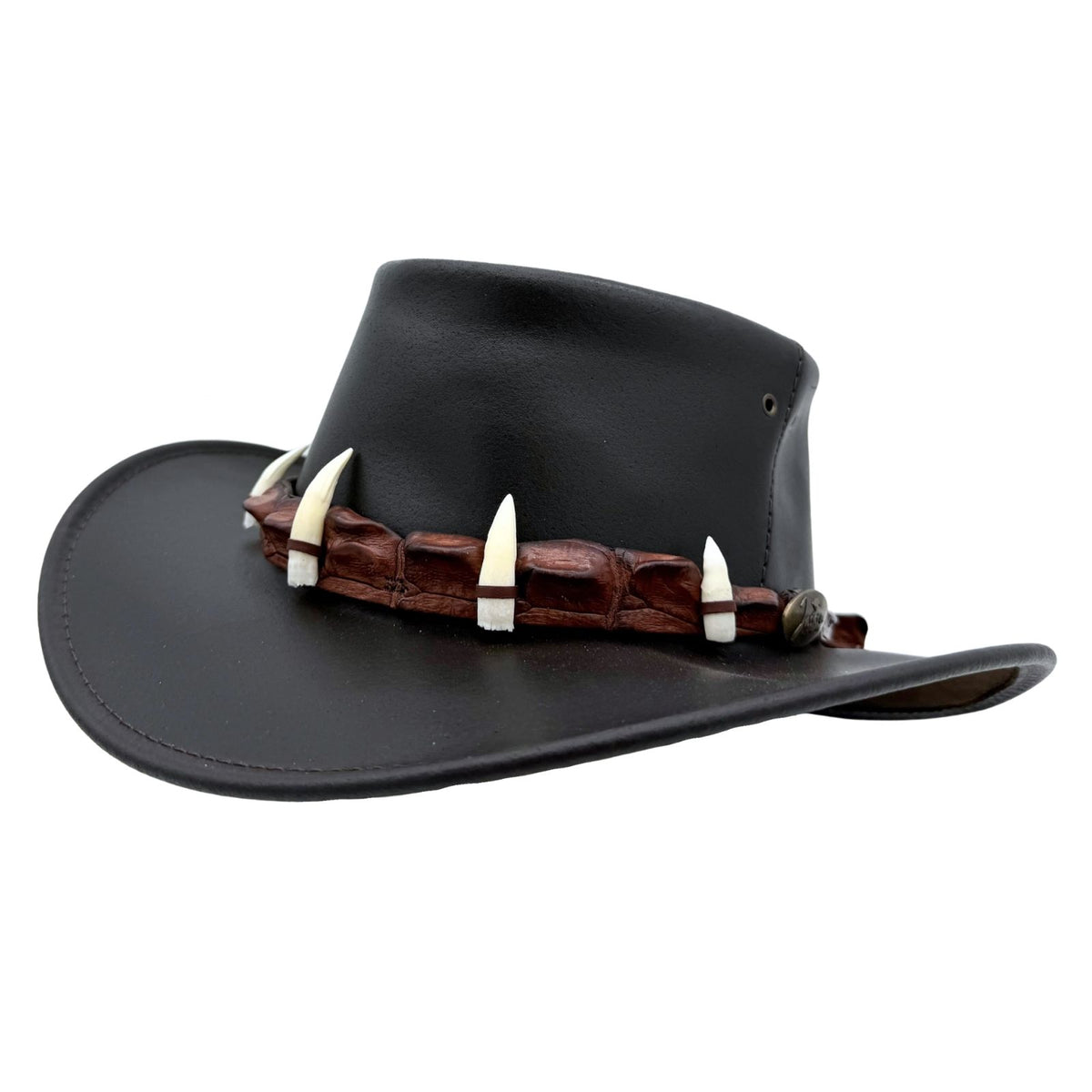
Steam is the usual lever, but keep it sparse and away from hatbands and trim, which may finish differently from the main hide. Jacaru's Crocodile Dundee style hats, with crocodile teeth and backstrap hatbands, are exactly the details you do not want to steam.
If the crown has collapsed or the brim is badly distorted, contact the maker before attempting a repair. A wavy brim is a home fix; a deformed crown is a workshop job.
How Long Should a Kangaroo Leather Hat Last in Canada?
Honest answer first: nothing in the research behind this piece measured how long a kangaroo leather hat lasts. You will see brand history floated around, such as Red Rock Hats citing 36 years or Hatworld calling itself a hat store since 2000, but that is business age, not durability evidence. So think maker's expectation rather than tested figure: a well conditioned kangaroo leather hat should come through several Canadian winters.
Three things decide whether yours does. Oil load, meaning how often you condition. Water exposure, meaning how often it soaks through and how it dries. Storage, meaning heat, sun and whether the brim sat crushed under a box for months.
A hat conditioned each October and re-shaped each April ages slowly and keeps its patina. One that freezes wet and dries against a radiator ages in a hurry, and that gap has nothing to do with the leather being kangaroo.
Know which wear risks to watch. Thinner, denser kangaroo leather tends to fail through punctures, over-conditioning that leaves a greasy film, and buffing too hard. Abrasion is less of a concern than it is on thicker cowhide.
One salt-season reality check: stitching, bands and liners often age faster than the hide itself. Inspect those parts each spring while the hat is already in your hands.
The Short Version: Condition in October, Re-Shape in April
Yes. An Australian outback hat in kangaroo leather is a realistic October to April hat across most of Canada, mostly because the leather keeps moving in the cold while heavier hides go board-stiff.
Four things to do:
Condition the band, brim edge and crown before the first snow.
Brush dried salt off before it works into the grain.
Dry a wet brim flat at room temperature, crown down.
Check the band and brim edge monthly through peak heating season.
Four things to never do:
Leave a soaked hat in a cold vehicle overnight.
Dry it on a radiator or beside a vent.
Bend a frozen brim.
Treat repellent spray as a substitute for proper drying.
Expect several winters out of it with that routine, though that's the maker's expectation, not a measured result. No source in this research tested it.
Scuffs and darkening are the good kind of wear, and they add character. Cracks from dried-out leather and a brim set into a permanent wave are the bad kind, and both are avoidable.
Conclusion
A kangaroo leather outback hat can handle a Canadian winter, but it will not do it unaided. The hide stays flexible in cold better than heavier cowhide, yet road salt, freeze-thaw cycles, and furnace-dry air still pull oil and shape out of it. Watch the stitching, band, and liner too; they often age faster than the leather. The routine is simple: condition in October, brush off salt, dry wet brims flat and at room temperature, and re-shape in April.
Your next step: take the hat down now, inspect the band and brim edge, and put a condition-and-reshape reminder on your calendar before the first snow. A little self-reliance each season keeps the hat ready for the next trail, the next cold morning, and the next unpaved detour. No bureaucracy required.



Our friends at Bocchetta Plush Toys have a great range of lifelike plush animals that make great gifts for people of all ages.