




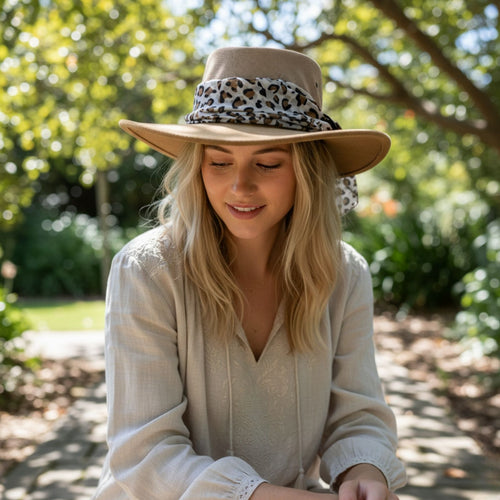
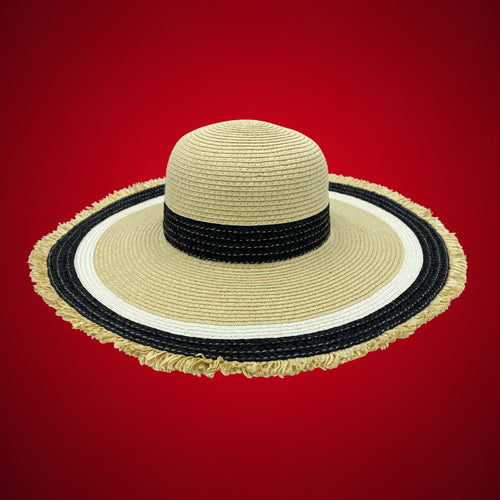




Brim, Band and Fit: Kangaroo Outback Hats for Women
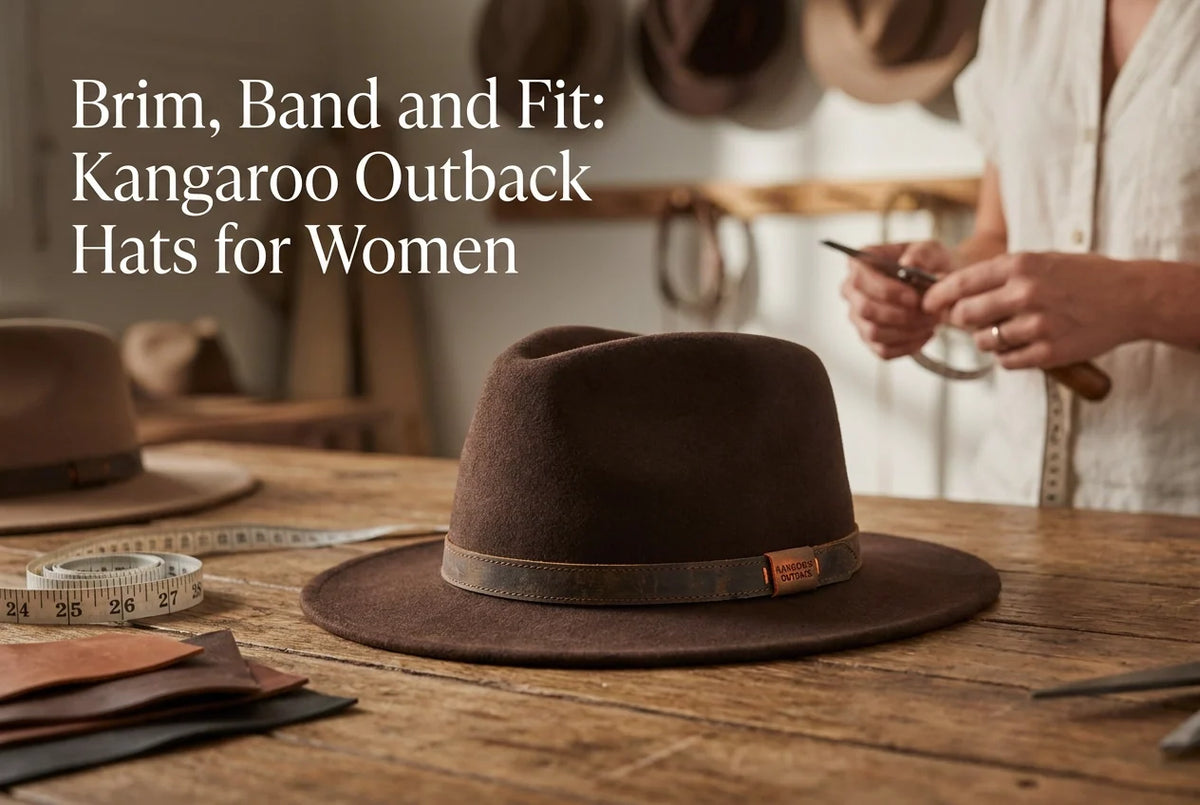
Most hat advice for women starts in the wrong place. It opens with colours and crown creases and quietly assumes the only real difference between a men's outback hat and one cut for a smaller head is the label inside. That is not how it works.
An outback hat is a fit problem before it is a style choice. Brim width has to make sense against your shoulders and your plans. Crown volume has to sit without pinching, which is where thin kangaroo leather earns its keep. And the band needs to adjust, because the same hat will sit over a ponytail one day and loose hair the next.
If you have been hunting for ladies hats that fit rather than just look the part, this walkthrough is for you, whether your weekend involves a trailhead or a backyard. We will cover brim width, how to judge a brim in the mirror before you commit, crown volume, measuring your head at home properly, why an adjustable band matters more than you think, and a buying order that gets all three right. Get those sorted, and the style question tends to answer itself.
Why an Outback Hat Is a Fit Problem Before It Is a Style Choice

Most outback hats start as one default pattern, cut around a broader shoulder line and a larger head. Shrink that block, call it a ladies hat, and two things stay unresolved: how far the brim reaches past your shoulders, and how much empty crown sits above your head.
Forget picking a colour and hoping. Three variables are actually tunable: brim width against shoulder width and use case, crown volume against head circumference and hair, and a band that copes when your hairstyle changes through the day.
Here's the honest bit: public body-size data exists. ANSUR II covers 93 measures for over 6,000 adult US personnel (internal 2012, public 2017), and Australia has AWAS, ASRAN and the iMOVE Aus Size dataset. None measure hat geometry, brim-to-shoulder ratios or kangaroo leather thickness. Nobody can hand you an evidence-backed universal chart for women's bush hats.
Everything below is how Jacaru approaches fit on real heads, based on watching customers wear the hats, not science dressed up as marketing. If you've been searching ladies hats or women's australian hats and found only category pages and one size chart, that gap is why this piece exists. Our Crocodile Dundee costume hat guide covers the costume angle; fit is the missing page.
Keep the stakes sensible. An outback hat is outdoor gear, closer to picking boots than picking a crown. Get the fit right and the rest gets easy. Jacaru is an Australian outfit built for people who travel, camp, ride and would rather look at a horizon than a house. Gear that fights you in the wind gets left behind.
Brim Width: Match It to Your Shoulders and Your Plans
Here's how Jacaru approaches brim width: it should scale with your shoulder width, not a number on a chart. A broader shoulder line carries more brim. On a narrower frame, a brim that sails past your shoulder points starts to look like a hat wearing a person, and you feel the excess before anyone else sees it.
Work in ratios. A brim that finishes at or inside your shoulder line reads balanced. Push wider only if your use case earns it.
Use case sets the upper limit. All-day sun on open ground wants the widest brim you can carry. Riding, driving and city travel want less, because brim catches wind, clips car headrests and blocks peripheral vision.
Wide brim wins on shade: it keeps midday sun off your neck and ears, runs rain away from your face, and delivers that classic wide-brim look.
Wide brim loses on wind and tight spaces: lift in a crosswind, doorway and backpack contact, and a hat that wants a chin strap or stampede strap in open country.
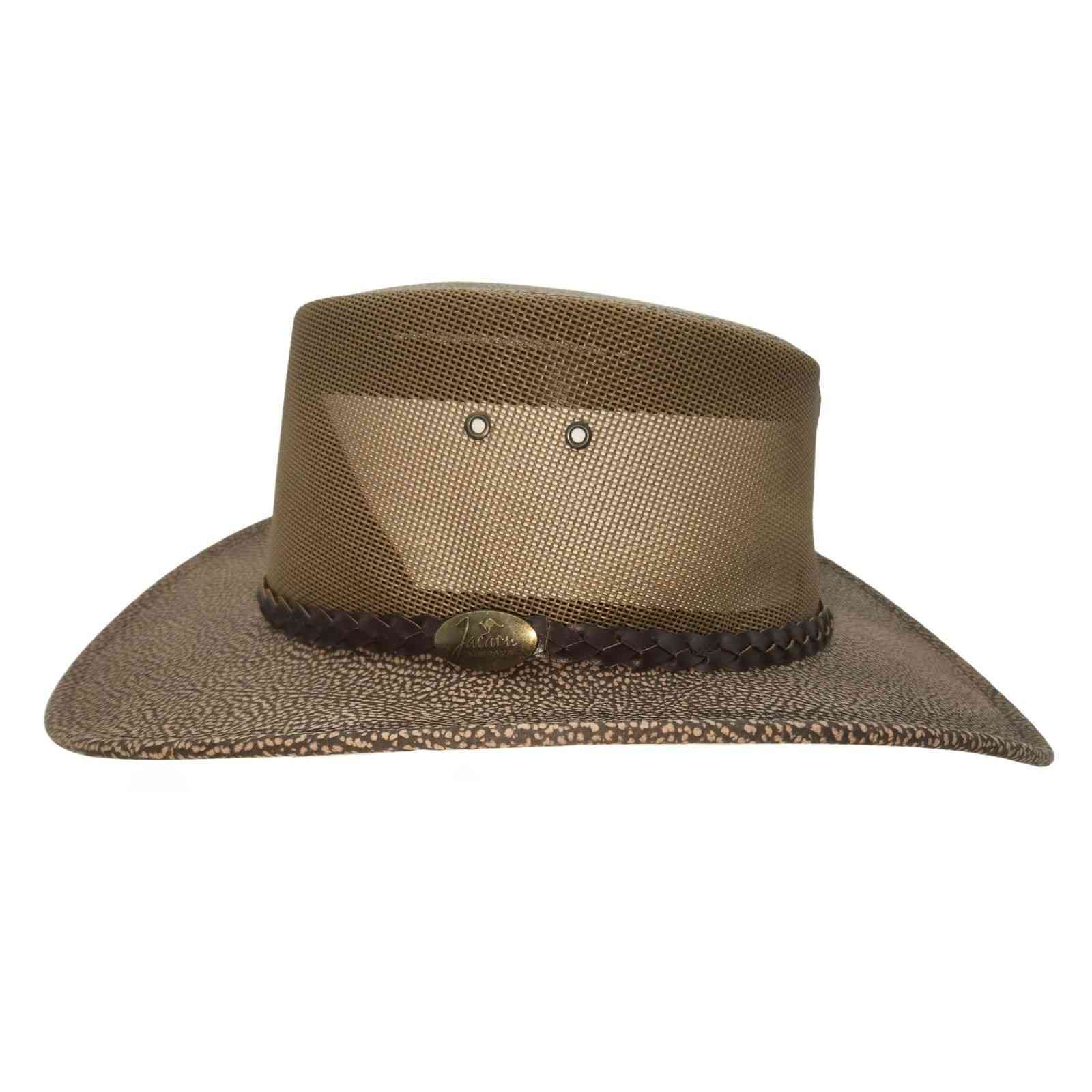
Material changes how a brim behaves. Jacaru makes outback hats in kangaroo, cow and buffalo leather, plus wool and straw. A thick leather brim holds a curve differently from a soft leather or straw brim, which matters if you want structure rather than a floppy edge.
Weighing two widths? Don't split the difference. Wider for open sun and long days outdoors, narrower for driving, riding and confined spaces. Let your main activity call it. Better still, check it against your own shoulders in a mirror.
Judging Brim in the Mirror Before You Commit
Trying one on is where that maths meets reality. Wear the jacket or pack you actually head outdoors in, because padding shifts your shoulder line, and that line is the ruler here. Stand square to a mirror and compare the widest brim edge with the outer tip of each shoulder. At or inside those tips reads balanced; well past them is a statement, so make it on purpose.
Then do the vision check. Look ahead, turn your head slowly left and right. If you are tilting or lifting the brim to see, it is wider than your use case wants. For frame and finish, see what to look for when buying a safari hat.
Run the environment test on paper: doorways, car headrests, overhead lockers, pack top straps, a stiff afternoon breeze. Any hat you would leave at home because of those is the wrong hat.
Finally, bend the brim where you need it. Shaping the front up for visibility and keeping the sides low for shade buys back width you would otherwise surrender.
Crown Volume: Why Thin Kangaroo Leather Suits a Smaller Head
Brim sorted. Now the part nobody warns you about: crown volume. That's two measurements at once, the internal circumference around your head and the internal depth above it. A hat can wrap your head neatly and still bottom out on your skull, or hover so high it lifts in the first crosswind.
Thin kangaroo leather earns its keep here. Jacaru works kangaroo leather thin, so less material crowds the same internal space and the crown shapes to your head instead of arguing with it. That's how a full-size outback hat sits on a smaller crown without pinching. Customers report a faster break-in too: rather than months of forcing a stiff crown down, the leather softens where your head actually is, which suits a first serious leather hat. Our kangaroo leather hats are made this way.
Material is a crown-volume choice. Kangaroo is light and pliable. Cow leather is heavier and more structured. Buffalo heavier again. Wool and straw tend to hold their shape, and straw is a light, breathable choice in serious heat.
Hair is part of crown volume, not separate. A bun, thick braid or ponytail changes your effective circumference, so a crown that fits hair-down may not fit hair-up.
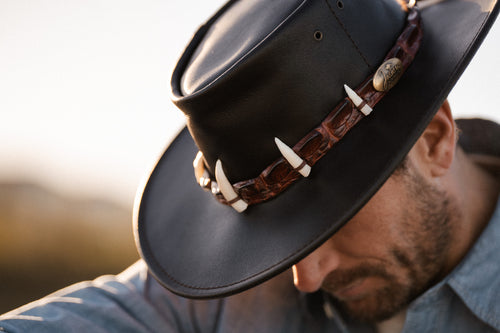
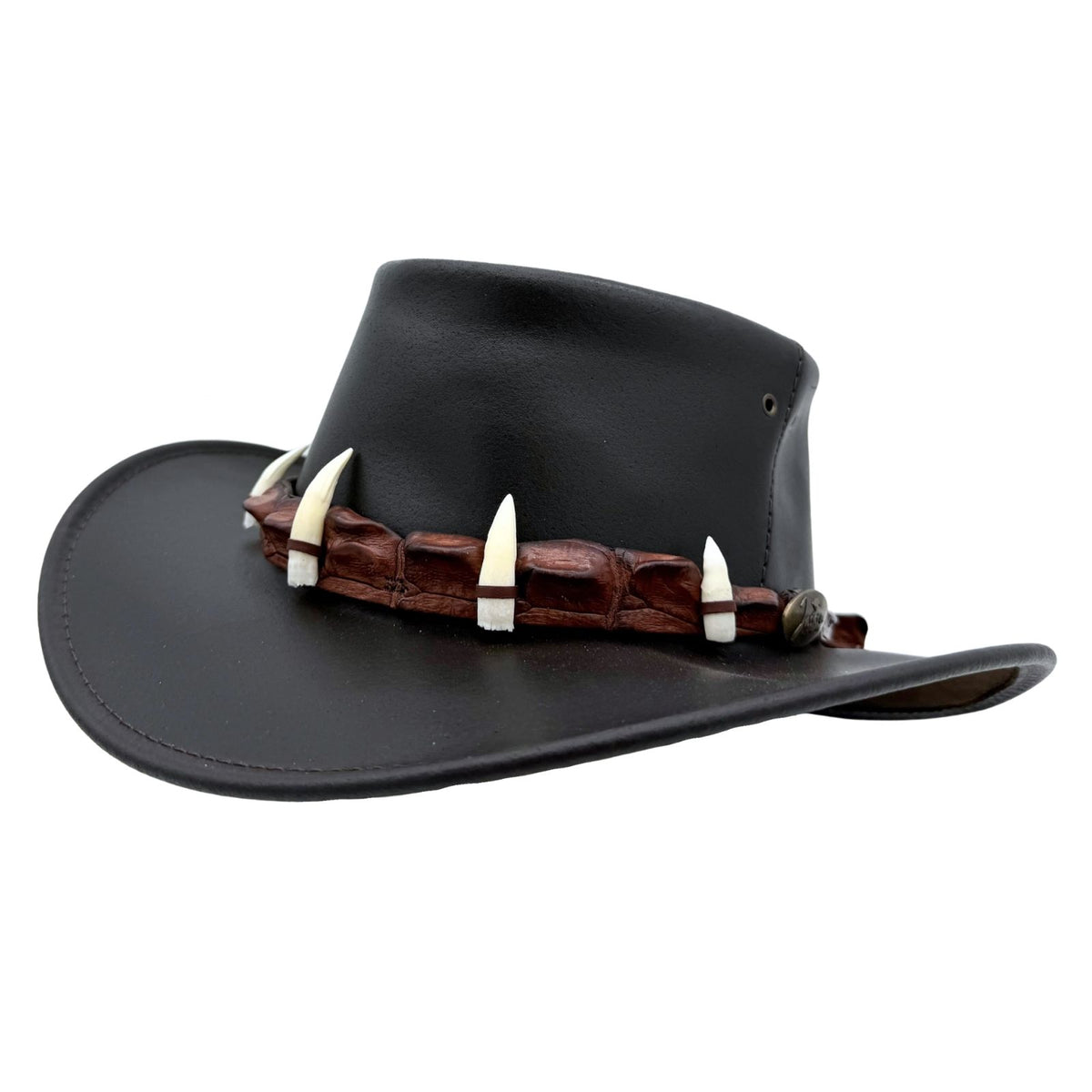
Pinching means too small: a red line across the forehead, a headache by afternoon. Wobbling in a breeze means too loose. Check the band, too. Jacaru's Crocodile Dundee style hats use genuine crocodile teeth and backstrap hatbands, and a band that sits smoothly adds comfort, not pressure at the back of your head. Next up: measuring your head at home.
Measuring Your Head at Home, Properly
Crown volume sorted, the next step is a number. Use a soft tape measure, or a strip of paper you mark and measure flat. Run it around the widest part of your head, roughly a centimetre above the ears and across the middle of the forehead, over the hairstyle you actually wear under the hat, keeping the tape level the whole way round.
Take two or three readings and write them down. If they disagree, use the larger figure, then let band adjustment take up the slack rather than buying tight and hoping.
Head shape matters as much as circumference. Two heads with the same measurement can be more oval or more round, so an oval crown that suits you beats a number on a chart. Treat the measurement as the start of a conversation. Our guide to Australian kangaroo hats covers what to expect from leather, and band adjustment plus crown material close the gap. Nothing in public body-size datasets describes hat geometry, so no number is a verdict.
The Band: Adjustability Matters More Than You Think
So you have your number. Now for what it cannot do alone.
An adjustable band is not a compromise. It is the feature that makes one hat work across a whole week. Hair down day, gym ponytail day, dressed-up bun day: three different sizes. A fixed hat fits one of them properly and the other two badly.
Keep two bands separate in your head. The external hatband, like the backstrap style with crocodile teeth on Jacaru's Crocodile Dundee hats, is the look. The internal sweatband does the fitting, so ask about that one specifically.
Look for adjustment that tightens without distorting the crown. Gentle tension is useful; crank it tight enough to dent the leather and you keep the hat on while ruining its shape.
Check where the band meets the back of your head too. A bulky seam or clip where your bun sits is what you notice by hour two, so a smooth internal finish matters more over long hair than a tight fit.
Hair shifts mid-day too, and the band absorbs that rather than your forehead.
Wind and travel belong in this. A chin strap or stampede strap keeps a hat on when you are on a bike, in a ute with the window down or on an exposed clifftop. And as practical care, let a soaked leather sweatband dry properly between wears.
One upside: bands are the cheapest way to change a hat's personality, so see hatbands and personalisation if you would rather own one that fits than three that nearly do.
A Buying Order That Gets All Three Right
Six steps, in this order.
1. Measure first. From the measuring section above, your number: the larger reading you already wrote down.
2. Name your use case in one sentence. Open sun, riding, driving, city travel, festivals, or a mix. That sets your maximum brim before you fall for a shape you cannot wear.
3. Match brim to shoulder line and use case. The mirror test above is the judge.
4. Choose material for crown volume. Thin kangaroo leather if you want a lighter hat that shapes to a smaller crown. Cow or buffalo leather for more structure and weight. Wool or straw if heat and weight are the priority.
5. Check the band against your real hair routine, not your best case. Adjustable wins if your style changes through the day, and the internal sweatband is the part doing the fitting.
6. Expect to break it in. Leather crowns soften and brims shape with wear, so give it some wear before deciding anything is wrong.
Our guide to choosing the right kangaroo leather hat goes deeper on leather weights.
While you weigh it up: Jacaru is Australian made, works in leather, wool and straw, and also makes kangaroo keyrings, fur items, souvenirs and corporate gifts. Handy when the hat is a gift and you want something with a story rather than a receipt.
Once Fit Is Right, the Style Question Answers Itself
Get the structure right and the style question dissolves. Brim, crown and band are the decisions. Colour, finish and trim are details, easy once the frame is settled.
A hat that fits stops reading as borrowed from someone else's wardrobe. Proportion does more for a smaller frame than any colourway, as the brim section showed. Our guide to what to look for in a leather cowboy hat goes deeper.
Style it like gear, not costume. A leather outback hat sits naturally with linen shirts, denim, work jackets, boots and anything else you would genuinely take outdoors, and looks unconvincing with office tailoring.
Use the band as your one variable. Same hat, different band, different mood, which beats buying a second hat in a colour you are unsure about.
Lean into wear. Marks, shaped brims and a softened crown are what make leather look owned rather than purchased. The hat that has been rained on, sat on a fence post and carried on three trips is the one people ask about.
Fit First, Then Forget About It
Three variables decide whether a kangaroo leather outback hat works on your head: brim width measured against your shoulder line and matched to what you actually do, crown volume kept manageable by thin, pliable leather, and a band adjustable enough to survive your hairstyle changing on a hot afternoon.
Before you buy: measure your head with your usual outdoor hair, name your main use case, pick the brim that suits it, choose kangaroo leather if you want a lighter crown that shapes to you, and confirm the internal sweatband adjusts without distorting the crown.
Then stop deliberating. A hat you reach for every morning beats one that matches an outfit. Sort the fit and style follows. That's the whole point of getting brim, band and fit right.
Conclusion
Getting a kangaroo leather outback hat right comes down to three things. Brim width should match your shoulders and what you actually do outdoors. Crown volume stays manageable when the leather is thin and pliable. The band should be adjustable enough to handle heat, hairstyles and long days. Measure your head with your usual outdoor hair, pick your main use case, and use the band as your one variable. Style it like gear, not costume, and let the marks, shaped brim and softened crown tell the story. Your next step: measure once, choose the brim and band that fit your life, then step outside in our kangaroo leather outback hat. Freedom, fresh air and a hat you forget you are wearing. That is the point.



Our friends at Bocchetta Plush Toys have a great range of lifelike plush animals that make great gifts for people of all ages.